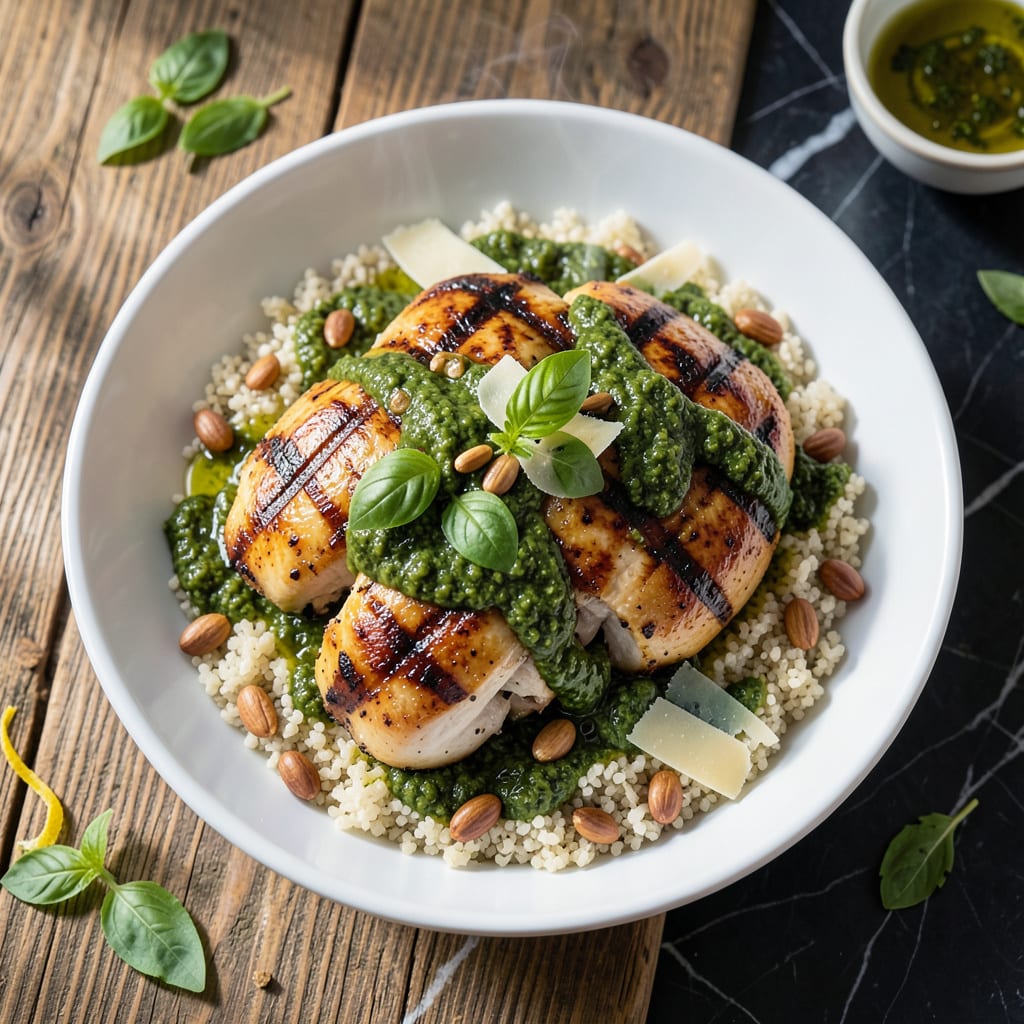
This recipe delivers herb-infused chicken with perfect grill marks and fresh pesto flavor. The char from the grill complements the bright, aromatic basil beautifully.
I developed this method to balance smoky depth with zesty freshness, using simple techniques anyone can master. The result is juicy, flavorful chicken that works for weeknight dinners or weekend gatherings.
Ingredients for Pesto Grilled Chicken
Fresh herbs and simple proteins create vibrant, char-kissed chicken with bold pesto flair.
| Ingredient | Amount | Notes |
|---|---|---|
| Boneless Skinless Chicken Breasts 🍗 | 1 ½ lb | Pounded to even thickness |
| Fresh Basil Leaves 🌿 | 2 cups | Packed, stems removed |
| Pine Nuts 🥜 | ½ cup | Toasted for richness |
| Garlic Cloves 🧄 | 4 cloves | Peeled and minced |
| Parmesan Cheese 🧀 | ¾ cup | Freshly grated from wedge |
| Extra-Virgin Olive Oil 🫒 | ¾ cup | Divided for pesto and grilling |
| Lemon Juice 🍋 | 2 tbsp | Freshly squeezed |
| Dijon Mustard 🟡 | 1 tbsp | For pesto binding |
| Kosher Salt 🧂 | 1 tsp | Diamond Crystal preferred |
| Freshly Ground Black Pepper 🌶️ | ½ tsp | Coarse grind recommended |
| Red Pepper Flakes 🔥 | ¼ tsp | Optional for heat |
| Balsamic Vinegar 🍷 | 1 tbsp | For finishing drizzle |
[recipe_ingredient_scaler]
The chicken quality matters here. Opt for air-chilled breasts from Whole Foods or a trusted butcher—they retain moisture better during grilling. Pounding to even thickness ensures uniform cooking and prevents dry edges. For the basil, farmers market bunches offer superior aroma compared to grocery store clamshells. Pine nuts, while pricey, add unmatched richness (splurge at Trader Joe’s for the best value).
No pine nuts? Walnuts or raw cashews work beautifully—slightly different flavor profile but equally delicious. Fresh Parmigiano-Reggiano is non-negotiable for authentic depth; pre-grated lacks the necessary texture. If avoiding dairy, nutritional yeast adds a cheesy note. The olive oil should be bold and peppery—this isn’t the place for mild, mass-market brands.
Pesto keeps 5 days refrigerated in an airtight container with a thin oil layer on top. Grilled chicken holds 3-4 days in the fridge or freezes beautifully for 3 months. For best results, bring chicken to room temperature before grilling (about 30 minutes on the counter).
Why You’ll Love This Recipe
- One Pan Wonder: I toss the chicken with pesto made from fresh basil, pine nuts, and parmesan, then grill—minimal dishes, maximum flavor.
- That Grill Char: The smoky char from grilling pairs with the garlicky, nutty pesto in a way that’s ridiculously good.
- Meal Prep MVP: I make a big batch on Sunday and it stays juicy for salads, wraps, or pasta all week.
- Leftovers? Sold.: Honestly, it tastes even better the next day—like the flavors had time to get cozy.
Step-by-Step Instructions for Pesto Grilled Chicken
Here’s the method. Straightforward, tested, works every time.
Step 1: Prepare the Pesto Base
In a food processor, combine the 2 cups fresh basil leaves, 0.5 cup pine nuts, and 4 cloves garlic cloves. Pulse until finely chopped, scraping down the sides as needed. This should take about 20-30 seconds total.
Add the 0.75 cup parmesan cheese, 1 tbsp dijon mustard, 1 tsp kosher salt, 0.5 tsp freshly ground black pepper, and 0.25 tsp red pepper flakes. Pulse again until the mixture resembles coarse crumbs. The texture should be uniform but still have some visible herb specks.
With the processor running, slowly drizzle in 0.5 cup extra-virgin olive oil through the feed tube. Process for 30-45 seconds until smooth and creamy. Stop to scrape the sides once if needed. The pesto should be thick but pourable.
Step 2: Finish and Marinate the Chicken
Transfer the pesto to a large bowl. Stir in the remaining 0.25 cup extra-virgin olive oil and 2 tbsp lemon juice. This thins it to the perfect consistency for marinating. Taste and adjust seasoning if needed, though the parmesan and salt should balance it well.
Add the 1.5 lb boneless skinless chicken breasts to the bowl, ensuring each piece is fully coated. Cover and refrigerate for at least 1 hour, or up to 4 hours for maximum flavor penetration. The chicken should turn a vibrant green from the basil.
Step 3: Grill to Perfection
Preheat your grill to medium-high heat (about 400°F). Remove the chicken from the marinade, letting any excess drip off, and place it on the grill. Cook for 6-7 minutes per side with the lid closed, or until the internal temperature reaches 165°F.
Look for distinct grill marks and a slight char on the edges before flipping. Don’t move the chicken until it releases easily from the grates—this ensures a clean sear. The pesto will caramelize slightly, creating a beautiful crust.
Step 4: Rest and Serve
Transfer the chicken to a cutting board and let it rest for 5-10 minutes. This allows the juices to redistribute, keeping the meat moist and flavorful. Tent loosely with foil to keep warm.
Slice the chicken against the grain into ½-inch thick pieces. Arrange on a platter and drizzle with the 1 tbsp balsamic vinegar for a bright, tangy finish. The balsamic adds a glossy sheen and complements the herby pesto beautifully.
Pro Tips For Making Pesto Grilled Chicken
- Pound the Chicken: I learned this the hard way—uneven chicken breasts cook unevenly. Pound them to an even ½-inch thickness so they grill up juicy all the way through.
- Toast the Pine Nuts: Skip raw pine nuts in your pesto; toss them in a dry pan for 2-3 minutes until golden. It deepens their flavor and keeps the pesto from tasting flat.
- Don’t Overgrill: Chicken dries out fast over direct heat. Pull it off at 160°F—it’ll coast to 165°F while resting, and stay tender.
- Use Room-Temp Cheese: Cold parmesan turns pesto clumpy. Grate it straight from the fridge, then let it sit 10 minutes before blending—smooth, creamy pesto every time.
Common Mistakes When Making Great pesto grilled chicken
Over-Marinating the Chicken
While marinating is crucial, leaving chicken in the pesto for more than 4 hours can actually break down the proteins too much. The acid in lemon juice and garlic starts “cooking” the meat, leading to a mushy texture. I learned this the hard way at a local BBQ competition.
Skipping the Pounding Step
Uneven chicken breasts cook inconsistently, leaving you with dry edges and undercooked centers. Always pound to an even ½-inch thickness using a meat mallet or rolling pin. This ensures uniform cooking and better pesto coverage. 💡
High Heat Burning
Pesto contains oil that can flare up on high heat. Grill at medium-high (400°F), not maximum, to prevent burning the herbs. Keep a spray bottle of water nearby for quick flare-up control.
Not Preheating the Grill
Placing chicken on a cold grill causes sticking and prevents proper searing. Always preheat for 10-15 minutes with the lid closed. The grates should be hot enough to sizzle when chicken touches them.
Neglecting Rest Time
Cutting into chicken immediately after grilling lets precious juices escape. Rest for 5-10 minutes tented with foil. This simple step makes the difference between dry and juicy meat.
Using Low-Quality Basil
Wilted or old basil turns pesto bitter. I only use farmers market bunches with vibrant green leaves. For best results, store basil stems in water like flowers until ready to use.
Nutrition Facts

Trained in classic French technique but raised on slow-cooked ribs and spicy rubs, she blends culinary skill with smoke and soul.
- Recipe for Boneless Pork Chops in Cast Iron Skillet: Sear and Baste to Juicy Perfection - October 3, 2026
- Recipe for Boneless Cross Rib Roast: Slow-Roasted Beef with Herb Crust - October 3, 2026
- Hamburgers in Sauce Recipe Crock Pot: Slow-Cooked Savory Delight - October 3, 2026