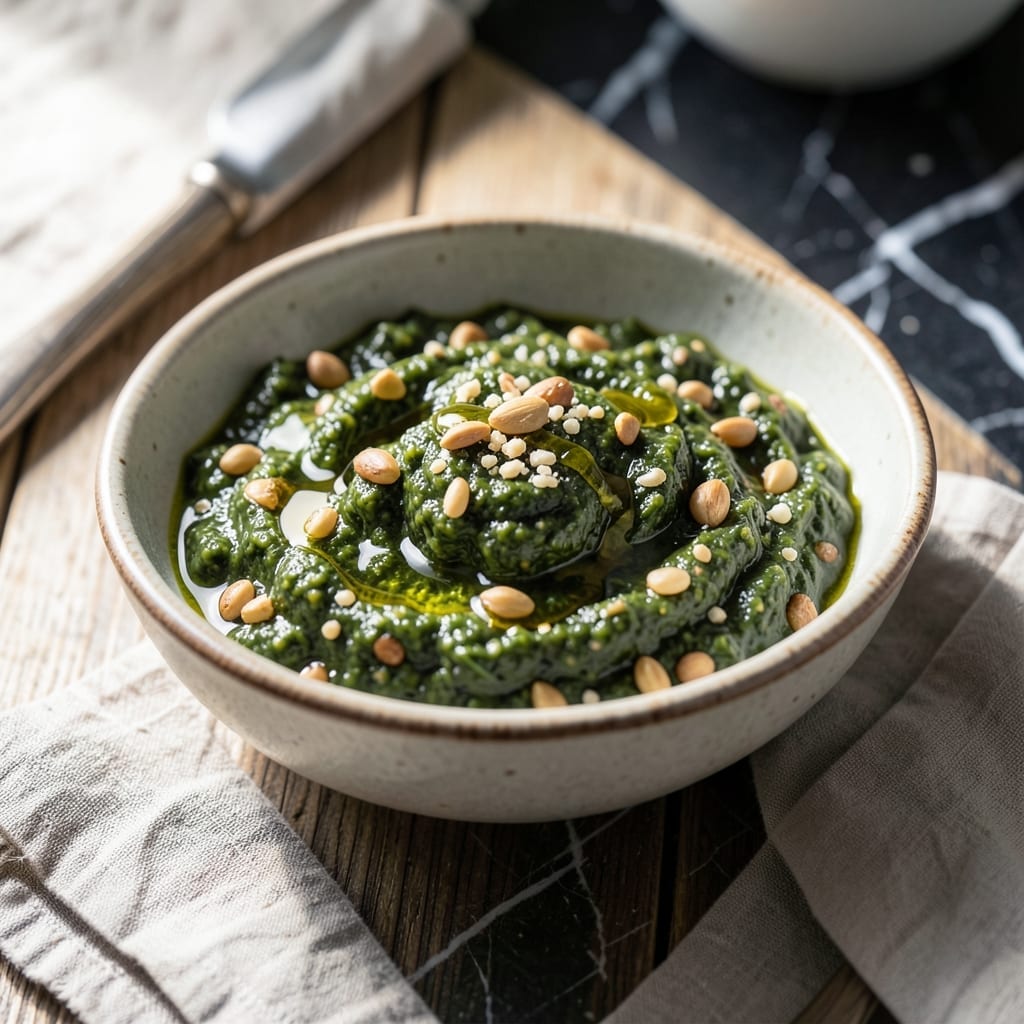
Don’t toss those carrot tops—turn them into a vibrant pesto that reduces waste and maximizes flavor. This simple blend transforms leafy greens into a rich, herbaceous sauce with just a few ingredients.
Perfect for pasta, sandwiches, or dipping, this pesto delivers bold taste with zero extra effort. Store in the fridge for up to five days or freeze for later use.
Ingredients for Pesto Recipe with Carrot Tops
Transform carrot greens into a bold, herbaceous sauce with these simple ingredients.
| Ingredient | Amount | Notes |
|---|---|---|
| Carrot Tops 🥕 | 2 cups | Packed, washed and dried |
| Fresh Basil Leaves 🌿 | 1 cup | Packed, stems removed |
| Garlic Cloves 🧄 | 2 cloves | Peeled and rough chopped |
| Raw Pine Nuts 🥜 | ⅓ cup | Toasted for richness |
| Nutritional Yeast 🧀 | ¼ cup | For cheesy flavor |
| Extra-Virgin Olive Oil 🫒 | ¾ cup | High quality, fruity |
| Lemon Juice 🍋 | 1 tbsp | Freshly squeezed |
| Sea Salt 🧂 | ½ tsp | Fine grain preferred |
| Black Pepper 🌶️ | ¼ tsp | Freshly ground |
[recipe_ingredient_scaler]
The carrot tops are the star here. Look for fresh, vibrant greens attached to carrots with firm stems—avoid wilted or yellowing leaves. Most grocery stores sell carrots with tops, but farmers markets often have the best quality. Pine nuts add richness, but they’re pricey; Trader Joe’s and Costco offer the most reasonable prices. Nutritional yeast replaces Parmesan perfectly for that umami depth.
No pine nuts? Raw cashews or walnuts work beautifully (toast them first for extra flavor). Swap basil for parsley or spinach if that’s what you have. The olive oil should be high-quality extra-virgin—this isn’t the time for that old bottle in the back of the cabinet. If you’re out of lemon juice, apple cider vinegar in a pinch does the trick.
This pesto keeps for 5 days in the fridge in an airtight container. For longer storage, freeze in ice cube trays, then transfer to a bag for up to 3 months. A thin layer of olive oil on top helps prevent browning.
Why You’ll Love This Recipe
- One Blender Wonder: I just toss in the carrot tops, basil, garlic, pine nuts, and nutritional yeast—blend and it’s done.
- Flavor Bomb: That combo of peppery carrot greens with the nutty pine nuts and sharp garlic? Ridiculously good.
- Weeknight Hero: I slather it on sandwiches, toss with pasta, or dollop on soups—works for everything from lunchboxes to dinner parties.
- Zero Waste Win: Honestly, it turns those carrot tops I’d normally compost into something I actually crave.
Step-by-Step Instructions for Pesto With Carrot Tops
This method ensures a smooth, vibrant pesto with balanced flavors and perfect texture.
Step 1: Toast the Pine Nuts for Depth
Heat a dry skillet over medium-low heat and add the 0.33 cup raw pine nuts. Toast for 3-5 minutes, stirring frequently, until they turn golden brown and emit a nutty aroma. Watch them closely—pine nuts burn easily due to their high oil content.
Immediately transfer the toasted pine nuts to a plate to cool. This prevents them from continuing to cook in the hot pan and becoming bitter. Set aside until ready to blend.
Step 2: Pulse the Aromatics and Greens
In a food processor, combine the 2 cloves garlic cloves, 2 cups carrot tops, and 1 cup fresh basil leaves. Pulse in 1-second bursts for 10-15 seconds total until the mixture is finely chopped but not pureed. You want some texture at this stage.
Stop and scrape down the sides of the bowl as needed to ensure even processing. The carrot tops may be slightly tougher than basil, so this step might require a few extra pulses.
Step 3: Incorporate Nutritional Yeast and Nuts
Add the cooled 0.33 cup raw pine nuts and 0.25 cup nutritional yeast to the food processor. Pulse again for 5-8 seconds until the nuts are finely ground and the nutritional yeast is evenly distributed. The mixture should look like coarse crumbs at this point.
The nutritional yeast adds a cheesy depth, while the pine nuts contribute richness. This combination creates the signature pesto flavor base.
Step 4: Emulsify with Olive Oil and Seasonings
With the food processor running on low, slowly drizzle in the 0.75 cup extra-virgin olive oil through the feed tube. Process for 20-30 seconds until the mixture is smooth and creamy. Stop to scrape the sides once or twice during this process.
Add the 1 tbsp lemon juice, 0.5 tsp sea salt, and 0.25 tsp black pepper. Pulse for 5-10 seconds until fully incorporated. Taste and adjust seasoning if needed—the lemon juice brightens the flavors, while the salt enhances them.
Step 5: Rest and Adjust Consistency
Transfer the pesto to a bowl and let it sit for 5-10 minutes. This allows the flavors to meld together. The pesto may thicken slightly as it rests.
If the pesto is too thick for your liking, stir in 1-2 teaspoons of water or additional olive oil to reach your desired consistency. For best results, use the pesto within 3 days or freeze it for longer storage.
Pro Tips For Making Pesto Recipe With Carrot Tops
- Blanch the Tops: I learned this the hard way—carrot tops can be bitter, so blanch them in boiling water for 30 seconds before blending to mellow the flavor.
- Toast the Pine Nuts: Sounds weird, but it works: dry-toast the pine nuts in a pan for 2-3 minutes until golden to bring out their richness.
- Skip the Overcrowding: After burning three batches, I finally figured out that a food processor works best when filled no more than halfway for even blending.
- Swap the Basil Ratio: My grandmother swore by this, and she was right: use twice as many carrot tops as basil to keep the pesto from tasting too grassy.
Serving Suggestions for Leftovers
Pasta Perfection
Toss this pesto with 12 ounces of hot, freshly cooked pasta—linguine or fettuccine work beautifully. I recommend reserving ½ cup pasta water to thin the pesto as needed for a silky sauce that clings to every strand. The starch in the water helps emulsify the mixture. 💛
Bruschetta Topping
Spread a generous spoonful on sliced baguette that’s been toasted and rubbed with a garlic clove. Top with cherry tomato halves for a fresh, vibrant appetizer. The pesto’s herbaceous notes pair wonderfully with the crisp bread and sweet tomatoes.
Dip for Veggies
Thin the pesto slightly with 1-2 tbsp olive oil for a smooth dip. Serve with raw or roasted vegetables like carrot sticks, cucumber slices, or bell pepper strips. It’s a crowd-pleasing addition to any snack platter.
Sandwich Spread
Use it as a flavorful spread for sandwiches or wraps. I love it on a caprese panini with fresh mozzarella, tomato, and a drizzle of balsamic glaze. The pesto adds a bright, herby kick that elevates the classic combo.
Salad Dressing
Whisk 2 tbsp pesto with 1 tbsp lemon juice and 3 tbsp olive oil for a quick, creamy dressing. Drizzle over mixed greens, roasted vegetables, or a simple tomato-cucumber salad. It’s a game-changer for everyday salads. ✨
Grain Bowl Boost
Drizzle over quinoa, farro, or rice bowls for an extra layer of flavor. It pairs especially well with roasted veggies, chickpeas, and a sprinkle of feta. A little goes a long way in tying all the components together.
Frequently Asked Questions
Can I use only carrot tops without basil?
Use 3 cups carrot tops for a more earthy flavor. Basil adds sweetness, but carrot tops alone create a delightful, slightly peppery pesto.
What can I substitute for pine nuts?
Try walnuts, cashews, or almonds for a budget-friendly swap. Toast them for 3-5 minutes to enhance their flavor before blending.
How do I prevent my pesto from turning brown?
Store it in an airtight container with a thin layer of olive oil on top. This creates a barrier that keeps it vibrant for up to 5 days in the fridge.
Can I make this pesto nut-free?
Yes! Replace nuts with sunflower seeds or pumpkin seeds. Use the same amount and toast them for 2-3 minutes before blending.
Nutrition Facts

Trained in classic French technique but raised on slow-cooked ribs and spicy rubs, she blends culinary skill with smoke and soul.
- Recipe for Boneless Pork Chops in Cast Iron Skillet: Sear and Baste to Juicy Perfection - October 3, 2026
- Recipe for Boneless Cross Rib Roast: Slow-Roasted Beef with Herb Crust - October 3, 2026
- Hamburgers in Sauce Recipe Crock Pot: Slow-Cooked Savory Delight - October 3, 2026