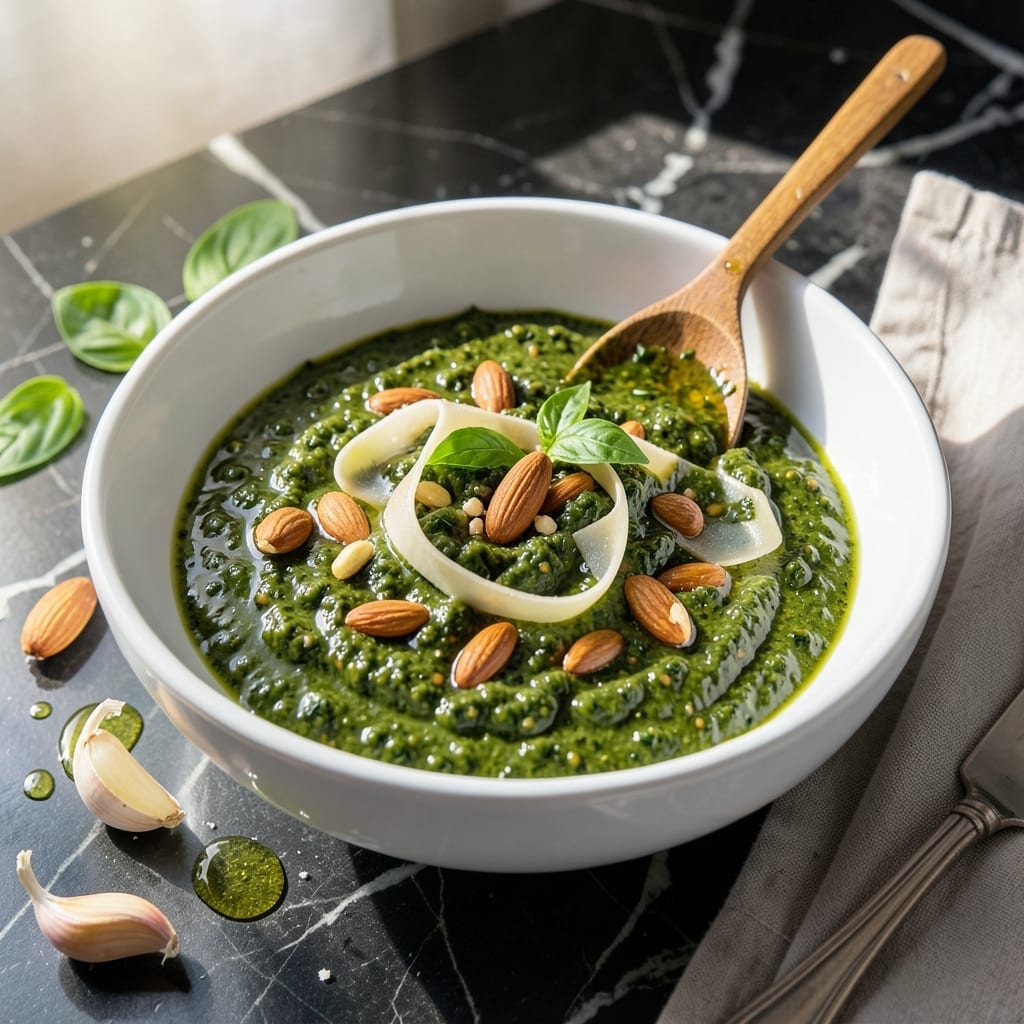
This almond pesto delivers a rich, nutty depth that perfectly complements fresh basil and Parmesan. I developed this variation to add a unique twist to classic pesto while keeping the preparation simple.
With just a few ingredients and a blender, you’ll create a versatile sauce that elevates pasta, sandwiches, or grilled vegetables. The almonds provide a satisfying texture and hearty flavor.
Ingredients for Pesto Sauce Recipe with Almonds
Eight premium ingredients transform into this versatile, nutty basil sauce with minimal effort.
| Ingredient | Amount | Notes |
|---|---|---|
| Fresh Basil Leaves 🌿 | 2 cups | Packed, stems removed |
| Raw Almonds 🥜 | ½ cup | Toasted for depth |
| Garlic Cloves 🧄 | 3 cloves | Peeled, rough chopped |
| Parmesan Cheese 🧀 | ¾ cup | Freshly grated from wedge |
| Extra-Virgin Olive Oil 🫒 | ¾ cup | High-quality, fruity |
| Lemon Juice 🍋 | 1 tbsp | Freshly squeezed |
| Sea Salt 🧂 | ½ tsp | Fine grain preferred |
| Freshly Ground Black Pepper 🌶️ | ¼ tsp | To taste |
[recipe_ingredient_scaler]
The basil must be vibrant—farmers market finds outperform grocery store containers. Whole Foods or specialty markets often carry superior Parmigiano-Reggiano wedges. Almonds should be raw and fresh; stale nuts develop bitterness. For optimal results, toast them lightly to enhance their natural oils. The olive oil quality directly impacts flavor—select cold-pressed, extra-virgin for best results.
No Parmesan? Pecorino Romano offers a sharper alternative. Almonds can be swapped for walnuts or cashews (equal amounts). If fresh basil is unavailable, use half the quantity of dried basil (though texture differs). Lemon juice can be replaced with white wine vinegar (1:1 ratio). The garlic quantity can be adjusted based on preference—some prefer a milder profile.
Store pesto in an airtight container with a thin layer of olive oil on top to prevent browning. Refrigerates for up to 5 days or freezes for 3 months. Portion into ice cube trays for convenient single-use amounts.
Why You’ll Love This Recipe
- Blitz in Minutes: I toss everything in the food processor and it’s ready before the pasta boils.
- Nutty Depth: Raw almonds give it a sweeter, richer kick than pine nuts, and the basil still shines through.
- Spreads Everywhere: I slather it on sandwiches, stir it into soups, and even dollop it on roasted veggies.
- Stays Fresh: A jar keeps in the fridge for a week, so I always have a quick flavor boost on hand.
Step-by-Step Instructions for Pesto Sauce With Almonds
Master the technique for this vibrant, nutty sauce that elevates any dish it touches.
Step 1: Toast the Almonds for Depth of Flavor
Heat a dry skillet over medium heat and add the 0.5 cup Raw Almonds. Toast for 4-6 minutes, stirring frequently, until the almonds turn light golden brown and release a nutty aroma. This step enhances their natural richness and prevents a raw aftertaste in the finished pesto.
Watch closely—almonds burn quickly once they start browning. Immediately transfer them to a plate to cool. This stops the cooking process and preserves their crisp texture. You’ll notice the color deepen slightly as they cool; this is normal.
Step 2: Pulse the Base Ingredients
In a food processor, combine the 2 cups Fresh Basil Leaves, toasted Raw Almonds, 3 cloves Garlic Cloves, 0.5 tsp Sea Salt, and 0.25 tsp Freshly Ground Black Pepper. Pulse in 1-second bursts until the mixture is finely chopped but not pureed. Stop and scrape down the sides as needed to ensure even processing.
The mixture should resemble coarse crumbs at this stage. Avoid over-processing, as this can make the pesto bitter. The basil leaves will release some moisture, but the texture should still have visible flecks of green and brown from the almonds.
Step 3: Emulsify with Cheese and Olive Oil
Add the 0.75 cup Parmesan Cheese to the food processor and pulse briefly to combine. With the processor running, slowly drizzle in the 0.75 cup Extra-Virgin Olive Oil in a thin, steady stream. This gradual addition is key to creating a smooth, creamy emulsion rather than a separated, oily mixture.
Stop the processor and scrape down the sides once or twice during this step. The pesto should thicken and become glossy as the oil incorporates. The texture will be thick but pourable—like a rich, vibrant sauce.
Step 4: Finish with Lemon Juice and Adjust Seasoning
Add the 1 tbsp Lemon Juice and pulse once or twice to incorporate. The acidity brightens the flavors and balances the richness of the olive oil and cheese. Taste and adjust the seasoning if needed—though the Sea Salt and Parmesan Cheese should provide enough saltiness for most palates.
If the pesto is too thick, you can thin it with an additional 1-2 tablespoons of Extra-Virgin Olive Oil. For best results, let it sit for 10-15 minutes at room temperature to allow the flavors to meld before serving.
Pro Tips For Making Pesto Sauce Recipe With Almonds
- Toast the Almonds: Lightly toasting the raw almonds in a dry pan for 2-3 minutes until fragrant brings out their natural oils and adds depth to the pesto. I learned this the hard way—untreated almonds can leave the sauce tasting flat.
- Blanch the Basil: Dip the basil leaves in boiling water for 10 seconds, then shock in ice water to lock in that bright green color. Sounds weird, but it works—your pesto will stay vibrant instead of turning dull.
- Skip the Over-blening: Pulse the ingredients in short bursts rather than letting the processor run continuously. After burning out two motors, I finally figured out that over-processing turns pesto into a bitter, pasty mess.
- Use Room-Temp Cheese: Take the Parmesan out of the fridge 30 minutes before blending—it grates smoother and incorporates better into the sauce. My grandmother swore by this, and she was right: cold cheese clumps and ruins the texture.
Regional Styles of This Recipe
🍝 Ligurian Style
The birthplace of pesto, Liguria in Italy, crafts the most traditional version of pesto sauce with almonds. Here, fresh Genovese basil, garlic, Pecorino Sardo or Parmigiano-Reggiano, and pine nuts are the stars, but almonds are a fantastic substitute for a nuttier twist. The sauce is made by grinding ingredients in a mortar and pestle for a rustic texture. Olive oil is slowly drizzled in to emulsify the mixture. This style is light, aromatic, and perfect for tossing with trofie pasta or spreading on focaccia.
🌿 Sicilian Style
Sicily puts its own spin on pesto by incorporating almonds as the primary nut, along with tomatoes, garlic, and basil. Known as pesto alla Trapanese, this version is slightly chunkier and often includes Pecorino cheese. The addition of tomatoes gives it a vibrant red hue and a slightly sweet, tangy flavor. It’s traditionally served with bucatini pasta and is a summer favorite in Trapani.
🧀 Californian Style
In California, pesto takes on a fresher, more experimental approach. Almonds are commonly used in place of pine nuts for their affordability and mild flavor. This style often includes arugula or spinach alongside basil, and sometimes even avocado for creaminess. The sauce is typically blended until smooth and paired with everything from pasta to grilled chicken or as a dip for crusty bread.
🌶️ Provencal Style
Hailing from the Provence region of France, this variation, known as pistou, is similar to pesto but often omits nuts entirely. However, when almonds are included, they add a delightful crunch. Garlic, basil, and Gruyère or Pecorino cheese are key, and the sauce is traditionally stirred into vegetable soups or served with boiled potatoes and green beans. It’s a simpler, heartier take on the classic.
Nutrition Facts

Trained in classic French technique but raised on slow-cooked ribs and spicy rubs, she blends culinary skill with smoke and soul.
- Recipe for Boneless Pork Chops in Cast Iron Skillet: Sear and Baste to Juicy Perfection - October 3, 2026
- Recipe for Boneless Cross Rib Roast: Slow-Roasted Beef with Herb Crust - October 3, 2026
- Hamburgers in Sauce Recipe Crock Pot: Slow-Cooked Savory Delight - October 3, 2026