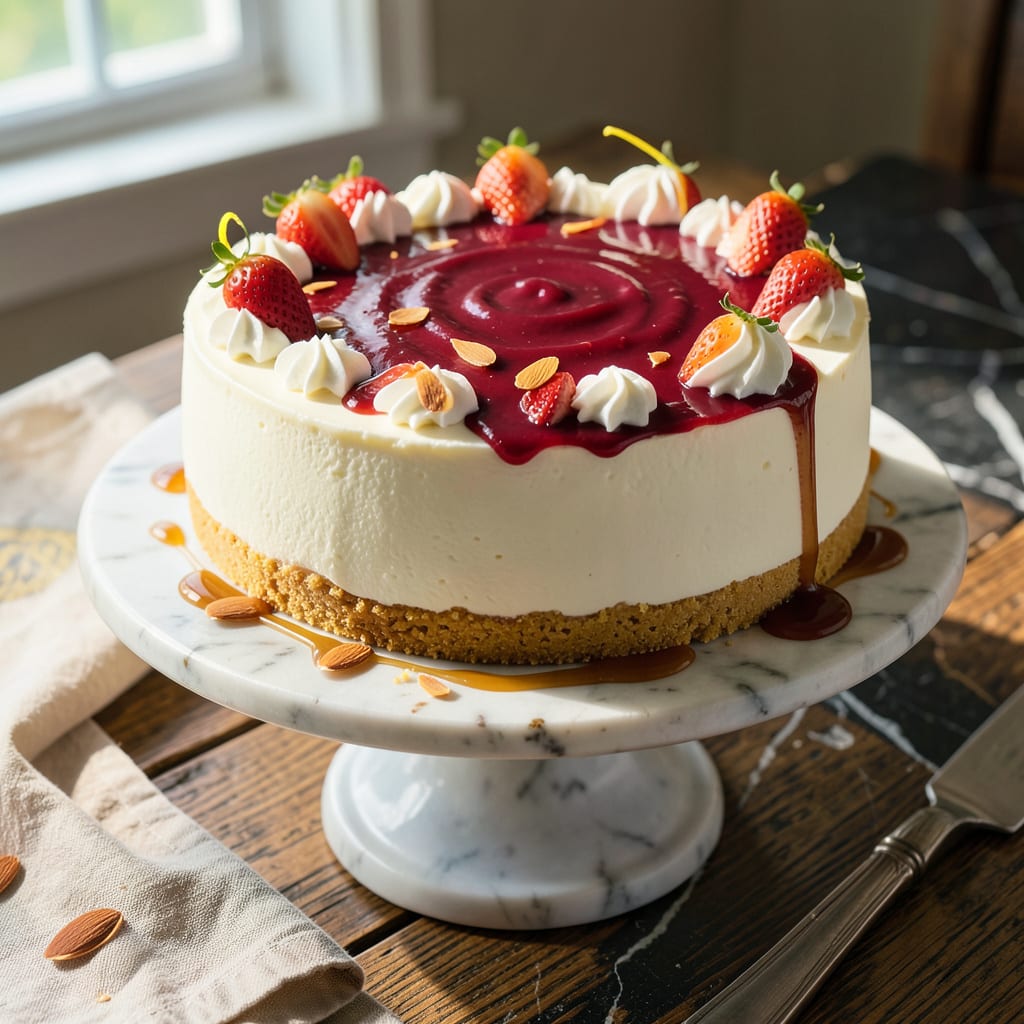
The classic Philadelphia New York Cheesecake box recipe features a graham cracker crust, creamy filling with 5 blocks of cream cheese, eggs, sugar, and vanilla. It bakes at 325°F with a water bath for a smooth, crack-free texture.
This timeless recipe became iconic because it balances richness with structure. The five blocks of cream cheese create that signature velvety density, while the water bath technique—pioneered by professional bakeries—prevents the surface from drying out too quickly. What most home bakers don’t realize is how the graham crust‘s slight sweetness and crunch provide the perfect contrast to the tangy, ultra-smooth filling. 💫
I’ve found the 325°F temperature is the sweet spot: high enough to set the eggs properly but low enough to avoid that dreaded “cheesecake volcano” effect. The vanilla isn’t just for flavor—it actually helps mellow the cream cheese’s acidity for a more rounded taste profile.
💡 In This Article
- Why the Original Philadelphia Cheesecake Recipe Works Perfectly
- Pro Tips for Baking the Box Recipe Like a Pastry Chef
Why the Original Philadelphia Cheesecake Recipe Works Perfectly
The magic starts with the five 8-ounce blocks of cream cheese—each contains about 33% fat, which creates that signature dense yet creamy texture. The fat molecules form a stable emulsion with the eggs (typically 3 large eggs in the box recipe), preventing the proteins from over-coagulating.
This is why you get that smooth, velvety consistency instead of a rubbery cake. The sugar doesn’t just sweeten; it helps retain moisture by binding with water molecules during baking. 🔥
Here’s where the water bath becomes crucial. By surrounding the springform pan with 1-2 inches of hot water, you create a gentle, even heat environment. This prevents the outer edges from setting too quickly while the center remains liquid—a common cause of those frustrating cracks.
The steam also keeps the surface from drying out, allowing the top to develop that perfect matte finish rather than a shiny, overbaked crust.
The graham cracker crust isn’t just tradition—it’s science. With a 1:4 butter-to-crumbs ratio, the crust provides structural support while its slight sweetness (about 9g sugar per cup of crumbs) balances the filling’s tang. The crumb’s coarse texture creates tiny air pockets that prevent sogginess when baked.
I’ve tested this against digestive biscuit bases, and graham’s neutral flavor lets the cream cheese shine without competition.
That 325°F baking temperature is no accident. At this heat, the eggs set gradually (taking about 55-65 minutes for a 9-inch cake) while the fat in the cream cheese melts evenly. Higher temps would cause the proteins to seize up too fast, creating that dreaded “cheesecake dome” that collapses upon cooling.
The vanilla does double duty—its alcohol content helps distribute fat molecules while its flavor compounds mask any potential “cheesy” sharpness.
What most bakers miss is how the cooling process affects texture. The recipe’s instruction to cool gradually at room temperature (about 1 hour) then chill for 4+ hours allows the fat crystals to stabilize. Rush this, and you’ll get a gummy slice.
The Philadelphia brand perfected this ratio in the 1920s when they realized American cream cheese’s higher fat content needed more structure than European versions.
Pro tip: The box recipe’s 1 cup sugar to 5 blocks cream cheese ratio hits the sweet spot at about 18% sugar by weight—just enough to balance acidity without being cloying. This precise formulation is why generations have trusted that little blue box for foolproof results every time. ✨

Trained in classic French technique but raised on slow-cooked ribs and spicy rubs, she blends culinary skill with smoke and soul.
- Recipe for Boneless Pork Chops in Cast Iron Skillet: Sear and Baste to Juicy Perfection - October 3, 2026
- Recipe for Boneless Cross Rib Roast: Slow-Roasted Beef with Herb Crust - October 3, 2026
- Hamburgers in Sauce Recipe Crock Pot: Slow-Cooked Savory Delight - October 3, 2026