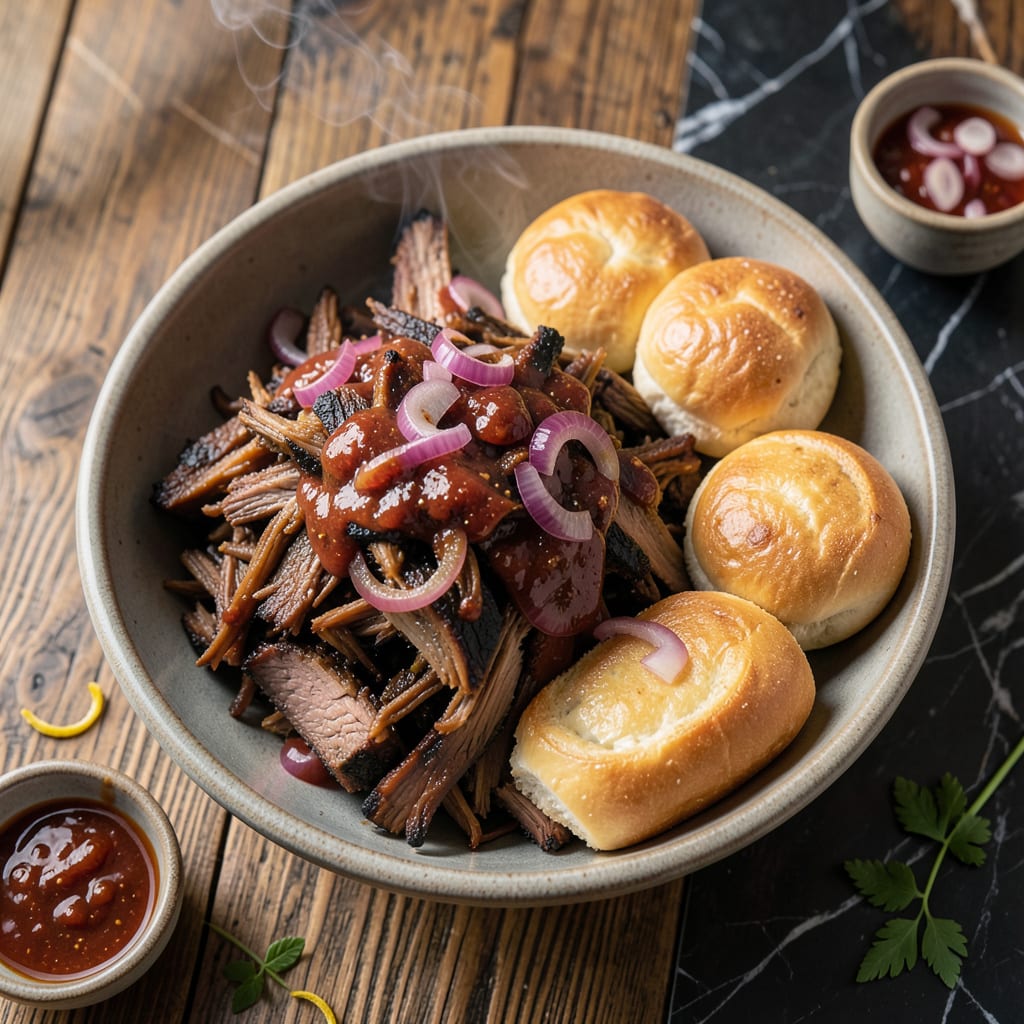
Getting my first whiff of hickory smoke at a family cookout sparked my obsession with perfect pulled pork. This San Diego-style method delivers tender, smoky results every time.
Slow-smoked pork shoulder, a bold dry rub, and tangy sauce create that signature Phil’s BBQ flavor. The meat falls apart effortlessly, ready for sandwiches or plates.
Ingredients for Phil’s Bbq Pulled Pork
Pantry staples meet bold flavors for that signature San Diego BBQ experience at home.
| Ingredient | Amount | Notes |
|---|---|---|
| Pork Shoulder 🥩 | 5 lb | Bone-in, well-marbled preferred |
| Hickory Wood Chunks 🪵 | 3 lb | For authentic smoky flavor |
| Brown Sugar 🍚 | ½ cup | Light or dark variety |
| Paprika 🌶️ | 2 tbsp | Sweet or smoked variety |
| Garlic Powder 🧄 | 1 tbsp | Not garlic salt |
| Onion Powder 🧅 | 1 tbsp | Fresh ground preferred |
| Coarse Salt 🧂 | 1 tbsp | Kosher or sea salt |
| Black Pepper 🌶️ | 1 tbsp | Freshly ground preferred |
| Chili Powder 🌶️ | 1 tbsp | Mild or hot variety |
| Cayenne Pepper 🔥 | ½ tsp | Adjust for heat preference |
| Apple Cider Vinegar 🍏 | ½ cup | For tangy sauce base |
| Ketchup 🍅 | 1 ½ cups | Quality brand recommended |
| Worcestershire Sauce 🫒 | 2 tbsp | Anchovy-free if preferred |
| Mustard 🟡 | 2 tbsp | Yellow or Dijon variety |
| Molasses 🫙 | 2 tbsp | For depth of flavor |
[recipeingredientscaler]
The pork shoulder is non-negotiable for that fall-apart texture. Costco has great pre-packaged options, but ask your local butcher for a Boston butt with good marbling. Hickory chunks (not chips) give you that long, slow burn—Lowe’s or Home Depot usually stock them. For the dry rub, Penzeys spices are top-tier if you’re feeling fancy, but grocery store brands work fine too.
No hickory? Pecan or apple wood gets you close. Swap brown sugar for turbinado if you want crunch. Out of apple cider vinegar? White vinegar plus a pinch of sugar works in a pinch. The sauce is flexible—add a splash of bourbon if you want it boozy, or honey if you prefer it sweeter (just don’t tell the purists).
Smoked pork keeps 4-5 days in the fridge, freezes for 3 months. The sauce? 1 week refrigerated, but it’s so good you’ll use it up fast. Reheat meat gently with a splash of water or sauce to keep it moist.
Why You’ll Love This Recipe
- I’ll be real: the leftovers taste even better the next day, and they freeze beautifully for quick meals later.
- Set and Forget: I toss the pork shoulder in the morning with just brown sugar, paprika, and garlic powder, then let the smoker do the work for hours.
- Smoky Sweet Perfection: The hickory wood chunks infuse this pulled pork with a deep, rich flavor that pairs perfectly with the caramelized brown sugar crust.
- Feeds the Whole Crew: Between us, this makes enough for a crowd, and it’s just as good piled on buns as it is in tacos or salads.
Step-by-Step Instructions for San Diego-Style Smoked Pulled Pork
This is the method I’ve perfected over years of backyard smoking sessions.
Step 1: Season and Prep the Pork Shoulder
Pat the 5 lb Pork Shoulder dry with paper towels to ensure the rub adheres properly. In a bowl, combine the 0.5 cup Brown Sugar, 2 tbsp Paprika, 1 tbsp Garlic Powder, 1 tbsp Onion Powder, 1 tbsp Coarse Salt, 1 tbsp Black Pepper, 1 tbsp Chili Powder, and 0.5 tsp Cayenne Pepper.
Massage this rub all over the pork shoulder, pressing it into every crevice. Let it sit at room temperature for 30-45 minutes while you prepare your smoker—this rest allows the spices to penetrate and the meat to cook more evenly.
Step 2: Smoke the Pork Low and Slow
Preheat your smoker to 225-250°F using the 3 lb Hickory Wood Chunks for that authentic San Diego BBQ flavor. Once the smoker is stable and producing thin, blue smoke, place the pork shoulder on the grates, fat-side up.
Smoke undisturbed for 6-8 hours until the internal temperature reaches 165-170°F. Resist the urge to peek—every time you open the lid, you lose heat and add to your cooking time. The pork should develop a deep mahogany bark on the outside.
Step 3: Wrap and Continue Cooking
When the pork hits the stall (temperature stops rising), wrap it tightly in aluminum foil or butcher paper. This step, called the “Texas crutch,” helps push through the stall while keeping the meat moist. Return it to the smoker.
Continue cooking until the internal temperature reaches 200-205°F and the pork is probe-tender—this usually takes another 4-6 hours. The meat should pull apart easily with a fork when done.
Step 4: Rest and Pull the Pork
Remove the pork from the smoker and let it rest, wrapped, for at least 1 hour. This rest allows the juices to redistribute, ensuring every bite is tender and flavorful.
Unwrap the pork and use two forks to pull it into shreds. Discard any large fat chunks, but leave some for flavor. The pulled pork should be moist, smoky, and ready to soak up any sauce you add.
Step 5: Make the Sauce and Serve
In a saucepan, combine the 0.5 cup Apple Cider Vinegar, 1.5 cups Ketchup, 2 tbsp Worcestershire Sauce, 2 tbsp Mustard, and 2 tbsp Molasses. Simmer over medium heat for 10-15 minutes until thickened.
Toss the pulled pork with as much sauce as you like, or serve it on the side for dipping. The sauce should be tangy, slightly sweet, and rich—perfect for balancing the smoky pork. Serve immediately on buns or as a main dish.
Pro Tips For Making Phil’S Bbq Pulled Pork
- Low and Slow Wins: Keep your smoker between 225-250°F and give the pork shoulder at least 8 hours—rushing it with higher heat just makes the meat tough and chewy. I learned this the hard way after pulling dry pork off the grill at hour 4.
- Soak the Hickory: Submerge those hickory wood chunks in water for at least 30 minutes before smoking. Sounds weird, but it works: prevents them from burning too fast and gives you that steady, smoky flavor Phil’s recipe is known for.
- Skip the Early Sauce: Resist the urge to baste with BBQ sauce before the pork hits 160°F internally—it’ll just burn and turn bitter. Wait until the last hour or after pulling to mix it in.
- Rest Under Foil: Once it’s done, tent the pork with foil and let it rest for 30 minutes before shredding. This isn’t the prettiest method, but it’s the tastiest—locks in all the juices so they don’t end up on your cutting board.
Common Mistakes When Making Great phils bbq pulled pork
Rushing the Process
Low and slow is non-negotiable for pulled pork. I’ve seen friends pull meat at 180°F thinking it’s done—it’ll be tough and stringy. That final push to 200-205°F breaks down collagen into gelatin, creating that buttery texture Phil’s is famous for. 💡
Skipping the Rest
After smoking, the pork needs at least 1 hour to rest wrapped. Cutting too soon sends all those juices onto your cutting board instead of staying in the meat. I once served a batch right off the smoker—dry as a desert, and my family never let me forget it.
Over-Smoking
More smoke isn’t better. After 6-8 hours with hickory, the pork has absorbed all it can. Adding extra wood just makes it bitter. That deep mahogany bark you want forms naturally without overpowering the flavor.
Poor Wrapping Technique
When wrapping for the Texas crutch, seal it tight—no gaps. I use heavy-duty foil and double-wrap for insurance. Loose wrapping lets steam escape, drying out the meat and defeating the purpose of this crucial step.
Neglecting the Stall
The stall happens around 165°F when evaporative cooling slows the cook. Don’t panic and crank the heat. That’s when wrapping becomes your best friend, powering through without sacrificing moisture. Patience wins every time.
Drowning in Sauce
Phil’s sauce is legendary, but it should complement, not smother. Toss the pork with ½ cup sauce per 1 lb, then let guests add more. The meat’s smoky flavor should shine through, not get lost in a sea of sauce.
Nutrition Facts

Trained in classic French technique but raised on slow-cooked ribs and spicy rubs, she blends culinary skill with smoke and soul.
- Recipe for Boneless Pork Chops in Cast Iron Skillet: Sear and Baste to Juicy Perfection - October 3, 2026
- Recipe for Boneless Cross Rib Roast: Slow-Roasted Beef with Herb Crust - October 3, 2026
- Hamburgers in Sauce Recipe Crock Pot: Slow-Cooked Savory Delight - October 3, 2026