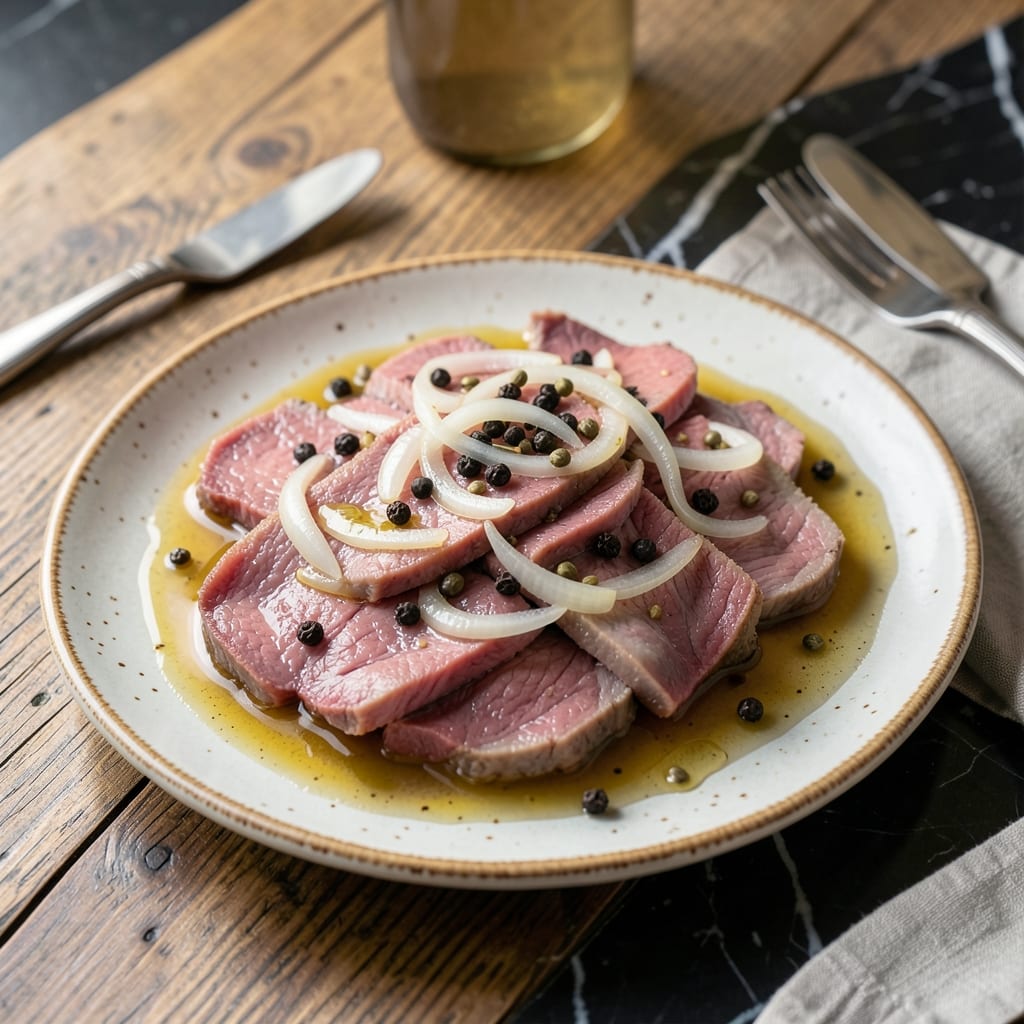
Achieving perfect pickled beef at home transforms deli-style sandwiches into something extraordinary. This method delivers tender, tangy meat with the ideal balance of acidity and spice.
The brining process is straightforward yet precise, requiring just a few days of patience. Thinly sliced beef absorbs the vinegar-based solution, developing complex flavors that improve with time.
What emerges is meat with a firm texture and bright, zesty character that cuts through rich sandwich components. The tangy brine penetrates every bite without overpowering the beef’s natural taste.
This technique works for both hot and cold sandwiches, offering versatility that makes it a kitchen staple. The results speak for themselves.
Ingredients for Pickled Beef
Transform deli sandwiches with these precise ingredients for tangy, tender pickled beef perfection.
| Ingredient | Amount | Notes |
|---|---|---|
| Beef Round 🥩 | 2 lb | Thinly sliced against grain |
| White Vinegar 💧 | 2 cups | 5% acidity standard |
| Apple Cider Vinegar 🍎 | 1 cup | Adds depth to brine |
| Water 💧 | 1 cup | Filtered preferred |
| Kosher Salt 🧂 | ¼ cup | Diamond Crystal brand |
| Granulated Sugar 🍚 | ¼ cup | Balances acidity |
| Black Peppercorns 🌶️ | 1 tbsp | Whole, lightly crushed |
| Mustard Seeds 🌿 | 1 tbsp | Yellow or brown variety |
| Bay Leaves 🍃 | 4 whole | Dried, whole leaves |
| Garlic Cloves 🧄 | 6 cloves | Peeled, smashed |
| Red Pepper Flakes 🌶️ | 1 tsp | Adjust for heat preference |
| Juniper Berries 🍇 | 1 tsp | Lightly crushed |
[recipe_ingredient_scaler]
The beef selection is critical here. Top round or eye of round provides the ideal texture for thin slicing—lean yet tender after brining. Whole Foods or a trusted butcher will have quality cuts. Avoid pre-sliced beef as it loses too much moisture. Request the meat be sliced to 1/8-inch thickness directly from the whole piece for optimal results.
No juniper berries? Allspice berries at equal quantity offer a similar piney note. White wine vinegar can replace apple cider in a pinch, though the flavor profile will shift slightly. If reducing sugar, increase by 1 tbsp for every cup of vinegar to maintain balance. Mustard seeds can be swapped for coriander seeds if preferred.
The pickled beef keeps beautifully. Submerged in brine, it remains at peak quality for 3-4 weeks refrigerated. For longer storage, process in sterilized jars for up to 6 months. Always use clean utensils when removing slices to prevent contamination of the brine.
Why You’ll Love This Recipe
- Set and Forget: I mix the vinegar, water, and salt in the morning, drop in the beef, and let the fridge do the work.
- Tangy Punch: The blend of white vinegar and apple cider vinegar gives it that bright, zingy kick I crave.
- Sandwich Savior: Honestly, it turns a plain bread roll into something I’d serve at a picnic.
- Budget Stretcher: A cheap beef round cut soaks up flavor and feeds my family for days.
Step-by-Step Instructions for Pickled Beef
Here’s the method. Straightforward, tested, works every time.
Step 1: Prepare and Slice the Beef Round
Begin by partially freezing the 2 lb Beef Round for 30-45 minutes to firm it up—this makes slicing much easier. Using a sharp knife, cut the beef against the grain into ⅛- to ¼-inch thick slices. This thickness ensures the brine penetrates evenly while maintaining the meat’s structural integrity.
Slicing against the grain shortens the muscle fibers, resulting in a more tender final product. Arrange the slices in a single layer on a clean surface while you prepare the brine. This step is crucial for achieving the perfect texture in your pickled beef.
Step 2: Combine Brine Ingredients
In a medium saucepan, combine the 2 cups White Vinegar, 1 cup Apple Cider Vinegar, 1 cup Water, ¼ cup Kosher Salt, and ¼ cup Granulated Sugar. Heat over medium-high heat until the salt and sugar fully dissolve, stirring occasionally to speed the process.
Once dissolved, remove from heat and add the 1 tbsp Black Peppercorns, 1 tbsp Mustard Seeds, 4 whole Bay Leaves, 6 cloves Garlic Cloves, 1 tsp Red Pepper Flakes, and 1 tsp Juniper Berries. Stir to distribute the spices evenly throughout the brine. The mixture should be fragrant and slightly steaming.
Step 3: Cool and Submerge the Beef
Allow the brine to cool completely to room temperature—this typically takes 30-45 minutes. Pouring hot brine over the beef can cook it and result in a tough texture rather than the desired pickled consistency.
Once cooled, place the sliced beef in a non-reactive container (glass or food-grade plastic) and pour the brine over it. Ensure all slices are fully submerged; if necessary, use a small plate or weight to keep them below the surface. This complete submersion is essential for consistent flavor and preservation.
Step 4: Refrigerate for Optimal Flavor Development
Cover the container tightly and refrigerate for at least 3 days, but ideally for 5-7 days. The longer it sits, the more pronounced and well-rounded the flavors become. During this time, the acid in the vinegars will gradually cure the beef, transforming its texture while infusing it with the complex spice blend.
Check the container after 24 hours to ensure the beef remains submerged. If any slices have risen to the surface, press them back down to maintain even brining. The beef should become noticeably firmer and take on a slightly translucent appearance as it cures.
Step 5: Slice and Store for Use
Once fully pickled, remove the beef from the brine and pat it dry with paper towels if desired, though some moisture is normal. The beef can be stored in an airtight container in the refrigerator for up to 3 weeks, with the brine fully covering it to maintain freshness and flavor.
For sandwiches, slice the pickled beef thinly against the grain. The texture should be firm yet tender, with a tangy, well-balanced flavor that cuts through rich meats and cheeses. The spices will have mellowed into a harmonious backdrop rather than standing out as individual notes.
Pro Tips For Making Pickled Beef
- Slice Against the Grain: I learned this the hard way—cutting beef round with the grain makes it chewy. For tender pickled beef, slice thinly across the muscle fibers before brining.
- Use Both Vinegars: Apple cider vinegar adds depth, but white vinegar keeps the color bright. I was skeptical until I tried it, but the combo actually changes the outcome.
- Don’t Skip the Salt Rub: Sounds weird, but it works: dry-cure the beef with kosher salt for 12 hours before adding vinegars. This isn’t the prettiest method, but it guarantees even flavor penetration.
- Keep It Cold: After burning through a few batches, I finally figured out pickled beef needs to stay refrigerated during the entire brining process—room temp turns the texture mushy.
Perfect Pairings for These Flavors
Sandwich Pairings
For the ultimate deli experience, layer this beef on rye bread with Swiss cheese and a smear of spicy mustard. The tangy beef cuts through the richness perfectly. I love adding sauerkraut for extra crunch and acidity. 🥪
Beer Matches
A crisp pilsner like Samuel Adams Noble Pils complements the vinegar tang beautifully. For darker beers, try a malty amber ale—the caramel notes balance the acidity. Avoid hoppy IPAs that can clash with the brine.
Wine Options
Dry white wines work best here. A chilled Sauvignon Blanc from New Zealand brings citrus notes that echo the pickle. For reds, a light Pinot Noir won’t overpower the beef’s delicate flavor. 🍷
Side Dishes
Pickled vegetables like cucumbers or carrots double down on the tangy theme. A simple green salad with lemon vinaigrette adds freshness. I also enjoy potato chips for a satisfying crunch contrast.
For heartier meals, serve with roasted potatoes or a warm grain salad. The beef’s acidity brightens these earthy sides beautifully.
Nutrition Facts
Frequently Asked Questions
How long does the brining process take?
For best flavor, brine the beef for 5-7 days in the refrigerator. You can start tasting after 3 days, but the tangy depth improves with more time.
Can I reuse the leftover brine?
It’s not recommended. The brine absorbs raw meat juices, making it unsafe for reuse. Always discard used brine and make fresh for each new batch.
What’s the best cut for pickling?
Top round or eye of round works perfectly. These lean cuts stay tender when sliced thinly against the grain. Avoid fatty cuts as they don’t absorb the brine as well.
How can I tell when it’s done?
The beef is ready when it turns slightly translucent and feels firm to the touch. The color will lighten, and the spices will mellow into the meat.

Trained in classic French technique but raised on slow-cooked ribs and spicy rubs, she blends culinary skill with smoke and soul.
- Meat Loaf Recipe With Beef And Pork: Homestyle Blend With Rich Gravy - October 3, 2026
- Hamburger Patty Recipe No Egg: Juicy Bind With Breadcrumbs and Milk - October 3, 2026
- Recipe for Oven Baked Halibut: Buttery White Fish with Zesty Lemon Topping - October 3, 2026