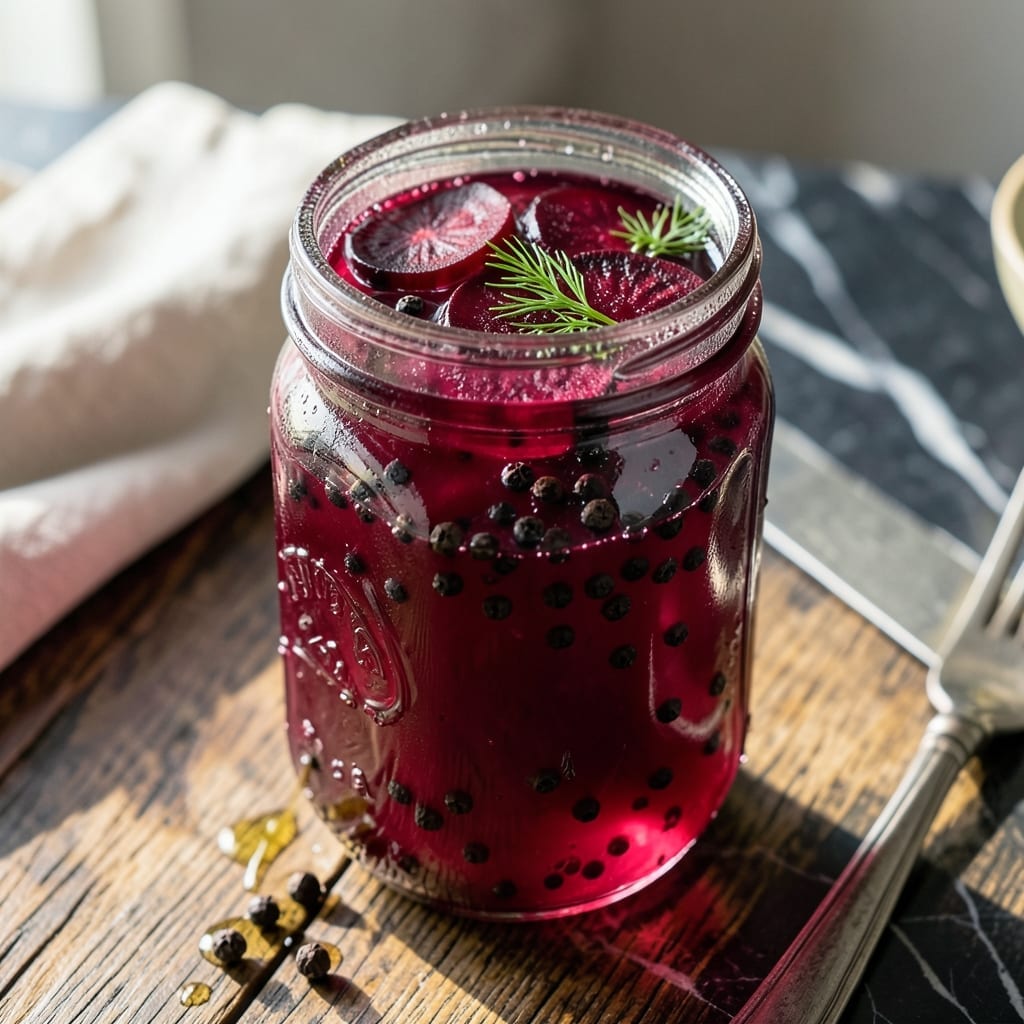
This vibrant ruby elixir transforms simple beets into a versatile liquid gold for your culinary creations. The process is straightforward yet yields complex, tangy-sweet depth that elevates both cocktails and dressings.
I developed this method to capture the essence of pickled beets in liquid form, creating a multipurpose ingredient that works as a cocktail mixer, salad dressing base, or even a glaze for roasted vegetables. The fermentation step intensifies the flavor naturally.
The result is a bright, slightly acidic juice with earthy beet undertones and a stunning magenta hue. It keeps beautifully in the refrigerator, allowing you to add a pop of color and flavor to dishes on demand.
Use it to craft unique cocktails, drizzle over goat cheese, or whisk into vinaigrettes. This creation opens up endless possibilities.
Ingredients for Pickled Beet Juice
Transform simple beets into a vibrant, multipurpose liquid with these pantry staples and fresh produce.
| Ingredient | Amount | Notes |
|---|---|---|
| Fresh Beets 🍠 | 2 lb | Peeled, medium-sized for best flavor |
| Apple Cider Vinegar 🍏 | 1 ½ cups | Raw, unfiltered preferred |
| Water 💧 | 1 ½ cups | Filtered for purity |
| Granulated Sugar 🍚 | ½ cup | Organic or raw cane sugar |
| Sea Salt 🧂 | 1 tbsp | Fine grain for even dissolve |
| Black Peppercorns 🌶️ | 1 tsp | Whole, lightly crushed |
| Yellow Mustard Seeds 🌿 | 1 tsp | Whole for fermentation |
| Bay Leaf 🍃 | 1 whole | Dried, for depth |
| Garlic Cloves 🧄 | 3 cloves | Smashed for aroma release |
[recipe_ingredient_scaler]
The beets are the soul here—local farmers markets often have the most flavorful, earthy ones (look for firm, unblemished skins). For vinegar, Bragg is my go-to, but any raw, unfiltered apple cider vinegar works. I avoid white vinegar—it lacks the fruit-forward depth. Sugar choice matters less, but avoid honey to keep it vegan. Whole Foods has great bulk spices if you need to restock peppercorns or mustard seeds.
No apple cider vinegar? Red wine vinegar at half the amount keeps the tang but adds a different fruit note. Short on sugar? Maple syrup at three-quarters the quantity works (and adds complexity). Skip the mustard seeds if needed—they add texture but aren’t essential. For a quicker version, pre-cooked beets (vacuum-sealed, not pickled) cut the time in half, though the flavor won’t develop as deeply.
This keeps for 3-4 weeks in the fridge in a sealed glass jar. The flavor deepens over the first week as fermentation continues. Freeze in ice cube trays for 6 months if you’ve made too much (perfect for single-serving cocktails later).
Why You’ll Love This Recipe
- 20-Minute Magic: I can have this simmering on the stove faster than it takes to peel the beets.
- Tangy Sweet Balance: The apple cider vinegar and sugar create that perfect bright-sweet zing that makes my taste buds dance.
- Meal Prep MVP: I pour this over salads all week, and it keeps getting better in the fridge.
- Pantry Hero: Five ingredients I always have on hand, and it turns humble beets into something extraordinary.
Step-by-Step Instructions for Pickled Beet Juice
Transform your fresh beets into a vibrant, tangy elixir with this straightforward pickling method.
Step 1: Prepare and Roast the Fresh Beets
Preheat your oven to 400°F. While it heats, scrub the 2 lb Fresh Beets thoroughly under cool water to remove any dirt. Trim off the tops and roots, then peel them carefully—this prevents earthy flavors from overpowering your juice.
Wrap the peeled beets individually in foil to trap steam, which keeps them moist during roasting. Place them on a baking sheet and roast for 45-60 minutes, or until they’re tender enough to pierce easily with a knife. The beets should be fork-tender but not mushy, as they’ll soften further during the pickling process.
Step 2: Create the Pickling Brine
In a medium saucepan, combine the 1.5 cups Apple Cider Vinegar, 1.5 cups Water, 0.5 cup Granulated Sugar, and 1 tbsp Sea Salt. Bring the mixture to a gentle boil over medium-high heat, stirring occasionally until the sugar and salt fully dissolve.
Once dissolved, reduce the heat to low and add the 1 tsp Black Peppercorns, 1 tsp Yellow Mustard Seeds, 1 whole Bay Leaf, and 3 cloves Garlic Cloves. Let the brine simmer for 5 minutes to allow the spices to infuse the liquid with their aromatic flavors.
Step 3: Blend and Strain for Smooth Juice
When the beets are cool enough to handle, chop them into rough chunks and place them in a blender. Add about ½ cup of the hot brine to help with the blending process. Pulse until the beets are completely liquefied into a smooth, deep ruby puree.
Position a fine-mesh strainer over a large bowl or pitcher and pour the beet puree through it. Use a spoon or spatula to press down gently on the solids, extracting every last drop of vibrant juice. Discard the pulp left in the strainer—it’s done its job.
Step 4: Combine and Chill the Pickled Beet Juice
Pour the strained beet juice into the remaining hot brine in the saucepan. Stir well to combine, then let the mixture cool to room temperature. Taste and adjust seasoning if needed—though the flavors will meld and mellow as it chills.
Transfer the mixture to a clean glass jar or bottle and refrigerate for at least 4 hours, or preferably overnight. This chilling time allows the flavors to fully develop, giving you that perfect balance of earthy beets, tangy vinegar, and warm spices.
Pro Tips For Making Pickled Beet Juice
- Roast Beets First: Toss whole beets in oil and roast at 400°F for 45-60 minutes until tender—it deepens their sweetness and makes peeling a breeze.
- Use Raw Vinegar: Skip the pre-boiled vinegar; raw apple cider vinegar with the mother gives the brine a tangier, more complex flavor that shines in the juice.
- Skip the Peel: After roasting, the skins slip right off with a paper towel—no need for a messy pre-peel, and you avoid losing half the beet to your fingers.
- Balance the Brine: Taste as you go: 1 part sugar to 1 part salt in the brine keeps the juice from being cloyingly sweet or harshly sour—I learned this the hard way after ruining two batches.
Pro Cooking Tips for Perfect Results
Brine Balance
I always taste my brine before adding the beets—it should be tangy with a hint of sweetness. If it’s too sharp, add 1-2 tbsp more sugar. The ratio of 1:1 vinegar to water creates a balanced base that won’t overpower the beets’ natural earthiness.
Blending Technique
For ultra-smooth juice, blend the roasted beets in batches with ½ cup brine per 1 lb beets. A high-speed blender like Vitamix works best, but any blender will do. Pulse first, then blend continuously for 30-45 seconds until completely liquid.
Straining Secrets
Use a fine-mesh strainer lined with cheesecloth for the clearest juice. Press gently—don’t force it, or you’ll get bitter pulp in your final product. I compost the leftover pulp; it’s full of fiber and nutrients. 🌱
Fermentation Boost
For deeper flavor, let the strained juice sit at room temperature for 12-24 hours before refrigerating. Cover loosely with a cloth to allow airflow while keeping debris out. The spices will continue to develop complexity during this time.
Equipment Care
Vinegar can corrode metal over time, so I always use glass or ceramic containers for storage. Mason jars are perfect—they’re airtight and let you admire that stunning magenta color. Label with the date; the juice peaks in flavor at 2 weeks. 💡
Flavor Testing
After chilling, taste again and adjust. Need more tang? Add 1 tbsp vinegar. Want it sweeter? Stir in 1 tsp sugar until dissolved. The flavor will soften slightly as it continues to meld in the fridge.
Nutrition Facts
Frequently Asked Questions
What can I use this juice for?
Use it as a base for cocktails, mix into vinaigrettes, or drizzle over roasted veggies. It adds vibrant color and tangy depth to dishes.
How long does it need to chill?
Refrigerate for at least 4 hours, but overnight is ideal. This allows flavors to fully develop and meld together.
Can I use canned beets?
Fresh beets work best for vibrant flavor, but canned (in water, not pickled) can be used. Reduce roasting time to 20-30 minutes since they’re pre-cooked.
Why did my juice turn cloudy?
Cloudiness usually means pulp wasn’t fully strained. Use a fine-mesh strainer lined with cheesecloth for crystal-clear results.

Trained in classic French technique but raised on slow-cooked ribs and spicy rubs, she blends culinary skill with smoke and soul.
- Recipe for Boneless Pork Chops in Cast Iron Skillet: Sear and Baste to Juicy Perfection - October 3, 2026
- Recipe for Boneless Cross Rib Roast: Slow-Roasted Beef with Herb Crust - October 3, 2026
- Hamburgers in Sauce Recipe Crock Pot: Slow-Cooked Savory Delight - October 3, 2026