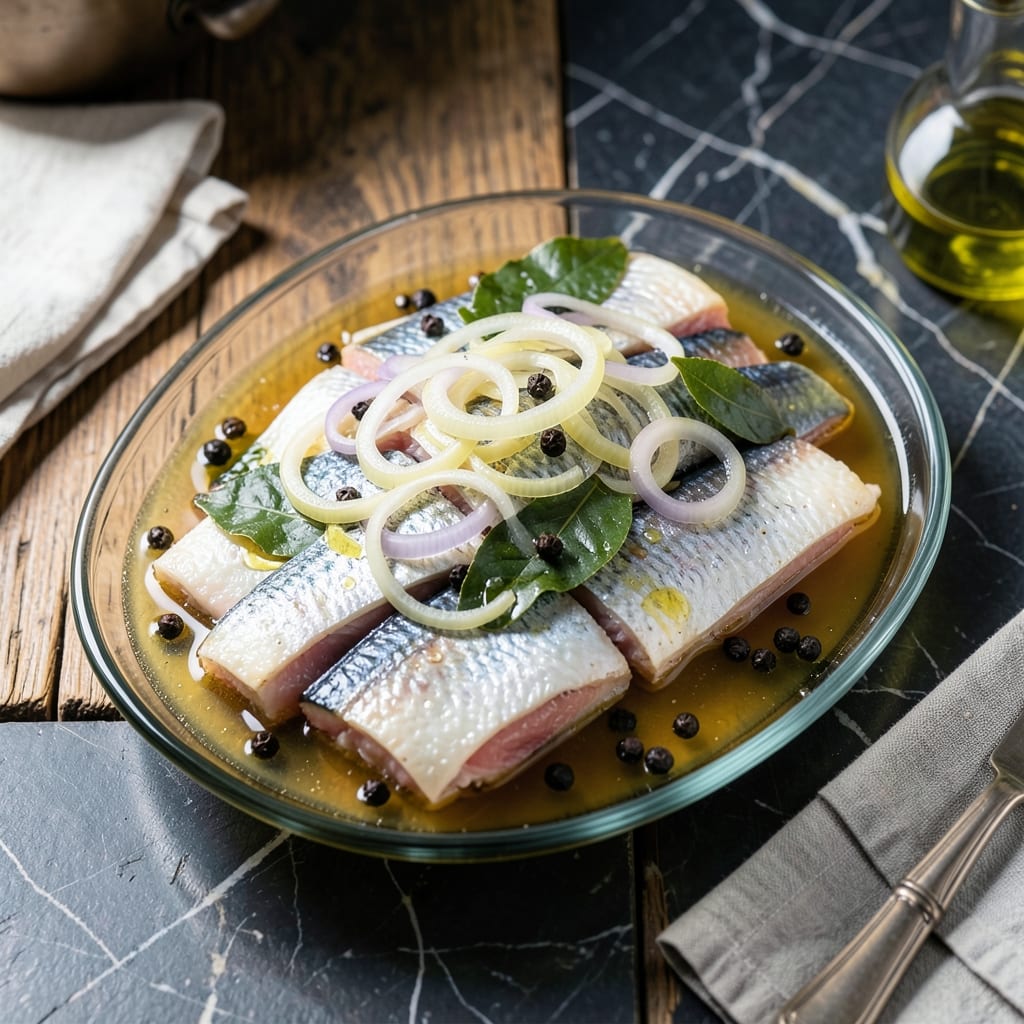
This Nordic pickled herring recipe delivers bold, briny-sweet flavors with minimal effort.
Traditional preparation involves a simple cure of salt and sugar, followed by a tangy vinegar marinade with sliced onions and fresh dill. The process transforms fresh herring into a delicacy that keeps well in the refrigerator for weeks.
What sets this dish apart is the balance of sweet, salty, and sour notes that develop during the marinating process. The herring becomes tender and fragrant, absorbing the aromatic flavors of the dill and onions.
Serve it chilled with rye bread or as part of a smorgasbord. This method preserves authenticity while keeping the technique accessible.
Ingredients for Pickled Herring
Fresh herring, a simple cure, and aromatic marinade create this traditional Nordic dish.
| Ingredient | Amount | Notes |
|---|---|---|
| Fresh Herring Fillets 🐟 | 1 ½ lb | Skin-on, deboned, cut into strips |
| Kosher Salt 🧂 | ½ cup | Diamond Crystal preferred for curing |
| Granulated Sugar 🍚 | ¼ cup | Balances brine sweetness |
| White Wine Vinegar 🍷 | 1 ½ cups | Quality brand for clean tang |
| Water 💧 | 1 cup | Filtered cold water |
| Yellow Onion 🧅 | 1 whole | Thinly sliced into crescents |
| Fresh Dill 🌿 | ½ cup | Coarsely chopped, stems included |
| Black Peppercorns 🌶️ | 2 tsp | Lightly crushed for aroma |
| Bay Leaves 🍃 | 2 pieces | Dried, whole leaves |
| Mustard Seeds 🌿 | 1 tsp | Yellow or brown variety |
| Allspice Berries 🌰 | 6 pieces | Lightly crushed for infusion |
| Lemon Zest 🍋 | 1 tbsp | From organic lemon preferred |
[recipe_ingredient_scaler]
The herring quality is paramount. Source fresh, sushi-grade fillets from a reputable fishmonger or Whole Foods seafood counter. Look for firm, glossy flesh with a mild ocean scent—avoid any fishy aroma. For the salt cure, Diamond Crystal kosher salt dissolves cleanly and evenly, which is critical for proper curing. The vinegar should be a good white wine variety; Colavita or Lucini offer consistent acidity without harsh aftertastes.
No fresh dill? Dried dill at one-third the amount works in a pinch, though the flavor won’t be as vibrant. Short on allspice berries? A pinch of ground allspice can substitute, but whole berries infuse better. If white wine vinegar is unavailable, apple cider vinegar adds a fruitier note. The sugar can be reduced slightly, but don’t omit it entirely—it’s essential for balancing the brine’s sharpness.
This pickled herring improves with time. Store in a clean glass jar in the refrigerator for up to 3 weeks. The flavors deepen after 48 hours of marinating. For best results, turn the jar daily to redistribute the marinade. Always use a non-reactive container to prevent off-flavors.
Why You’ll Love This Recipe
- No-Fuss Brine: I just mix salt, sugar, vinegar, and water—no fancy steps, and the herring does the rest.
- Bright and Tangy: That sharp white wine vinegar cuts through the rich fish in the most addictive way.
- Party Starter: I set out a jar at gatherings, and it’s always the first thing to disappear.
- Keeps for Weeks: Honestly, it tastes even better after a few days in the fridge, and it’s ready whenever I need a quick snack.
Step-by-Step Instructions for Pickled Herring
This method ensures perfectly cured herring with balanced tang and aromatic depth.
Step 1: Cure the Herring Fillets
Begin by arranging the 1.5 lb Fresh Herring Fillets skin-side down in a single layer in a non-reactive dish. I recommend glass or ceramic to prevent any metallic reactions with the cure.
In a bowl, combine the 0.5 cup Kosher Salt and 0.25 cup Granulated Sugar until evenly mixed. Sprinkle half of this mixture over the fillets, then flip them and sprinkle with the remaining cure. This ratio creates the ideal balance of salinity and sweetness.
Cover the dish and refrigerate for 12-18 hours. The fillets should release liquid and become slightly firmer to the touch, indicating proper curing. Drain and rinse the fillets briefly under cold water to remove excess cure.
Step 2: Prepare the Pickling Brine
In a saucepan, combine the 1.5 cups White Wine Vinegar, 1 cup Water, 2 tsp Black Peppercorns, 2 pieces Bay Leaves, 1 tsp Mustard Seeds, and 6 pieces Allspice Berries.
Bring to a gentle simmer over medium heat until small bubbles form at the edges—this takes about 5 minutes. You’ll notice the spices begin to release their aromas into the liquid. Remove from heat and let the brine cool to room temperature before using.
This cooling step is crucial; adding hot brine to the fillets would partially cook them instead of preserving their delicate texture.
Step 3: Layer Fillets with Aromatics
Thinly slice the 1 whole Yellow Onion into crescents and coarsely chop the 0.5 cup Fresh Dill, stems included for maximum flavor. In a clean, non-reactive container, create alternating layers of herring fillets, onion slices, and fresh dill.
Add the 1 tbsp Lemon Zest evenly across the layers. The zest brightens the overall flavor profile and complements the briny tang. Pour the cooled brine over the fillets, ensuring they are fully submerged. Use a small plate or weight to keep the fillets under the liquid if needed.
Step 4: Refrigerate and Marinate
Seal the container and refrigerate for at least 24 hours before serving. This allows the flavors to fully develop and penetrate the fillets. I’ve found that 48 hours yields the best balance of tang and spice.
Check the fillets periodically to ensure they remain submerged in the brine. The pickling process is complete when the fillets take on a slightly translucent appearance and the brine has a pronounced aromatic quality. Serve chilled for the best texture and flavor.
Pro Tips For Making Pickled Herring
- Debone Thoroughly: I learned this the hard way—tiny pin bones ruin the texture, so run your fingers along the fillets under running water to catch every last one.
- Balance the Brine: Use a 1:1 ratio of sugar to salt in your brine, or the herring will either taste like the ocean or dessert.
- Skip the Boil: Resist the urge to boil the vinegar-water mixture; just heat it until the sugar and salt dissolve to keep the flavors clean and bright.
- Rest Overnight: After jarring, give it a full 24 hours in the fridge—any less and the fish won’t fully absorb the tangy, sweet-salty brine.
Troubleshooting Perfect Results
Brine Too Harsh
If your brine tastes overly sharp after 24 hours, you likely used too much vinegar. Add 1-2 tbsp granulated sugar to the jar and stir gently. Let it sit for 6-8 hours before tasting again. The sugar will mellow the acidity without diluting the flavors. 💡
Herring Too Salty
Over-curing is a common mistake. If your fillets are too salty, soak them in cold water for 30-60 minutes to leach out excess salt. Change the water once if needed, then pat dry before returning to the marinade.
Fillets Not Submerged
If fillets float above the brine, they won’t pickle evenly. Use a small glass weight or a zip-top bag filled with water to keep everything submerged. Check daily and adjust as needed to prevent spoilage.
Cloudy Brine
Cloudiness often means the brine wasn’t fully cooled before adding to the fish. If this happens, strain the brine and bring it back to a simmer with fresh spices. Cool completely before pouring it over the herring to restore clarity.
Soft Texture
Herring can turn mushy if over-marinated. Stick to the 24-48 hour window for best texture. If they’re already soft, serve immediately—they’re still safe but best enjoyed fresh.
Weak Flavor
If the flavor seems bland, add 1 tsp lemon zest or an extra sprig of fresh dill to the jar. Shake gently and wait 12 hours for the new aromatics to infuse. 🌟
Nutrition Facts
Frequently Asked Questions
How long can I store pickled herring in the fridge?
Properly stored in an airtight container with brine, it lasts up to 3 weeks. The flavors actually improve after 48 hours of marinating.
Can I use a different type of vinegar?
Yes, apple cider vinegar works but adds a fruitier note. Avoid balsamic—its strong flavor overpowers the fish. Stick to white wine vinegar for authentic taste.
Why did my herring turn mushy?
Over-marinating is the likely culprit. Stick to 24-48 hours max. If it’s already soft, serve immediately—it’s still safe but best fresh.
Do I need to remove the skin before pickling?
No, the skin helps hold the fillets together. Just ensure it’s scaled and clean before curing. The skin also absorbs the brine flavors well.

Trained in classic French technique but raised on slow-cooked ribs and spicy rubs, she blends culinary skill with smoke and soul.
- Recipe for Boneless Pork Chops in Cast Iron Skillet: Sear and Baste to Juicy Perfection - October 3, 2026
- Recipe for Boneless Cross Rib Roast: Slow-Roasted Beef with Herb Crust - October 3, 2026
- Hamburgers in Sauce Recipe Crock Pot: Slow-Cooked Savory Delight - October 3, 2026