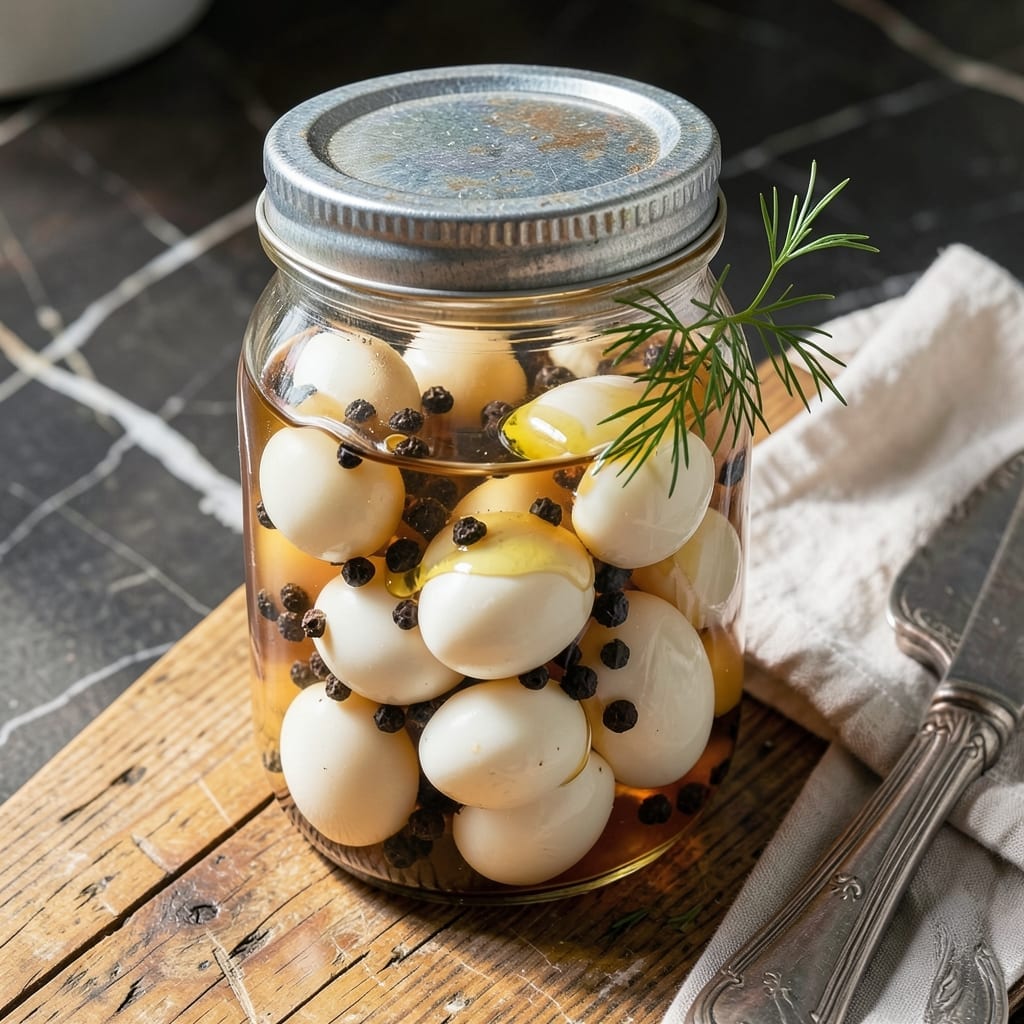
These delicate quail eggs transform into elegant appetizers with a simple pickling process. The brine infuses them with tangy flavor while preserving their rich, creamy texture.
Perfect for charcuterie boards or garnishing salads, this method ensures consistent results with minimal effort. Store them in the fridge for up to two weeks.
Ingredients for Pickled Quail Egg
Twelve delicate eggs meet a bright, aromatic brine for effortless gourmet results.
| Ingredient | Amount | Notes |
|---|---|---|
| Quail Eggs 🥚 | 36 whole | Fresh, unpeeled for boiling |
| White Vinegar 💧 | 1 ½ cups | 5% acidity standard pickling vinegar |
| Water 💧 | 1 ½ cups | Filtered for clarity |
| Granulated Sugar 🍚 | 2 tbsp | Dissolves easily in brine |
| Kosher Salt 🧂 | 1 tbsp | Diamond Crystal preferred |
| Black Peppercorns 🌶️ | 1 tsp | Whole, for aromatic depth |
| Mustard Seeds 🌿 | 1 tsp | Yellow or brown variety |
| Dried Dill 🍃 | 1 tsp | Or 1 tbsp fresh dill |
| Garlic Cloves 🧄 | 4 cloves | Lightly crushed, peeled |
| Red Pepper Flakes 🌶️ | ½ tsp | Adjust for heat preference |
| Bay Leaves 🍃 | 2 pieces | Dried, whole leaves |
| White Onion 🧅 | ½ whole | Thinly sliced for infusion |
[recipe_ingredient_scaler]
The eggs are everything here. Source from specialty grocers like Whole Foods or Asian markets—they often carry quail eggs fresh. Look for clean, uncracked shells with no strong odor (a sign of age). For the vinegar, standard 5% acidity white vinegar is ideal; avoid apple cider vinegar as its color and flavor can overpower the delicate eggs. Diamond Crystal kosher salt dissolves cleanly without additives.
No quail eggs? Chicken eggs work at a 1:5 ratio (use 6 large chicken eggs for 30 quail eggs), though the texture differs slightly. Out of mustard seeds? Coriander seeds at equal volume add a different but complementary note. For heat, fresh jalapeño slices can replace red pepper flakes. The dill can be fresh (triple the amount) or omitted entirely if preferred.
These keep beautifully. Once cooled, transfer to a clean jar and refrigerate for up to 2 weeks. The flavor deepens after 48 hours, so plan ahead. Always use a clean utensil when removing eggs to prevent contamination. Brine can be reused once, then discarded.
Why You’ll Love This Recipe
- 5-Minute Brine: I mix vinegar, sugar, and salt in a pot, boil, then pour over eggs—done before the kettle cools.
- Tangy Little Bites: The vinegar cuts through the rich eggs with just the right sweet-sour balance.
- Party Starter: I keep a jar in the fridge for charcuterie boards or last-minute appetizers.
- Budget Stretcher: A dozen quail eggs cost less than a fancy cheese board but impress just as much.
Step-by-Step Instructions for Pickled Quail Eggs
Master the technique for perfectly tangy, brined eggs with consistent texture and flavor.
Step 1: Hard-Boil and Peel the Quail Eggs
Place the 36 whole Quail Eggs in a saucepan and cover with cold water by 1 inch. Bring to a boil over high heat, then immediately reduce to a simmer. Cook for exactly 3 minutes—this timing ensures the yolks are fully set without becoming dry.
Drain and transfer the eggs to an ice water bath for 5 minutes to halt the cooking process. Once cooled, gently tap each egg on a hard surface and roll between your fingers to crack the shell. Peel under running water to remove all membrane bits, which helps the brine penetrate evenly.
The eggs should emerge smooth and intact. Any tears in the white will absorb too much brine, altering the texture. Work carefully but efficiently, as the eggs are delicate.
Step 2: Prepare the Pickling Brine
In a non-reactive saucepan, combine the 1.5 cups White Vinegar, 1.5 cups Water, 2 tbsp Granulated Sugar, and 1 tbsp Kosher Salt. Heat over medium-high heat until the sugar and salt fully dissolve, stirring occasionally. This ensures a uniform brine that won’t settle or separate.
Once dissolved, remove from heat and add the 1 tsp Black Peppercorns, 1 tsp Mustard Seeds, 1 tsp Dried Dill, 4 cloves Garlic Cloves, 0.5 tsp Red Pepper Flakes, 2 pieces Bay Leaves, and 0.5 whole White Onion, thinly sliced. The residual heat will release the aromatics without overcooking them.
Let the brine steep for 10 minutes to allow the spices to infuse. The liquid should take on a slight golden hue from the spices, signaling it’s ready for use.
Step 3: Sterilize and Pack the Jars
While the brine steeps, sterilize two 16-ounce jars by submerging them in boiling water for 5 minutes. Dry thoroughly with a clean towel to prevent any contamination. Sterilization is critical for shelf stability and safety.
Divide the peeled Quail Eggs evenly between the jars, packing them snugly but without crushing. Distribute the White Onion slices, Garlic Cloves, and whole spices (Black Peppercorns, Mustard Seeds, Bay Leaves) evenly between the jars. This ensures each serving has balanced flavor.
Step 4: Fill with Brine and Seal
Strain the warm brine through a fine-mesh sieve into a measuring cup to remove the solid aromatics. Pour the clear brine over the eggs in each jar, ensuring they are fully submerged. Tap the jars gently on the counter to remove air bubbles, which could lead to spoilage.
If the eggs aren’t fully covered, top with a bit of the reserved White Vinegar and Water mix to ensure complete submersion. Seal the jars with lids while the brine is still warm—this creates a vacuum seal as it cools.
Let the jars cool to room temperature, then refrigerate. The eggs will be ready to eat after 24 hours but develop deeper flavor after 3-4 days. Store in the refrigerator for up to 1 month.
Pro Tips For Making Pickled Quail Egg
- Boil Gently: Hard-boil quail eggs for exactly 3 minutes in simmering—not rolling—water to avoid rubbery yolks. I learned this the hard way after too many gray-centered eggs.
- Poke the Shells: After peeling, prick each egg once with a toothpick so the brine penetrates fully. Sounds weird, but it works: no unflavored centers.
- Use Hot Brine: Pour the vinegar-sugar-salt mixture over the eggs while it’s still hot—this kickstarts the pickling and guarantees even flavor in half the time.
- Skip the Crowding: Pack eggs in a single layer in the jar, not stacked, or they’ll stick together and pickled unevenly. I was skeptical until I tried it and saw the difference.
Best Sauces and Condiments for This Dish
Classic Remoulade
I love pairing these eggs with a creamy remoulade sauce—it’s a match made in brunch heaven. Whisk together ½ cup mayo, 1 tbsp Dijon mustard, 1 tbsp capers, and 1 tbsp chopped cornichons for a tangy kick. 💛
Spicy Sriracha Mayo
For a little heat, mix ¼ cup mayo with 1 tbsp sriracha and 1 tsp lime juice. The cool creaminess of the mayo balances the spice perfectly, and the acidity cuts through the richness of the eggs.
Herb aioli
Blend ½ cup mayo with 2 minced garlic cloves, 1 tbsp fresh dill, and 1 tsp lemon zest. This bright, herby dip complements the pickled flavor beautifully.
Sweet and Tangy Glaze
Simmer ¼ cup apple cider vinegar, 2 tbsp honey, and 1 tsp whole grain mustard until thickened. Drizzle lightly over halved eggs for a glossy finish that adds depth to every bite. ✨
Simple Mustard Dip
Sometimes less is more. Stir 2 tbsp whole grain mustard with 1 tbsp Greek yogurt and 1 tsp honey. The texture clings perfectly to the eggs, and the sharpness plays well with the brine.
Nutrition Facts
Frequently Asked Questions
How long do pickled quail eggs last?
They stay fresh in the fridge for up to 1 month when fully submerged in brine. For best flavor, wait at least 24 hours before eating.
Can I use chicken eggs instead?
Yes! Use 6 large chicken eggs for every 30 quail eggs. Boil for 9-10 minutes instead of 3 minutes. The texture will be slightly different but still delicious.
Why did my eggs turn greenish?
This happens when eggs are overcooked. Stick to exactly 3 minutes for quail eggs and 9-10 minutes for chicken eggs. The green tint is harmless but affects appearance.
Can I reuse the pickling brine?
Only once! After the first use, discard it. Reusing more than once can lead to bacterial growth and spoilage.

Trained in classic French technique but raised on slow-cooked ribs and spicy rubs, she blends culinary skill with smoke and soul.
- Recipe for Boneless Pork Chops in Cast Iron Skillet: Sear and Baste to Juicy Perfection - October 3, 2026
- Recipe for Boneless Cross Rib Roast: Slow-Roasted Beef with Herb Crust - October 3, 2026
- Hamburgers in Sauce Recipe Crock Pot: Slow-Cooked Savory Delight - October 3, 2026