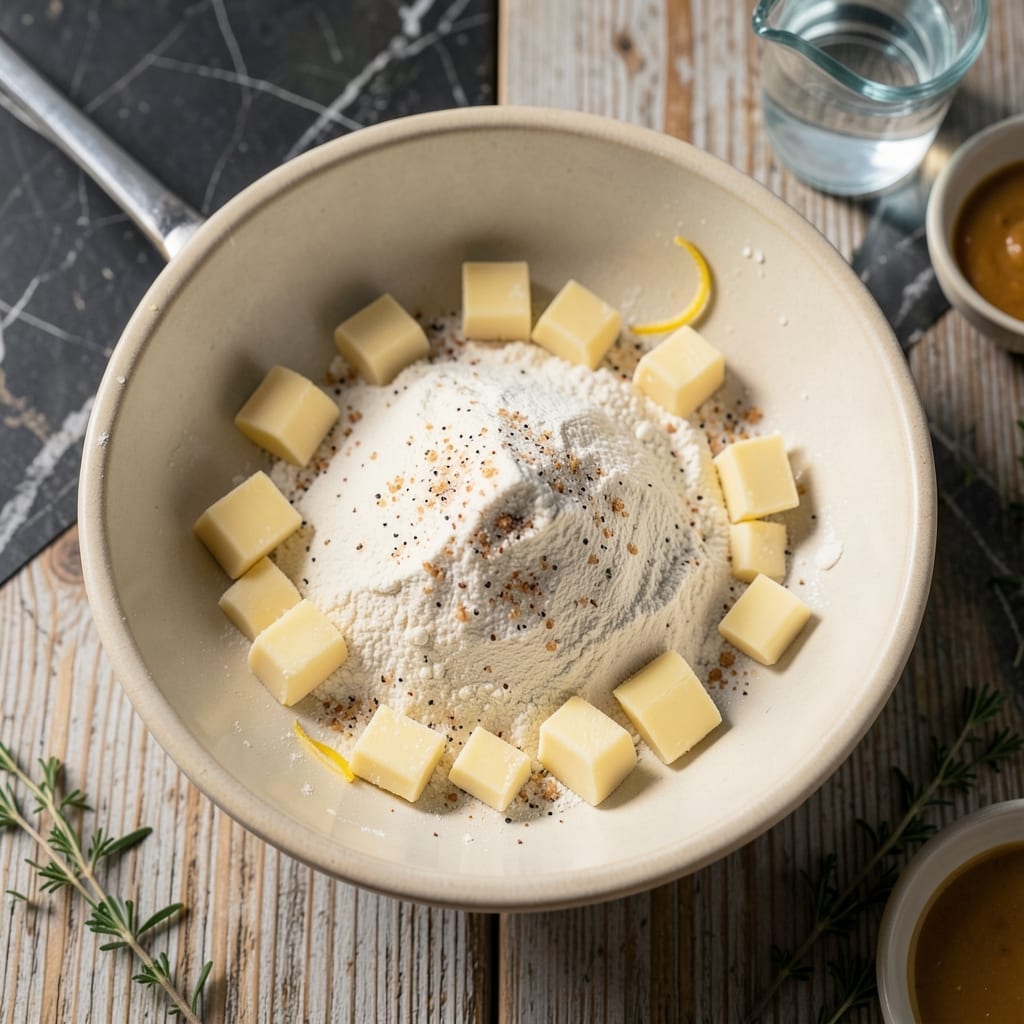
This butter-based pie crust delivers flaky layers and a golden finish every time. A proven technique with simple ingredients creates professional results.
Cold butter and minimal handling ensure the perfect texture. The method guarantees a crust that’s crisp, tender, and ready for any filling.
Ingredients for Pie Crust Recipe Butter
Cold butter, minimal flour handling, and a touch of vinegar create that signature flakiness.
| Ingredient | Amount | Notes |
|---|---|---|
| All-Purpose Flour 🌾 | 2 ½ cups | Spoon and level, do not scoop |
| Unsalted Butter 🧈 | 1 cup | Very cold, cubed into 1/2-inch pieces |
| Ice Water 💧 | ¼ cup | Plus 1-2 tbsp as needed |
| Granulated Sugar 🍚 | 1 tsp | Optional, for sweet crusts |
| Sea Salt 🧂 | 1 tsp | Fine grain preferred |
| White Vinegar 🍋 | 1 tsp | Or apple cider vinegar |
| Vanilla Extract 🌿 | ½ tsp | Optional, for sweet applications |
[recipe_ingredient_scaler]
The butter is critical—use European-style or high-fat for maximum flakiness. Plugra or Kerrygold are excellent choices. Ensure it stays ice-cold until mixed; I recommend freezing the cubes for 10 minutes before starting. The flour should be low-protein all-purpose (10-12% protein), like Gold Medal or King Arthur. Measure by spooning into the cup and leveling—scooping packs it down and leads to tough crust.
No vinegar? Lemon juice works identically. For a sweeter crust (like fruit pies), add the sugar and vanilla. The vinegar tenderizes the gluten—don’t skip it. If you’re out of unsalted butter, use salted but reduce the added salt by half. The ice water must be truly icy; I keep a bowl of water with ice cubes in the freezer while prepping.
The dough keeps 2-3 days wrapped tightly in the fridge. For longer storage, freeze the shaped disc for up to 3 months. Let it thaw overnight in the fridge before rolling. Always handle the dough as little as possible to maintain those flaky layers.
Why You’ll Love This Recipe
- Five Minute Mix: I can have this pie crust ready before the oven even preheats—just cut cold butter into flour, add ice water, and go.
- Buttery Bliss: The unsalted butter and pinch of sugar give it that rich, flaky taste with just the right hint of sweetness.
- Endless Possibilities: Sweet pies, savory quiches, even hand pies—this crust works for every occasion I’ve thrown at it.
Step-by-Step Instructions for Pie Crust
This method ensures perfectly flaky layers with a golden brown finish every time.
Step 1: Combine Dry Ingredients
Measure 2.5 cups All-Purpose Flour by spooning it into your measuring cup and leveling off with a knife—never scoop directly from the bag, as this compacts the flour and affects texture. Whisk it together with 1 tsp Sea Salt and, if making a sweet crust, 1 tsp Granulated Sugar in a large mixing bowl.
This step distributes the salt and sugar evenly throughout the flour, preventing concentrated pockets that could lead to uneven flavor or texture. The fine grain sea salt dissolves more readily, ensuring every bite is perfectly seasoned. For sweet applications, add 0.5 tsp Vanilla Extract to the dry mix for enhanced flavor.
Step 2: Cut in the Cold Butter
Add 1 cup Unsalted Butter that has been cubed into ½-inch pieces and kept very cold. Using a pastry cutter or your fingertips, work the butter into the flour until the mixture resembles coarse crumbs with some pea-sized butter pieces remaining visible.
These visible butter pieces are crucial—they create the flaky layers you want. The colder the butter, the better it will maintain its structure during mixing and baking, resulting in distinct, delicate layers. Work quickly to prevent the butter from warming and melting into the flour.
Step 3: Add Liquid and Form the Dough
Create a well in the center of the flour-butter mixture. Add 1 tsp White Vinegar and 0.25 cup Ice Water, mixing gently with a fork until the dough just begins to come together. The vinegar tenderizes the gluten, ensuring a more delicate crust.
If the dough seems too dry, add 1-2 tbsp more ice water, but avoid overworking it. The dough should hold together when pressed but still appear slightly shaggy. Overmixing develops gluten, which leads to a tough crust rather than the desired flaky texture.
Step 4: Chill and Rest the Dough
Turn the dough out onto a lightly floured surface and gently shape it into a disk. Wrap it tightly in plastic wrap and refrigerate for at least 1 hour, or up to 2 days. This chilling period allows the butter to resolidify and the gluten to relax.
Resting the dough makes it easier to roll out without cracking and ensures even baking. The cold butter will create steam during baking, which lifts the layers and produces that coveted flaky texture. Proper chilling is non-negotiable for achieving the perfect crust.
Pro Tips For Making Pie Crust Recipe Butter
- Chill the Butter: Cut the unsalted butter into small cubes and refrigerate for 15-20 minutes before mixing—cold butter is non-negotiable for that flaky texture.
- Use Ice Water: Fill a glass with water and ice cubes, then measure from that—room temp water makes a tough crust, and I learned this the hard way.
- Don’t Overwork It: Mix just until the dough comes together; over-handling develops gluten, which makes the crust chewy instead of tender.
- Rest Before Rolling: Let the dough rest in the fridge for at least 30 minutes before rolling—this relaxes the gluten and prevents shrinking when baked.
Regional Styles of This pie crust recipe butter
Southern Lard Tradition
In the South, many cooks replace 25% of the butter with leaf lard for extra flakiness. The lard has a higher melting point than butter, creating more distinct layers. I learned this trick from my grandmother’s church cookbook.
French Shortcrust Style
For a cookie-like texture, French pastry chefs use cake flour and powdered sugar. They also add 1 egg yolk for richness and structure. This version, called pâte sablée, is perfect for tarts.
Midwest Sweet Crust
Midwestern bakers often add 2 tbsp powdered sugar and 1 egg to the dough for pies like apple or cherry. The egg adds color and binding, while the sugar enhances the fruit filling’s sweetness. 💛
California Olive Oil
West Coast bakers sometimes swap half the butter for extra-virgin olive oil, adding a subtle fruitiness. This works best for galettes and free-form pies. Use a high-quality oil like California Olive Ranch.
New England Vinegar
Yankee cooks often use apple cider vinegar instead of white vinegar, adding a hint of tang. They also tend to use salted butter and omit added salt, relying on the butter’s natural saltiness.
Texas Two-Step
For extra flakiness, Texas bakers make a double-crust pie with different fats in each layer. The bottom crust uses all butter, while the top crust combines butter and shortening. This ensures a crisp bottom and flaky top. ✨
Nutrition Facts
Frequently Asked Questions
Why must the butter stay cold?
Cold butter creates steam pockets during baking, producing flaky layers. If it softens, it blends into the flour, resulting in a dense, tough crust instead. Keep cubes chilled until the last moment.
Can I use salted butter instead?
Yes, but reduce added salt by half. Salted butter varies in salt content by brand, so taste test carefully. For consistent results, unsalted is preferred.
What if my dough cracks while rolling?
Let it warm slightly at room temperature for 5-10 minutes, then try again. Patch small cracks with extra dough, pressing gently to seal without overworking.
How do I prevent a soggy bottom crust?
Blind bake the crust for 10-12 minutes before adding filling. Also, brush the bottom with a thin layer of egg white to create a moisture barrier.

Trained in classic French technique but raised on slow-cooked ribs and spicy rubs, she blends culinary skill with smoke and soul.
- Recipe for Boneless Pork Chops in Cast Iron Skillet: Sear and Baste to Juicy Perfection - October 3, 2026
- Recipe for Boneless Cross Rib Roast: Slow-Roasted Beef with Herb Crust - October 3, 2026
- Hamburgers in Sauce Recipe Crock Pot: Slow-Cooked Savory Delight - October 3, 2026