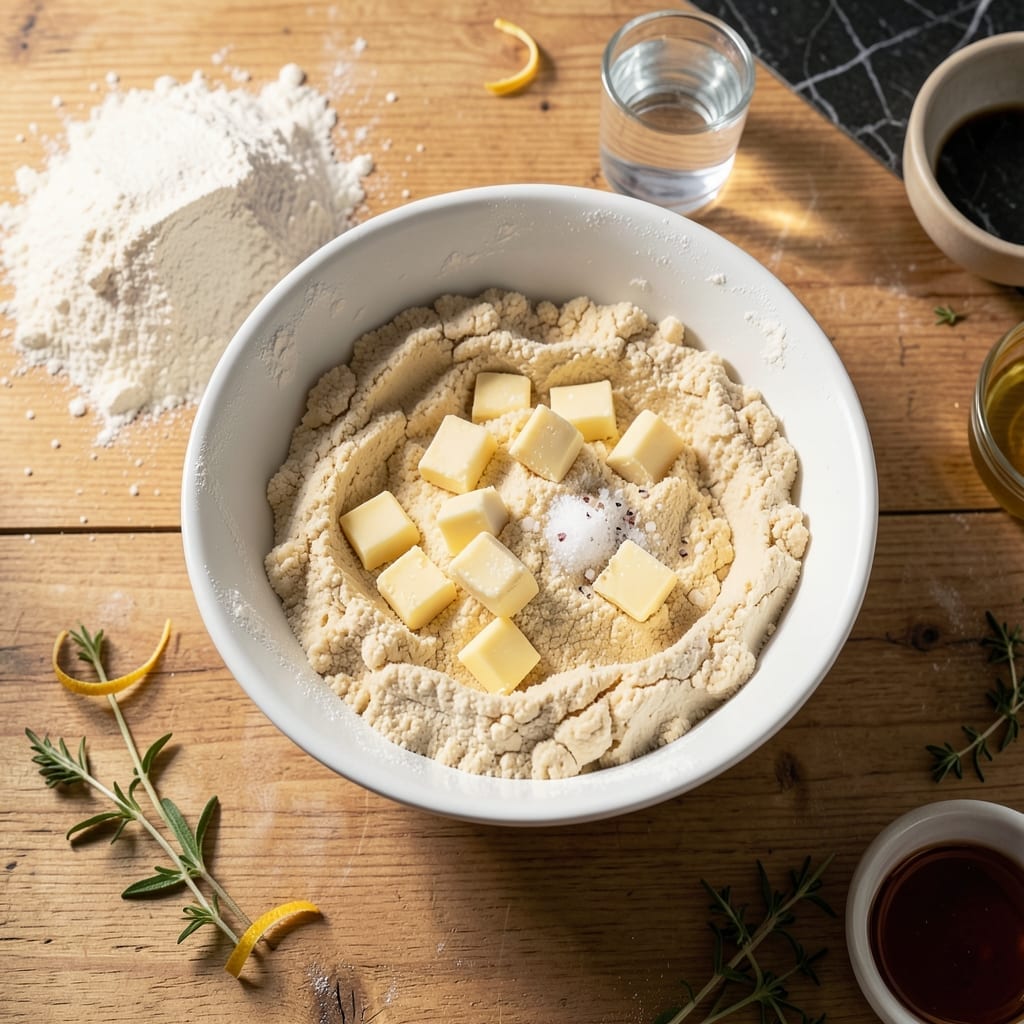
Achieving a flaky pie crust comes down to cold ingredients and minimal handling. This single-crust recipe delivers perfect layers without complicated techniques.
With just a few basic ingredients and 15 minutes of prep, you’ll create a golden, tender base for any pie filling. The key is keeping everything ice-cold until it hits the oven.
Ingredients for Pie Crust Recipe for One Pie
Six simple ingredients yield a flaky, golden crust ready for any pie filling.
| Ingredient | Amount | Notes |
|---|---|---|
| All-Purpose Flour 🌾 | 1 ¼ cups | Spoon and level for accuracy |
| Unsalted Butter 🧈 | ½ cup | Ice-cold, cut into cubes |
| Ice Water 💧 | ¼ cup | Plus 1 tbsp as needed |
| Granulated Sugar 🍚 | 1 tsp | Optional for sweet crusts |
| Fine Sea Salt 🧂 | ½ tsp | Diamond Crystal preferred |
| Apple Cider Vinegar 🍏 | 1 tsp | Or white vinegar |
[recipe_ingredient_scaler]
The butter must be ice-cold—this creates those coveted flaky layers. Land O’Lakes or Kerrygold unsalted are excellent choices. Use all-purpose flour like King Arthur for consistent results. If your kitchen is warm, chill the flour and mixing bowl for 15 minutes before starting. The vinegar tenderizes the dough without adding noticeable flavor.
No apple cider vinegar? Lemon juice or white vinegar work equally well. For a richer flavor, substitute 1 tbsp sour cream for 1 tbsp of the water. If you’re out of unsalted butter, use salted but reduce the added salt by half. The sugar can be omitted for savory pies or increased to 1 tbsp for sweeter applications.
The dough can be refrigerated for up to 2 days or frozen for 3 months. For best results, wrap tightly in plastic wrap to prevent drying. Let chilled dough sit at room temperature for 10 minutes before rolling to prevent cracking.
Why You’ll Love This Recipe
- One Bowl Wonder: I can mix the flour, butter, and ice water right in my favorite bowl—no fancy equipment, just my hands and five minutes.
- Buttery Perfection: The unsalted butter and a pinch of sugar create this flaky, golden crust that’s crisp yet tender in every bite.
- Holiday or Tuesday: Works for Thanksgiving pumpkin pie or a random weeknight apple pie when the craving hits.
- Budget Friendly: Flour, butter, water, and salt are kitchen staples. Honestly, this costs pennies and tastes like a bakery masterpiece.
Step-by-Step Instructions for Pie Crust for One Pie
Master the technique for a golden, flaky crust that shatters at the touch.
Step 1: Combine Dry Ingredients
In a large bowl, whisk together the 1.25 cups All-Purpose Flour, 1 tsp Granulated Sugar, and 0.5 tsp Fine Sea Salt until evenly distributed. The sugar adds subtle sweetness, especially for fruit pies, while the salt enhances all the flavors.
This step ensures the leavening and seasoning are uniform throughout the crust. I always whisk vigorously for 30 seconds to break up any lumps in the flour and create a light, aerated base for the butter.
Step 2: Cut in the Cold Butter
Add the 0.5 cup Unsalted Butter, cut into ½-inch cubes, to the flour mixture. Use a pastry cutter or your fingertips to work the butter into the flour until the mixture resembles coarse crumbs with pea-sized butter pieces visible.
The butter must stay ice-cold—this is non-negotiable for flakiness. If the butter starts to soften or melt, chill the mixture for 10 minutes before proceeding. The visible butter flecks create the steam pockets that will separate into flaky layers during baking.
Step 3: Add Liquid and Form the Dough
Create a well in the center of the flour-butter mixture. Pour in the 0.25 cup Ice Water and 1 tsp Apple Cider Vinegar. Use a fork to gently toss the mixture, gradually incorporating the liquid until the dough just begins to come together.
The vinegar tenderizes the gluten, preventing a tough crust. Stop mixing as soon as the dough holds when pressed—overworking develops gluten, which makes the crust dense rather than flaky. If the dough seems too dry, add ice water 1 tablespoon at a time until it just coheres.
Step 4: Chill and Rest the Dough
Turn the dough onto a lightly floured surface and gently shape it into a disk about 1 inch thick. Wrap it tightly in plastic wrap and refrigerate for at least 1 hour, or up to 2 days.
Chilling relaxes the gluten and solidifies the butter, making the dough easier to roll out and preventing shrinkage during baking. I prefer a 2-hour chill for optimal texture. The dough should feel firm but not rock-hard when ready to use.
Step 5: Roll and Blind Bake or Fill
On a lightly floured surface, roll the chilled dough into a 12-inch circle, about ⅛ inch thick. Transfer it to a pie plate, gently press it into the bottom and sides, and trim the edges, leaving a ½-inch overhang for crimping.
For a pre-baked crust, freeze the dough in the pie plate for 15 minutes, then prick the bottom with a fork and blind bake at 375°F for 15-20 minutes until light golden brown. For a filled pie, proceed directly to adding your filling. The crust should hold its shape without slumping.
Pro Tips For Making Pie Crust Recipe For One Pie
- Chill the Butter: Cut the unsalted butter into small cubes and freeze for 10 minutes before mixing—this keeps it from melting into the flour too fast, which is what makes the crust flaky.
- Use Ice Water: Fill a cup with water and ice cubes, then measure from that so the water stays cold while you work; warm water makes the dough tough.
- Don’t Overmix: Stop mixing as soon as the dough comes together, even if it looks shaggy; overworking develops gluten, and that’s what makes crusts chewy instead of tender.
- Rest Before Rolling: Wrap the dough and refrigerate for at least 30 minutes—this relaxes the gluten and makes rolling out way easier, with less cracking or shrinking.
Essential Equipment for This Recipe
Pastry Tools
A pastry cutter makes quick work of incorporating cold butter into flour. I use the OXO Good Grips model—its comfortable handles and sharp blades cut through butter without warming it. This tool ensures even distribution for those coveted flaky layers. 💡
Rolling Essentials
Invest in a French rolling pin (no handles) for better control. I prefer the J.K. Adams maple wood pin—its 20-inch length handles single crusts perfectly. A silicone pastry mat with measurements helps roll to an even ⅛-inch thickness every time.
Chilling Solutions
For chilling dough, glass or ceramic pie plates work better than metal—they retain cold longer. I use a Pyrex 9-inch pie dish. Wrap dough in plastic wrap directly touching the surface to prevent drying. A dough scraper helps lift the rolled crust without stretching it.
Blind Baking Gear
For pre-baking, pie weights or dried beans prevent bubbling. I use ceramic pie weights from RSVP International. Line the crust with parchment paper before adding weights. A fork for docking and a cooling rack complete your setup.
Nutrition Facts
Frequently Asked Questions
Why does the butter need to stay cold?
Cold butter creates steam pockets during baking, which separate into flaky layers. If it melts prematurely, the crust becomes dense instead of light and crisp.
Can I make this ahead of time?
The dough can be refrigerated for up to 2 days or frozen for 3 months. Wrap it tightly in plastic to prevent drying, then thaw overnight before rolling.
What if my crust shrinks while baking?
Shrinking usually means the dough wasn’t chilled long enough. Ensure it rests for at least 1 hour before rolling, and avoid stretching it when transferring to the pie plate.
Can I use a food processor for mixing?
Yes! Pulse the flour and butter until pea-sized crumbs form, then add liquid. Be careful not to overmix—the process should take 10-15 pulses total.

Trained in classic French technique but raised on slow-cooked ribs and spicy rubs, she blends culinary skill with smoke and soul.
- Recipe for Boneless Pork Chops in Cast Iron Skillet: Sear and Baste to Juicy Perfection - October 3, 2026
- Recipe for Boneless Cross Rib Roast: Slow-Roasted Beef with Herb Crust - October 3, 2026
- Hamburgers in Sauce Recipe Crock Pot: Slow-Cooked Savory Delight - October 3, 2026