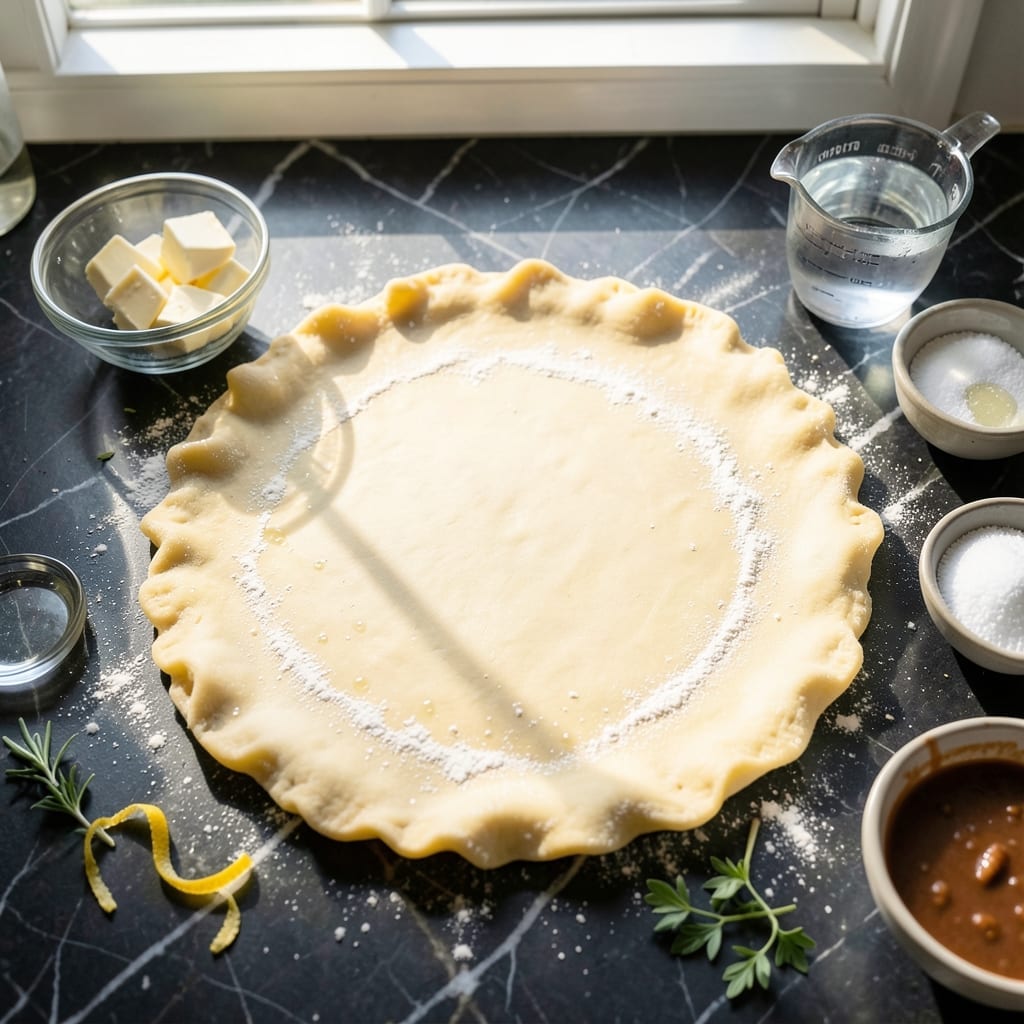
A flaky, buttery crust is the foundation of any great pecan pie, transforming it from good to unforgettable.
This recipe delivers a perfect golden base that holds its shape yet melts in your mouth with every bite.
Ingredients for Pie Crust Recipe for Pecan Pie
A short list yields a flaky, golden crust that elevates pecan pie to perfection.
| Ingredient | Amount | Notes |
|---|---|---|
| All-Purpose Flour 🌾 | 2 ½ cups | Spoon and level, not scooped |
| Unsalted Butter 🧈 | 1 cup | Cold, cubed into 1/2-inch pieces |
| Ice Water 💧 | ¼ cup | Plus 1 tbsp as needed |
| Granulated Sugar 🍚 | 1 tbsp | Fine white sugar preferred |
| Kosher Salt 🧂 | 1 tsp | Diamond Crystal preferred |
| White Vinegar 💧 | 1 tsp | Distilled or apple cider |
| Vanilla Extract 🌿 | ½ tsp | Pure extract recommended |
[recipe_ingredient_scaler]
The butter is non-negotiable here—European-style with 82% fat (like Plugrá or Kerrygold) gives superior flakiness. Keep it ice-cold until the moment you cut it into the flour. For flour, King Arthur or Gold Medal all-purpose are reliable. The vinegar isn’t just for flavor; it tenderizes the gluten slightly. Use a scale if you have one—1 cup flour = 120g for consistency.
No unsalted butter? Use salted and reduce added salt to 1/4 tsp. Short on ice water? Very cold tap water works in a pinch (but add it slowly). For a richer crust, replace 2 tbsp butter with 2 tbsp shortening—it has a higher melting point. The sugar can be omitted entirely if you prefer a savory crust, but it adds a subtle caramel note that complements pecan pie beautifully.
Dough keeps 2 days wrapped tightly in the fridge, or freeze for 3 months. Baked crusts stay crisp for 24 hours at room temperature in an airtight container. For make-ahead, roll and freeze the dough in the pie dish—bake straight from frozen, adding 5 minutes to the blind-bake time.
Why You’ll Love This Recipe
- Five Ingredients Only: I love that this crust comes together with just flour, butter, ice water, sugar, and salt—no fancy pantry hunting required.
- Buttery, Flaky Layers: The cold butter creates these incredible crispy layers that shatter with every bite of pecan pie.
- Holiday Ready: This crust is my go-to for Thanksgiving and Christmas, but honestly, I make it for Sunday suppers too.
- Dough for Days: The recipe makes enough for two crusts, so I always freeze half for next time. Between us, it’s my little time-saving secret.
Step-by-Step Instructions for Pie Crust for Pecan Pie
Master these professional techniques to achieve a perfectly flaky, buttery foundation for your dessert.
Step 1: Combine Dry Ingredients and Cold Butter
In a large mixing bowl, whisk together the 2.5 cups All-Purpose Flour, 1 tbsp Granulated Sugar, and 1 tsp Kosher Salt. The sugar adds a subtle sweetness that complements the pecan filling, while the salt enhances all the flavors.
Cut in the 1 cup Unsalted Butter (cubed into 1/2-inch pieces) using a pastry cutter or your fingers. Work quickly to maintain the cold temperature, pinching the butter into the flour until the mixture resembles coarse crumbs with pea-sized butter pieces visible. This visible fat creates the flaky layers we’re after.
Step 2: Add Liquid Ingredients to Form the Dough
Create a well in the center of the flour-butter mixture. Add the 0.25 cup Ice Water, 1 tsp White Vinegar, and 0.5 tsp Vanilla Extract. The vinegar tenderizes the gluten for a more delicate crust, while the vanilla adds a subtle depth of flavor.
Using a fork, gradually incorporate the wet ingredients into the dry, starting from the center and working outward. The dough will begin to come together in clumps. If the mixture seems too dry, add up to 1 tbsp of additional ice water, 1 teaspoon at a time, until it just holds together when pressed.
Step 3: Chill and Rest the Dough
Turn the dough out onto a lightly floured surface and gently shape it into a disk about 1 inch thick. Be careful not to overwork the dough—this develops gluten, which makes the crust tough rather than tender and flaky.
Wrap the disk tightly in plastic wrap and refrigerate for at least 1 hour, or up to 24 hours. This chilling period allows the butter to firm up and the gluten to relax, making the dough easier to roll out and preventing it from shrinking during baking. The ideal temperature for rolling is when the dough is firm but not rock-hard.
Step 4: Roll Out and Transfer to Pie Dish
On a lightly floured surface, roll the chilled dough into a circle about 12 inches in diameter and 1/8 inch thick. To prevent sticking, lift and rotate the dough a quarter turn after each roll, dusting with flour as needed.
Carefully transfer the rolled dough to a 9-inch pie dish. Gently press it into the bottom and up the sides, being careful not to stretch the dough. Trim the excess, leaving a 1/2-inch overhang around the edge. Fold the overhang under itself and crimp decoratively with your fingers or a fork.
Step 5: Pre-Bake for Optimal Results
For pecan pie, a pre-baked crust prevents a soggy bottom. Preheat your oven to 375°F. Line the crust with parchment paper and fill it with pie weights or dried beans to prevent puffing.
Bake for 15 minutes, then carefully remove the parchment and weights. Return the crust to the oven and bake for an additional 5-7 minutes until the bottom appears dry and the edges are just beginning to turn light golden brown. Let it cool completely before adding your pecan filling.
Pro Tips For Making Pie Crust Recipe For Pecan Pie
- Chill the Butter: Cut your unsalted butter into small cubes and refrigerate for 15 minutes before mixing—I learned this the hard way after ending up with a tough crust instead of flaky layers.
- Use Ice-Cold Water: Fill a glass with water and ice cubes, then measure from that for the ice water. Sounds obvious, but warm water makes the dough sticky and hard to handle.
- Don’t Overwork Dough: Mix just until the dough comes together, even if it looks a little shaggy. After burning three batches, I finally figured out that overmixing develops gluten, making the crust chewy instead of tender.
- Rest Before Rolling: Wrap the dough and let it rest in the fridge for at least 30 minutes. My grandmother swore by this, and she was right: it relaxes the gluten and makes rolling out a breeze.
Pro Cooking Tips for Perfect Results
Butter Temperature Control
Keep your 1 cup Unsalted Butter ice-cold until the moment you cut it into the flour. I cube mine into ½-inch pieces and pop it back in the fridge while prepping other ingredients. If the butter starts to soften during mixing, pause and chill the bowl for 10 minutes. 🌡️
Minimal Water Addition
Add your ¼ cup Ice Water gradually—start with 3 tbsp and only add more if the dough won’t hold together when pressed. Too much water develops gluten, which makes the crust tough. The 1 tsp White Vinegar helps tenderize without extra liquid.
Pastry Cutter Precision
Use a pastry cutter or your fingertips to work the butter into the flour. I prefer the cutter for even pea-sized pieces. Avoid using a food processor—it’s easy to overwork the dough and warm the butter. The goal is visible butter flecks for maximum flakiness.
Chilling Time Matters
Don’t rush the 1-hour chill—this is when the magic happens. The butter re-firms, and the gluten relaxes. I often make my dough the night before for even better results. If you’re in a hurry, a 20-minute freeze can work in a pinch.
Rolling Technique
Roll from the center outward, rotating the dough a quarter turn after each pass to prevent sticking. Dust your surface lightly with flour, but don’t overdo it—too much can make the crust dry. Aim for a 12-inch circle that’s ⅛ inch thick.
Blind-Baking Tip
For pecan pie, always pre-bake the crust to avoid a soggy bottom. Use parchment paper and pie weights or dried beans. Bake at 375°F for 15 minutes with weights, then 5-7 minutes without for a golden base. 💛
Frequently Asked Questions
Can I use shortening instead of butter?
Yes, but it changes the flavor. Replace up to ½ the butter with shortening for extra flakiness, as it has a higher melting point.
Why does the crust need to be pre-baked?
Pre-baking prevents a soggy bottom. Pecan pie filling is very wet, so a 15-minute blind bake at 375°F creates a barrier.
How do I fix a tough crust?
Overworking develops gluten. Next time, handle the dough minimally and ensure your butter stays ice-cold.
Can I make the dough ahead?
The dough keeps 2 days refrigerated or 3 months frozen. Thaw overnight in the fridge before rolling.
Nutrition Facts

Trained in classic French technique but raised on slow-cooked ribs and spicy rubs, she blends culinary skill with smoke and soul.
- Recipe for Boneless Pork Chops in Cast Iron Skillet: Sear and Baste to Juicy Perfection - October 3, 2026
- Recipe for Boneless Cross Rib Roast: Slow-Roasted Beef with Herb Crust - October 3, 2026
- Hamburgers in Sauce Recipe Crock Pot: Slow-Cooked Savory Delight - October 3, 2026