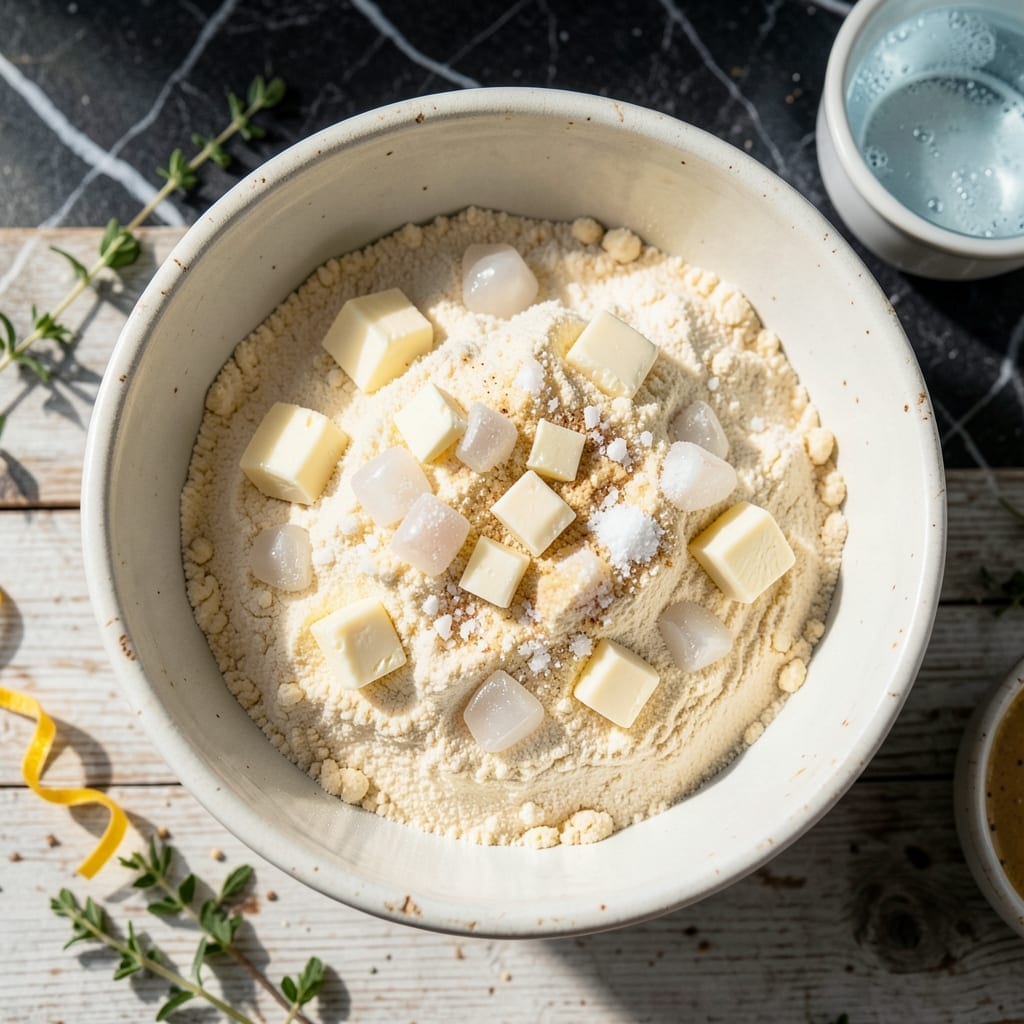
Grandma knew best when it came to pie crust, and her lard-based recipe delivers unmatched flaky layers every time. The secret lies in keeping the lard cold and handling the dough minimally.
This traditional method creates a tender, golden crust that shatters with each bite. Perfect for fruit pies, custards, or any filling that needs a sturdy yet delicate base.
Ingredients for Pie Crust Recipe Using Lard
Cold lard and minimal handling create that signature flaky, golden crust Grandma perfected.
| Ingredient | Amount | Notes |
|---|---|---|
| All-Purpose Flour 🌾 | 2 ½ cups | Plus extra for dusting |
| Lard 🧈 | ¾ cup | Leaf lard preferred for purity |
| Ice Water 💧 | ⅓ cup | Very cold, about 5-6 tbsp |
| Salt 🧂 | 1 tsp | Fine grain preferred |
| Granulated Sugar 🍚 | 1 tsp | Optional for sweet crusts |
| Unsalted Butter 🧈 | ¼ cup | Optional for extra flavor |
| White Vinegar 🍋 | 1 tbsp | Helps tenderize crust |
[recipe_ingredient_scaler]
The lard is non-negotiable here—leaf lard from a trusted butcher or Armour brand at the grocery store gives you that pure, clean flavor without any porky aftertaste. Cold is key: keep it in the fridge until the last second, and don’t let it soften. All-purpose flour works perfectly (I use King Arthur), but if you want to get fancy, a mix of all-purpose and pastry flour gives even more tenderness.
No lard? Shortening in a pinch but the texture won’t be the same. Vegetarian? Swap in coconut oil at a 1:1 ratio—just chill it solid first. The vinegar might seem odd, but it tenderizes the gluten. Skip the sugar if you’re making a savory pie. For extra richness, that splash of butter (Kerrygold is my go-to) adds depth without compromising the flake.
The dough keeps in the fridge for 2-3 days or in the freezer for 1 month. Wrap it tight in plastic—air is the enemy of flaky crusts. Let it sit at room temp for 10 minutes before rolling (the good stuff, not the pre-shredded kind).
Why You’ll Love This Recipe
- Five-Minute Mix: I love how the lard and flour come together in seconds flat—just pulse, add ice water, and it’s ready to roll.
- Buttery Crisp Layers: Honestly, nothing beats that flaky, melt-in-your-mouth texture lard gives, especially with a pinch of sugar for warmth.
- Pies for Any Day: I’ve used this crust for everything from holiday apple pies to quick Tuesday night pot pies.
Step-by-Step Instructions for Pie Crust Using Lard
This method guarantees layers of flakiness that shatter with every bite.
Step 1: Mix Dry Ingredients and Cut in Lard
In a large bowl, whisk together the 2.5 cups All-Purpose Flour, 1 tsp Salt, and 1 tsp Granulated Sugar. The sugar is optional but adds a subtle sweetness that complements fruit fillings beautifully.
Add the 0.75 cup Lard directly to the flour mixture. Using a pastry cutter or two forks, cut the lard into the flour until the mixture resembles coarse crumbs with pea-sized lard pieces visible. Here’s the thing—those visible fat pieces are what create the flaky layers, so don’t overwork them into oblivion.
Step 2: Incorporate Butter and Vinegar
Add the 0.25 cup Unsalted Butter (cut into small cubes) and the 1 tbsp White Vinegar to the bowl. The vinegar tenderizes the gluten, while the butter adds an extra layer of flavor to your crust.
Using your fingers or the pastry cutter, work the butter into the mixture until it’s evenly distributed. You should still see distinct pieces of fat throughout the flour—this is the secret to that grandma-approved flakiness. The mixture will look slightly shaggy at this stage, which is exactly what you want.
Step 3: Add Ice Water and Form Dough
Create a well in the center of your flour mixture. Pour in the 0.33 cup Ice Water all at once. Using a fork, gently stir the mixture just until the dough begins to come together. It will look dry and crumbly at first, but resist the urge to add more water.
Once the dough starts holding when pressed, turn it out onto a lightly floured surface. Gently knead it just 4-5 times until it forms a cohesive ball. Overworking the dough develops gluten, which makes for a tough crust rather than a flaky one. The dough should feel cold and slightly shaggy—not smooth.
Step 4: Chill and Rest the Dough
Divide the dough into two equal portions and shape each into a disk about 1 inch thick. Wrap each disk tightly in plastic wrap and refrigerate for at least 1 hour (or up to 2 days).
This resting period allows the gluten to relax and the fat to rechill, which prevents shrinking during baking and ensures maximum flakiness. I always make my dough the night before—it saves time and improves the texture. When ready to use, let the dough sit at room temperature for 10-15 minutes before rolling to prevent cracking.
Pro Tips For Making Pie Crust Recipe Using Lard
- Chill the Lard: Cut your lard into small cubes and freeze for 15 minutes before mixing—I learned this the hard way after ending up with a greasy crust instead of flaky layers.
- Use Ice-Cold Water: Measure your water, then add ice cubes to keep it frigid while working; even slightly warm water melts the lard and ruins the texture.
- Don’t Overwork Dough: Stop mixing as soon as the dough comes together, even if it looks shaggy—overworking develops gluten and makes the crust tough.
- Rest Before Rolling: Wrap the dough and refrigerate for at least 30 minutes; skipping this makes it shrink when baked, and nobody wants a sad, shrunken pie shell.
Perfect Pairings for This pie crust recipe using lard
Fruit Pie Fillings
This crust shines with classic fruit fillings. Try apple pie with a touch of cinnamon and nutmeg—the lard’s richness balances the tartness perfectly. For berry lovers, a mixed berry filling with 1 cup each of blueberries, raspberries, and blackberries creates a vibrant, juicy center. 💛
Custard and Cream Pies
Custard pies need a sturdy yet delicate base, and this crust delivers. Pumpkin pie or pecan pie fillings pair beautifully with the flaky texture. I always add 1 tsp vanilla extract to my custard for extra warmth.
Savory Hand Pies
Don’t limit this crust to sweets. Use it for savory hand pies filled with chicken pot pie mixture or spiced beef and vegetables. The lard adds a depth that complements hearty fillings wonderfully.
Beverage Pairings
A cold glass of whole milk is my go-to for cutting through the richness. For adults, a dry Riesling or sparkling cider cleanses the palate between bites. The acidity balances the buttery crust beautifully. ✨
Ice Cream Toppings
Serve warm fruit pies à la mode with a scoop of vanilla bean ice cream. The contrast of hot and cold, crisp and creamy, is irresistible. I also love drizzling salted caramel sauce over the top for extra indulgence.
Holiday Specials
For Thanksgiving, this crust elevates sweet potato pie with marshmallow topping. At Christmas, a mince pie with brandy butter makes the perfect festive treat. The lard gives it that nostalgic, old-fashioned texture everyone loves.
Nutrition Facts
Frequently Asked Questions
Why use lard instead of butter?
Lard has a higher melting point than butter, creating more distinct flaky layers. It also has a neutral flavor that lets the filling shine. Butter adds richness but can make crusts spread more during baking.
Can I substitute shortening for lard?
Yes, but expect slightly different results. Shortening has a similar melting point but lacks lard’s natural flavor. Use the same 0.75 cup amount. Leaf lard remains the gold standard for texture.
How do I keep the crust from shrinking?
Chill the dough for at least 1 hour before rolling. Let it rest 10-15 minutes at room temperature before rolling to prevent cracking. Don’t stretch the dough when fitting it into the pan.
What’s the secret to extra flaky layers?
Keep the lard ice-cold and work quickly. Visible pea-sized fat pieces in the dough create steam during baking, making those coveted layers. Handle the dough minimally to avoid developing gluten.

Trained in classic French technique but raised on slow-cooked ribs and spicy rubs, she blends culinary skill with smoke and soul.
- Hamburger Patty Recipe No Egg: Juicy Bind With Breadcrumbs and Milk - October 3, 2026
- Recipe for Oven Baked Halibut: Buttery White Fish with Zesty Lemon Topping - October 3, 2026
- Meatball Curry Recipe Kerala Style: Coconut-Spiced Gravy With Tender Bites - October 3, 2026