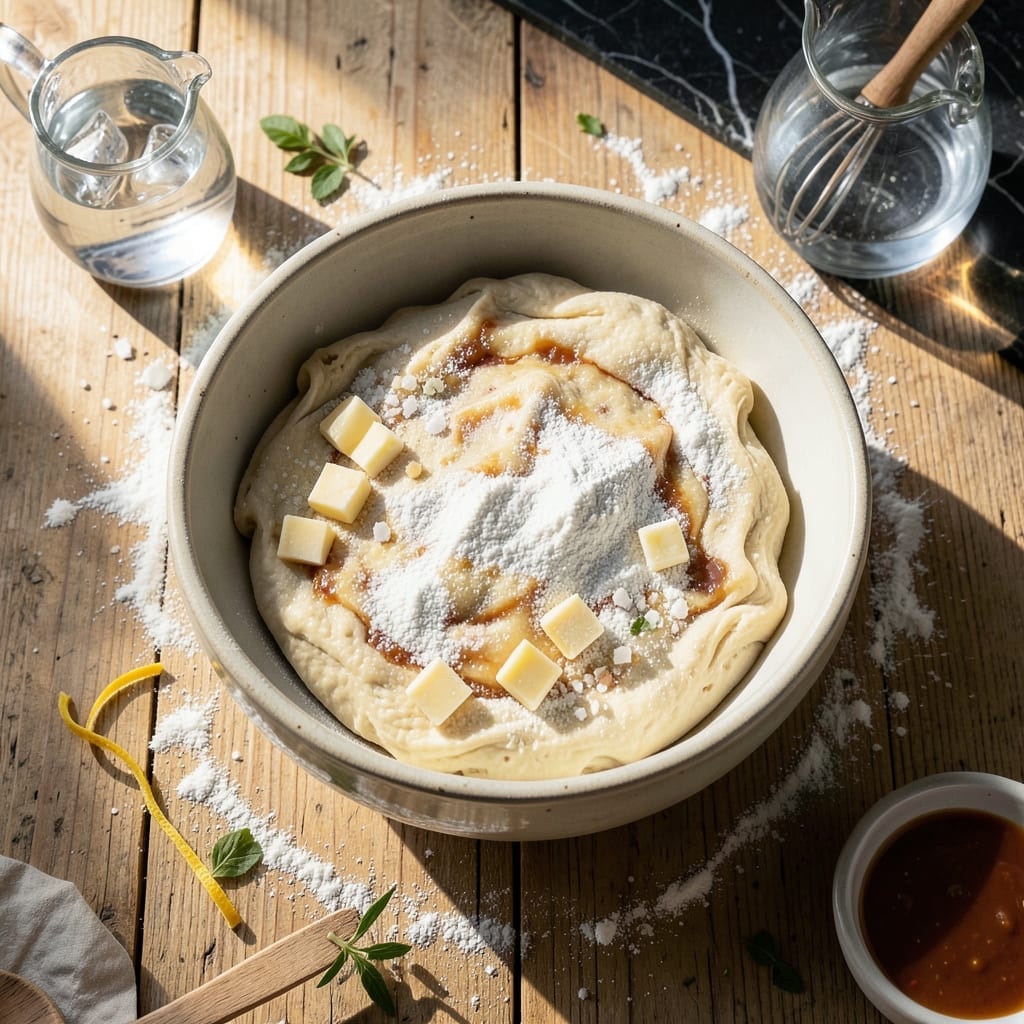
This pie pastry delivers flaky layers and a golden crust that rivals any bakery. The secret lies in using lard, which creates a tender texture that butter alone can’t achieve.
With simple ingredients and precise technique, this recipe ensures a sturdy yet delicate pastry perfect for any pie. Resting the dough is key to preventing shrinkage during baking.
Ingredients for Pie Pastry Recipe with Lard
A few simple staples create a bakery-quality crust with perfect texture.
| Ingredient | Amount | Notes |
|---|---|---|
| All-Purpose Flour 🌾 | 2 ½ cups | Plus extra for dusting |
| Lard 🧈 | ¾ cup | Chilled and cubed |
| Salt 🧂 | 1 tsp | Fine table salt |
| Ice Water 💧 | ½ cup | Plus 1-2 tbsp as needed |
| Granulated Sugar 🍚 | 1 tbsp | Optional for sweet pies |
| Apple Cider Vinegar 🍏 | 1 tbsp | Helps tenderize the crust |
| Unsalted Butter 🧈 | ¼ cup | Chilled and cubed |
[recipe_ingredient_scaler]
The lard is non-negotiable here. Leaf lard (rendered from pig fat around the kidneys) is the gold standard—pure white, odorless, and yields the flakiest layers. Grocery stores usually stock it near the baking supplies or in the refrigerated section. Tenderflake is a widely available brand. If you can only find hydrogenated lard, it’ll work, but avoid anything with additives.
No lard on hand? Shortening is the closest substitute, though the flavor won’t be as rich. For a butter-only version, use 1 cup total butter (chilled and cubed) and skip the lard entirely. The vinegar can be swapped for lemon juice in a pinch. If your flour is old or weak, weigh it out—280g for 2.5 cups ensures the right protein content.
The dough keeps well wrapped in plastic for 2 days in the fridge or 2 months frozen. Bring it to room temperature before rolling for best results. Resting the dough at least 30 minutes is essential for preventing shrinkage during baking.
Why You’ll Love This Recipe
- Five Ingredients Only: I love that this comes together with just flour, lard, salt, ice water, and a touch of sugar—no fancy pantry hunts.
- Flaky Perfection: The lard makes it so tender and flaky, with that buttery richness that store-bought crusts just can’t match.
- Endless Possibilities: Sweet or savory, this pastry works for pot pies, fruit tarts, or even hand pies for lunchboxes.
Step-by-Step Instructions for Pie Pastry With Lard
This method ensures a tender, flaky crust that holds its shape when baked.
Step 1: Combine Dry Ingredients
In a large mixing bowl, whisk together the 2.5 cups All-Purpose Flour, 1 tsp Salt, and 1 tbsp Granulated Sugar until evenly distributed. The sugar adds subtle sweetness, but you can omit it for savory pies.
This step ensures the leavening and seasoning are uniform throughout the dough. Make sure there are no lumps in the flour mixture before proceeding to the next step.
Step 2: Cut in Chilled Fats
Add the 0.75 cup Lard and 0.25 cup Unsalted Butter (both chilled and cubed) to the flour mixture. Use a pastry cutter or your fingers to work the fats into the flour until the mixture resembles coarse crumbs with pea-sized pieces of fat visible.
The key to flakiness is keeping the fats cold—this creates layers when rolled out. Work quickly to prevent the lard and butter from melting into the flour. If your hands warm up, chill the bowl briefly before continuing.
Step 3: Add Liquid Ingredients Gradually
Combine the 0.5 cup Ice Water and 1 tbsp Apple Cider Vinegar in a small bowl. Create a well in the center of the flour mixture and add the liquid 1 tablespoon at a time, mixing gently with a fork after each addition.
The vinegar tenderizes the gluten, resulting in a more delicate crust. Stop adding liquid as soon as the dough begins to come together—it should be shaggy, not sticky. Overworking the dough at this stage will make it tough.
Step 4: Chill and Rest the Dough
Turn the dough onto a lightly floured surface and gently shape it into a disk. Wrap it tightly in plastic wrap and refrigerate for at least 1 hour (or up to 2 days).
This resting period allows the gluten to relax and the fats to rechill, making the dough easier to roll out. It also prevents shrinkage during baking. For best results, let the dough sit at room temperature for 10 minutes before rolling to soften slightly.
Pro Tips For Making Pie Pastry Recipe With Lard
- Chill the Lard: Cut the lard into small cubes and refrigerate for 30 minutes before mixing—this keeps it firm so it doesn’t melt into the flour, which means flakier layers.
- Use Ice-Cold Water: Measure your water, then add ice cubes to it for 10 minutes before using. I learned this the hard way—warm water makes the dough tough, not tender.
- Don’t Overmix: Stop stirring as soon as the dough comes together, even if it looks shaggy. Overworking it develops gluten, and suddenly your crust is chewy, not crisp.
- Rest the Dough: Give it a solid 30 minutes in the fridge before rolling. Sounds weird, but it works: the lard firms up again, and the dough rolls out smooth instead of cracking.
Best Sauces and Condiments for These Flavors
Sweet Pairings
For fruit pies, a warm vanilla custard sauce or English cream poured over each slice adds richness. I whisk 2 cups whole milk with 4 egg yolks and ⅓ cup sugar for a simple version. The creamy texture contrasts beautifully with the flaky crust. 💛
Savory Accompaniments
With savory pies like chicken pot pie, serve a pepper gravy on the side. I make mine with pan drippings, 2 tbsp flour, and 1 cup chicken broth. For extra zing, add 1 tsp Worcestershire sauce to deepen the flavor.
Tangy Options
A dollop of whipped cream cheese with honey or maple syrup drizzled on top works wonders with apple or pumpkin pies. I mix 8 oz softened cream cheese with 2 tbsp honey for a quick spread. The tang cuts through the sweetness perfectly.
Fruit Compotes
For berry pies, serve a mixed berry compote on the side. Simmer 2 cups frozen berries with ¼ cup sugar and 1 tbsp lemon juice until thickened. It adds fresh fruit flavor without overwhelming the pastry.
Ice Cream Classic
You can never go wrong with vanilla ice cream alongside warm pie. I recommend Haagen-Dazs or Ben & Jerry’s for their rich, creamy texture. The contrast of hot and cold is what makes this pairing timeless.
Nutrition Facts
Frequently Asked Questions
Why use lard instead of butter?
Lard creates a flakier texture and more tender crust. It has a higher melting point than butter, which helps maintain structure during baking. Butter adds flavor, but lard excels in texture.
Can I make this ahead of time?
Yes! The dough keeps wrapped in plastic for 2 days in the fridge or 2 months frozen. Bring to room temperature before rolling for best results.
What if my dough is too dry?
Add 1 tablespoon of ice water at a time until it just comes together. Overworking the dough will make it tough, so mix gently.
How thin should I roll the pastry?
For most pies, roll to about 1/8-inch thickness. This ensures even baking and a sturdy yet delicate crust.

Trained in classic French technique but raised on slow-cooked ribs and spicy rubs, she blends culinary skill with smoke and soul.
- Recipe for Boneless Pork Chops in Cast Iron Skillet: Sear and Baste to Juicy Perfection - October 3, 2026
- Recipe for Boneless Cross Rib Roast: Slow-Roasted Beef with Herb Crust - October 3, 2026
- Hamburgers in Sauce Recipe Crock Pot: Slow-Cooked Savory Delight - October 3, 2026