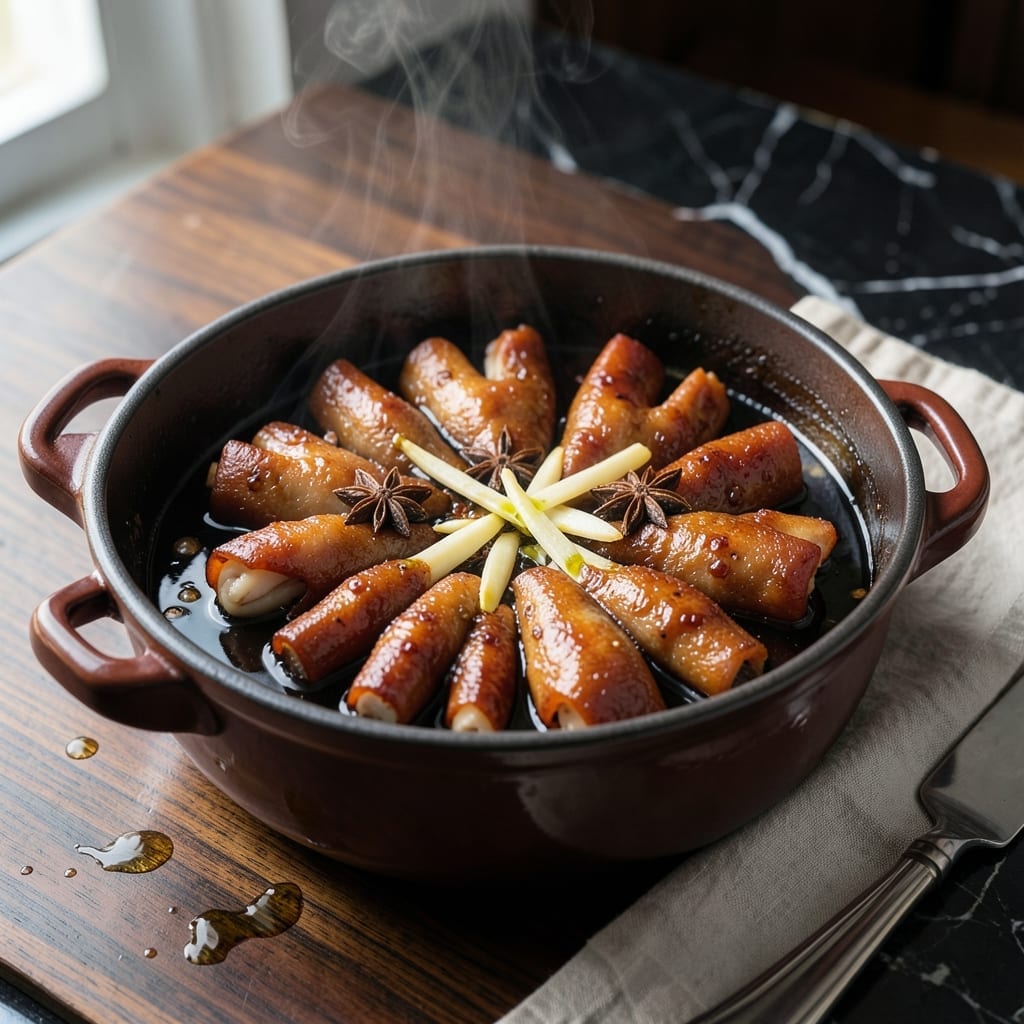
This traditional Chinese preparation transforms humble pig feet into a tender, collagen-rich delicacy through careful braising.
Slow cooking breaks down tough tissues, yielding melt-in-your-mouth results with each bite. The method preserves authentic flavors while ensuring perfect texture every time.
Ingredients for Pig Feet Recipe Chinese
Transform humble pig feet into a collagen-rich delicacy with these traditional ingredients.
| Ingredient | Amount | Notes |
|---|---|---|
| Pig Feet 🐷 | 2 lb | Cleaned, split, and blanched |
| Soy Sauce 🫒 | ½ cup | Light or all-purpose variety |
| Dark Soy Sauce 🫒 | 2 tbsp | For deep color and richness |
| Shaoxing Wine 🍶 | ¼ cup | Chinese cooking wine preferred |
| Rock Sugar 🍚 | 2 tbsp | Or substitute brown sugar |
| Ginger 🧄 | 4 slices | Fresh, thick slices, unpeeled |
| Garlic Cloves 🧄 | 6 cloves | Smashed lightly, unpeeled |
| Star Anise Pods ⭐ | 2 whole | Dried, whole pods |
| Cinnamon Stick 🌿 | 1 whole | 2-inch piece |
| Dried Shitake Mushrooms 🍄 | 4 pieces | For umami depth |
| Green Onions 🧅 | 4 whole | Cut into 2-inch sections |
| Water 💧 | 4 cups | Or enough to cover pig feet |
| Vegetable Oil 🫒 | 2 tbsp | For initial searing |
[recipe_ingredient_scaler]
The pig feet are the foundation—source from a trusted butcher or Asian market for freshness. Look for clean, odor-free feet with intact skin. Most butchers will split and clean them for you if requested. Blanching is non-negotiable; it removes impurities and ensures a clean, clear braising liquid. Shaoxing wine is essential for authentic flavor, available at any well-stocked Asian grocery.
No Shaoxing wine? Dry sherry is the closest substitute, though slightly less complex. Rock sugar can be replaced with brown sugar in a pinch, but it lacks the subtle mineral notes. For the mushrooms, fresh shiitake work too (reduce water by half). If star anise is unavailable, one teaspoon of five-spice powder offers similar aromatic depth.
Braised pig feet actually improve overnight. Store in the fridge for up to 5 days—the collagen continues to soften. Freeze for 3 months if making ahead. Reheat gently to preserve the tender texture, adding a splash of water if needed.
Why You’ll Love This Recipe
- Set and Forget: I just toss everything in the pot and let the soy sauce and rock sugar work their magic for hours.
- Melts in Mouth: The slow-cooked pig feet absorb the Shaoxing wine and dark soy until they’re fall-off-the-bone tender.
- Crowd Pleaser: I serve this at family gatherings and everyone—even the picky eaters—goes back for seconds.
- Budget Stretch: A few inexpensive pig feet turn into a rich, saucy dish that feeds us for days.
Step-by-Step Instructions for Chinese Braised Pig Feet
This traditional method transforms tough cuts into fall-off-the-bone tenderness with rich, aromatic depth.
Step 1: Sear Pig Feet for Depth of Flavor
Heat the 2 tbsp vegetable oil in a heavy pot over medium-high heat until shimmering. Add the 2 lb pig feet and sear until deeply browned on all sides, about 5-7 minutes per side. This step builds a flavorful foundation for the braise.
You’ll notice the skin starts to crisp and contract—this is ideal. The browning creates complex Maillard compounds that will infuse into the final dish. Don’t rush; proper searing ensures maximum flavor development.
Step 2: Build the Aromatic Base
Add the 4 slices ginger, 6 cloves garlic cloves, 2 whole star anise pods, 1 whole cinnamon stick, 4 pieces dried shitake mushrooms, and 4 whole green onions to the pot. Stir for 2 minutes until fragrant and the spices begin to toast.
The aromatics should release their essential oils, filling your kitchen with warm, spiced notes. This brief toasting step intensifies their flavors before the liquid is added. Be careful not to burn the garlic or ginger.
Step 3: Add Liquids and Braise Until Tender
Pour in the 0.5 cup soy sauce, 2 tbsp dark soy sauce, 0.25 cup Shaoxing wine, 2 tbsp rock sugar, and 4 cups water. Stir to combine, ensuring the sugar dissolves completely. The liquid should just cover the pig feet—add a splash more water if needed.
Bring to a boil, then reduce heat to maintain a gentle simmer. Cover and braise for 2.5-3 hours, turning the pig feet occasionally, until the meat is fork-tender and nearly falling off the bone. The collagen will have transformed into rich, silky gelatin.
Step 4: Reduce and Glaze
Once the pig feet are tender, remove the lid and increase heat to medium. Simmer uncovered for an additional 20-30 minutes until the sauce reduces to a glossy, syrupy consistency that coats the back of a spoon.
This reduction step concentrates the flavors and creates a beautiful lacquered finish on the pig feet. The sauce should be thick enough to cling to the meat but still pourable. Taste and adjust seasoning if needed, though the soy sauces should provide adequate saltiness.
Pro Tips For Making Pig Feet Recipe Chinese
- Blanch First: Always blanch the pig feet in boiling water for 5-10 minutes before braising to remove impurities and odors—skipping this step leaves a gamey taste that no amount of soy sauce can fix.
- Balance the Sauces: Use a 2:1 ratio of regular soy sauce to dark soy sauce for the right color and depth without overpowering saltiness; I learned this the hard way after ruining a batch with too much dark soy.
- Simmer Low and Slow: Keep the heat at a gentle simmer, not a boil, for at least 2 hours—rushing it with high heat makes the collagen tough instead of melt-in-your-mouth tender.
- Add Rock Sugar Early: Drop the rock sugar in during the first 30 minutes of braising so it dissolves completely and caramelizes slightly, giving the sauce that glossy, rich sheen.
Best Sauces and Condiments for pig feet recipe chinese
Classic Dipping Sauce
I always serve this with a simple black vinegar and garlic sauce. Combine ¼ cup Chinkiang vinegar, 1 tbsp soy sauce, 1 tsp sesame oil, and 2 minced garlic cloves. The tang cuts through the richness beautifully. 💫
Spicy Chili Oil
For heat lovers, Sichuan chili oil with crushed peanuts adds texture and fire. I use Lao Gan Ma brand for its deep, toasted aroma. Drizzle just before serving so the oil stays vibrant and fragrant.
Sweet Soy Glaze
A quick glaze of reduced kecap manis (Indonesian sweet soy) with 1 tbsp honey and 1 tsp rice vinegar creates a glossy finish. Brush it on during the last 10 minutes of braising for caramelized edges.
Herbal Accompaniment
Fresh Thai basil leaves and cilantro stems add brightness. I pluck leaves from my garden—it’s a habit from my foraging days. The herbs balance the deep, savory notes of the braising liquid.
Pickled Vegetables
Quick-pickled daikon radish and carrots with rice vinegar and 1 tsp sugar offer crunch. Let them sit for 30 minutes while the pig feet finish cooking. The acidity refreshes your palate between bites.
Sesame Garnish
Toasted white sesame seeds and crushed Sichuan peppercorns add aroma and numbing heat. I toast seeds in a dry pan for 2-3 minutes until golden. Sprinkle generously just before serving.
Nutrition Facts
Frequently Asked Questions
How long does it take to tenderize pig feet?
Braising for 2.5-3 hours at a gentle simmer is ideal. The collagen breaks down slowly, creating that signature melt-in-your-mouth texture. Rushing with high heat will toughen the meat.
Can I make this in a slow cooker?
Yes! Use the low setting for 6-8 hours. Brown the pig feet first for depth of flavor, then transfer everything to the slow cooker. The hands-off method works beautifully.
Why is blanching the pig feet important?
Blanching removes impurities and blood, ensuring a clean braising liquid. Skip this step and your final dish may have a bitter taste or cloudy appearance. Always blanch for 5-10 minutes first.
What if my sauce is too thin?
Simmer uncovered for an extra 15-20 minutes to reduce. If it’s still thin, mix 1 tsp cornstarch with water and stir in during the last 5 minutes of cooking.

Trained in classic French technique but raised on slow-cooked ribs and spicy rubs, she blends culinary skill with smoke and soul.
- Recipe for Boneless Pork Chops in Cast Iron Skillet: Sear and Baste to Juicy Perfection - October 3, 2026
- Recipe for Boneless Cross Rib Roast: Slow-Roasted Beef with Herb Crust - October 3, 2026
- Hamburgers in Sauce Recipe Crock Pot: Slow-Cooked Savory Delight - October 3, 2026