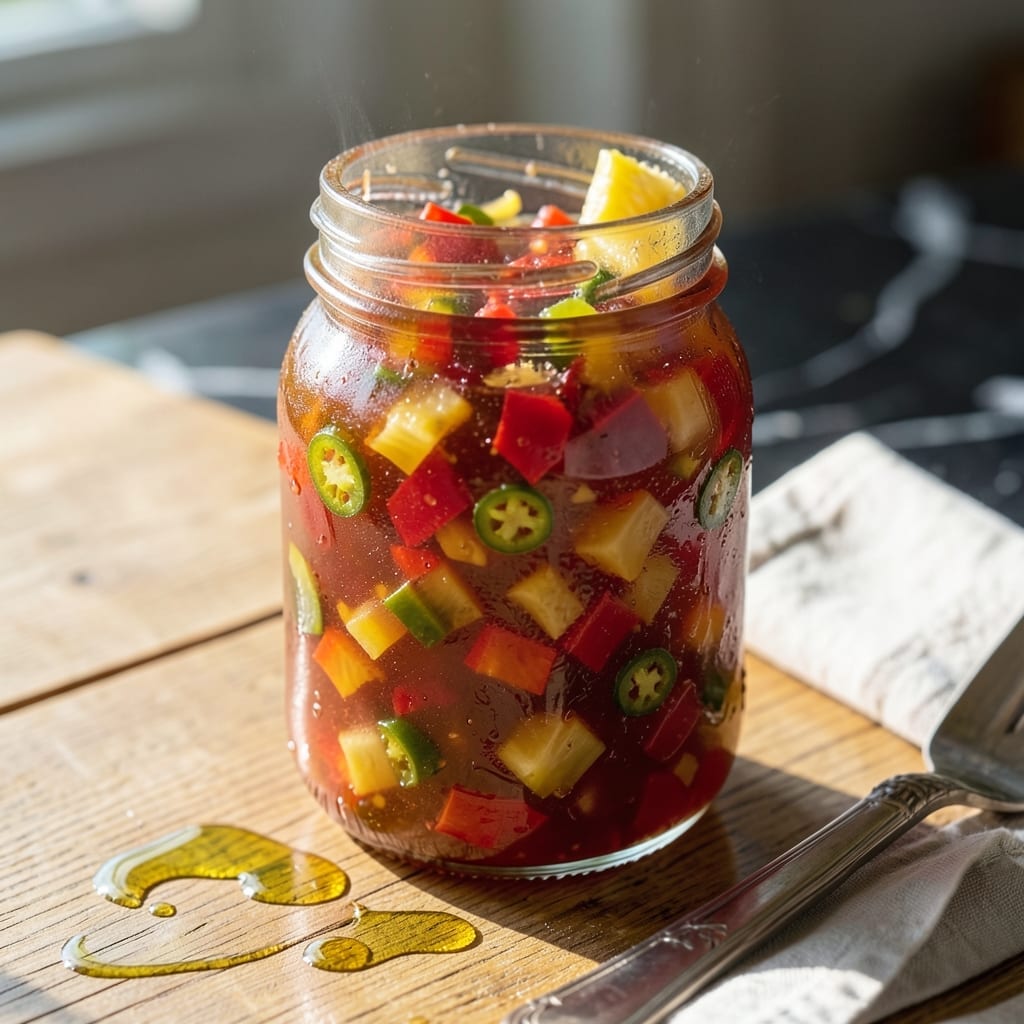
This sweet and spicy jelly transforms any charcuterie board with its vibrant flavor balance. I developed this recipe to capture the perfect harmony of tropical fruit and subtle heat.
With just a few simple ingredients and proper canning, you’ll have a versatile spread that keeps for months. The combination of pineapple and peppers creates a unique condiment that pairs beautifully with cheeses and cured meats.
Ingredients for Pineapple Pepper Jelly
Eight ingredients craft this vibrant, sweet-heat condiment perfect for any spread.
| Ingredient | Amount | Notes |
|---|---|---|
| Crushed Pineapple 🍍 | 2 cups | With juice, undrained |
| Red Bell Pepper 🌶️ | ½ cup | Finely diced for even distribution |
| Jalapeño Pepper 🌶️ | ¼ cup | Seeds removed for mild heat |
| Apple Cider Vinegar 🍏 | ¾ cup | 5% acidity for proper preservation |
| Granulated Sugar 🥄 | 4 cups | White sugar for clear jelly |
| Liquid Pectin 🧪 | 6 oz | One standard package |
| Lemon Juice 🍋 | 2 tbsp | Freshly squeezed for brightness |
| Pinch of Salt 🧂 | ¼ tsp | Fine grain for even distribution |
[recipe_ingredient_scaler]
The pineapple is the backbone—canned crushed pineapple in juice works best for consistent texture. For the peppers, fresh red bell and jalapeño provide the ideal color and heat balance. Find them at any local grocery store with a solid produce section. The pectin must be liquid (not powdered) for this recipe to set properly. Ball or Sure-Jell are reliable brands available at most supermarkets.
Need to adjust the heat? Add half the jalapeño seeds for more spice or swap in a milder pepper like poblano. Short on pineapple? Crushed mango works surprisingly well. The sugar amount is precise—don’t reduce or the jelly won’t set. If you’re out of apple cider vinegar, white vinegar at the same ratio can substitute, though the flavor profile will be slightly sharper.
This jelly seals beautifully in sterilized jars. Processed properly, it keeps for 12-18 months unopened. Once opened, store in the fridge for up to 1 month. The bright color fades slightly over time but the flavor remains vibrant.
Why You’ll Love This Recipe
- Minimal Chopping: I just toss the peppers and pineapple into the blender—no knife skills required.
- Sweet Heat Balance: The pineapple’s sweetness perfectly tempers the jalapeño’s kick, with apple cider vinegar tying it all together.
- Gift in a Jar: I make a double batch and give these away at holidays—they disappear faster than cookies.
- Pantry Staple: Honestly, it keeps for months, so I always have a jar ready for last-minute appetizers or cheese boards.
Step-by-Step Instructions for Pineapple Pepper Jelly
Master the technique for perfectly set jelly with balanced sweetness and subtle heat.
Step 1: Prepare the Vegetables and Fruit
Finely dice the 0.5 cup Red Bell Pepper and 0.25 cup Jalapeño Pepper—consistent small pieces ensure even distribution in the final jelly. Remove all seeds from the jalapeño to control the heat level. Measure out the 2 cups Crushed Pineapple with its juice, ensuring it remains undrained for maximum flavor.
Combine the diced peppers and crushed pineapple in a large, heavy-bottomed pot. The acidity from the pineapple juice helps soften the peppers as they cook, creating a smooth base for your jelly. Stir in the 0.25 tsp Pinch of Salt to enhance the natural flavors of the ingredients.
Step 2: Create the Sugar-Vinegar Syrup
Pour the 0.75 cup Apple Cider Vinegar into the pot with the fruit and pepper mixture. The vinegar’s 5% acidity is crucial for both preservation and achieving the proper gel set. Add all 4 cups Granulated Sugar at once, stirring well to begin dissolving it into the liquid.
Place the pot over medium-high heat and bring to a full rolling boil, stirring frequently to prevent scorching. This step ensures the sugar fully dissolves and integrates with the fruit mixture. Watch for the mixture to turn slightly translucent as the sugar melts completely.
Step 3: Incorporate Pectin and Acid
Once the sugar is fully dissolved, stir in the 2 tbsp Lemon Juice. The fresh acidity brightens the flavor profile and complements the sweetness. Immediately add the 6 oz Liquid Pectin, pouring it in slowly while stirring constantly to distribute it evenly throughout the mixture.
Return the mixture to a hard, rolling boil that cannot be stirred down. Boil vigorously for exactly 1 minute, timing precisely. This step activates the pectin, ensuring your jelly sets properly with the ideal consistency.
Step 4: Test and Jar the Jelly
After boiling, perform a gel test by placing a small spoonful of the mixture on a chilled plate. If it wrinkles when pushed with a finger after 30 seconds, the jelly is ready. If not, boil for another 30-60 seconds and retest.
Ladle the hot jelly into sterilized jars, leaving ¼-inch headspace. Wipe the rims with a clean, damp cloth to ensure a proper seal. Process the jars in a water bath for 10 minutes to preserve, or store in the refrigerator for immediate use. The jelly will continue to set as it cools, achieving its final texture within 24 hours.
Pro Tips For Making Pineapple Pepper Jelly
- Simmer Low and Slow: Keep the heat at a gentle simmer—high heat will burn the sugar and turn your jelly bitter. I learned this the hard way after ruining a batch by rushing it.
- Drain the Pineapple: Use a fine-mesh strainer to drain crushed pineapple well, or your jelly will be watery. Sounds tedious, but it actually changes the outcome.
- Seed the Jalapeños: Remove all seeds and membranes from the jalapeños unless you want a fiery jelly. After burning my tongue once, I now double-check every pepper.
- Use a Candy Thermometer: Skip guessing and cook until the mixture hits 220°F on a thermometer. This guarantees the jelly sets properly without overcooking.
Creative Variations of This Recipe
Mango Pepper Fusion
Swap ½ of the crushed pineapple for crushed mango to create a tropical twist. The mango adds a rich, honeyed depth while keeping the signature heat. I discovered this variation at a local farmers market where the vendor used Alphonso mangoes. 💛
Habanero Heat Boost
Replace the jalapeño with 1 finely diced habanero (seeds removed) for a fiery kick. The habanero’s fruity heat pairs beautifully with the pineapple. Wear gloves when handling—trust me on this one.
Herbal Infusion
Add 1 tbsp fresh thyme leaves or 2 tsp dried thyme while cooking for an earthy note. I forage wild thyme along my coastal rides and love how it elevates the jelly’s complexity.
Citrus Zing
Include zest of 1 lime along with the lemon juice for a brighter, more citrus-forward profile. The lime zest adds a subtle bitterness that balances the sweetness perfectly.
Savory Garlic Twist
Sauté 2 minced garlic cloves in 1 tbsp olive oil before adding to the pepper mixture. This adds a savory depth that works wonderfully with cheeses on charcuterie boards. 🔥
Low-Sugar Option
Use 2 cups sugar and 2 cups honey for a less refined sweetness. Note that this may slightly alter the set, so test for gel consistency before jarring.
Nutrition Facts
Frequently Asked Questions
Can I use fresh pineapple instead of canned?
Yes, but crush fresh pineapple to measure 2 cups with juice. Canned is more consistent for pectin setting. Add 1 tbsp lemon juice to fresh to boost acidity.
Why did my jelly not set properly?
Likely underboiled or incorrect pectin ratio. Ensure a hard boil for 1 full minute after adding pectin. Always use liquid pectin, not powdered.
How long does this jelly last unopened?
Properly canned and sealed, it keeps for 12-18 months in a cool, dark place. Refrigerate after opening and use within 1 month.
Can I reduce the sugar amount?
Not recommended—sugar is crucial for gel formation and preservation. Reducing it may prevent proper setting and shorten shelf life.

Trained in classic French technique but raised on slow-cooked ribs and spicy rubs, she blends culinary skill with smoke and soul.
- Recipe for Boneless Pork Chops in Cast Iron Skillet: Sear and Baste to Juicy Perfection - October 3, 2026
- Recipe for Boneless Cross Rib Roast: Slow-Roasted Beef with Herb Crust - October 3, 2026
- Hamburgers in Sauce Recipe Crock Pot: Slow-Cooked Savory Delight - October 3, 2026