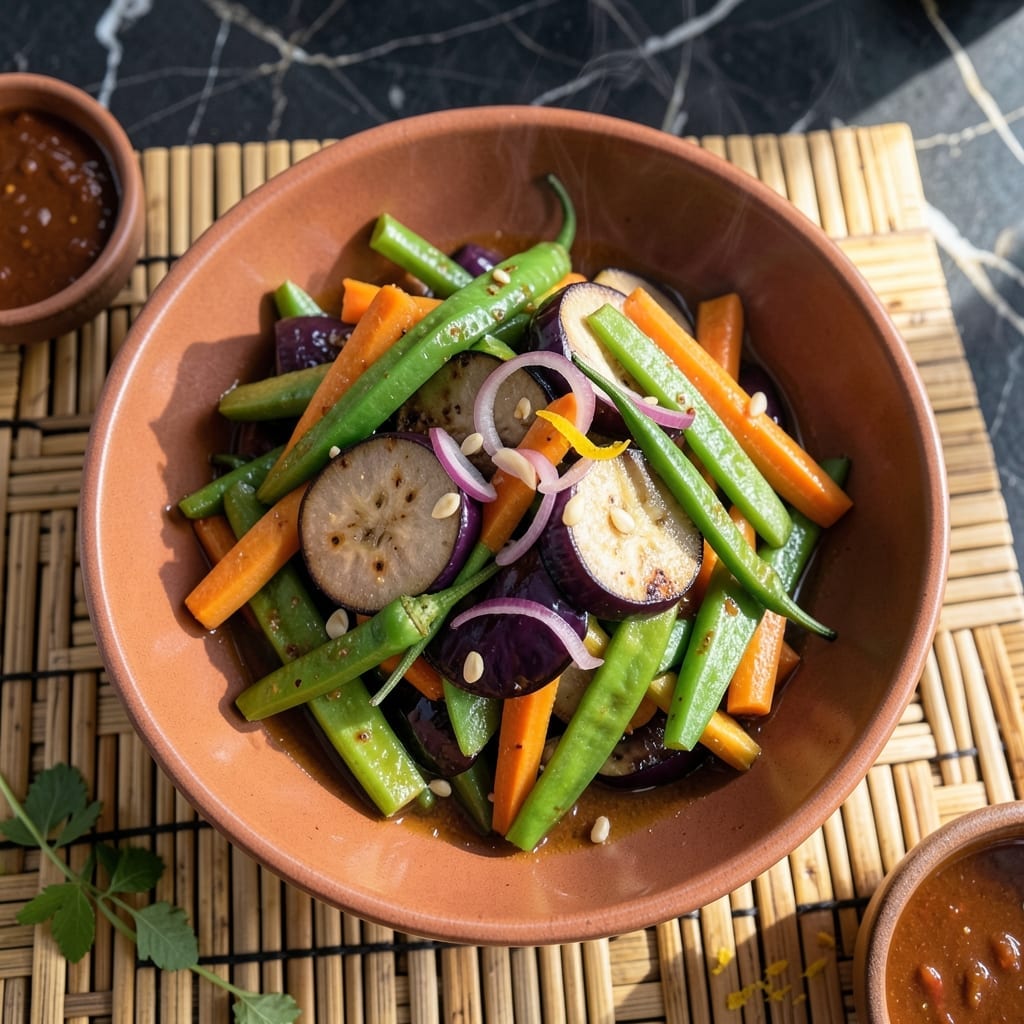
Filipino cuisine transforms humble vegetables into vibrant, flavor-packed dishes that shine as sides or mains. These recipes highlight fresh, local produce with bold seasonings.
From crispy fried eggplant to tangy green papaya salad, each dish offers a taste of authentic Pinoy flavors. Simple ingredients deliver complex, satisfying results every time.
Ingredients for Pinoy Recipe Vegetable Dishes
Fresh vegetables and bold seasonings create these authentic Pinoy-style sides with ease.
| Ingredient | Amount | Notes |
|---|---|---|
| Eggplant 🍆 | 2 whole | Medium-sized, sliced thin |
| Green Papaya 🍈 | 1 whole | Peeled, julienned |
| Carrots 🥕 | 2 whole | Peeled, cut into sticks |
| Long Green Chilies 🌶️ | 2 whole | Sliced diagonally |
| Red Onion 🧅 | 1 whole | Thinly sliced |
| Garlic Cloves 🧄 | 4 cloves | Minced finely |
| Fresh Ginger 🌿 | 1 tbsp | Peeled, grated |
| Soy Sauce 🫒 | ¼ cup | Filipino brand preferred |
| White Vinegar 💧 | ½ cup | Or cane vinegar |
| Brown Sugar 🍚 | 2 tbsp | Light or dark |
| Fish Sauce 🫒 | 2 tbsp | Vegan fish sauce alternative |
| Vegetable Oil 🫒 | 1 cup | For frying |
| Salt 🧂 | 1 tsp | Or to taste |
| Black Pepper 🌶️ | ½ tsp | Freshly ground |
[recipe_ingredient_scaler]
The eggplant should be firm and glossy—avoid any with soft spots. Filipino markets often carry the long, slender variety that’s ideal for frying. For green papaya, look for unripe fruit (it should feel hard and green on the outside). Asian grocery stores are your best bet, or sub with green mango if unavailable. Carrots and chilies add color and crunch, so choose vibrant, unblemished produce.
No green papaya? Shredded cabbage or green mango work well (adjust sweetness as needed). For a milder dish, reduce the chilies or remove seeds. Vegan fish sauce can be found at Whole Foods or online—Ocean’s Halo is a reliable brand. If using regular soy sauce, opt for low-sodium to control saltiness. Brown sugar can be swapped for coconut sugar at a 1:1 ratio.
Prep all vegetables just before cooking to maintain freshness. Store leftover dish in an airtight container in the fridge for up to 3 days. The flavors meld beautifully overnight, making this taste even better the next day. Not suitable for freezing.
Why You’ll Love This Recipe
- One Pot Wonder: I just toss everything in—eggplant, green papaya, carrots—and let it simmer while I set the table.
- Umami Bomb: The charred eggplant and crisp red onion give that deep, savory taste I crave every time.
- Feeds a Crowd: Honestly, I double the batch for potlucks and it’s always the first dish to vanish.
- Peso Stretcher: Between us, this costs less than a fancy salad but tastes like a million bucks.
Step-by-Step Instructions for Filipino-Style Vegetable Dishes
Master these techniques to create authentic, vibrant sides with perfect texture and balance.
Step 1: Prepare and Slice the Vegetables
Begin by peeling the green papaya and cutting it into thin julienne strips. Slice the eggplant into ¼-inch thick rounds—the thinner the slices, the faster they’ll absorb the marinade. Peel and cut the carrots into 2-inch sticks for even cooking.
Thinly slice the red onion into half-moons and diagonally cut the long green chilies into 1-inch pieces. Proper slicing ensures even cooking and optimal flavor absorption. Keep all cut vegetables separate until ready to combine.
Step 2: Create the Marinade Base
In a large mixing bowl, whisk together the 0.25 cup soy sauce, 0.5 cup white vinegar, 2 tablespoons brown sugar, 2 tablespoons fish sauce, 1 teaspoon salt, and 0.5 teaspoon black pepper until the sugar fully dissolves. This balance of salty, sweet, and tangy is essential for authentic Filipino flavor.
Add the minced garlic and grated ginger to the marinade. These aromatics form the flavor foundation, so ensure they’re finely minced and grated for maximum infusion. Let the mixture sit for 5 minutes to allow the flavors to meld before combining with the vegetables.
Step 3: Marinate the Vegetables
Combine all the sliced vegetables—eggplant, green papaya, carrots, red onion, and long green chilies—in the marinade bowl. Gently toss to coat evenly, ensuring every piece is submerged in the liquid. The eggplant will begin to soften slightly as it absorbs the marinade.
Cover the bowl and let it marinate at room temperature for 30 minutes. This allows the vegetables to soak up the complex flavors. For deeper penetration, you can gently stir the mixture halfway through the marinating time.
Step 4: Fry to Perfection
Heat the 1 cup vegetable oil in a deep skillet over medium-high heat until it reaches 350°F. To test readiness, drop a small piece of vegetable into the oil—it should sizzle immediately. Carefully add the marinated vegetables in batches to avoid overcrowding the pan.
Fry for 3-4 minutes until the vegetables turn light golden brown and the edges crisp slightly. Use a slotted spoon to transfer them to a paper towel-lined plate to drain excess oil. The goal is a tender interior with a crisp exterior.
Step 5: Serve Immediately
Arrange the fried vegetables on a serving platter while still hot. The contrast of the crispy exterior and the tangy, savory marinade makes these sides irresistible. Serve with steamed rice to balance the bold flavors.
For best results, consume immediately as the vegetables lose their crispness as they cool. The residual heat will continue to soften the textures slightly, creating a harmonious bite.
Pro Tips For Making Pinoy Recipe Vegetable Dishes
- Salt the Eggplant: Sprinkle sliced eggplant with salt and let it sit for 10 minutes before cooking to draw out bitterness—I learned this the hard way after serving a bitter batch once.
- Peel the Papaya: Green papaya skin can be tough, so peel it completely before slicing, even if it looks thin.
- Cook Chilies Last: Add long green chilies in the last 2-3 minutes of cooking to keep their fresh, sharp heat instead of letting them turn mushy.
- Slice Evenly: Cut carrots and eggplant into uniform pieces so everything cooks at the same rate—no one wants crunchy carrots and mushy eggplant.
Flavor Customization for pinoy recipe vegetable dishes
Spice It Up
Add 1-2 sliced Thai bird’s eye chilies to the marinade for an extra kick. These tiny peppers pack serious heat but balance beautifully with the tangy vinegar. I find they elevate the dish without overpowering the vegetables’ natural flavors. 🌶️
Sweeten the Deal
For a sweeter profile, increase the brown sugar to 3 tablespoons or add 1 tablespoon honey. This works especially well with the green papaya, enhancing its natural sweetness. The contrast with the salty fish sauce is absolutely divine.
Umami Boost
Stir in 1 tablespoon oyster sauce (or vegan alternative) to the marinade for deeper umami richness. I prefer Lee Kum Kee brand for its consistent quality. This addition creates a more complex flavor base that lingers on the palate.
Herb Infusion
Fresh herbs can transform this dish. Add ¼ cup chopped cilantro or Thai basil leaves to the marinade. The bright, citrusy notes of cilantro complement the vinegar perfectly, while basil adds a subtle anise flavor.
Citrus Twist
For a refreshing variation, include 2 tablespoons calamansi juice or lime juice in the marinade. This adds a bright, citrusy dimension that cuts through the richness. I squeeze fresh calamansi when available at Filipino markets. 💛
Crunchy Topping
After frying, sprinkle with 2 tablespoons crushed roasted peanuts or toasted sesame seeds. This adds texture and a nutty depth. The crunch contrasts beautifully with the tender vegetables, making every bite more exciting.
Nutrition Facts
Frequently Asked Questions
Can I use regular papaya instead of green?
No, green papaya is unripe and firm, perfect for this dish. Regular papaya is too soft and sweet. Substitute with green mango or shredded cabbage if needed.
How do I make this dish less spicy?
Remove the seeds from the chilies or reduce the quantity. For zero heat, skip the chilies entirely. The tangy marinade still delivers great flavor.
What’s the best oil for frying?
Use vegetable, canola, or peanut oil for their high smoke points. Avoid olive oil as it can burn at 350°F. Always heat oil to the right temperature before adding food.
Can I bake instead of fry?
Yes, but texture differs. Toss marinated veggies with 1 tablespoon oil and bake at 400°F for 15-20 minutes, flipping halfway. They’ll be softer, not crispy.

Trained in classic French technique but raised on slow-cooked ribs and spicy rubs, she blends culinary skill with smoke and soul.
- Recipe for Boneless Pork Chops in Cast Iron Skillet: Sear and Baste to Juicy Perfection - October 3, 2026
- Recipe for Boneless Cross Rib Roast: Slow-Roasted Beef with Herb Crust - October 3, 2026
- Hamburgers in Sauce Recipe Crock Pot: Slow-Cooked Savory Delight - October 3, 2026