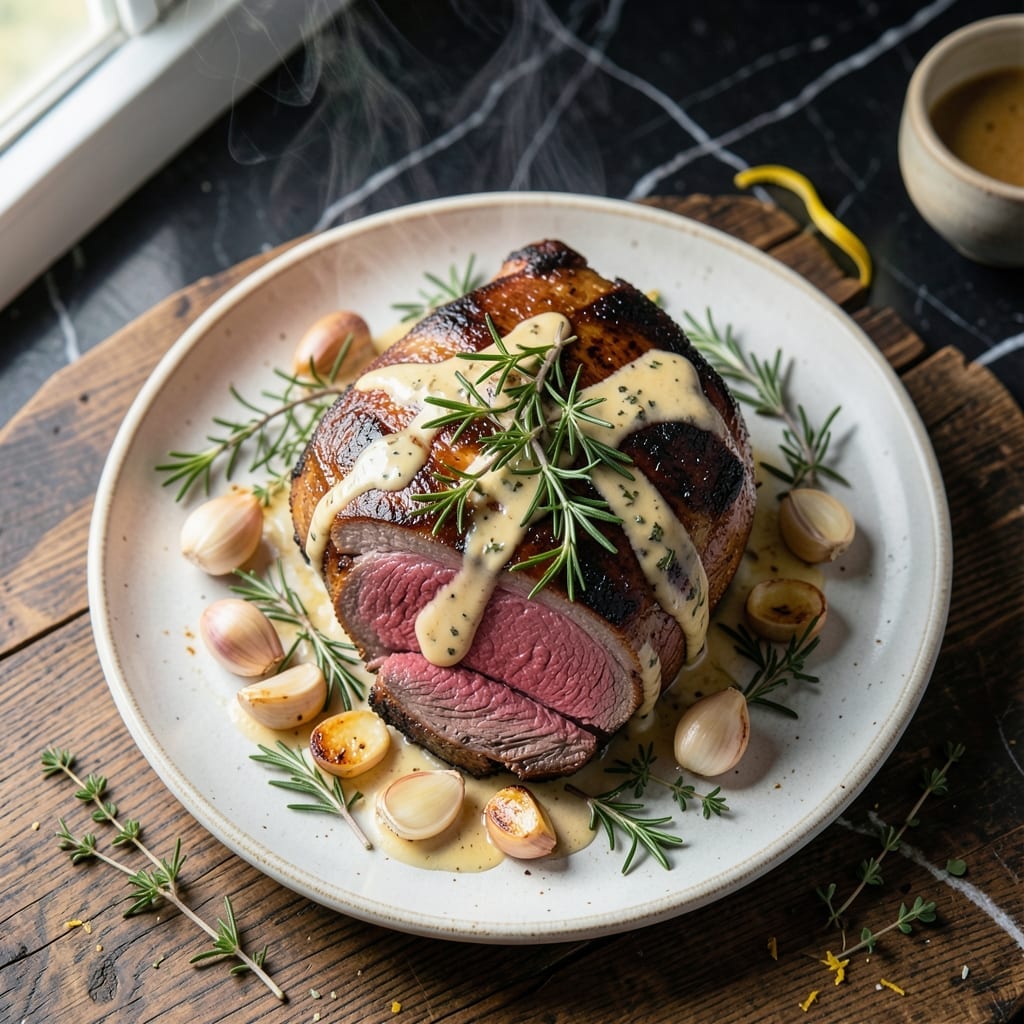
This beef tenderloin delivers a tender, elegant centerpiece for your holiday table. My method ensures perfect results every time.
With a garlic herb crust and precise cooking, it transforms a simple cut into a showstopping dish worth celebrating.
Ingredients for Pioneer Woman Beef Tenderloin
Pantry staples meet premium beef for a holiday-worthy centerpiece with bold flavor.
| Ingredient | Amount | Notes |
|---|---|---|
| Beef Tenderloin 🥩 | 3 lb | Center-cut, trimmed of excess fat |
| Unsalted Butter 🧈 | ½ cup | Room temperature, divided |
| Garlic Cloves 🧄 | 6 cloves | Minced for maximum flavor |
| Fresh Rosemary 🌿 | 3 tbsp | Finely chopped, stems removed |
| Fresh Thyme 🍃 | 3 tbsp | Finely chopped, stems removed |
| Kosher Salt 🧂 | 1 ½ tsp | Diamond Crystal preferred |
| Freshly Ground Black Pepper 🌶️ | 1 tsp | Coarse grind recommended |
| Dijon Mustard 🟡 | 2 tbsp | Smooth, not whole grain |
| Olive Oil 🫒 | 1 tbsp | Extra-virgin, for searing |
| Red Wine 🍷 | ½ cup | Dry variety like Cabernet |
| Beef Broth 🥣 | ½ cup | Low-sodium preferred |
| All-Purpose Flour 🌾 | 2 tbsp | For thickening pan sauce |
[recipe_ingredient_scaler]
The beef tenderloin is the star—splurge on center-cut from Costco or Whole Foods (the good stuff, not the pre-cut steaks). Look for even marbling and vibrant color. I always ask the butcher to trim excess fat for me (saves time and mess). The herbs? Fresh is non-negotiable here. Grab a bunch of rosemary and thyme—they keep well in the fridge wrapped in damp paper towels.
No red wine? Beef broth with a splash of balsamic mimics the depth. Fresh herbs not an option? Dried at one-third the amount (but fresh really is better). The Dijon can be swapped for whole-grain if that’s what’s in the pantry. For a richer sauce, deglaze with dry sherry instead of wine—it’s what I reach for when I’m feeling fancy.
Leftovers (if there are any) keep beautifully in the fridge for 4-5 days. Slice and reheat gently in the sauce to prevent drying out. Freezes for 3 months if wrapped tightly. Bring to room temp before reheating for best texture (worth the extra minute).
Why You’ll Love This Recipe
- Minimal Fuss: I just rub the beef with butter, garlic, and herbs, then let the oven do the work.
- Holiday Star: I serve this for Christmas and birthdays—always disappears first.
- Leftover Luxury: Cold slices make the best next-day sandwiches. Honestly, I look forward to them.
Step-by-Step Instructions for Beef Tenderloin With Garlic Herb Crust
This is my go-to method for a showstopping holiday centerpiece that melts in your mouth.
Step 1: Prep and Season the Tenderloin
Pat the 3 lb beef tenderloin completely dry with paper towels—this is non-negotiable for achieving that perfect sear. Trim any remaining silver skin or excess fat, leaving just enough to add flavor without being chewy.
Season generously with all the 1.5 tsp kosher salt and 1 tsp freshly ground black pepper, pressing it into the meat so it adheres well. I use Diamond Crystal kosher salt here because its larger flakes distribute more evenly and give better control over seasoning.
Let the seasoned tenderloin sit at room temperature for 30-45 minutes before cooking. This step ensures even cooking throughout—cold meat seizes up when it hits the hot pan, leading to uneven doneness.
Step 2: Create the Garlic Herb Crust
In a small bowl, mix 0.5 cup unsalted butter (room temperature) with the 6 cloves minced garlic cloves, 3 tbsp fresh rosemary, and 3 tbsp fresh thyme. I chop the herbs finely so they adhere better to the meat and distribute their flavor evenly.
Stir in the 2 tbsp Dijon mustard until fully incorporated. This adds a subtle tang that cuts through the richness of the beef and butter. The mixture should be thick and spreadable—almost like a compound butter with herbs.
Spread this garlic herb butter all over the tenderloin, pressing it in so it forms a thick crust. This isn’t just for flavor; it creates a beautiful golden-brown exterior that locks in all those incredible juices.
Step 3: Sear and Roast to Perfection
Preheat your oven to 425°F. Heat the 1 tbsp olive oil in a large oven-safe skillet over high heat until it shimmers but doesn’t smoke. Add the tenderloin and sear on all sides for 2-3 minutes per side until deeply browned.
You’re looking for a dark, caramelized crust—this is where the Maillard reaction works its magic, creating complex flavors. Don’t rush this step; a good sear is the foundation of a great roast.
Transfer the skillet to the preheated oven and roast for 20-25 minutes until the internal temperature reaches 130-135°F for medium-rare. The exact time depends on your oven and the thickness of your tenderloin, so use a meat thermometer for accuracy.
Step 4: Make the Red Wine Pan Sauce
Transfer the tenderloin to a cutting board and tent loosely with foil. Place the skillet on the stovetop over medium heat and add the 2 tbsp all-purpose flour, stirring to coat the browned bits on the bottom. Cook for 1 minute to remove the raw flour taste.
Pour in the 0.5 cup red wine and 0.5 cup beef broth, scraping up all those flavorful browned bits with a wooden spoon. This deglazing step is where you capture all that concentrated beefy goodness. Simmer for 3-4 minutes until the sauce thickens enough to coat the back of a spoon.
Strain the sauce through a fine-mesh sieve to remove any solids, then pour it into a gravy boat or small pitcher. The sauce should be rich, glossy, and full of depth—perfect for drizzling over each slice of tenderloin.
Step 5: Rest, Slice, and Serve
Let the tenderloin rest for 15 minutes before slicing. I know it’s tempting to dig in right away, but resting allows the juices to redistribute throughout the meat. If you cut into it too soon, all those beautiful juices will end up on your cutting board instead of in the beef.
Slice the tenderloin into 1-inch thick medallions, cutting against the grain for maximum tenderness. Arrange the slices on a platter and drizzle some of that incredible red wine sauce over the top.
Serve immediately while still warm. Each bite should deliver perfectly tender beef with a flavorful herb crust, complemented by the rich, savory sauce. This is holiday dining at its finest.
Pro Tips For Making Pioneer Woman Beef Tenderloin
- Room Temp First: Take the beef tenderloin out of the fridge 1-2 hours before cooking—cold meat seizes up and cooks unevenly, and I learned this the hard way with a dry center.
- Sear Hard, Roast Gentle: Crank the oven to 450°F for a screaming hot sear on the butter-herb crust, then drop it to 325°F to finish cooking through without burning the garlic and rosemary.
- Dry the Surface: Pat the tenderloin bone-dry with paper towels before seasoning—any moisture steams the meat instead of letting it form that deep brown crust we all want.
- Butter Last: Add the unsalted butter, garlic, rosemary, and thyme only after the initial sear, or the milk solids in the butter will burn and turn bitter before the meat is done.
Make-Ahead Tips for Leftovers
Room Temperature Prep
Take the 3 lb beef tenderloin out of the fridge 1 hour before cooking. This ensures even cooking throughout the roast. I learned this the hard way when my first attempt had a cold center.
Herb Butter Advance
Mix the 0.5 cup unsalted butter, 6 cloves minced garlic, 3 tbsp rosemary, and 3 tbsp thyme up to 24 hours ahead. Store in an airtight container in the fridge. This saves time and lets flavors meld beautifully. 🌿
Sear and Roast Later
After applying the herb butter, you can refrigerate the seasoned tenderloin for up to 4 hours before searing. This works well when hosting dinner parties.
Sauce Prep
Measure out the 0.5 cup red wine and 0.5 cup beef broth in advance. Having these ready means you can deglaze immediately after roasting, while the pan is still hot.
Resting Strategy
Transfer the roasted tenderloin to a warm platter and tent with foil. It will stay hot for 30-45 minutes while you finish the sauce. This timing works perfectly for holiday meals.
Reheating Tip
If making ahead completely, undercook by 5°F, then reheat slices in the sauce at 300°F for 10-15 minutes. This prevents overcooking while maintaining tenderness. 🔥
Nutrition Facts
Frequently Asked Questions
What’s the ideal internal temperature for medium-rare?
Remove from oven at 130-135°F—it will rise to 135-140°F while resting. Use a meat thermometer for accuracy.
Can I substitute dried herbs for fresh?
Yes, use 1 tbsp dried for every 3 tbsp fresh. Rehydrate in 1 tsp warm water first for better flavor distribution.
How long should it rest before slicing?
Let it rest 15 minutes tented with foil. This keeps juices inside the meat, not on your cutting board.
What if my sauce is too thin?
Simmer longer or mix 1 tsp cornstarch with 1 tbsp cold water, then stir into sauce. Thickens in 1-2 minutes.

Trained in classic French technique but raised on slow-cooked ribs and spicy rubs, she blends culinary skill with smoke and soul.
- Recipe for Boneless Pork Chops in Cast Iron Skillet: Sear and Baste to Juicy Perfection - October 3, 2026
- Recipe for Boneless Cross Rib Roast: Slow-Roasted Beef with Herb Crust - October 3, 2026
- Hamburgers in Sauce Recipe Crock Pot: Slow-Cooked Savory Delight - October 3, 2026