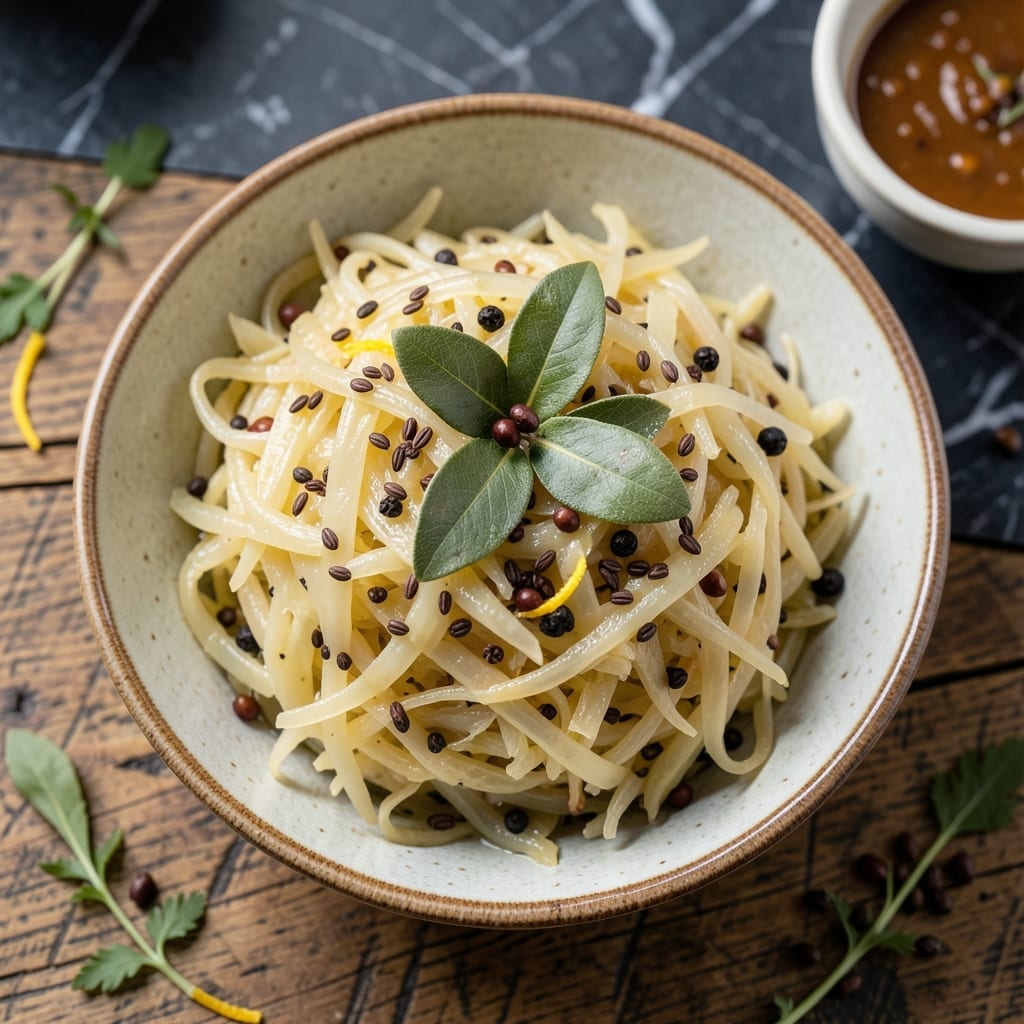
Fermenting cabbage at home delivers perfect sauerkraut with minimal effort. This traditional method transforms simple ingredients into a tangy, probiotic-rich side dish.
With precise timing and temperature control, you’ll achieve consistent results. The process honors classic techniques while ensuring modern kitchen safety standards.
Ingredients for Pioneer Woman Sauerkraut
Traditional fermentation requires just cabbage, salt, and time to create this tangy classic.
| Ingredient | Amount | Notes |
|---|---|---|
| Green Cabbage 🥬 | 2 ½ lb | Fresh, tightly packed heads |
| Kosher Salt 🧂 | 1 ½ tbsp | Diamond Crystal preferred for consistency |
| Caraway Seeds 🌿 | 1 tbsp | Whole, for authentic flavor |
| Black Peppercorns 🌶️ | 1 tsp | Freshly cracked for best results |
| Juniper Berries 🍇 | 10 pieces | Lightly crushed (optional, traditional) |
| Bay Leaves 🍃 | 2 whole | Dried, for depth of flavor |
| Filtered Water 💧 | 1 cup | Chlorine-free for proper fermentation |
| Apple 🍎 | 1 whole | Peeled, cored, and sliced (optional for sweetness) |
| Onion 🧅 | 1 whole | Thinly sliced (optional for complexity) |
| Garlic Cloves 🧄 | 4 cloves | Peeled and smashed (optional for depth) |
[recipe_ingredient_scaler]
The cabbage is paramount for perfect sauerkraut. Select firm, dense heads of green cabbage with crisp leaves—avoid pre-shredded mixes (they oxidize too quickly). Kosher salt is essential for both flavor and fermentation consistency; Diamond Crystal is the industry standard for its pure, additive-free composition. Caraway seeds add that unmistakable Old-World flavor; find them in the spice aisle at Whole Foods or specialty grocers.
Out of caraway? Fennel seeds at half the amount provide a similar anise note. Juniper berries can be omitted, but they contribute a subtle piney depth. For a sweeter kraut, add a thinly sliced apple or onion—this balances the tang without compromising the fermentation. Never use iodized salt; its additives can inhibit fermentation and create a metallic taste.
Fermented sauerkraut keeps for 6-12 months in a cool, dark place once fully fermented. Store in airtight containers, submerged under liquid to prevent mold. The flavor deepens over time, so resist eating it all at once—patience rewards with superior complexity.
Why You’ll Love This Recipe
- Set It & Forget It: No kneading, no fancy gadgets—just shred, salt, and let the cabbage do its magic over time.
- Tangy & Aromatic: The caraway seeds and juniper berries give it that deep, earthy flavor I crave with every bite.
- Meal Prep Champion: I make a big batch and it keeps for weeks, ready to brighten up sandwiches or sausages anytime.
- Penny-Wise Ferment: A head of cabbage and a handful of spices cost pennies but taste like a gourmet treat. Honestly, my wallet thanks me.
Step-by-Step Instructions for Tangy Fermented Cabbage
Master the fermentation process with precision and patience for ideal results.
Step 1: Prepare the Cabbage and Brine
Remove any outer leaves from the 2.5 lb green cabbage and rinse under cold water. Quarter the cabbage and remove the core, then thinly slice or shred using a sharp knife or mandoline. Place the shredded cabbage in a large mixing bowl.
Sprinkle the 1.5 tbsp kosher salt evenly over the cabbage. Massage the cabbage firmly with your hands for 5-7 minutes until it releases liquid and becomes slightly wilted. This step is crucial for creating the brine that will preserve and ferment the cabbage properly.
Step 2: Add Aromatics and Pack the Jar
Add the 1 tbsp caraway seeds, 1 tsp black peppercorns, 10 pieces juniper berries, and 2 whole bay leaves to the cabbage. If using, incorporate the peeled, cored, and sliced apple, thinly sliced onion, and peeled and smashed 4 cloves garlic for additional depth of flavor.
Pack the mixture tightly into a clean, large glass jar or fermentation crock, pressing down firmly to remove air pockets. Pour the 1 cup filtered water into the jar, ensuring the cabbage is fully submerged under the liquid. The brine should cover the cabbage by at least 1 inch.
Place a fermentation weight or a smaller jar filled with water on top to keep the cabbage submerged. Cover the jar loosely with a lid or clean cloth to allow gases to escape during fermentation.
Step 3: Ferment at Room Temperature
Store the jar at room temperature, ideally between 65-75°F, away from direct sunlight. Fermentation will begin within 24-48 hours, indicated by bubbles forming in the brine. This is a sign that the lactic acid bacteria are actively working.
Check the jar daily to ensure the cabbage remains submerged. Skim off any scum that forms on the surface with a clean spoon. Taste the sauerkraut after 5-7 days to monitor the fermentation progress. The flavor will start tangy and become more pronounced over time.
Step 4: Complete Fermentation and Store
Allow the sauerkraut to ferment for a total of 3-4 weeks, or until it reaches your preferred level of tanginess. The longer it ferments, the more developed and sour the flavor will become. You’ll notice the texture softening and the aroma deepening as it matures.
Once fermented to your liking, remove the weight and any remaining scum. Seal the jar with a tight-fitting lid and transfer it to the refrigerator. Properly fermented and stored sauerkraut will keep for several months in the refrigerator, with the flavor continuing to develop over time.
Pro Tips For Making Pioneer Woman Sauerkraut
- Massage the Cabbage: Work the salt into the shredded cabbage with your hands for at least 5 minutes—it should release enough liquid to cover itself. I learned this the hard way when my first batch stayed dry and tough.
- Use Fresh Caraway: Toast the caraway seeds in a dry pan for 30 seconds before adding them. Sounds weird, but it works: the flavor wakes up and actually changes the outcome.
- Skip the Packed Salt: Measure kosher salt by weight (2-3% of cabbage weight) instead of volume—packed salt throws off the ratio every time. My grandmother swore by this, and she was right.
- Weight It Down: Place a zip-top bag filled with water on top of the cabbage in the fermentation vessel to keep it submerged. This isn’t the prettiest method, but it’s the tastiest way to prevent mold.
Flavor Customization for This Dish
Herb-Infused Kraut
Forage wild dill or thyme from coastal paths and add 2 tbsp fresh herbs to your jar. This adds earthy complexity that pairs beautifully with the tang. I love how these local finds connect my cooking to the land. 🌿
Spicy Kick Variation
Add 1 tsp red pepper flakes or 1 sliced jalapeño when packing your jar. The heat builds gradually during fermentation, creating a perfect balance with the sour notes. It reminds me of the spicy rubs from my BBQ competition days.
Sweet and Tangy
Incorporate 1 grated carrot and 1 tbsp maple syrup to your cabbage mix. The natural sweetness counteracts the acidity beautifully. This version is particularly popular at my family gatherings.
Smoky Depth
For a unique twist, add 1 tsp smoked paprika or a small piece of hickory wood chip (food-safe) to the jar. The smoke infuses during fermentation, giving your kraut a subtle BBQ character that honors my pitmaster roots.
Umami Boost
Stir in 1 tbsp nutritional yeast or 1 tsp mushroom powder before packing. These add a savory depth that makes the kraut taste almost meaty. I discovered this trick while training in French kitchens. 💡
Citrus Zing
Add the zest of 1 lemon or 1 orange to brighten the flavor profile. The citrus oils preserve well in the brine and add a refreshing note that cuts through the richness of any dish you pair it with.
Nutrition Facts
Frequently Asked Questions
What’s the ideal fermentation temperature?
Keep your jar at 65-75°F for best results. Cooler temps slow fermentation, while warmer ones can make it too sour too fast. A pantry or cupboard away from heat sources works perfectly.
How do I know when it’s ready?
Taste after 5-7 days, then weekly. It’s done when it reaches your preferred tanginess, usually 3-4 weeks. The texture will soften and the aroma will deepen as it matures.
Can I use table salt instead?
Avoid iodized table salt—it can inhibit fermentation. Stick with kosher salt or sea salt for consistent, safe results. Diamond Crystal is the gold standard for home fermenters.
Why is there scum on top?
Scum is normal during active fermentation. Skim it off daily with a clean spoon to prevent mold. Ensure your cabbage stays submerged under brine to inhibit harmful bacteria growth.

Trained in classic French technique but raised on slow-cooked ribs and spicy rubs, she blends culinary skill with smoke and soul.
- Recipe for Boneless Pork Chops in Cast Iron Skillet: Sear and Baste to Juicy Perfection - October 3, 2026
- Recipe for Boneless Cross Rib Roast: Slow-Roasted Beef with Herb Crust - October 3, 2026
- Hamburgers in Sauce Recipe Crock Pot: Slow-Cooked Savory Delight - October 3, 2026