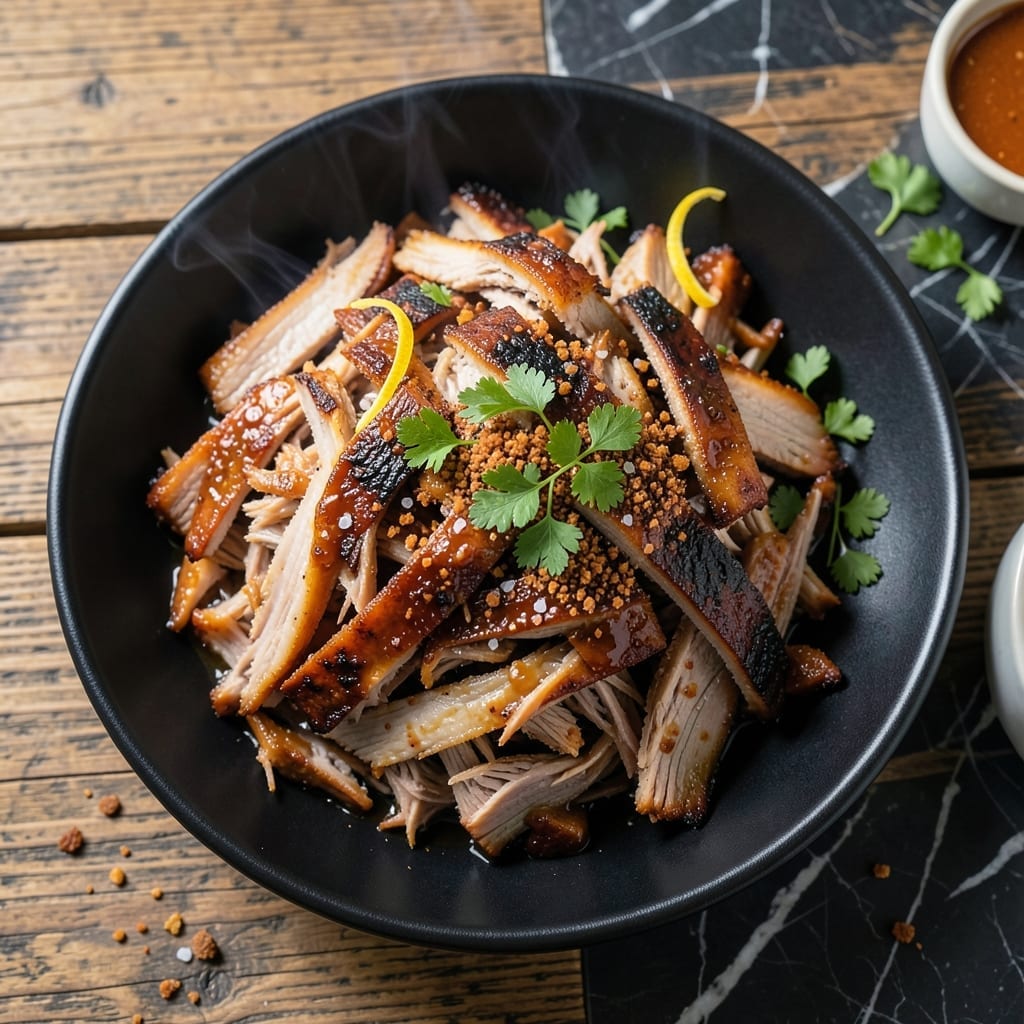
There’s nothing like the rich aroma of hickory-smoked pulled pork coming off a Pit Boss grill. This method transforms tough pork shoulder into tender, flavorful meat with minimal effort.
By maintaining a steady 225°F and using a simple dry rub, you’ll achieve that coveted bark and fall-apart texture. The pellet grill does most of the work while you enjoy the process.
Ingredients for Pit Boss Pellet Grill Pulled Pork
Simple rub, one cut of meat, and hickory pellets are all you need.
| Ingredient | Amount | Notes |
|---|---|---|
| Pork Shoulder 🥩 | 4 lb | Bone-in for extra flavor |
| Hickory Wood Pellets 🪵 | 20 lb | For Pit Boss pellet grill |
| Brown Sugar 🧈 | ½ cup | Light or dark variety |
| Kosher Salt 🧂 | 2 tbsp | Diamond Crystal preferred |
| Black Pepper 🌶️ | 2 tbsp | Freshly ground for best flavor |
| Paprika 🌶️ | 1 tbsp | Sweet or smoked variety |
| Garlic Powder 🧄 | 1 tbsp | Not garlic salt |
| Onion Powder 🧅 | 1 tbsp | Fresh ground preferred |
| Chili Powder 🌶️ | 1 tbsp | Adjust for heat preference |
| Cumin 🌿 | 1 tsp | Ground for dry rub |
| Apple Cider Vinegar 🍏 | ½ cup | For spritzing during cook |
| Yellow Mustard 🟡 | ¼ cup | Binder for the rub |
| Pork Broth 🥣 | 1 cup | Low-sodium preferred |
[recipe_ingredient_scaler]
The pork shoulder is the star here. Bone-in gives you that extra-rich flavor and stays juicier during the long cook. I grab mine from Costco—they’ve got big, well-marbled cuts at a good price. Most butcher shops will also have it labeled as pork butt (same thing). Look for 8-10 lbs if you’re feeding a crowd, but 4 lbs is perfect for this recipe.
No hickory pellets? Apple or pecan wood work great too—sweeter profile but still delicious. Out of apple cider vinegar? White vinegar in a pinch (just not as fruity). For the rub, Penzeys spices are my go-to, but store brands are fine. If you don’t have pork broth, chicken broth works—just skip it entirely if you’re in a bind, the meat still turns out great.
Leftovers keep in the fridge for 4-5 days or freeze for up to 3 months. Pull apart and portion before storing—makes weeknight dinners a breeze. The rub can be mixed ahead and stored for 1 month in a cool, dark place.
Why You’ll Love This Recipe
- Set It and Forget: The Pit Boss does all the work—just season the pork shoulder, load the hickory pellets, and let it smoke low and slow.
- Smoky Sweet Perfection: Brown sugar caramelizes with hickory smoke, giving every bite that rich, fall-off-the-bone tenderness I crave.
- Feeds a Crowd: One pork shoulder makes enough for tacos, sandwiches, and meals all week—honestly, it’s my go-to for parties.
- Budget-Friendly Win: Pork shoulder is cheap, and this recipe turns it into something that tastes like it cost a fortune.
Step-by-Step Instructions for Hickory-Kissed Pulled Pork
Here’s my tested method that delivers tender, smoky results every single time.
Step 1: Prepare the Dry Rub and Coat the Pork
In a bowl, combine the 0.5 cup brown sugar, 2 tbsp kosher salt, 2 tbsp black pepper, 1 tbsp paprika, 1 tbsp garlic powder, 1 tbsp onion powder, 1 tbsp chili powder, and 1 tsp cumin. Mix until evenly blended—this creates your flavor foundation.
Pat the 4 lb pork shoulder dry with paper towels, then rub it all over with the 0.25 cup yellow mustard. This acts as a binder for the dry rub. Coat the pork completely with the spice mixture, pressing it in so it adheres well. Let it sit at room temperature for 30 minutes while you prep your grill.
Step 2: Set Up the Pit Boss Pellet Grill
Fill your Pit Boss hopper with the 20 lb hickory wood pellets—this wood gives that classic smoky flavor. Preheat the grill to 225°F with the lid closed. Once it reaches temperature, you should see a steady stream of thin blue smoke coming from the exhaust.
Place a disposable aluminum pan filled with the 1 cup pork broth on the grill grates. This adds moisture to the cooking environment and helps prevent the pork from drying out during the long cook. The pan also catches drippings, making cleanup easier.
Step 3: Smoke the Pork Low and Slow
Position the pork shoulder on the grill grates, fat-side up. Close the lid and smoke undisturbed for 6 hours. Resist the urge to peek—every time you open the lid, you lose heat and smoke, which can add 30 minutes or more to your cooking time.
After 6 hours, check the pork’s internal temperature with a meat thermometer. When it hits 160-165°F, it’s time to wrap. Lay out a large piece of heavy-duty foil, place the pork in the center, and pour 0.25 cup of the apple cider vinegar over it. Wrap tightly to create a steamy environment.
Step 4: Finish and Rest for Maximum Tenderness
Return the wrapped pork to the grill and continue cooking until the internal temperature reaches 203°F. This usually takes another 3-4 hours. The pork is done when a probe or fork slides in and out with no resistance—like butter.
Once done, remove the pork from the grill and let it rest in the foil for 1 hour. This resting period allows the juices to redistribute throughout the meat. If you skip this step, you’ll lose all those delicious juices when you pull it apart.
Step 5: Shred and Serve
Unwrap the pork and transfer it to a large cutting board or bowl. Use two forks to shred the meat—it should come apart with almost no effort. Discard any large fat chunks or the bone if your cut included one.
Mix in the remaining 0.25 cup apple cider vinegar from your spritz bottle if you’d like extra tang. Serve the pulled pork on buns with your favorite barbecue sauce, or use it in tacos, nachos, or sandwiches. The smoky hickory flavor shines through in every bite.
Pro Tips For Making Pit Boss Pellet Grill Pulled Pork
- Dry the Shoulder: Pat the pork shoulder completely dry before seasoning—I learned this the hard way after my first batch had a weak bark because the rub wouldn’t stick to the wet surface.
- Low and Slow: Set your Pit Boss to 225°F and resist the urge to crank it up. After rushing a few cooks, I finally accepted that pulled pork needs 10-12 hours at that temp to get tender.
- Skip the Water Pan: Sounds weird, but it works: on a pellet grill, the water pan just steams the bark off. Let the hickory pellets do their job without adding moisture.
- Rest Under Foil: Once it hits 203°F internal, wrap it in foil and let it sit for at least 30 minutes—your future self will thank you when it shreds like butter.
Common Mistakes When Making This Dish
Skipping the Rest
I see too many cooks pull their pork straight off the grill and start shredding. Resting for 1 hour in foil is non-negotiable—it lets juices redistribute. Skip this and you’ll have dry meat on your hands.
Peeking Too Often
Every time you open that Pit Boss lid, you lose 25-50°F of heat and precious smoke. I set a timer and resist the urge to check until the 6-hour mark. Trust the process.
Wrong Wood Choice
Hickory is classic, but I’ve seen people use mesquite for pulled pork—it’s just too strong. Stick with hickory, apple, or pecan for that perfect balance. Mesquite can make your meat taste bitter. 🌡️
Insufficient Rub Application
Don’t just sprinkle the rub on—press it into the meat so it forms a crust. I use yellow mustard as a binder to help it adhere. A light coating ensures every bite is flavorful.
Ignoring the Stall
When your pork hits 160-165°F, it stalls as moisture evaporates. Wrapping in foil with apple cider vinegar helps push through this phase. Without this step, you could add 2-3 hours to your cook time.
Over-Trimming Fat
That fat cap protects the meat during the long cook. I leave at least ¼ inch of fat on the pork shoulder. The fat renders down, basting the meat from within and adding moisture.
Nutrition Facts
Frequently Asked Questions
What temperature should I maintain?
Keep your Pit Boss at a steady 225°F throughout the cook. This low-and-slow approach ensures tender results without drying out the meat.
How long does it take to smoke?
The total cook time is typically 9-10 hours at 225°F, including 6 hours unwrapped and 3-4 hours wrapped. Plan ahead for this slow process.
When should I wrap the pork?
Wrap in foil when the internal temperature hits 160-165°F, usually after 6 hours. This helps push through the stall and speeds up cooking.
Can I use a different wood pellet?
Yes! Apple or pecan work well for a sweeter profile. Avoid mesquite as it can overpower the pork’s natural flavor.

Trained in classic French technique but raised on slow-cooked ribs and spicy rubs, she blends culinary skill with smoke and soul.
- Recipe for Boneless Pork Chops in Cast Iron Skillet: Sear and Baste to Juicy Perfection - October 3, 2026
- Recipe for Boneless Cross Rib Roast: Slow-Roasted Beef with Herb Crust - October 3, 2026
- Hamburgers in Sauce Recipe Crock Pot: Slow-Cooked Savory Delight - October 3, 2026