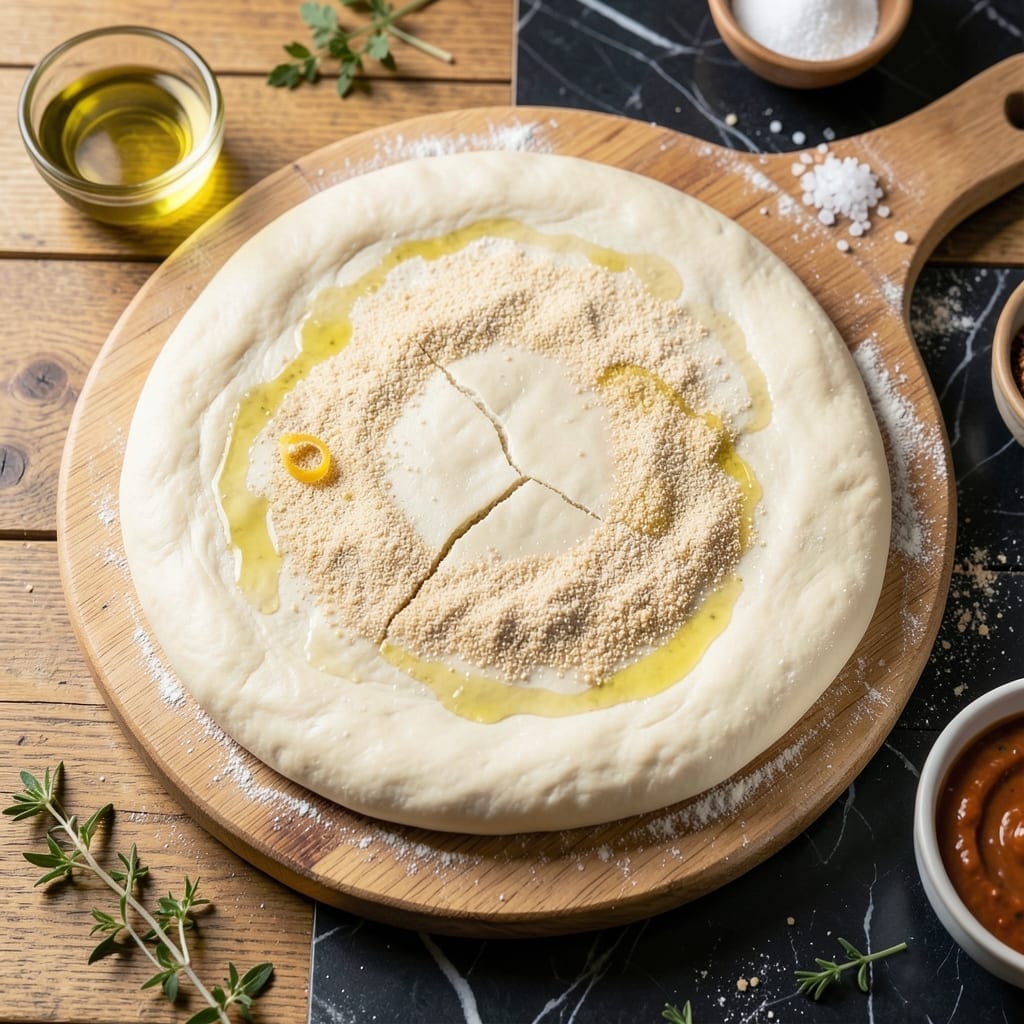
Achieving an authentic Neapolitan base at home starts with the right flour and technique. This 00 flour recipe delivers the perfect balance of chewiness and crispness.
With just 2 hours of rise time, you’ll create a dough that stretches thin yet holds toppings beautifully. The result is a professional-quality crust with those signature air pockets.
Ingredients for Pizza Dough Recipe Using 00 Flour
Seven core ingredients for professional-quality Neapolitan dough with authentic texture and flavor.
| Ingredient | Amount | Notes |
|---|---|---|
| 00 Flour 🌾 | 3 ½ cups | Caputo brand recommended for authenticity |
| Active Dry Yeast 🍞 | ¼ oz | One standard packet, freshly checked |
| Fine Sea Salt 🧂 | 2 tsp | Diamond Crystal preferred for consistency |
| Filtered Water 💧 | 1 ½ cups | Lukewarm, about 110°F |
| Extra-Virgin Olive Oil 🫒 | 2 tbsp | High-quality for flavor depth |
| Semolina Flour 🌾 | ¼ cup | For dusting work surface |
| Granulated Sugar 🍚 | 1 tsp | Helps activate the yeast |
[recipe_ingredient_scaler]
The 00 flour is non-negotiable for authenticity—Caputo or Antimo brands are the gold standard (find them at Eataly or specialty Italian markets). Fresh yeast is ideal, but active dry works perfectly—just ensure it’s not expired. Diamond Crystal sea salt dissolves evenly, but any fine sea salt will do in a pinch. Water temperature is critical: too hot kills yeast, too cold slows activation.
Out of 00 flour? Bread flour is the closest substitute, though the texture won’t be identical. No semolina for dusting? All-purpose flour works (but semolina adds that crisp bottom). The olive oil can be omitted if you prefer a leaner dough, but it adds richness and extensibility. Sugar can be swapped with honey at a 1:1 ratio if that’s what you have.
Dough rests best in a lightly oiled bowl, covered, at room temperature for the 2-hour rise. Refrigerate for up to 48 hours for deeper flavor development. Freeze dough balls for up to 3 months—thaw overnight in the fridge before using.
Why You’ll Love This Recipe
- It’s my Friday night hero: Margherita for the kids, loaded veggie for us, or calzone pockets for lunch tomorrow.
- 5-Minute Mix: I bloom the yeast in warm water, dump everything in a bowl, and the dough comes together faster than my coffee brews.
- Silky Crust: Honestly, 00 flour makes a difference—crisp outside, airy inside, with that olive oil richness in every bite.
- Blank Canvas: It’s my Friday night hero: Margherita for the kids, loaded veggie for us, or calzone pockets for lunch tomorrow.
Step-by-Step Instructions for Pizza Dough Using 00 Flour
Master the authentic Neapolitan technique with these precise, time-tested steps for perfect dough every time.
Step 1: Activate the Yeast Properly
Begin by combining the 1.5 cups filtered water (lukewarm at about 110°F) with the 1 tsp granulated sugar and 0.25 oz active dry yeast in a small bowl. The sugar feeds the yeast, creating the perfect environment for activation.
Let this mixture sit undisturbed for 5-10 minutes until it becomes frothy with a foam layer about ½ inch thick on top. This visual confirmation means your yeast is alive and ready. If you don’t see bubbles, your water may have been too hot or the yeast too old—start over with fresh ingredients.
Step 2: Create the Dough Foundation
In a large mixing bowl, combine the 3.5 cups 00 flour with the 2 tsp fine sea salt. Make a well in the center and pour in the activated yeast mixture along with the 2 tbsp extra-virgin olive oil.
Using a wooden spoon, gradually incorporate the flour into the wet ingredients until a shaggy dough forms. The olive oil adds richness and helps create a tender crumb, while the fine sea salt ensures even distribution and proper flavor development throughout the dough.
Step 3: Knead to Perfect Elasticity
Turn the dough out onto a surface lightly dusted with 0.25 cup semolina flour. The semolina prevents sticking while adding a subtle texture to your final crust. Knead the dough for 8-10 minutes by hand, using the heel of your palm to push the dough away, then fold it back over itself.
You’ll know it’s ready when the dough becomes smooth, elastic, and slightly tacky to the touch but not sticky. Press your finger gently into the dough—if it springs back slowly, you’ve developed the gluten properly. This step is crucial for that authentic chewy texture characteristic of Neapolitan-style crust.
Step 4: First Rise for Flavor Development
Shape the dough into a ball and place it in a lightly oiled bowl, turning to coat all sides. Cover with a damp kitchen towel or plastic wrap and let it rise in a warm, draft-free area for 1-1.5 hours or until doubled in volume.
For authentic results, maintain a consistent temperature of about 75-80°F. The dough should look puffy and jiggle slightly when gently shaken. This first rise allows the yeast to ferment the sugars, developing the complex flavors that distinguish professional-quality pizza dough from ordinary versions.
Step 5: Divide and Second Rise for Optimal Texture
Punch down the risen dough to release the air, then divide it into 4 equal portions for individual pizzas. Shape each portion into a tight ball by tucking the edges under and rolling gently on your work surface.
Place the dough balls on a semolina-dusted tray, cover loosely, and let rest for another 30-45 minutes at room temperature. This second rise relaxes the gluten, making the dough easier to stretch without tearing. Your dough is now ready to be shaped into that perfect Neapolitan base with a thin center and slightly thicker, puffy edge.
Pro Tips For Making Pizza Dough Recipe Using 00 Flour
- Proof Slowly: Let the dough rise in the fridge for at least 24 hours—this develops more flavor and a lighter texture than room-temp proofing.
- Use Warm Water: Activate the yeast with water around 110°F (not hot); I learned this the hard way after killing a few batches with water that was too warm.
- Don’t Overwork Dough: Mix just until smooth to avoid tough gluten—00 flour is delicate, and over-kneading ruins that perfect Neapolitan chew.
- Oil the Bowl: Coat the rising bowl with about 1 tablespoon of olive oil to prevent sticking and make the dough easier to handle later.
Dietary Considerations for pizza dough recipe using 00 flour
Gluten Sensitivities
This recipe contains gluten from 00 flour and semolina, so it’s unsuitable for those with celiac disease or gluten intolerance. However, you can substitute with a 1:1 gluten-free flour blend like King Arthur Measure for Measure for a workable alternative.
Vegan Adaptation
Good news: this dough is already vegan as written! The recipe uses no animal products, relying solely on flour, water, yeast, salt, olive oil, and sugar. Just ensure your toppings align with vegan principles to keep the whole pizza plant-based. 🌱
Low-Sodium Option
To reduce sodium, cut the fine sea salt by half or replace it with a low-sodium alternative. The dough will still rise properly, though the flavor may be slightly less pronounced. I often use 1 tsp Diamond Crystal instead of 2 tsp for a milder taste.
Sugar-Free Version
If avoiding sugar, you can omit the 1 tsp granulated sugar entirely. The yeast will still activate, though it may take an extra 5 minutes to foam. Alternatively, use 1 tsp honey if natural sweeteners are acceptable in your diet.
Allergen Notes
This dough contains no nuts, dairy, or eggs, making it safe for most common allergies. However, always check your 00 flour brand for potential cross-contamination warnings if allergies are severe. Store-bought brands like Caputo typically process in dedicated facilities.
Diabetic Considerations
For those monitoring carb intake, each dough ball contains about 70g net carbs. Consider making thinner crusts or smaller personal pizzas to reduce portion sizes. Pair with high-fiber toppings to slow glucose absorption. ⚡
Nutrition Facts
Frequently Asked Questions
Why use 00 flour for pizza dough?
00 flour creates a silky, elastic dough with the perfect balance of chewiness and crispness. Its fine grind and low protein content mimic traditional Neapolitan results.
Can I substitute bread flour?
Yes, but expect a slightly chewier texture. Bread flour’s higher protein creates more gluten, resulting in a denser crust than with 00 flour.
What if my dough doesn’t rise?
Check your yeast freshness and water temperature first. If both are good, ensure your rising environment is warm enough (75-80°F).
How long can I refrigerate the dough?
Up to 48 hours for best flavor development. Longer storage may affect texture and rise.

Trained in classic French technique but raised on slow-cooked ribs and spicy rubs, she blends culinary skill with smoke and soul.
- Meatball Curry Recipe Kerala Style: Coconut-Spiced Gravy With Tender Bites - October 3, 2026
- Recipe for Curried Tofu: Aromatic Spices With Crispy Edges - October 3, 2026
- Recipe for Dumplings in Crock Pot: Fluffy Pillows with Minimal Effort - October 3, 2026