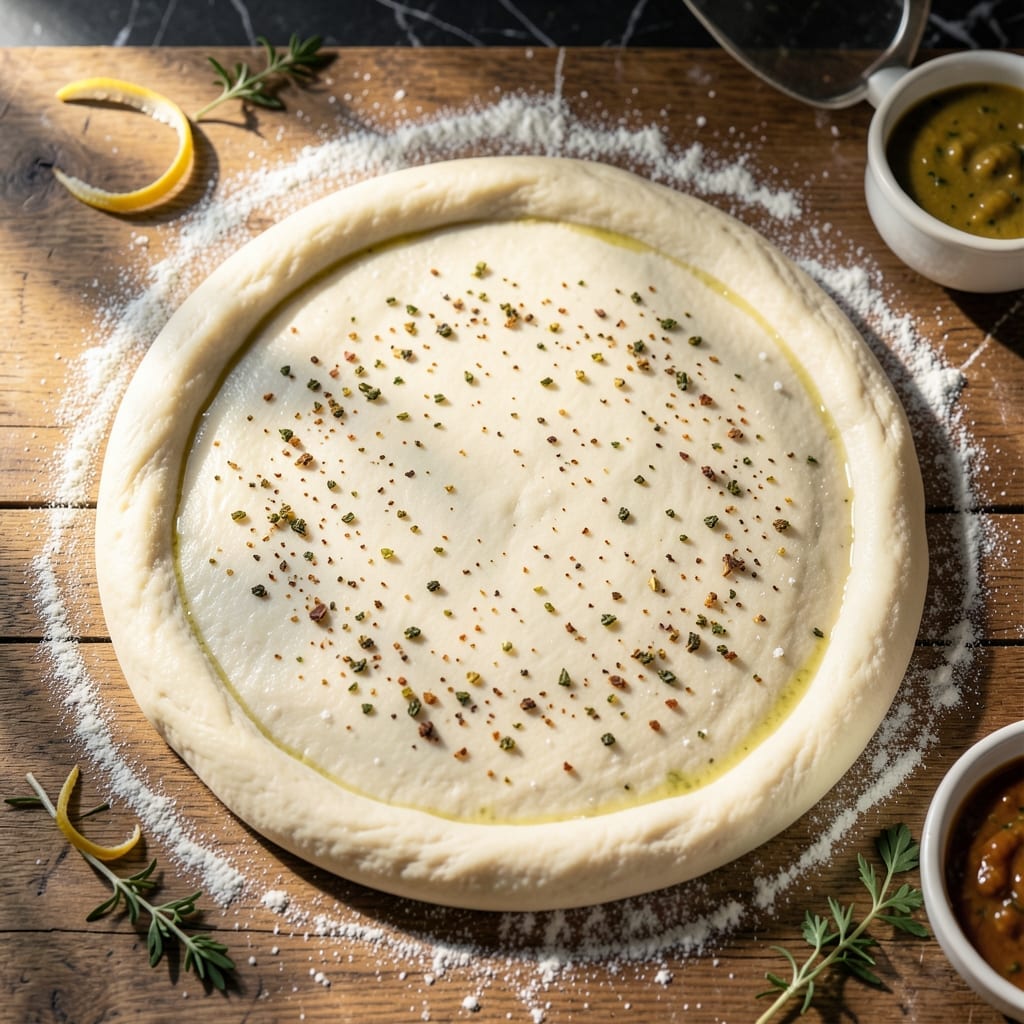
This no-yeast pizza dough delivers a light, fluffy crust in minutes using self-raising flour. The technique is simple yet proven, creating a base that bakes up golden and tender.
With just a few pantry staples and 10 minutes of prep, you’ll have a dependable dough ready for your favorite toppings. The result is a crisp-edged crust with a soft, airy texture.
Ingredients for Pizza Dough Recipe Using Self Raising Flour
Just nine pantry staples create this airy, no-yeast pizza base in minutes.
| Ingredient | Amount | Notes |
|---|---|---|
| Self-Raising Flour 🌾 | 3 cups | All-purpose with baking powder works |
| Greek Yogurt 🥛 | 1 cup | Plain, full-fat preferred |
| Olive Oil 🫒 | 2 tbsp | Extra-virgin for richness |
| Baking Powder 🧂 | 1 tsp | Ensures proper rise |
| Salt 🧂 | ½ tsp | Fine sea salt preferred |
| Sugar 🍚 | 1 tsp | Balances acidity in dough |
| Garlic Powder 🧄 | ½ tsp | Optional for flavor boost |
| Dried Oregano 🌿 | ½ tsp | Crushed for better distribution |
| Water 💧 | ¼ cup | Warm, for optimal texture |
[recipe_ingredient_scaler]
The self-raising flour is non-negotiable here (it’s doing all the leavening work). King Arthur or Gold Medal brands are reliable—just check the expiration date, as old baking powder loses its punch. If you’re making your own blend, ensure it’s 1 cup all-purpose flour + 1.5 tsp baking powder + 0.5 tsp salt per cup. The Greek yogurt adds tang and tenderness—Fage or Chobani full-fat are my go-tos.
No Greek yogurt? Sour cream at the same amount works in a pinch. Out of self-raising flour? All-purpose plus 1.5 tsp baking powder per cup gets you there. The olive oil can be any neutral oil (vegetable, avocado), but extra-virgin adds that restaurant-quality depth. Skip the sugar if you prefer a savory crust, but it helps with browning.
Dough keeps 2-3 days wrapped tightly in the fridge, or freeze for 1 month (thaw overnight before using). Pre-shaped balls freeze best—just roll out straight from the freezer. Room temp dough is easiest to work with, so let it sit 10-15 minutes before stretching.
Why You’ll Love This Recipe
- No Fuss Mixing: I just stir self-raising flour, Greek yogurt, and a glug of olive oil—no yeast, no waiting, no stress.
- Buttery Crisp: The olive oil gives the crust a rich, almost buttery flavor that’s way better than store-bought.
- Weeknight Hero: I’ve used it for quick dinners, lunch with friends, even impromptu movie nights.
- Pantry Savior: Between us, I always have these ingredients on hand, so pizza night never breaks the bank.
Step-by-Step Instructions for Pizza Dough Using Self Raising Flour
This no-yeast method comes together quickly with minimal effort and maximum flavor.
Step 1: Combine Dry Ingredients
In a large mixing bowl, whisk together the 3 cups Self-Raising Flour, 1 tsp Baking Powder, 0.5 tsp Salt, 1 tsp Sugar, 0.5 tsp Garlic Powder, and 0.5 tsp Dried Oregano until evenly distributed. I crush the oregano between my fingers as I add it to release its aromatic oils.
This step ensures your dry ingredients are perfectly incorporated before adding the wet components. The baking powder works with the self-raising flour to create that perfect lift, while the sugar balances the tang of the yogurt. You’ll notice the mixture takes on a light, uniform color when fully combined.
Step 2: Incorporate Wet Ingredients
Make a well in the center of your dry mixture and add the 1 cup Greek Yogurt, 2 tbsp Olive Oil, and 0.25 cup Water. Using a wooden spoon or your hands, mix until a shaggy dough forms. The yogurt should be plain and full-fat for the best texture—low-fat versions can make the dough too sticky.
At first, it might seem like the dough is too dry, but keep mixing. The flour will hydrate as you work it, and you’ll end up with a soft, slightly tacky dough. If it feels too stiff, add a splash more water, but I’ve found the 0.25 cup is usually perfect for this ratio of ingredients.
Step 3: Knead Until Smooth
Turn the dough onto a lightly floured surface and knead for 5-7 minutes until smooth and elastic. Press the dough with the heel of your hand, fold it over, and repeat. You’ll feel the texture change as the gluten develops—it should spring back slightly when pressed.
Don’t overdo it; you want a tender crust, not a tough one. If the dough sticks, dust your surface with a bit more flour, but avoid adding too much. The dough should still feel slightly tacky but not adhere to your hands. This step is where the magic happens, transforming your ingredients into a workable pizza base.
Step 4: Rest and Roll
Place the dough in a lightly oiled bowl, cover with a clean kitchen towel, and let it rest at room temperature for 20-30 minutes. This short rest relaxes the gluten, making the dough easier to roll out. You’ll notice it puffs up slightly, which is a good sign the baking powder is activating.
After resting, divide the dough into two equal portions (for two medium pizzas) and roll each out on a floured surface to your desired thickness. For a crispier crust, aim for ¼-inch thickness. The dough should hold its shape without springing back too much—if it does, let it rest another 5 minutes before trying again.
Pro Tips For Making Pizza Dough Recipe Using Self Raising Flour
- Knead Just Enough: Mix until it just comes together—overworking the dough with self-raising flour makes it tough. I learned this the hard way after my first few pizzas came out dense.
- Use Full-Fat Yogurt: Skip low-fat Greek yogurt; the extra fat in full-fat keeps the dough tender and easier to stretch. Sounds weird, but it works.
- Rest Before Rolling: Let the dough sit for 10-15 minutes after mixing—this relaxes the gluten so it doesn’t spring back when you roll it out. My grandmother swore by this, and she was right.
- Add Extra Baking Powder: Toss in ½ teaspoon of baking powder along with the self-raising flour for a lighter, airier crust. I was skeptical until I tried it, but now it’s non-negotiable.
Flavor Customization for This pizza dough recipe using self raising flour
Herb-Infused Crust
For a Mediterranean twist, add 1 tbsp fresh rosemary and 1 tsp lemon zest to your dry ingredients. I forage wild rosemary along the coast for this—it adds a piney brightness. The citrus lifts the richness of the olive oil beautifully. 🌿
Spicy Kick
Mix ½ tsp cayenne pepper and 1 tsp smoked paprika into the flour. This gives your crust a subtle heat that pairs perfectly with pepperoni or jalapeños. The smoked paprika adds depth, reminiscent of my competition BBQ rubs.
Cheesy Bites
Fold in ½ cup shredded Parmesan or ¼ cup grated Pecorino Romano during the final kneading stage. The cheese melts into the dough, creating little pockets of savory goodness. I prefer Parmigiano-Reggiano for its nutty sharpness.
Sweet Option
Increase sugar to 2 tbsp and add 1 tsp cinnamon to your dry mix for a dessert-style crust. Top with Nutella and fresh berries. The cinnamon warms up the flavor, making it perfect for a sweet finish.
Garlic Lover’s
Boost the garlic powder to 1 tbsp and add 1 tsp onion powder. This creates a robust, aromatic base that shines with tomato-based toppings. I often add 2 minced fresh garlic cloves to the wet ingredients too. 💡
Nutrition Facts
Frequently Asked Questions
Why use self-raising flour instead of regular?
It eliminates the yeast step entirely, creating a quick, light crust. The pre-mixed leavening agents in self-raising flour react immediately with liquid, giving you a tender base without waiting hours for dough to rise.
Can I make this dough ahead of time?
Yes! Wrap tightly and refrigerate for 2-3 days or freeze for 1 month. Thaw overnight in the fridge before using. Room temperature dough stretches more easily.
What if my dough is too sticky?
Add flour 1 tbsp at a time while kneading until it reaches the right consistency. Avoid over-flouring, as too much can make your crust dense. Lightly dust your work surface instead.

Trained in classic French technique but raised on slow-cooked ribs and spicy rubs, she blends culinary skill with smoke and soul.
- Recipe for Boneless Pork Chops in Cast Iron Skillet: Sear and Baste to Juicy Perfection - October 3, 2026
- Recipe for Boneless Cross Rib Roast: Slow-Roasted Beef with Herb Crust - October 3, 2026
- Hamburgers in Sauce Recipe Crock Pot: Slow-Cooked Savory Delight - October 3, 2026