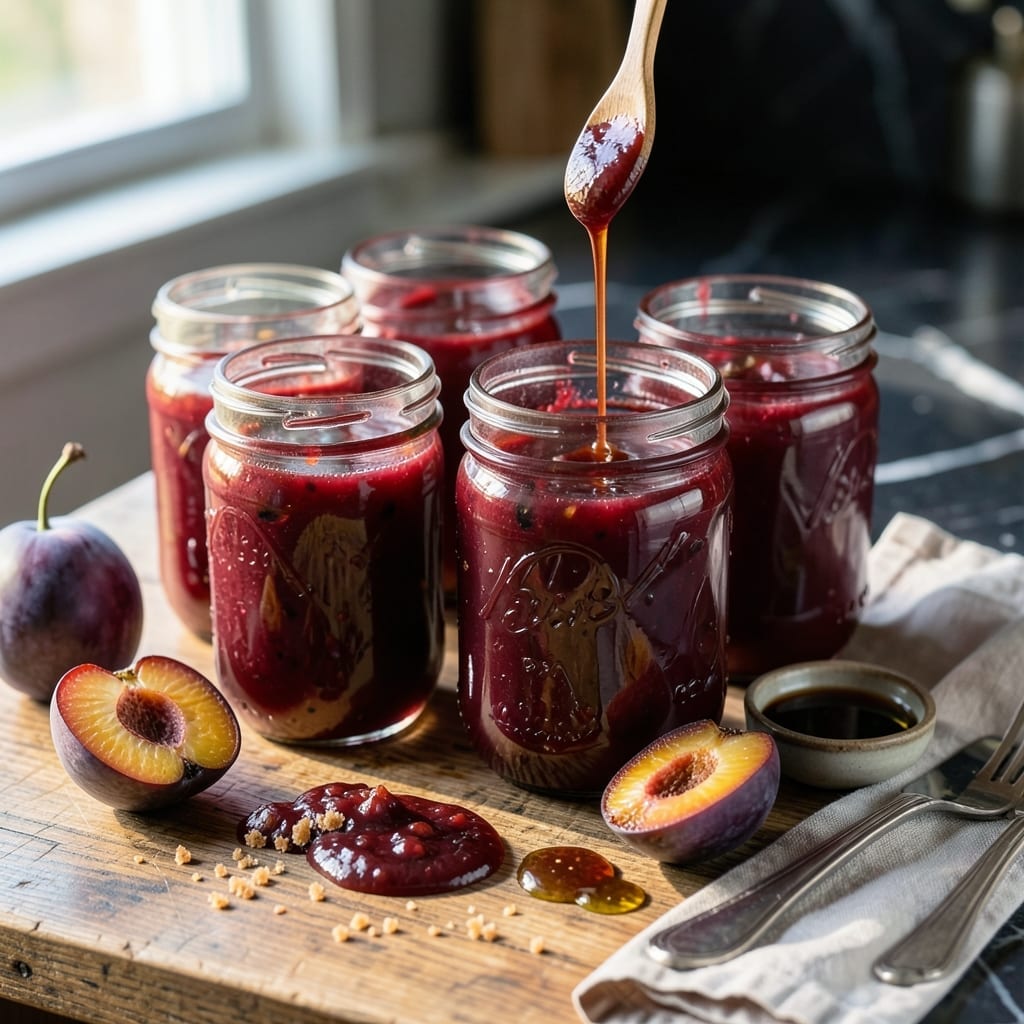
This plum barbecue sauce captures the perfect balance of sweet, tangy, and smoky flavors for your pantry. Preserving it through canning ensures you’ll have this versatile sauce ready all year.
I developed this recipe to elevate grilled meats and sandwiches with a unique fruit-based twist. The process is straightforward, delivering a thick, rich sauce that keeps beautifully.
Ingredients for Plum Barbecue Sauce Canning
Nine simple ingredients transform plums into a rich, smoky barbecue sauce ready for canning.
| Ingredient | Amount | Notes |
|---|---|---|
| Fresh Plums 🟣 | 3 lb | Pitted and chopped, ripe for sweetness |
| Apple Cider Vinegar 🍎 | 1 cup | Balances sweetness with tang |
| Brown Sugar 🍚 | 1 ½ cups | Light or dark, packed firmly |
| Tomato Paste 🍅 | ½ cup | For thickness and depth |
| Molasses 🫒 | ¼ cup | Adds rich, smoky depth |
| Worcestershire Sauce 💧 | 2 tbsp | Use vegan variety to ensure dietary compliance |
| Smoked Paprika 🌶️ | 1 tbsp | For authentic barbecue flavor |
| Onion Powder 🧅 | 1 tbsp | Enhances savory notes |
| Garlic Powder 🧄 | 1 tbsp | Complements the plums perfectly |
| Salt 🧂 | 1 tsp | Kosher or sea salt preferred |
[recipe_ingredient_scaler]
The plums are everything here. Look for ripe but firm plums—they’ll hold up better during cooking. Farmers markets are ideal, but any grocery store with a good produce section will work just fine. I always grab an extra pound or two (frozen works in a pinch) to adjust sweetness. Organic plums aren’t necessary, but avoid ones with thick skins—they can make the sauce bitter.
No fresh plums? Frozen plums at equal quantity work great—just thaw them first. Swap molasses for maple syrup or honey if needed (though honey isn’t vegan, so stick with maple for strict diets). Missing smoked paprika? Chipotle powder in a pinch, but use half the amount. The tomato paste can be subbed with crushed tomatoes, but cook it down longer to thicken.
This sauce keeps beautifully. Canned properly, it’ll last 12-18 months in a cool, dark place. Once opened, store in the fridge for up to 2 weeks. The flavor deepens over time, so try to wait at least a week before digging in.
Why You’ll Love This Recipe
- One Pot Wonder: I just dump everything in a saucepan—plums, vinegar, sugar—and let it simmer. No fancy steps, just stir and taste.
- Sweet-Tangy Magic: The molasses and apple cider vinegar balance the plums into this rich, complex sauce that’s way better than store-bought.
- Grilled Everything’s BFF: I slather this on ribs, chicken, even roasted veggies. Honestly, it’s my secret weapon for summer cookouts.
- Pantry Gold: Canning a batch means I’ve got homemade BBQ sauce ready for months—no last-minute grocery runs.
Step-by-Step Instructions for Plum Barbecue Sauce Canning
Transform fresh plums into a rich, smoky barbecue sauce that preserves beautifully for later use.
Step 1: Prepare and Cook the Plums
Begin by pitting and chopping the 3 lb Fresh Plums into small pieces. I like to leave the skins on for extra texture and color. Place them in a large, heavy-bottomed pot—this prevents burning as the fruit breaks down.
Add the 1 cup Apple Cider Vinegar to the pot with the plums. Bring the mixture to a gentle boil over medium-high heat, then reduce to a simmer. Cook for 15-20 minutes, stirring occasionally, until the plums soften and break apart easily with a wooden spoon.
Step 2: Incorporate Sweet and Savory Elements
Stir in the 1.5 cups Brown Sugar, 0.5 cup Tomato Paste, and 0.25 cup Molasses. The tomato paste adds body, while the molasses deepens the flavor with its robust, slightly bitter notes. Use a whisk to blend everything smoothly.
Now add the 2 tbsp Worcestershire Sauce, 1 tbsp Smoked Paprika, 1 tbsp Onion Powder, 1 tbsp Garlic Powder, and 1 tsp Salt. These spices and seasonings build the sauce’s signature complexity. Simmer for another 10-12 minutes, stirring frequently to prevent sticking.
Step 3: Blend and Adjust Consistency
Once the mixture thickens slightly, remove it from the heat and let it cool for 5 minutes. Then, use an immersion blender to purée the sauce until smooth. If you prefer a chunkier texture, pulse it a few times instead of fully blending.
Taste and adjust the seasoning if needed. The sauce should balance sweet, tangy, and smoky flavors. If it’s too thick, thin it with a splash of water or additional apple cider vinegar. If it’s too thin, return it to the heat and simmer for a few more minutes.
Step 4: Process for Canning
Ladle the hot sauce into sterilized canning jars, leaving ½ inch of headspace at the top. Remove any air bubbles by gently tapping the jars on the counter, then wipe the rims clean with a damp cloth to ensure a proper seal.
Process the jars in a water bath canner for 20 minutes. Once done, carefully remove them and place them on a towel-lined countertop to cool. You’ll hear the satisfying ping of the lids sealing as they cool—this confirms a successful preserve. Store in a cool, dark place for up to 1 year.
Pro Tips For Making Plum Barbecue Sauce Canning
- Simmer Low and Slow: After burning my first batch, I learned to keep the heat at a gentle simmer—high heat turns the brown sugar bitter and makes the molasses stick to the pan.
- Pit the Plums First: Skipping this step leaves a weird texture, so take the extra 5 minutes to halve and pit the plums before cooking—I was skeptical until I tried it.
- Balance the Sweetness: Taste as you go and add the brown sugar gradually; plums vary in sweetness, and too much upfront can overpower the vinegar’s tang.
- Use a Fine Mesh Strainer: For a smoother sauce, press the cooked mixture through a fine mesh strainer—it’s not the prettiest step, but it removes any stubborn plum skins.
Common Mistakes When Making This Recipe
Skipping Sterilization
Never skip sterilizing your jars and lids, even if they look clean. I use my dishwasher’s sanitize cycle or boil them for 10 minutes. Unsterilized jars can introduce bacteria that spoil your sauce.
Overfilling Jars
Leave that ½ inch headspace—it’s critical for proper sealing. Overfilling causes sauce to seep under the lid, preventing a vacuum seal. I measure with a ruler to be precise.
Insufficient Processing Time
Stick to the full 20 minutes in the water bath. Cutting time short risks leaving harmful bacteria. The sauce must reach 212°F throughout to be safe.
Using Wrong Vinegar
Apple cider vinegar’s 5% acidity is essential for preservation. White vinegar works, but never use balsamic or rice vinegar—their lower acidity won’t preserve safely. 🔥
Ignoring pH Levels
Plums are low-acid, so the vinegar and tomato paste are non-negotiable. Test your sauce with pH strips—it must be 4.6 or lower for safe canning.
Rushing the Cooling
Let jars cool undisturbed for 12-24 hours. Moving them too soon can break the seal. That satisfying ping means success—listen for it!
Nutrition Facts
Frequently Asked Questions
Can I use frozen plums instead of fresh?
Yes, frozen plums work perfectly. Thaw them first and drain excess liquid to maintain the right consistency. No need to adjust cooking times.
How long does canned sauce last unopened?
Properly canned sauce stays fresh for 12-18 months in a cool, dark pantry. Once opened, refrigerate and use within 2 weeks.
Why did my sauce turn out too thin?
Simmer longer to reduce liquid, or add 1-2 tbsp tomato paste. For future batches, cook plums down more before adding other ingredients.
Can I adjust the sweetness level?
Reduce brown sugar to 1 cup for less sweetness, or add 1-2 tbsp more for extra richness. Taste before canning.

Trained in classic French technique but raised on slow-cooked ribs and spicy rubs, she blends culinary skill with smoke and soul.
- Recipe for Boneless Pork Chops in Cast Iron Skillet: Sear and Baste to Juicy Perfection - October 3, 2026
- Recipe for Boneless Cross Rib Roast: Slow-Roasted Beef with Herb Crust - October 3, 2026
- Hamburgers in Sauce Recipe Crock Pot: Slow-Cooked Savory Delight - October 3, 2026