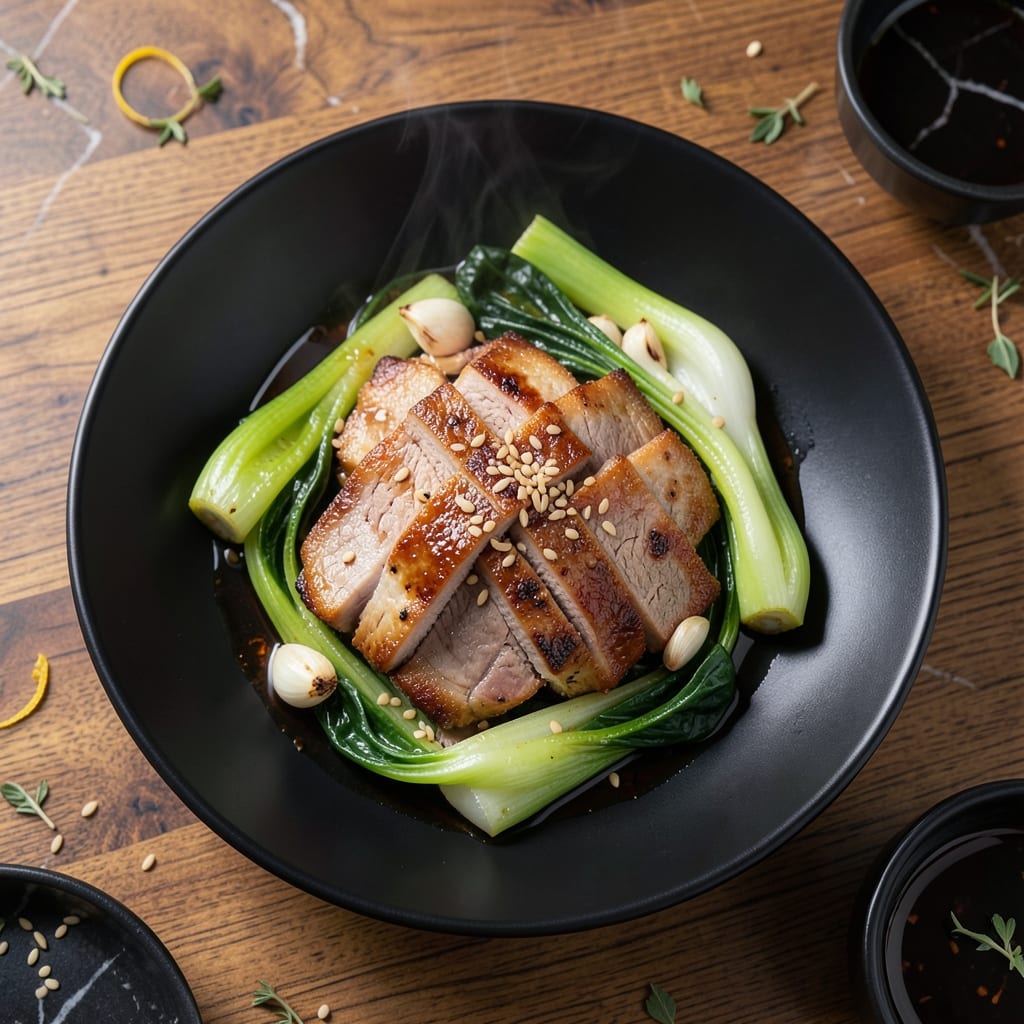
This stir-fry delivers a perfect balance of savory pork and crisp bok choy in minutes. I developed this method during my time cooking 2,000 pounds of pork weekly at The Smoky Pig.
The key is high heat and quick cooking to maintain the bok choy’s texture while fully cooking the pork. Simple ingredients come together with a flavorful sauce that coats every bite.
You’ll achieve tender pork slices and bright green bok choy with a slight crunch. The sauce creates a glossy finish that ties all the elements together beautifully.
Ready in 15 minutes, this dish proves that restaurant-quality meals can happen at home with minimal effort. Serve over steamed rice for a complete meal.
Ingredients for Pork and Bok Choy
Thinly sliced pork, crisp bok choy, and a glossy sauce. Simple but restaurant-worthy.
| Ingredient | Amount | Notes |
|---|---|---|
| Pork Shoulder 🥩 | 1 ½ lb | Thinly sliced for stir-fry |
| Bok Choy 🥬 | 1 lb | Baby or Shanghai variety |
| Soy Sauce 🫒 | ¼ cup | Low-sodium preferred |
| Oyster Sauce 🍚 | 2 tbsp | For depth of flavor |
| Sesame Oil 🫒 | 1 tbsp | Toasted variety for aroma |
| Garlic Cloves 🧄 | 4 cloves | Minced finely |
| Fresh Ginger 🌿 | 1 tbsp | Grated or minced |
| Rice Vinegar 🧃 | 1 tbsp | Or apple cider vinegar |
| Cornstarch 🌾 | 1 tbsp | For sauce thickening |
| Brown Sugar 🍚 | 1 tbsp | Light or dark variety |
| Vegetable Oil 🫒 | 2 tbsp | High smoke point for frying |
| Red Pepper Flakes 🌶️ | ½ tsp | Optional for heat |
| Green Onions 🧅 | 4 whole | Thinly sliced for garnish |
| Sesame Seeds 🌰 | 1 tsp | Toasted for garnish |
[recipe_ingredient_scaler]
The pork is everything here. Pork shoulder has the right fat content for stir-fry—tenderloin dries out too fast. I buy mine pre-sliced from H-Mart when I can, but any Asian market will have what you need. Look for strips with a little marbling (that white fat running through). If you’re slicing it yourself, freeze the pork for 20 minutes first—makes thin, even cuts way easier.
No oyster sauce? Hoisin or fish sauce works in a pinch (start with 1 tbsp and taste). Fresh ginger is ideal, but ground ginger at half the amount gets you close. The cornstarch is for thickening—arrowroot powder is a 1:1 swap. Baby bok choy is sweeter and more tender, but regular works too (just chop the stems into pieces).
Leftovers keep 3-4 days in the fridge, but the bok choy softens over time. Freeze without the greens for up to 3 months. I double the sauce and keep it in a jar—perfect for quick stir-fries later (it’s the same stuff I used at The Smoky Pig).
Why You’ll Love This Recipe
- One Pan Wonder: I toss the pork, bok choy, and sauces together—no extra bowls, no fuss.
- Umami Bomb: Soy sauce, oyster sauce, and sesame oil create that deep, savory punch I crave.
- Weeknight Hero: Honestly, it’s my go-to for busy Tuesdays when I need dinner fast.
- Stretches Far: Pork shoulder is cheap, and this makes enough for leftovers that taste even better the next day.
Step-by-Step Instructions for Pork and Bok Choy Stir-Fry
Here’s the method. Straightforward, tested, works every time.
Step 1: Prep the Pork and Marinade
Thinly slice the 1.5 lb Pork Shoulder into bite-sized strips. I like to cut against the grain for maximum tenderness. In a bowl, combine the pork with 0.25 cup Soy Sauce, 1 tbsp Brown Sugar, 1 tbsp Cornstarch, and 0.5 tsp Red Pepper Flakes.
The cornstarch helps the pork retain moisture while creating that classic stir-fry texture. Let it marinate for 10 minutes while you prep the rest. Don’t skip this step—it makes a noticeable difference in the final texture.
Step 2: Stir-Fry the Pork to Perfection
Heat 1 tbsp Vegetable Oil in a wok or large skillet over high heat until it shimmers. Add half the marinated pork in a single layer—don’t overcrowd the pan or it’ll steam instead of sear. Cook for 3-4 minutes until the edges are browned and the pork is just cooked through.
Transfer the cooked pork to a clean plate and repeat with the remaining 1 tbsp Vegetable Oil and pork. The pork should have a slightly caramelized crust from the sugar in the marinade. Set both batches aside while you cook the vegetables.
Step 3: Cook the Aromatics and Bok Choy
In the same pan, add the 4 cloves Garlic Cloves and 1 tbsp Fresh Ginger. Stir-fry for 30 seconds until fragrant—you’ll smell it immediately. Then add the 1 lb Bok Choy, separating the leaves if using baby bok choy.
Stir-fry for 2-3 minutes until the bok choy is bright green and slightly wilted but still crisp. The stems should be tender but retain some bite. If your pan seems dry, add a splash of water to help steam the greens.
Step 4: Combine Everything with the Sauce
Return all the pork to the pan with the bok choy. Add 2 tbsp Oyster Sauce and 1 tbsp Rice Vinegar. Stir everything together and cook for 1-2 minutes until the sauce coats all the ingredients and everything is heated through.
The oyster sauce adds depth and a slight gloss to the dish. Drizzle with 1 tbsp Sesame Oil at the end for that signature nutty aroma. Toss to combine and cook for another 30 seconds just to warm it through.
Garnish with 4 whole Green Onions and 1 tsp Sesame Seeds before serving. The green onions add freshness and color, while the sesame seeds provide a subtle crunch.
Pro Tips For Making Pork And Bok Choy
- Sear the Pork First: I learned this the hard way—browning the pork shoulder in batches over medium-high heat for 2-3 minutes per side locks in juices and adds depth that simmering alone just can’t.
- Separate Bok Choy Leaves: Sounds tedious, but pulling the leaves apart before cooking guarantees even cooking and better sauce absorption—no more sad, wilted outer leaves hiding raw stems.
- Skip the Overcrowding: Resist the urge to dump all the pork in the pan at once; crowding steams instead of sears, and your pork ends up gray and sad instead of golden and crisp.
- Finish with Sesame Oil: Stir in that sesame oil at the very end, off the heat—adding it too early makes it bitter, but a final drizzle (about 1 teaspoon) gives that nutty aroma that makes the dish sing.
Regional Styles of These Flavors
Cantonese Wok Style
In Cantonese cuisine, this dish often includes black bean garlic sauce for depth. I use Lee Kum Kee brand for authenticity. The pork is typically velveted first—marinated with 1 tsp baking soda to tenderize, then blanched in hot oil before stir-frying. 🔥
Sichuan Spicy Version
Sichuan cooks add dried chilies and Sichuan peppercorns for numbing heat. Toast 1 tsp peppercorns and 5-6 dried chilies in oil before adding aromatics. The bok choy holds up well to the bold flavors, and I finish with a splash of Chinkiang vinegar for tang.
Thai Basil Twist
Thai versions swap soy for fish sauce and add holy basil at the end. Use 2 tbsp fish sauce and 1 tbsp palm sugar in the sauce. The basil wilts into the dish, releasing its anise-like aroma. I source my basil from Atlanta’s Buford Highway farmers market.
Korean Bulgogi Style
Marinate the pork in pear puree and gochujang for sweetness and heat. Use ¼ cup grated Asian pear and 1 tbsp gochujang in the marinade. The pear enzymes naturally tenderize the meat, and I like to add toasted sesame seeds as garnish.
Vietnamese Caramelized
Vietnamese cooks caramelize 3 tbsp sugar in the pan first for a deep amber color. Add 2 tbsp fish sauce to balance the sweetness. The bok choy soaks up the caramel beautifully, and I serve this with jasmine rice to soak up every last bit. 💛
Nutrition Facts
Frequently Asked Questions
Can I use a different cut of pork?
Pork tenderloin works but dries out faster. For best results, stick with shoulder or butt. These cuts have more fat, keeping the meat juicy during high-heat cooking.
How do I prevent the bok choy from getting soggy?
Cook it last and keep the heat high. Add bok choy only after removing pork, then stir-fry for 2-3 minutes max. Overcooking releases too much water.
What can I substitute for oyster sauce?
Hoisin or fish sauce work in a pinch. Start with 1 tbsp and adjust to taste. Hoisin adds sweetness, while fish sauce brings umami depth.
Is this dish gluten-free?
Not as written. Regular soy sauce contains wheat. Use tamari (gluten-free soy) and verify all sauces. Cornstarch is safe but check labels for cross-contamination.

Trained in classic French technique but raised on slow-cooked ribs and spicy rubs, she blends culinary skill with smoke and soul.
- Recipe for Boneless Pork Chops in Cast Iron Skillet: Sear and Baste to Juicy Perfection - October 3, 2026
- Recipe for Boneless Cross Rib Roast: Slow-Roasted Beef with Herb Crust - October 3, 2026
- Hamburgers in Sauce Recipe Crock Pot: Slow-Cooked Savory Delight - October 3, 2026