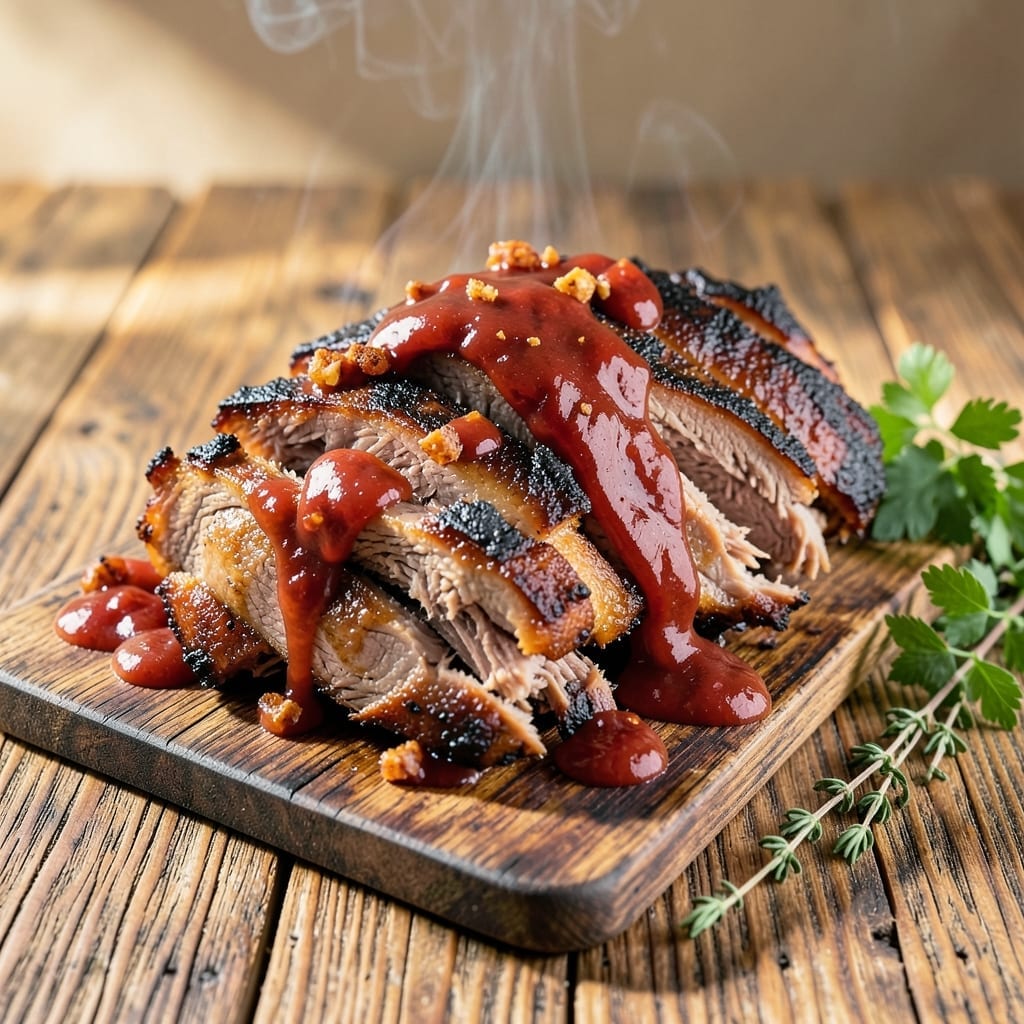
Few aromas beat hickory smoke mingling with sweet and tangy pork. This method transforms tough cuts into tender, fall-off-the-bone perfection through slow cooking.
I’ve spent years refining this technique, blending classic BBQ tradition with professional precision. The result is meat that’s deeply flavored, juicy, and infused with just the right balance of sweetness and acidity.
Ingredients for Pork Barbecue
Slow cooking transforms tough pork into tender, smoky, sweet and tangy perfection.
| Ingredient | Amount | Notes |
|---|---|---|
| Pork Shoulder 🐖 | 4 lb | Bone-in, skin-on preferred |
| Hickory Wood Chips 🪵 | 2 cups | Soaked in water for 1 hour |
| Brown Sugar 🍚 | ½ cup | Light or dark variety |
| Apple Cider Vinegar 🍏 | ½ cup | For tangy acidity balance |
| Ketchup 🍅 | 1 cup | High-quality preferred |
| Yellow Mustard 🟡 | ¼ cup | For depth and tang |
| Worcestershire Sauce 🫕 | 2 tbsp | Adds umami complexity |
| Garlic Powder 🧄 | 1 tbsp | Freshly made preferred |
| Onion Powder 🧅 | 1 tbsp | Balances sweetness |
| Smoked Paprika 🌶️ | 1 tbsp | Enhances smoky flavor |
| Kosher Salt 🧂 | 1 tbsp | Adjust to taste |
| Black Pepper 🌶️ | 1 tsp | Freshly ground preferred |
| Chili Powder 🌶️ | 1 tsp | Mild or hot variety |
| Ground Cumin 🌿 | ½ tsp | Toasted for depth |
| Liquid Smoke 🔥 | 1 tsp | Optional for extra smokiness |
[recipe_ingredient_scaler]
The pork shoulder is non-negotiable for this technique. Bone-in, skin-on provides the best moisture and flavor retention. Source from Whole Foods or a trusted butcher—look for good marbling throughout. Hickory wood chips are essential for the classic BBQ profile, but apple or cherry wood can add a fruitier note if preferred. Soak them properly to avoid flare-ups during smoking.
Out of apple cider vinegar? White vinegar with a splash of lemon juice works in a pinch. Need to skip the ketchup? Tomato paste thinned with vinegar mimics the tang and body. For a sugar-free option, maple syrup or honey can replace brown sugar (though the flavor profile shifts slightly). The Worcestershire adds depth—vegetarian versions are available if avoiding anchovies.
The cooked pork keeps beautifully in the fridge for 4-5 days and freezes for 3 months. Store the sauce separately if possible—it prevents sogginess when reheating. Always let the meat rest for at least 30 minutes before shredding to retain juices (worth the wait).
Why You’ll Love This Recipe
- Set It and Forget: I rub the pork shoulder with brown sugar, let the smoker do the work with hickory chips, and come back to fall-off-the-bone tenderness.
- Smoky Sweet Balance: The apple cider vinegar cuts through the richness while the hickory and ketchup create that classic backyard BBQ taste I crave.
- Feeds the Whole Crew: Between us, this pulls apart into enough sandwiches for a weekend gathering or meal prep for the week.
- Leftovers Level Up: Honestly, the flavors deepen overnight—shredded pork tacos or loaded baked potatoes taste even better the next day.
Step-by-Step Instructions for Pork Barbecue
Master the slow-smoking technique that transforms pork shoulder into a sweet and tangy barbecue perfection.
Step 1: Prepare and Season the Pork Shoulder
Begin by patting the 4 lb Pork Shoulder dry with paper towels to ensure a good bark forms during smoking. I always trim excess fat, leaving about ¼ inch to protect the meat while allowing smoke penetration.
In a bowl, combine the brown sugar, garlic powder, onion powder, smoked paprika, kosher salt, black pepper, chili powder, ground cumin, and liquid smoke. Rub this mixture generously over all surfaces of the pork shoulder, pressing firmly to adhere. Let it sit at room temperature for 30 minutes while you prepare the smoker.
Step 2: Set Up the Smoker with Hickory Wood Chips
Soak the 2 cups Hickory Wood Chips in water for 1 hour to ensure they smolder rather than burn. This creates the ideal smoke environment. Preheat your smoker to 225°F using the soaked wood chips.
Once the smoker reaches temperature and produces thin, blue smoke, place the seasoned pork shoulder directly on the grate, fat-side up. The fat cap will baste the meat as it renders. Maintain the temperature between 225-250°F throughout the cook.
Step 3: Slow-Smoke to Perfection
Smoke the pork shoulder undisturbed for 6-8 hours, or until the internal temperature reaches 165-170°F. This is when the “stall” occurs—moisture evaporates and the temperature plateaus. Resist the urge to increase the heat; patience ensures tender, juicy meat.
At this point, wrap the pork shoulder tightly in aluminum foil or butcher paper. This helps power through the stall while retaining moisture. Return it to the smoker and continue cooking until the internal temperature hits 200-205°F and the meat is probe-tender.
Step 4: Prepare the Sweet and Tangy Barbecue Sauce
In a saucepan, combine the ketchup, apple cider vinegar, yellow mustard, and worcestershire sauce. Simmer over medium heat for 10-12 minutes, stirring occasionally, until the sauce thickens slightly and the flavors meld together.
Taste and adjust seasoning if needed, though the dry rub should provide enough flavor. Keep the sauce warm on low heat until ready to use. This balance of sweet, tangy, and umami perfectly complements the smoky pork.
Step 5: Rest, Pull, and Serve
Once the pork reaches the desired temperature, remove it from the smoker and let it rest, wrapped, for 1 hour. This allows the juices to redistribute, ensuring moist, flavorful meat.
Unwrap the pork and pull it apart using two forks or your hands. The meat should come apart easily with minimal effort. Toss the pulled pork with the warm barbecue sauce until evenly coated. Serve immediately on buns or as a platter, with extra sauce on the side.
Pro Tips For Making Pork Barbecue
- Smoke Low and Slow: Keep your smoker between 225-250°F and give the pork shoulder at least 8 hours—rushing with higher heat dries it out and turns the hickory wood chips bitter.
- Trim the Fat Cap: Leave about 1/4 inch of fat on the pork shoulder for flavor, but trim anything thicker, or it won’t render properly and you’ll end up with chewy chunks in your pulled pork.
- Skip the Early Sauce: I learned this the hard way—don’t add the ketchup, brown sugar, or apple cider vinegar until the last hour, or the sugar burns and the vinegar makes the meat tough.
- Rest Before Pulling: Wrap the finished shoulder in foil and let it rest 30-45 minutes; all the juices redistribute, and it shreds like butter instead of falling apart into a dry, stringy mess.
Common Mistakes When Making Perfect Results
Rushing the Smoke
One of the biggest mistakes I see is cranking up the heat to 300°F+ to speed up the process. Low and slow at 225-250°F is non-negotiable for breaking down collagen into gelatin. Anything higher risks tough, dry meat. 🔥
Skipping the Stall
When your pork hits 165-170°F, don’t panic if the temperature stalls. This is normal as moisture evaporates. Wrapping in foil or butcher paper at this point helps push through without losing moisture.
Over-Smoking
Using too many wood chips or not soaking them creates bitter, acrid smoke. Stick to 2 cups soaked hickory for this recipe. Thin, blue smoke is what you want—thick white smoke means your chips are burning, not smoldering.
Neglecting the Rest
Pulling the pork straight off the smoker and shredding it immediately causes all those precious juices to spill out. Always rest it wrapped for at least 1 hour—I often let mine rest for 2 hours in a cooler. 💡
Under-Seasoning
Be generous with your dry rub. A 4 lb pork shoulder needs a thick, even coating to build that flavorful bark. Press the rub in firmly so it adheres during the long cook.
Sauce Too Early
Slathering on barbecue sauce before the final hour can cause it to burn. Add the sauce only during the last 30-60 minutes of cooking, or toss it with the pulled pork after resting.
Nutrition Facts
Frequently Asked Questions
What’s the best wood for smoking?
Hickory provides the classic robust flavor, but apple or cherry wood adds a sweeter, fruitier note. Soak the chips for 1 hour to ensure they smolder properly.
Can I use a gas grill instead?
Yes! Set up for indirect cooking with a drip pan and maintain 225-250°F. Add wood chips in a foil pouch over the flame for smoke flavor.
How long should I rest the meat?
Rest wrapped for at least 1 hour to retain juices. For competition-level tenderness, rest for 2 hours in a cooler.
Can I make this without a smoker?
Use an oven at 225°F with a water pan for moisture. Add 1 teaspoon liquid smoke to the rub for that classic flavor.

Trained in classic French technique but raised on slow-cooked ribs and spicy rubs, she blends culinary skill with smoke and soul.
- Recipe for Boneless Pork Chops in Cast Iron Skillet: Sear and Baste to Juicy Perfection - October 3, 2026
- Recipe for Boneless Cross Rib Roast: Slow-Roasted Beef with Herb Crust - October 3, 2026
- Hamburgers in Sauce Recipe Crock Pot: Slow-Cooked Savory Delight - October 3, 2026