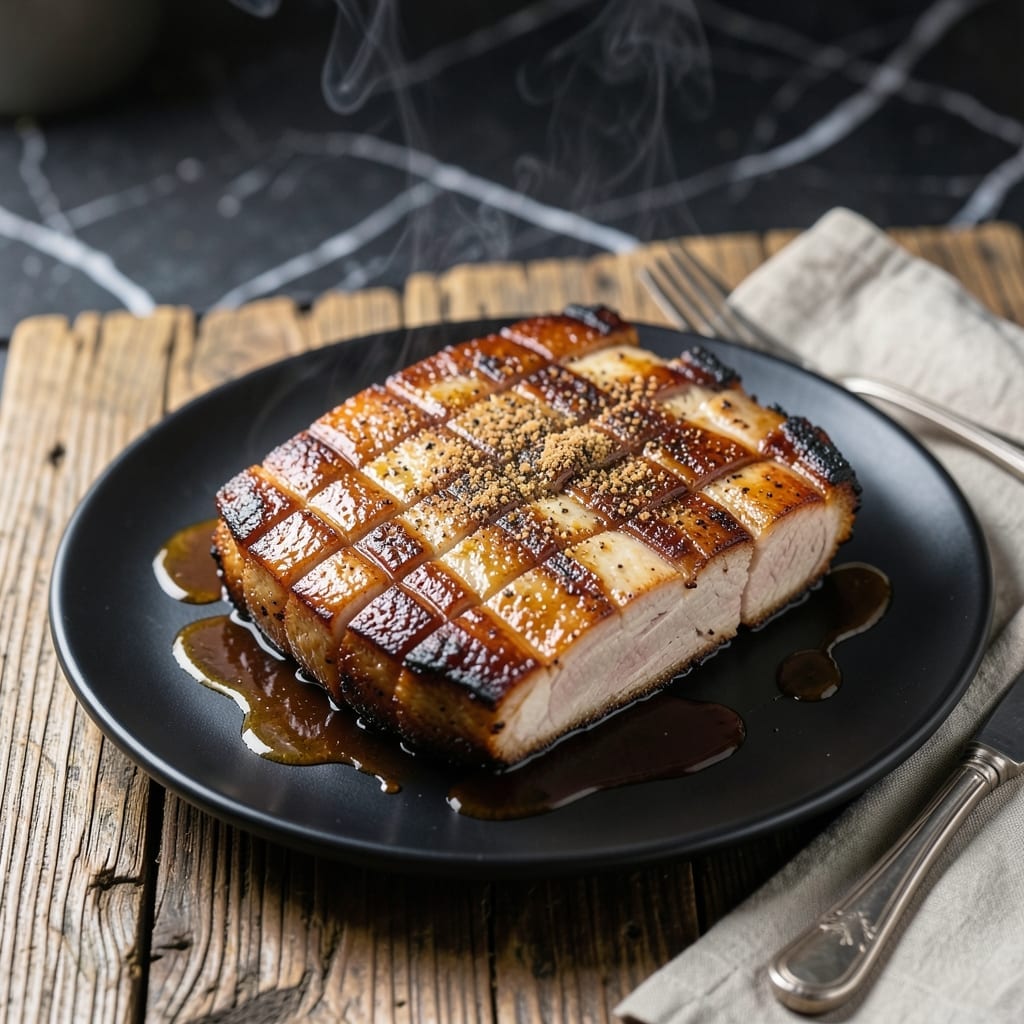
This pork belly barbecue delivers crispy edges with melt-in-your-mouth tenderness every time. My French training meets smokehouse tradition in this proven method for perfect results.
Low and slow cooking transforms the belly into a caramelized masterpiece with a smoky-sweet bark. The technique ensures the fat renders beautifully while keeping the meat juicy.
Ingredients for Pork Belly Barbecue
Quality pork belly and a handful of pantry staples create this showstopping dish.
| Ingredient | Amount | Notes |
|---|---|---|
| Pork Belly 🥓 | 2 lb | Skin-on, uniform thickness |
| Kosher Salt 🧂 | 2 tbsp | Diamond Crystal preferred |
| Light Brown Sugar 🍚 | ½ cup | Packed, for bark formation |
| Black Pepper 🌶️ | 1 tbsp | Freshly cracked preferred |
| Smoked Paprika 🌶️ | 2 tsp | Sweet or hot variety |
| Garlic Powder 🧄 | 1 tbsp | Not garlic salt |
| Onion Powder 🧅 | 1 tbsp | Fine ground texture |
| Apple Cider Vinegar 🍏 | ¼ cup | Balances sweetness |
| Worcestershire Sauce 🫒 | 2 tbsp | Anchovy-free if preferred |
| Tomato Paste 🍅 | 3 tbsp | Concentrated for depth |
| Honey 🍯 | ¼ cup | Local variety recommended |
| Olive Oil 🫒 | 2 tbsp | For rubbing pork belly |
| Hickory Wood Chips 🪵 | 1 cup | Soaked for 30 minutes |
| Yellow Mustard 🟡 | 2 tbsp | Binder for dry rub |
[recipe_ingredient_scaler]
The pork belly is non-negotiable for authentic results. Source skin-on slabs from a reputable butcher or specialty grocer like Whole Foods. Look for even marbling and a thickness of about 1.5 inches—thinner cuts dry out, thicker ones take forever. Diamond Crystal kosher salt is the professional choice for its clean flavor and even distribution. Avoid pre-cut pieces; a whole slab lets you control the portion size and presentation.
No apple cider vinegar? White vinegar in a pinch, but it lacks depth. Swap honey for maple syrup if you need a vegan option. Anchovy-free Worcestershire is easy to find at Trader Joe’s. The smoked paprika is doing heavy flavor lifting—if yours is old (test by smelling it), replace it immediately. Tomato paste from a can is fine, but those tubes at Whole Foods eliminate waste.
Pork belly keeps frozen for 6-12 months—vacuum seal for best results. The dry rub can be mixed ahead and stored in an airtight container for 1 month. Leftovers? They reheat beautifully, though the bark softens. Consume within 4 days for peak texture.
Why You’ll Love This Recipe
- I’ll be real: one slab serves six, and it’s the only thing my picky uncle asks for seconds of.
- 5-Minute Rub: I just mix salt, brown sugar, and smoked paprika—no marinating overnight, yet the flavor sinks in deep.
- Crispy & Sticky: That first bite with the caramelized sugar crust and tender belly? Ridiculously good.
- Feeds a Crowd: I’ll be real: one slab serves six, and it’s the only thing my picky uncle asks for seconds of.
Step-by-Step Instructions for Pork Belly Barbecue
Master the technique for achieving tender meat with perfectly crispy edges every time.
Step 1: Prepare and Season the Pork Belly
Begin by patting the 2 lb Pork Belly completely dry with paper towels. This removes surface moisture that could interfere with the rub adhering properly. I always score the skin in a crosshatch pattern to help the seasoning penetrate and create more surface area for crispiness.
In a bowl, combine the 2 tbsp Kosher Salt, 0.5 cup Light Brown Sugar, 1 tbsp Black Pepper, 2 tsp Smoked Paprika, 1 tbsp Garlic Powder, and 1 tbsp Onion Powder. Rub this mixture all over the pork belly, pressing firmly to ensure it sticks. Then brush with 2 tbsp Yellow Mustard—this acts as a binder for the dry rub and enhances flavor development.
Step 2: Create the Barbecue Glaze
In a saucepan, combine the 0.25 cup Apple Cider Vinegar, 2 tbsp Worcestershire Sauce, 3 tbsp Tomato Paste, and 0.25 cup Honey. Simmer over medium heat for 8-10 minutes, stirring occasionally, until the mixture thickens slightly and the flavors meld together.
The glaze should coat the back of a spoon but still be pourable. This balance of sweetness from the honey, tang from the vinegar, and umami from the tomato paste and Worcestershire sauce will create a complex flavor profile that complements the pork belly perfectly.
Step 3: Smoke the Pork Belly to Perfection
Preheat your smoker to 225°F using 1 cup Hickory Wood Chips that have been soaked for 30 minutes. Place the seasoned pork belly directly on the grates, skin-side up. Smoke for 3-4 hours until the internal temperature reaches 165°F.
During the last 30 minutes of smoking, begin brushing the pork belly with the prepared glaze every 10 minutes. This builds layers of flavor and creates that signature sticky, caramelized exterior. The hickory smoke will infuse the meat with a deep, robust flavor that pairs beautifully with the sweet and tangy glaze.
Step 4: Finish with High Heat for Crispy Edges
Transfer the pork belly to a baking sheet and brush with one final coat of glaze. Place under a preheated broiler for 3-5 minutes, watching closely to prevent burning. The goal is to achieve a deep mahogany color with slightly charred edges.
Alternatively, you can finish on a hot grill over direct medium-high heat for 2-3 minutes per side. This final high-heat step is crucial for achieving the promised crispy texture. The sugar in the glaze will caramelize, creating that irresistible crunch.
Step 5: Rest and Slice for Serving
Remove the pork belly from the heat and let it rest on a cutting board for 10-15 minutes. This allows the juices to redistribute throughout the meat, ensuring every bite is moist and flavorful.
Slice the pork belly against the grain into ½-inch thick pieces. Each slice should showcase the beautiful smoke ring just beneath the surface, with a crispy exterior giving way to tender, juicy meat. Serve immediately with any remaining glaze on the side for dipping.
Pro Tips For Making Pork Belly Barbecue
- Score Deep: Cut the pork belly skin in a crosshatch pattern, going all the way through the fat but not into the meat. I learned this the hard way—shallow scores don’t let the rub penetrate or the fat render properly.
- Dry the Skin: Pat the pork belly completely dry with paper towels before seasoning, then let it sit uncovered in the fridge for 1 hour. Sounds weird, but it works: the salt and sugar stick better, and you’ll get a crispier finish.
- Low and Slow: Start at 275°F and resist the urge to crank it up—pork belly needs 3-4 hours to turn tender without drying out. After burning two batches trying to rush it, I finally accepted that patience is non-negotiable here.
- Rest Before Slicing: Let the cooked pork belly rest under foil for at least 15 minutes before slicing. This isn’t the prettiest method, but it’s the only way to keep all those juices from running out when you cut into it.
Health Benefits of This pork belly barbecue
Rich Protein Source
This dish delivers high-quality protein essential for muscle repair and growth. A 4-ounce serving provides about 20 grams of protein, supporting tissue maintenance and immune function. The slow cooking preserves these nutrients beautifully. 💪
Healthy Fats Balance
While pork belly contains saturated fats, it also offers monounsaturated fats that support heart health when consumed in moderation. The fat renders during cooking, creating that signature texture while providing energy.
Vitamin B Powerhouse
You’ll get a significant dose of B vitamins, particularly B1, B6, and B12. These support metabolism and nervous system health. I notice better energy levels when I include this in my rotation.
Iron and Zinc Boost
This cut is rich in heme iron (easily absorbed) and zinc, both crucial for blood health and immune function. A single serving provides about 15% of your daily iron needs. 💛
Collagen Benefits
The connective tissue in pork belly breaks down into gelatin during slow cooking, which supports joint and skin health. This is why properly cooked belly feels so nourishing.
Energy for Active Lifestyles
The combination of protein and fats provides sustained energy, perfect for my long coastal motorcycle rides. It’s my go-to meal before a day of foraging for wild herbs or competing in local BBQ events.
Nutrition Facts
Frequently Asked Questions
Should I remove the skin before smoking?
Keep the skin on for maximum flavor and texture. Scoring it in a crosshatch pattern helps the rub penetrate and creates crispier edges. The skin protects the meat while allowing smoke to work its magic.
What if my smoker runs hotter than 225°F?
Adjust your vents to lower the temperature, or add a water pan to stabilize heat. Maintaining 225°F for 3-4 hours ensures tender meat without drying it out. A thermometer is essential for accuracy.
Can I use a different wood for smoking?
Try apple or cherry wood for sweeter notes, or pecan for a milder flavor. Each wood type adds a unique dimension, so experiment to find your favorite pairing with the glaze.
Why rest the meat before slicing?
Resting for 10-15 minutes lets juices redistribute, preventing dryness when you cut into it. Skipping this step means losing precious moisture and flavor to the cutting board. Patience pays off with juicier results!

Trained in classic French technique but raised on slow-cooked ribs and spicy rubs, she blends culinary skill with smoke and soul.
- Recipe for Boneless Pork Chops in Cast Iron Skillet: Sear and Baste to Juicy Perfection - October 3, 2026
- Recipe for Boneless Cross Rib Roast: Slow-Roasted Beef with Herb Crust - October 3, 2026
- Hamburgers in Sauce Recipe Crock Pot: Slow-Cooked Savory Delight - October 3, 2026