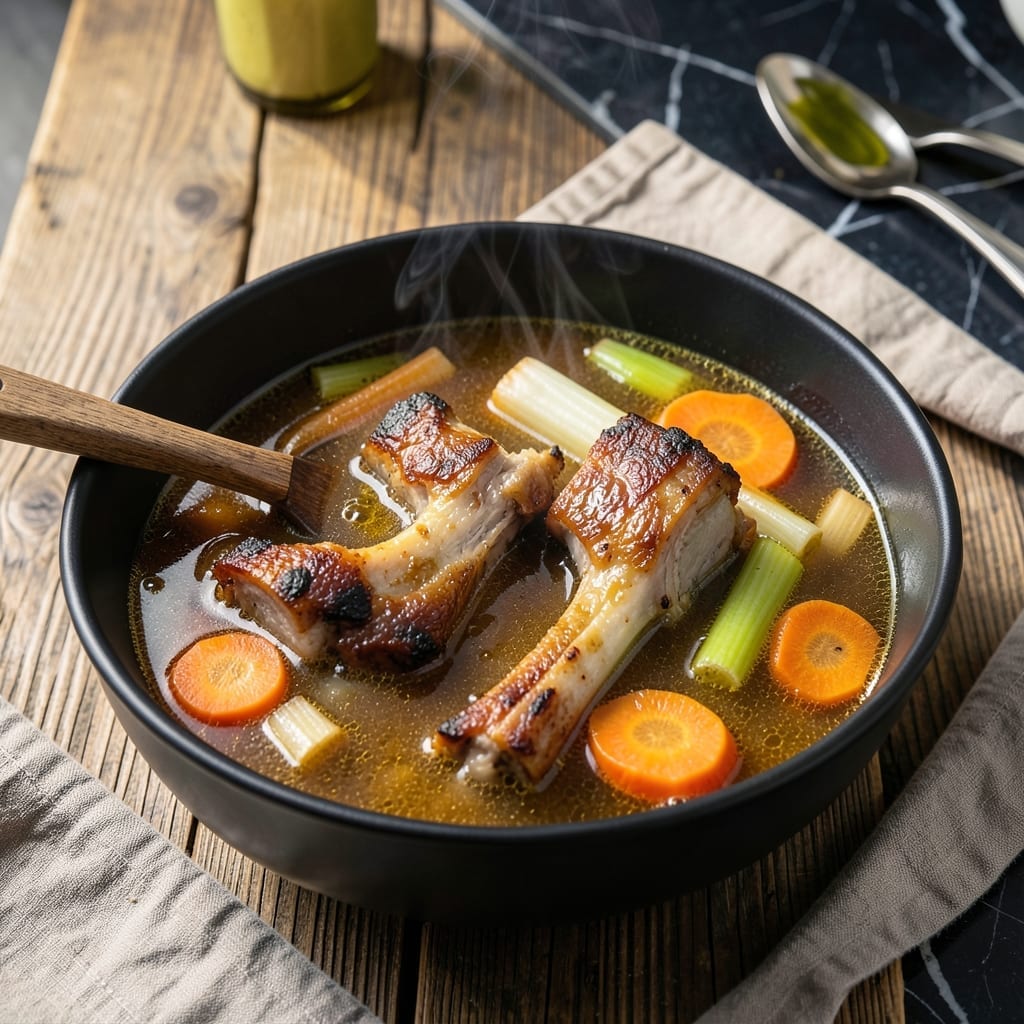
Nutrient-rich pork bone broth is the foundation of countless dishes, and this method ensures a perfect result every time. Slow simmering extracts deep flavor and gelatin from the bones, creating a liquid gold that elevates soups, sauces, and grains.
I rely on a combination of pork bones and aromatic vegetables for a balanced, savory base. The key is patience—letting the broth gently bubble for hours develops complexity that can’t be rushed.
What emerges is a clear, amber broth with a rich mouthfeel and subtle sweetness. The collagen from the bones creates a velvety texture that coats the spoon, while the vegetables add layers of depth without overpowering.
Use this as a base for ramen, braising liquids, or simply sip it warm. The possibilities are endless.
Ingredients for Pork Bone Broth
A handful of bones, vegetables, and time create this nourishing foundation for countless dishes.
| Ingredient | Amount | Notes |
|---|---|---|
| Pork Bones 🍖 | 4 lb | Neck, knuckle, or femur bones preferred |
| Cold Water 💧 | 6 cups | Enough to cover bones by 2 inches |
| Apple Cider Vinegar 🍏 | 2 tbsp | Helps extract minerals from bones |
| Yellow Onion 🧅 | 2 whole | Quartered, skin on for color |
| Carrots 🥕 | 3 whole | Cut into large chunks |
| Celery Stalks 🌿 | 3 whole | Cut into large chunks |
| Garlic Cloves 🧄 | 6 cloves | Smashed but unpeeled |
| Bay Leaves 🍃 | 2 whole | Dried, for aromatic depth |
| Whole Peppercorns 🌶️ | 1 tbsp | Lightly crushed |
| Fresh Thyme Sprigs 🌿 | 4 whole | For earthy undertones |
| Fresh Parsley Stems 🌿 | ½ cup | Reserve leaves for garnish |
| Kosher Salt 🧂 | 1 tbsp | Adjust to taste at end |
[recipe_ingredient_scaler]
The bones are everything here. Pork neck or knuckle bones deliver the most gelatin and flavor. Ask your butcher for bones with some meat still attached (they’ll often give these away for free). Local butchers or Whole Foods typically have the best selection. Look for bones with visible marbling—they’ll yield the richest broth. Avoid pre-cooked bones like ham hocks, as they won’t produce the same depth.
Short on time? An Instant Pot on high pressure for 2-3 hours gets you close to stovetop results. No apple cider vinegar? Lemon juice or white vinegar works in a pinch. The vegetables can be swapped for whatever you have—leeks instead of onions, parsnips instead of carrots. Skip the salt at the beginning; it’s easier to adjust at the end when the broth has reduced.
Strain and cool the broth completely before storing. Skim off any fat that solidifies on top for a cleaner finish. Keeps in the fridge for up to 5 days or can be frozen for 6 months. Freeze in ice cube trays for easy portioning in future recipes.
Why You’ll Love This Recipe
- Dump and Simmer: I toss the pork bones, onion, and carrots into the pot with cold water and vinegar, then let the stove do the work.
- Rich and Deep: The slow simmer pulls every bit of flavor from the bones, leaving a broth that’s savory and satisfying with just a hint of sweetness from the carrots.
- Meal Prep Hero: I make a big batch on Sunday and use it all week—soups, grains, or just sipping straight from a mug.
- Pennywise Comfort: Those inexpensive pork bones and basic veggies stretch into gallons of nourishing broth, and it freezes beautifully.
Step-by-Step Instructions for Pork Bone Broth
This method ensures a deeply flavorful, nutrient-rich broth with minimal effort.
Step 1: Roast the Pork Bones for Depth of Flavor
Preheat your oven to 400°F. Arrange the 4 lb Pork Bones on a rimmed baking sheet in a single layer. Roast for 30-40 minutes until the bones are deeply browned and any exposed marrow looks caramelized.
This step is non-negotiable for rich, complex flavor. The high heat draws out the natural gelatin and renders fat, which will create a golden layer of flavor in your broth. Don’t skip it—you’ll taste the difference.
Step 2: Deglaze and Add Vegetables and Aromatics
Transfer the roasted bones to a large stockpot. Place the baking sheet on the stovetop over medium heat, add the 2 tbsp Apple Cider Vinegar, and scrape up all the browned bits with a wooden spoon. Pour this liquid into the stockpot along with the 6 cups Cold Water.
Add the 2 whole Yellow Onion, 3 whole Carrots, 3 whole Celery Stalks, 6 cloves Garlic Cloves, 2 whole Bay Leaves, 1 tbsp Whole Peppercorns, 4 whole Fresh Thyme Sprigs, and 0.5 cup Fresh Parsley Stems. The vinegar helps extract minerals from the bones, while the vegetables and herbs build layers of aroma.
Step 3: Simmer Gently for Maximum Extraction
Add enough additional water to cover the bones by 2 inches. Bring the mixture to a boil over high heat, then immediately reduce to a gentle simmer. Skim off any foam or impurities that rise to the surface during the first 30 minutes.
Partially cover the pot and simmer for 12-24 hours. The longer you go, the more gelatin and collage you’ll extract. Keep the heat low—a rolling boil will cloud your broth. The surface should look barely active, with small bubbles occasionally breaking.
Step 4: Strain and Season for Clarity and Flavor
Carefully strain the broth through a fine-mesh sieve into a large bowl or another pot. Discard all solids. Let the broth settle for 10 minutes, then skim off any fat that rises to the top with a spoon or paper towel.
Stir in the 1 tbsp Kosher Salt and taste. Adjust the seasoning if needed, but remember the flavor will concentrate as it cools. For the clearest broth, avoid pressing the solids in the sieve—this can make the broth cloudy.
Cool the broth completely before transferring to airtight containers. It will keep in the refrigerator for up to 5 days or in the freezer for 6 months.
Pro Tips For Making Pork Bone Broth
- Roast the Bones: I learned this the hard way—raw bones make a dull broth. Toss them in a 400°F oven for 20-30 minutes first for depth you can actually taste.
- Use Cold Water: Sounds weird, but it works: starting with cold water and the vinegar helps pull more collagen from the bones as it slowly heats.
- Skim the Foam: Don’t let the scum that rises in the first 30 minutes stay in the pot—skim it off with a fine mesh strainer for a cleaner, clearer broth.
- Go Long and Low: After burning three batches at high heat, I finally figured out 12-24 hours on low simmer extracts the most gelatin without turning the stock bitter.
Regional Styles of These Flavors
French Technique
In my culinary training, we called this fond de veau—but with pork bones. The French method involves a 2-hour roasting at 375°F for deeper caramelization. I add a splash of white wine when deglazing for acidity that brightens the final broth. 🗺️
Asian Fusion
For an Eastern twist, I swap the vinegar for 2 tbsp rice vinegar and add 1-inch ginger slices, 2 star anise pods, and 1 cinnamon stick. This creates a pho-like base perfect for noodle soups. Simmer time remains the same, but the aroma is transformative.
Southern Comfort
Down South, we often use smoked pork bones from a previous BBQ session. I add 1 tsp smoked paprika and 2 dried chili pods to the pot. The result is a broth with a subtle smoky depth that’s incredible in gumbo or beans.
Mexican Inspired
I learned this from a Oaxacan chef: add 1 charred onion, 3 dried guajillo chiles, and 1 tsp cumin seeds to the simmer. The chiles add a mild heat and beautiful red hue. Strain well to remove the chile skins. 🌶️
German Tradition
My grandfather’s method includes 1 lb sauerkraut and 5 juniper berries. The sauerkraut adds a tangy complexity that pairs perfectly with pork. I simmer it for the last 2 hours to avoid bitterness.
Nutrition Facts
Frequently Asked Questions
Do I need to blanch the bones first?
Blanching is optional but helps create a clearer broth. Boil bones for 10 minutes, rinse, then proceed with roasting. This removes impurities that can cloud your final result.
Can I use a slow cooker instead of the stovetop?
Yes! Use the low setting for 18-24 hours. A slow cooker maintains the perfect gentle simmer without risk of boiling. Just ensure bones are fully submerged in liquid.
Why is my broth not gelatinous?
This usually means insufficient collagen extraction. Use more joint-rich bones like knuckles, and simmer for the full 24 hours. The vinegar helps but won’t compensate for short cooking time.

Trained in classic French technique but raised on slow-cooked ribs and spicy rubs, she blends culinary skill with smoke and soul.
- Recipe for Boneless Pork Chops in Cast Iron Skillet: Sear and Baste to Juicy Perfection - October 3, 2026
- Recipe for Boneless Cross Rib Roast: Slow-Roasted Beef with Herb Crust - October 3, 2026
- Hamburgers in Sauce Recipe Crock Pot: Slow-Cooked Savory Delight - October 3, 2026