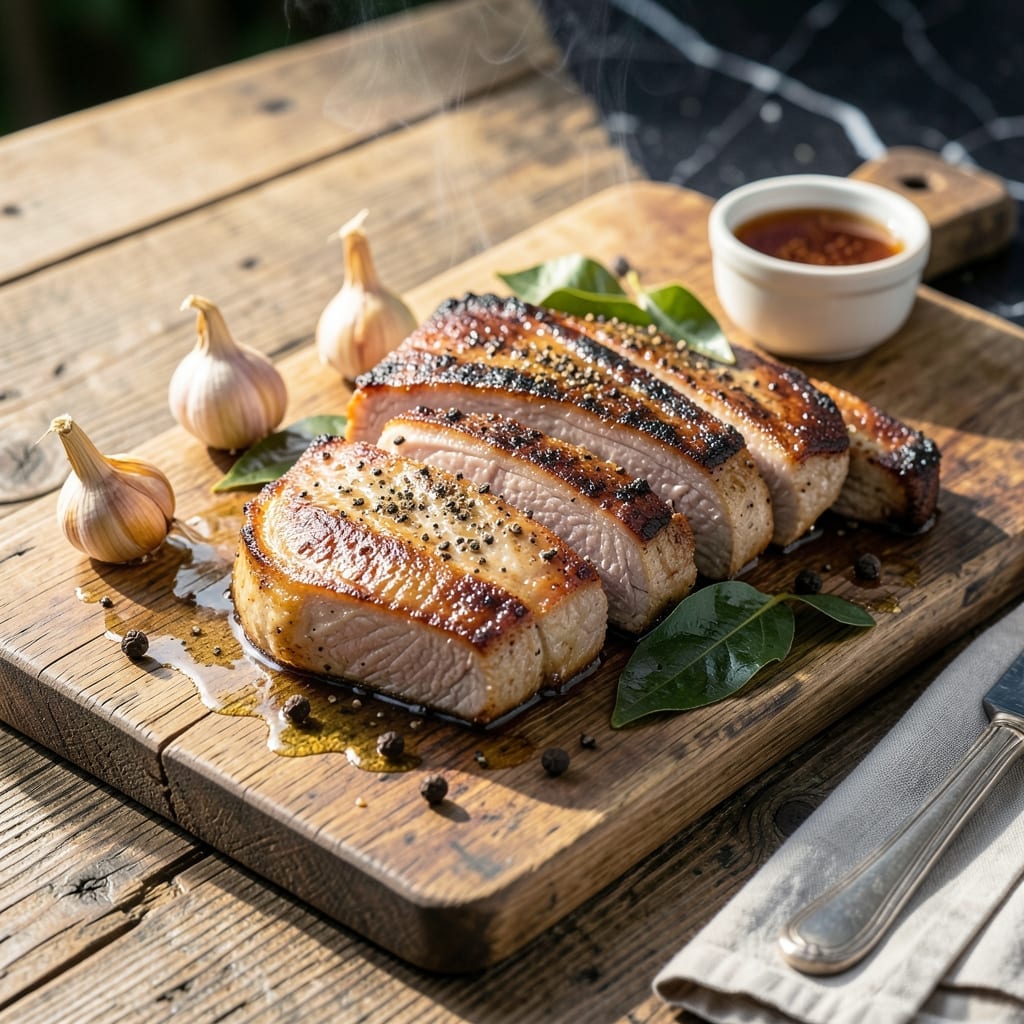
This brine transforms pork cuts into juicy, flavorful masterpieces on the grill. A simple salt-sugar-water base infuses moisture and seasoning deep into the meat before it hits the heat.
I developed this method after years of watching dry, overcooked pork come off the grill at competitions. The key is balancing salt and sugar to enhance natural flavors without overpowering them.
What emerges from the brine is pork that stays tender and moist through long cooking sessions, with a subtle seasoning that complements any rub or sauce. The difference is noticeable from the first bite.
Use this for chops, loin, or ribs—any cut benefits from the juice-retaining prep.
Ingredients for Pork Brine Recipe for Grilling
Eight ingredients create a brine that locks in moisture and flavor for the grill.
| Ingredient | Amount | Notes |
|---|---|---|
| Water 💧 | 4 cups | Cold, for brine base |
| Kosher Salt 🧂 | ½ cup | Diamond Crystal preferred |
| Brown Sugar 🍚 | ½ cup | Light or dark variety |
| Black Peppercorns 🌶️ | 1 tbsp | Whole, lightly crushed |
| Bay Leaves 🌿 | 4 whole | Dried, for aroma |
| Garlic Cloves 🧄 | 6 cloves | Smashed, peeled |
| Juniper Berries 🫒 | 1 tbsp | Optional, for depth |
| Apple Cider Vinegar 🍏 | ¼ cup | Balances sweetness |
[recipe_ingredient_scaler]
The salt is critical here—Diamond Crystal kosher salt dissolves cleanly and seasons evenly without overpowering. Brown sugar adds subtle sweetness that caramelizes on the grill (light or dark both work). For the best results, use filtered or distilled water to avoid any off-flavors from tap water. Most grocery stores carry Diamond Crystal in the kosher section, but any pure kosher salt will do in a pinch.
No kosher salt? Table salt at half the amount—but measure carefully, as it’s much saltier. Swap brown sugar for white if needed, though you’ll lose some depth. White wine vinegar works instead of apple cider, but reduce by a tablespoon to avoid over-acidifying. Juniper berries are optional but add a piney note that pairs beautifully with pork (find them at Whole Foods or specialty spice shops).
This brine keeps 1 week refrigerated in a sealed container. Discard after use—never reuse brine that’s had raw meat in it. For best results, brine pork cuts for 12-24 hours before grilling.
Why You’ll Love This Recipe
- 5-Minute Mix: I just dump water, salt, sugar, and spices in a pot—no fancy steps, no stress.
- Juicy Every Time: Honestly, the brown sugar and bay leaves work magic, keeping the pork tender and packed with flavor.
- Grill Night Hero: Between us, this brine makes weeknight dinners or weekend BBQs effortlessly impressive.
- Budget Stretcher: One batch brines multiple cuts, and the ingredients cost pennies compared to fancy marinades.
Step-by-Step Instructions for Pork Brine for Grilling
Here is the professional method for creating a brine that ensures tender, flavorful pork every time.
Step 1: Combine Water with Salt and Sugar
In a large saucepan, combine the 4 cups Water with 0.5 cup Kosher Salt and 0.5 cup Brown Sugar. Place the pan over medium-high heat and stir until the salt and sugar dissolve completely. This creates the foundation for a balanced brine that penetrates the meat evenly.
Do not allow the mixture to boil—remove it from heat as soon as the granules are fully incorporated. The goal is to create a clear, smooth liquid without any undissolved particles. This ensures maximum absorption into the pork during the brining process.
Step 2: Toast Spices and Aromatics
In a dry skillet over medium heat, lightly toast the 1 tbsp Black Peppercorns, 4 whole Bay Leaves, and 1 tbsp Juniper Berries for 1-2 minutes until fragrant. This step intensifies their essential oils and enhances their contribution to the brine.
Add the toasted spices to the brine mixture along with the 6 cloves Garlic Cloves. The garlic should be smashed and peeled to release its flavor compounds. Stir to combine, allowing the spices to infuse the liquid as it cools.
Step 3: Add Acid and Cool Completely
Stir in the 0.25 cup Apple Cider Vinegar to the brine. The acidity helps tenderize the meat and balances the sweetness from the brown sugar. This step is crucial for achieving that perfect equilibrium of flavors in your final dish.
Let the brine cool to room temperature before using. This typically takes 1-2 hours at room temperature or 30 minutes in an ice bath. Never brine meat in warm liquid, as it can begin cooking the pork unevenly and promote bacterial growth.
Step 4: Submerge Pork and Refrigerate
Place your pork cuts in a large container or resealable bag and pour the cooled brine over them. Ensure the pork is fully submerged—use a weight or plate if necessary to keep it under the liquid. This guarantees even brining and maximum flavor penetration.
Refrigerate for at least 4 hours, but for best results, brine overnight (up to 12 hours). The longer the pork brines, the more time the mixture has to work its magic, resulting in juicier, more flavorful meat when grilled.
Pro Tips For Making Pork Brine Recipe For Grilling
- Chill the Brine: Always refrigerate your brine before adding the pork—I learned this the hard way after serving slightly warm, overcooked chops. Cold brine keeps the meat safe and ensures even absorption.
- Use Kosher Salt: Measure by weight if possible, but if not, remember kosher salt crystals are larger than table salt. I ruined a batch by guessing and ended up with pork that tasted like the ocean.
- Don’t Over-Brine: Stick to 4-12 hours max for pork cuts like chops or tenderloin—any longer and the texture turns mealy. My first 24-hour brine experiment was a sad, mushy lesson.
- Toast the Spices: Lightly toast the black peppercorns and bay leaves in a dry pan before adding to the brine. Sounds like extra work, but it wakes up the flavors and makes the pork taste like it came from a pitmaster’s kitchen.
Dietary Considerations for These Flavors
Gluten-Free Friendly
This brine contains no gluten ingredients—I use Diamond Crystal kosher salt and pure brown sugar to keep it safe for those avoiding gluten. Always check your spice labels, as some brands add anti-caking agents that may contain gluten. 💪
Low-Sodium Option
For those watching sodium, reduce the kosher salt to ¼ cup and add 1 tsp of salt-free seasoning blend for flavor. The pork will still absorb moisture, just with less saltiness. Brining time can stay the same.
Sugar-Free Adaptation
Replace brown sugar with ¼ cup of erythritol or your preferred sugar substitute. Note that sugar helps with browning, so expect slightly less caramelization on the grill. A pinch of xanthan gum can help mimic sugar’s texture benefits.
Allium-Free Version
Simply omit the garlic cloves and add 1 tsp asafoetida powder for depth without alliums. This works well for those with garlic sensitivities. The other spices provide plenty of flavor on their own.
Vegetarian Brine Use
This same brine works beautifully for grilled veggies—try it with portobello mushrooms or thick-cut eggplant. The salt and sugar ratios remain perfect for plant-based proteins. Soak for 1-2 hours before grilling. ✨
Nut Allergy Safe
This recipe contains no nuts or nut-derived ingredients. All components are naturally nut-free, making it safe for those with nut allergies. Just verify your spice sources, as cross-contamination can occur in processing facilities.
Nutrition Facts
Frequently Asked Questions
How long should pork soak in the brine?
For best results, brine pork cuts for 12-24 hours in the fridge. Thinner cuts like chops need just 4-6 hours, while thicker pieces benefit from the full 12 hours. Never exceed 24 hours or the meat may become mushy.
Can I reuse the brine for another batch?
No, never reuse brine that’s had raw meat in it. The liquid can harbor bacteria and won’t be safe for reusing. Always discard used brine and make a fresh batch for each use.
Do I need to rinse the pork after brining?
Rinsing isn’t necessary but can help remove excess salt if desired. Pat the pork dry with paper towels before grilling to help achieve a better sear. The brine’s flavor will still penetrate deeply.
Can I use table salt instead of kosher?
Yes, but use half the amount—¼ cup table salt replaces ½ cup kosher salt. Table salt is denser, so measuring by weight is most accurate for consistent results.

Trained in classic French technique but raised on slow-cooked ribs and spicy rubs, she blends culinary skill with smoke and soul.
- Recipe for Boneless Pork Chops in Cast Iron Skillet: Sear and Baste to Juicy Perfection - October 3, 2026
- Recipe for Boneless Cross Rib Roast: Slow-Roasted Beef with Herb Crust - October 3, 2026
- Hamburgers in Sauce Recipe Crock Pot: Slow-Cooked Savory Delight - October 3, 2026