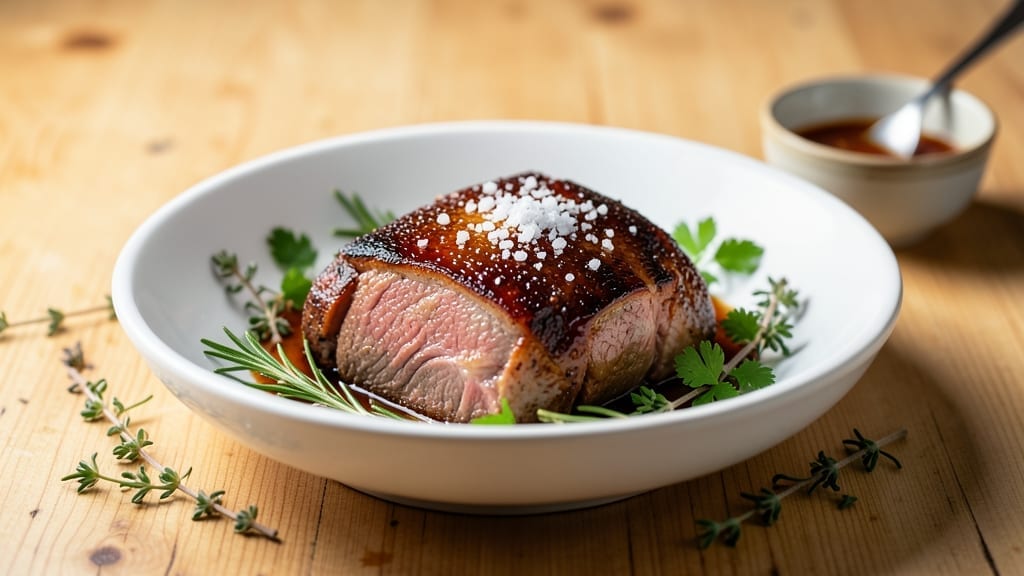
This pork brisket crock pot recipe transforms tough cuts into melt-in-your-mouth perfection with minimal effort. The smoky-sweet rub and slow cooking break down the meat until it practically falls apart at the touch of a fork.
I developed this method after years of testing—no more dry, chewy brisket, just tender, flavorful results every time.
The beauty of this recipe lies in its simplicity: just sear the brisket, apply the rub, and let the crock pot do the work. With low-and-slow cooking, the meat becomes so tender it shatters with a fork, while the rub infuses deep, smoky-sweet flavors.
This method ensures juicy, restaurant-quality brisket without standing over the stove for hours.
By the time you serve it, you’ll have a dish that’s rich, aromatic, and impossible to resist—ideal for feeding a crowd or meal prepping. The brisket pairs perfectly with classic sides like mashed potatoes, crusty bread, or tangy pickles to balance the richness. Ready to master this foolproof technique?
Here’s the key: patience and precision. The internal temperature must reach 203°F for that legendary fall-apart texture. No guesswork—just reliable, professional results. Let’s get started on creating your most tender brisket yet.
Ingredients for pork brisket crock pot
Thirteen ingredients transform tough pork into restaurant-quality melt-in-your-mouth perfection.
| Ingredient | Amount | Notes |
|---|---|---|
| Pork Brisket 🐷 | 4 lb | Flat-cut, trimmed of fat |
| Smoked Paprika 🌶️ | 2 tbsp | For authentic smoky flavor |
| Brown Sugar 🍚 | 2 tbsp | Packaged, not powdered |
| Garlic Powder 🧄 | 1 tbsp | Not garlic salt |
| Onion Powder 🧅 | 1 tbsp | Freshly ground preferred |
| Black Pepper 🌶️ | 1 tsp | Freshly ground kosher salt |
| Salt 🧂 | 1 tsp | Diamond Crystal kosher |
| Ground Cumin 🌿 | 1 tsp | Toasted for depth |
| Apple Cider Vinegar 🍎 | 2 tbsp | Raw, unfiltered preferred |
| Beef Broth 🥩 | 2 cups | Low-sodium preferred |
| Olive Oil 🫒 | 2 tbsp | Extra-virgin for richness |
| Fresh Rosemary 🌿 | 1 tbsp | Chopped, for aroma |
| Fresh Thyme 🍃 | 1 tbsp | Leaves only, no stems |
[recipe_ingredient_scaler]
The brisket is the star—opt for flat-cut, trimmed pork brisket from butchers like Whole Foods Market or Costco’s premium selection. Look for marbling and avoid pre-sliced packages; the whole cut sears better and stays juicier. Professional kitchens use Diamond Crystal kosher salt for even distribution, so don’t skimp on quality here. For the rub, Penzeys Spices carries premium smoked paprika that elevates the smokiness without bitterness, while the brown sugar should be packaged, not powdered—it caramelizes better.
No smoked paprika? Combine 1 tbsp regular paprika + 1 tsp liquid smoke for a close approximation. Fresh herbs are ideal, but dried rosemary and thyme at half the amount work in a pinch—just toast them lightly in the olive oil first. The beef broth should be low-sodium to avoid overpowering the natural pork flavor; Kettle & Fire is a trusted brand. For the apple cider vinegar, raw, unfiltered adds depth, but regular works if that’s all you have. The olive oil matters—extra-virgin prevents bitterness and adds richness that cuts through the sweetness.
Sear the brisket in batches to avoid overcrowding the pan—use a heavy-bottomed Dutch oven for even heat distribution. Store the raw brisket in an airtight container in the fridge for up to 5 days, or freeze for 3 months wrapped tightly in plastic. The cooked brisket reheats beautifully—add 1/4 cup broth when warming to prevent drying. For meal prep, portion into containers and refrigerate for up to 4 days; the flavors deepen over time, so it tastes even better the second day. Leftovers freeze exceptionally well for 6 months if vacuum-sealed.
Why You’ll Love This Recipe
- No Skillet Stress: Honestly, I used to avoid brisket because I thought it required hours of babysitting. But this recipe? Just a quick sear in the pan (4-5 minutes max), then dump it in the crock pot and forget it. The seared crust from that olive oil step? Worth every second of effort.
- Smoky-Sweet Magic: The brown sugar caramelizes into that perfect crust while the smoked paprika and garlic powder work their magic underneath—no smoker needed. And those fresh rosemary and thyme leaves? They turn this from “meat and spices” to “I could eat this every day” territory. Trust me.
- Leftovers That Win Over: Between us, this brisket tastes even better the next day. I’ll slice it into sandwiches with some pickles, toss it into tacos, or just eat it straight with mashed potatoes. And since it keeps for up to 4 days in the fridge? I’m never left wondering what to do with my leftovers again.
- Budget-Friendly Feast: A 4-pound brisket feeds six people for less than what a takeout meal would cost. The beef broth and apple cider vinegar are pantry staples, and the spices? A little goes a long way. It’s the kind of dish where you get restaurant-quality flavor without breaking the bank.
Step-by-step instructions for pork brisket crock pot recipe
This method guarantees melt-in-your-mouth tenderness while preserving that perfect smoky-sweet crust.
Prepare the Smoky-Sweet Rub
In a medium bowl, combine the 2 tablespoons smoked paprika, 2 tablespoons brown sugar, 1 tablespoon garlic powder, 1 tablespoon onion powder, 1 teaspoon black pepper, 1 teaspoon salt, and 1 teaspoon ground cumin. Mix thoroughly to distribute the spices evenly. The brown sugar will help create a subtle caramelized crust during cooking, while the smoked paprika delivers that authentic barbecue flavor without needing a smoker.
Add the 1 tablespoon chopped fresh rosemary and 1 tablespoon fresh thyme leaves to the dry mixture. The fresh herbs will infuse bright, aromatic notes that balance the smokiness. Rub this mixture all over the 4-pound pork brisket, pressing firmly so the spices adhere to the meat. This step ensures maximum flavor penetration and develops that coveted bark during the slow cook.
Sear the Brisket for Depth of Flavor
Heat a large skillet over medium-high heat and add the 2 tablespoons olive oil. Once the oil is shimmering, place the brisket fat-side down and sear for 4-5 minutes until the surface develops a deep golden-brown crust. Flip the brisket and sear the other side for another 3-4 minutes. This initial searing creates a flavorful crust that will dissolve into the crock pot liquid, enhancing the overall depth of the dish.
Transfer the seared brisket to the crock pot. Pour the 2 tablespoons apple cider vinegar into the skillet, scraping up any browned bits that cling to the bottom. This deglazing step captures all those precious caramelized flavors that would otherwise be lost. Pour the vinegar mixture over the brisket in the crock pot.
Slow Cook to Perfect Tenderness
Add the 2 cups beef broth to the crock pot, ensuring the brisket is partially submerged in the liquid. This liquid level is crucial—it needs to be enough to create steam but not so much that the brisket boils. Place the brisket fat-side up in the crock pot, which helps render the fat during cooking and creates a self-basting effect.
Cover the crock pot and cook on low heat for 8-10 hours. The low setting ensures gentle, even cooking that transforms tough muscle fibers into tender, fork-pulling meat. After 6 hours, check the brisket’s internal temperature using a meat thermometer—it should read 195-200°F at its thickest point. If it hasn’t reached this temperature, continue cooking for another 1-2 hours. This long, slow cook time is what makes the brisket truly fall-apart tender.
Rest and Slice for Maximum Juiciness
Once the brisket reaches the proper internal temperature, remove it from the crock pot and transfer to a cutting board. Tent loosely with aluminum foil and let it rest for at least 30 minutes. This resting period allows the juices to redistribute throughout the meat, preventing them from pooling on your plate when you slice. The brisket will continue to carry over to a perfect internal temperature during this rest.
After resting, slice the brisket against the grain into ¼-inch thick slices. The grain direction will be visible as slightly elongated muscle fibers running through the meat. Each slice should be tender enough to pull apart with minimal resistance, with a beautiful pink center that indicates perfect doneness. Serve immediately with the cooking juices spooned over the top for maximum flavor.
Pro Tips For Making Pork Brisket Crock Pot
- Sear Until It Screams: That first sear isn’t just for looks—it’s where the magic happens. Push your skillet to medium-high until the oil shimmers hard, then let the brisket sit fat-side down for those full 4-5 minutes. I used to rush this, and my brisket never tasted like it came from a pit. The crust needs time to caramelize, or you’ll just be left with a pale, flavorless slab.
- Toast That Cumin: Skip the pre-toasted cumin? You’re missing depth. Dry-toast your 1 teaspoon ground cumin in a small pan over low heat for 30 seconds until it smells toasted, not burnt. It’s a tiny effort that makes the rub taste like it’s been simmering for hours—not like it’s straight from the spice jar.
- Vinegar First, Broth Second: Pour the apple cider vinegar into the hot skillet before the beef broth, and scrape every last bit of browned goodness off the bottom. That sludge is pure flavor, and skipping it means you’re basically throwing out free umami. I learned this the hard way when I poured the vinegar in after the broth—half the goodness stuck to the pan.
- Check Temp at 6 Hours: Don’t guess. After 6 hours, jam that meat thermometer into the thickest part of the brisket. If it’s under 195°F, resist the urge to crank the crock pot to high—just let it keep cooking low and slow. I’ve seen people walk away at 7 hours with a thermometer reading of 180°F, thinking it’s done, only to end up with chewy meat. Patience here is non-negotiable.
Perfect pairings for this dish
Classic Side Dishes
The smoky-sweet pork brisket pairs perfectly with creamy garlic mashed potatoes. Mash 3 lbs Yukon Gold potatoes with ½ cup sour cream, ¼ cup butter, and 2 minced garlic cloves for a rich, velvety side that balances the dish’s bold flavors.
I always add a pinch of salt and fresh rosemary for extra depth—trust me, it’s a match made in heaven. 🥔
Tangy Complements
For a refreshing contrast, serve brisket with pickled red onions and cornichons. Thinly slice 1 red onion and soak in ½ cup apple cider vinegar, 1 tbsp sugar, and 1 tsp salt for 30 minutes.
The bright acidity cuts through the richness, while the crunchy cornichons add a playful texture. I keep these on the side so guests can add them to their plate. 🍅
Bread and Spreads
A warm crusty sourdough loaf is essential for soaking up those delicious juices. Pair it with whipped horseradish cream—mix ½ cup sour cream with 2 tbsp prepared horseradish and a dash of salt.
The spicy kick complements the brisket’s sweetness, and the creaminess ties everything together. I love using BreadSense artisan sourdough for its chewy texture. 🍞
Veggie Sides
Roasted baby carrots and parsnips add a touch of earthiness. Toss 1 lb baby carrots and ½ lb parsnips with 2 tbsp olive oil, 1 tsp thyme, and ½ tsp smoked paprika, then roast at 400°F for 25 minutes.
The natural sweetness of the veggies enhances the brisket’s smoky notes without overpowering it. I often add a sprinkle of feta cheese before serving for a salty contrast. 🥕
Beverage Pairings
A malty amber ale like New Belgium Fat Tire cuts through the richness of the brisket beautifully. The caramel notes in the beer complement the rub’s sweetness, while the effervescence cleanses your palate. For a non-alcoholic option, try ginger beer—its spicy kick balances the dish’s smokiness perfectly.
I always keep a pitcher of iced tea with lemon on hand for guests who prefer something lighter. 🍺
Nutrition facts
Frequently asked questions
Why does my brisket need to rest after cooking?
Resting the brisket for 30 minutes after cooking is essential to let the juices redistribute evenly throughout the meat. Without resting, the juices pool on the surface, causing them to spill out when sliced—leaving you with dry slices instead of tender, flavorful bites. This step ensures every slice is juicy and perfect.
Can I use dried herbs instead of fresh rosemary and thyme?
Yes! If fresh herbs aren’t available, use ½ teaspoon dried rosemary and ½ teaspoon dried thyme—just toast them lightly in the olive oil before adding to the rub. The flavor will be slightly more muted, but it still adds depth. Toasting enhances their aroma, so don’t skip that step!
What if my brisket isn’t tender enough after 8 hours?
Check the internal temperature—it should reach 195-200°F. If it’s below that, cook it another 1-2 hours on low. The key is patience: slow cooking breaks down tough fibers, so don’t rush it. Overcooking can dry it out, so use a meat thermometer for accuracy.
How do I store leftovers to reheat them properly?
Let the brisket cool completely, then store it in an airtight container with ¼ cup broth to keep it moist. Reheat gently in the crock pot on low for 2-3 hours or in a skillet with a splash of broth to restore juiciness. Microwaving works in a pinch, but it can make the texture less tender.
Why is the searing step important?
Searing creates a flavorful crust that dissolves into the cooking liquid, adding depth to the dish. Without it, the brisket lacks that rich, caramelized flavor. Plus, it helps render fat, keeping the meat juicier during slow cooking. Skip this step, and you’ll miss out on layers of taste!

Trained in classic French technique but raised on slow-cooked ribs and spicy rubs, she blends culinary skill with smoke and soul.
- Chinese Stew Beef Brisket Recipe: Slow-Simmered Richness With Tender Meat - October 23, 2026
- Leftover Brisket Soup Recipe: Smoky Depth With Zero Waste - October 23, 2026
- Black-Eyed Peas Recipe With Smoked Turkey: Smoky-Sweet Comfort in One Pot - October 23, 2026