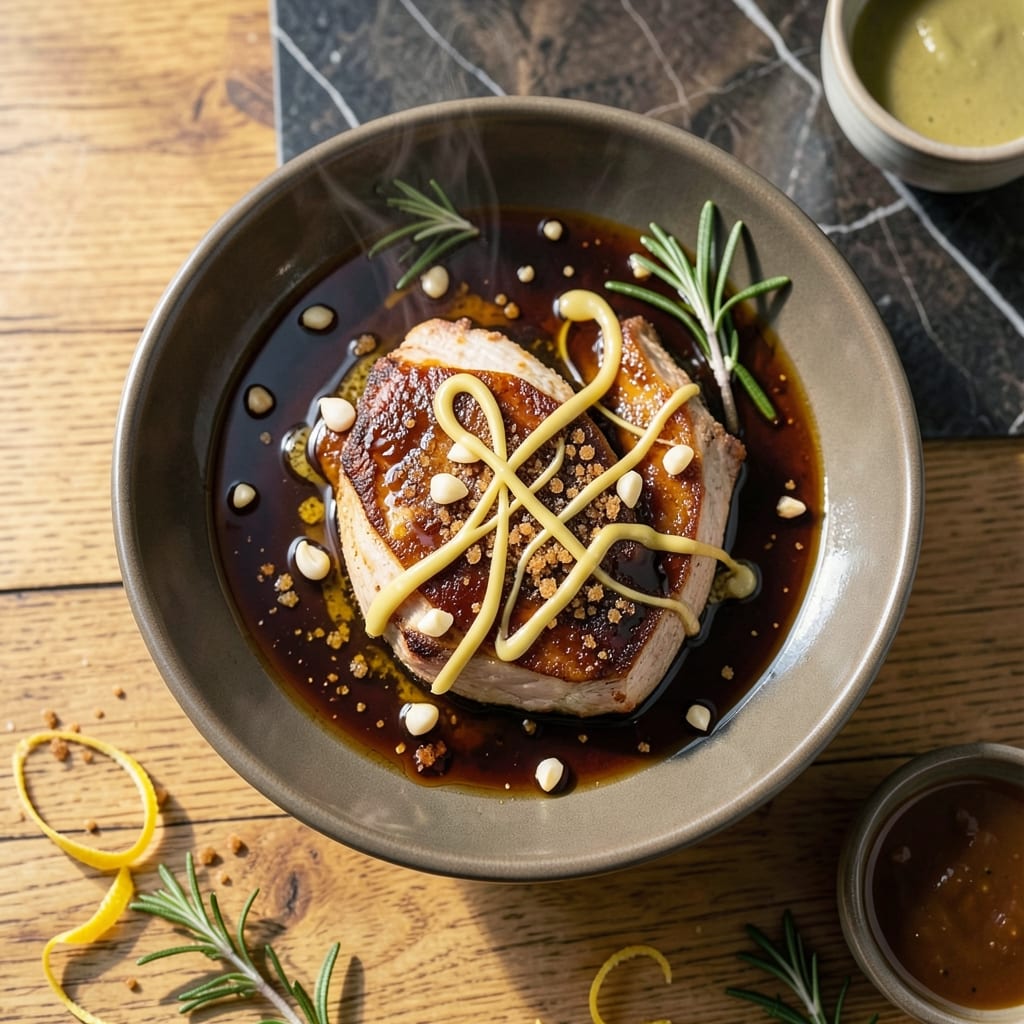
This marinade transforms ordinary pork chops into tender, juicy masterpieces with minimal effort. Apple cider vinegar works as a natural tenderizer while adding bright, tangy flavor that complements pork beautifully.
I developed this recipe after years of testing in my small Boston kitchen, perfecting the balance between acidity, sweetness, and savory notes. The vinegar breaks down proteins while garlic and herbs infuse the meat with depth.
The result is pork chops that stay moist during cooking and develop a beautiful caramelized crust. Marinate for at least 2 hours, or overnight for maximum flavor penetration.
Store any unused marinade in the refrigerator for up to 5 days. This simple mixture elevates weeknight dinners with professional results.
Ingredients for Pork Chop Marinade Recipe Apple Cider Vinegar
Nine ingredients, one bowl, pork chops that taste restaurant-worthy every time.
| Ingredient | Amount | Notes |
|---|---|---|
| Apple Cider Vinegar 🍏 | ¾ cup | Raw, unfiltered preferred for depth |
| Olive Oil 🫒 | ½ cup | Extra-virgin for balanced richness |
| Brown Sugar 🍚 | 3 tbsp | Light or dark works equally well |
| Soy Sauce 🥢 | 2 tbsp | Low-sodium to control saltiness |
| Worcestershire Sauce 🍶 | 1 tbsp | Adds umami depth to the blend |
| Garlic Cloves 🧄 | 4 cloves | Finely minced for even distribution |
| Dijon Mustard 🟡 | 1 tbsp | Smooth texture, sharp tang |
| Dried Rosemary 🌿 | 1 tsp | Crushed to release essential oils |
| Dried Thyme 🍃 | 1 tsp | Earthy backbone for the marinade |
| Black Pepper 🌶️ | 1 tsp | Freshly ground for bold flavor |
[recipe_ingredient_scaler]
The apple cider vinegar is non-negotiable here—Bragg or Heinz are reliable brands you’ll find at any supermarket. Look for the raw, unfiltered kind (the cloudy bottle) for maximum acidity and complexity. Whole Foods or Trader Joe’s carry great organic options if you’re avoiding additives. The olive oil should be something you’d drizzle on bread (extra-virgin), not that old bottle gathering dust.
No apple cider vinegar? White wine vinegar at a 1:1 ratio works in a pinch, though it’s slightly sharper. Swap brown sugar for maple syrup at 2 tbsp per 3 tbsp sugar. If you’re out of Dijon, regular yellow mustard plus a pinch of turmeric mimics the tang and color. For the herbs, fresh rosemary and thyme at triple the amount (1 tbsp each) bring even more brightness.
This keeps 5 days in the fridge in a sealed jar. The flavors deepen after a day, so make it ahead if you can. Don’t reuse marinade that’s touched raw pork—boil it for 3 minutes first if you want a sauce. Freezes beautifully for 3 months (thaw overnight in the fridge).
Why You’ll Love This Recipe
- 5-Minute Mix: I just dump all five ingredients in a bowl and whisk—no chopping, no fuss.
- Sweet-Tangy Magic: The brown sugar caramelizes while the apple cider vinegar cuts through with that perfect zing.
- Grill or Stovetop: Works for thick-cut chops on the grill or quick pan-seared ones on a weeknight.
- Stretches Far: One batch marinates four chops, and leftovers taste even better the next day.
Step-by-Step Instructions for Pork Chop Marinade
This method guarantees tender, juicy chops with maximum flavor penetration every time.
Step 1: Combine the Acidic Base and Sweetener
In a medium bowl, whisk together the 0.75 cup Apple Cider Vinegar with the 3 tbsp Brown Sugar until the sugar fully dissolves. I use a fork for this—it creates tiny bubbles that help distribute the sugar evenly.
The vinegar’s tang will break down tough muscle fibers in the pork, while the sugar caramelizes during cooking for a subtle sweetness. You’ll see the mixture turn slightly syrupy as the sugar incorporates.
Real talk: Raw, unfiltered apple cider vinegar adds a depth of flavor that refined versions can’t match. If you see sediment in your vinegar, don’t filter it out—those bits are flavor gold.
Step 2: Build the Umami Foundation
Add the 2 tbsp Soy Sauce, 1 tbsp Worcestershire Sauce, and 1 tbsp Dijon Mustard to the vinegar mixture. Whisk vigorously for 30 seconds until the mustard fully emulsifies into the liquid.
This trio creates a savory backbone that balances the acidity. The Dijon’s sharpness cuts through the richness of the pork, while the Worcestershire adds a fermented complexity. Low-sodium soy sauce lets you control the saltiness without overpowering the blend.
Here’s the thing—if your mustard is particularly thick, press it through a fine-mesh sieve first to avoid lumps in your marinade.
Step 3: Infuse with Aromatics and Herbs
Finely mince the 4 cloves Garlic Cloves and add them to the bowl along with the 1 tsp Dried Rosemary and 1 tsp Dried Thyme. Crush the dried herbs between your fingers as you add them to release their essential oils.
The garlic should be minced to a near-paste consistency so it distributes evenly and doesn’t leave large chunks on your chops. The rosemary and thyme add earthy, pine-like notes that complement the pork’s natural sweetness.
I always use fresh garlic cloves rather than pre-minced—fresh has a brighter, more vibrant flavor that makes a noticeable difference in the final dish.
Step 4: Emulsify with Oil for Maximum Coverage
Slowly drizzle in the 0.5 cup Olive Oil while whisking constantly. This creates a temporary emulsion that ensures the marinade clings to the pork rather than pooling at the bottom of the dish.
Extra-virgin olive oil adds a fruity richness that balances the acidity. The oil also helps carry fat-soluble flavors from the herbs and garlic into the meat. You’ll notice the marinade thicken slightly as it emulsifies.
Don’t skip the slow drizzle—adding the oil too quickly will cause it to separate from the vinegar mixture, leaving you with a broken marinade.
Step 5: Add the Finishing Touch and Rest
Stir in the 1 tsp Black Pepper and let the marinade sit for 5 minutes to allow the flavors to meld. Freshly ground black pepper adds a bold, slightly spicy kick that enhances the other flavors without overwhelming them.
Transfer your pork chops to a resealable bag or shallow dish and pour the marinade over them, ensuring all surfaces are coated. For best results, refrigerate for at least 4 hours or up to overnight before cooking.
This resting time is crucial—the acid needs time to work its magic on the meat fibers, while the flavors penetrate deeply. You’ll know it’s working when the chops take on a slightly grayish tint from the marinade.
Pro Tips For Making Pork Chop Marinade Recipe Apple Cider Vinegar
- Marinate Overnight: I learned this the hard way—pork chops need at least 4 hours in the apple cider vinegar marinade to really tenderize, but 8-12 hours makes the brown sugar and soy sauce penetrate deep.
- Balance the Acid: Apple cider vinegar is strong, so use 1 part vinegar to 1 part olive oil and 1 part soy sauce to prevent the pork from turning mushy or overly tangy.
- Skip the Metal: After ruining a batch with a reactive aluminum bowl, I now mix my marinade in glass or ceramic—it keeps the vinegar and Worcestershire from reacting and adding a metallic taste.
- Reduce for Glaze: Simmer the leftover marinade for 3-4 minutes after removing the pork, then brush it on while cooking for a sticky, caramelized glaze without food safety worries.
Essential Equipment for This Recipe
Mixing Bowls
I always use a 2-quart glass mixing bowl for this marinade—it’s non-reactive, easy to clean, and lets me see exactly when the oil emulsifies. Pyrex is my go-to brand; you’ll find it at any Target or grocery store. The slightly wider base gives plenty of room for whisking.
Whisks
A 10-inch ball whisk creates the perfect emulsion without over-aerating. I love the OXO Good Grips version—I’ve had mine for years. The ball shape reaches into bowl corners better than flat whisks, ensuring no oil gets left behind.
Measuring Tools
Accurate measurements matter here. I use stainless steel measuring cups and spoons from Cuisinox. For the vinegar, a liquid measuring cup with clear markings prevents spills. The brown sugar packs perfectly into a standard tablespoon measure.
Storage Containers
For marinating, a 1-gallon resealable freezer bag works perfectly for 4-6 chops. I use Ziploc brand—they’re durable and leak-proof. For extra marinade, store in a 16-ounce mason jar with a tight lid. 💡
Prep Tools
A garlic press saves time on the cloves, though I sometimes mince by hand for texture. For crushing herbs, a mortar and pestle releases more oils than your fingers. Both are kitchen staples I reach for constantly.
Cleanup Helpers
Keep a silicone pastry brush handy for coating every surface of the chops. After marinating, I transfer everything to the trash with a plastic grocery bag lined under my cutting board—no messy drips to clean up.
Nutrition Facts
Frequently Asked Questions
How long should I marinate pork chops?
For best results, marinate for at least 4 hours or up to overnight. The acid needs time to tenderize the meat and infuse flavor deeply.
Can I reuse the marinade after raw pork has touched it?
Never reuse raw marinade directly. To make a sauce, boil it for 3 minutes first to kill bacteria. Otherwise, discard it after use.
What can I substitute for apple cider vinegar?
Use white wine vinegar at a 1:1 ratio for similar tang. For less acidity, try lemon juice with a splash of water to mellow.
Why does my marinade separate after mixing?
Separation happens when oil isn’t properly emulsified. Whisk constantly while slowly drizzling in the olive oil to prevent this.

Trained in classic French technique but raised on slow-cooked ribs and spicy rubs, she blends culinary skill with smoke and soul.
- Meat Loaf Recipe With Beef And Pork: Homestyle Blend With Rich Gravy - October 3, 2026
- Hamburger Patty Recipe No Egg: Juicy Bind With Breadcrumbs and Milk - October 3, 2026
- Recipe for Oven Baked Halibut: Buttery White Fish with Zesty Lemon Topping - October 3, 2026