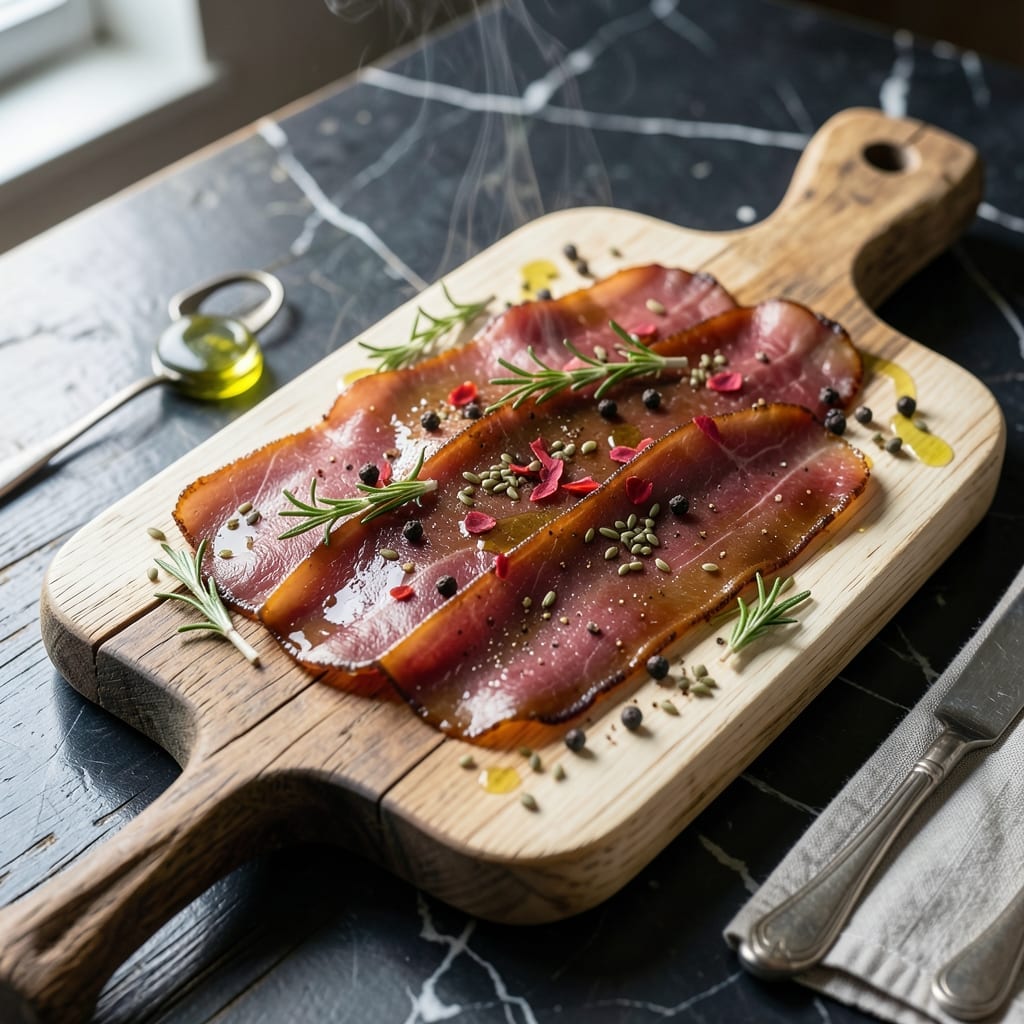
Traditional Italian coppa represents the art of charcuterie at its finest. This cured pork shoulder delivers rich, complex flavors through a time-honored process that transforms simple ingredients into something extraordinary.
The method combines precise spice blending with patient curing, creating a tender, marbled result that’s both elegant and deeply satisfying. I’ve refined this approach to ensure consistent quality without compromising authenticity.
What emerges after the curing period is a delicacy with perfectly balanced seasoning and a velvety texture. The spices penetrate deeply while maintaining the pork’s natural richness.
This preparation honors centuries-old techniques while remaining accessible to home cooks. The process requires attention to detail but rewards with exceptional flavor.
Ingredients for Pork Coppa
Transform simple pork shoulder into an Italian delicacy with these carefully selected curing ingredients.
| Ingredient | Amount | Notes |
|---|---|---|
| Pork Shoulder 🐖 | 2 ½ lb | Skin-on, bone-in preferred |
| Kosher Salt 🧂 | ¾ cup | Diamond Crystal preferred |
| Black Peppercorns 🌶️ | 2 tbsp | Freshly cracked |
| Fennel Seeds 🌿 | 1 tbsp | Lightly toasted |
| Red Pepper Flakes 🔥 | 1 tsp | Adjust for heat preference |
| Dried Rosemary 🍃 | 1 tbsp | Crushed between fingers |
| Bay Leaves 🌿 | 4 pieces | Whole, not ground |
| Garlic Cloves 🧄 | 6 cloves | Smashed, peeled |
| White Wine 🍷 | 1 cup | Dry variety preferred |
| Olive Oil 🫒 | ¼ cup | Extra-virgin for richness |
| Juniper Berries 🫒 | 1 tsp | Lightly crushed |
| Curing Salt 🧂 | ¼ tsp | Prague Powder #2 |
[recipe_ingredient_scaler]
The pork shoulder is non-negotiable here—opt for skin-on, bone-in for authentic texture. Local butcher shops offer the best quality, but Whole Foods or Costco carry suitable cuts. Look for good marbling; it ensures the final product stays moist during the long curing process. The curing salt (Prague Powder #2) is essential for proper preservation and color development.
No juniper berries? Gin (a few tablespoons) can substitute in a pinch, though the flavor profile shifts slightly. Dried thyme at half the amount works if you’re out of rosemary. For the wine, any dry white (Pinot Grigio, Sauvignon Blanc) is ideal—avoid oaky varieties. If avoiding alcohol, use white wine vinegar diluted with water, but the depth won’t be identical.
Store the cured coppa wrapped in butcher paper, then in a zip-top bag in the fridge for up to 3 months. For longer storage, vacuum-seal and freeze for 6-12 months. Bring to room temperature before slicing for optimal texture.
Why You’ll Love This Recipe
- Set and Forget: I just coat the pork shoulder with salt, peppercorns, and spices, then let time do the work—no fuss, no constant checking.
- Fennel Spice Magic: That first bite with the warm fennel seeds and a kick of red pepper flakes? Ridiculously good.
- Sandwich Superstar: I slice it thin for sandwiches, dice for pasta, or serve as-is with cheese—endless ways to use it.
- Budget-Friendly Feast: A whole pork shoulder cures into coppa for a fraction of the deli price, and it lasts for weeks.
Step-by-Step Instructions for Pork Coppa
Follow this precise method to create an authentic Italian cured meat with perfect texture and flavor.
Step 1: Prepare the Curing Spice Blend
In a mortar and pestle, combine the 2 tbsp Black Peppercorns, 1 tbsp Fennel Seeds, 1 tsp Juniper Berries, and 1 tsp Red Pepper Flakes. Crush until the spices release their aromatic oils but remain slightly coarse in texture. This process awakens the essential oils that will penetrate the meat during curing.
Add the 1 tbsp Dried Rosemary (crushed between your fingers) and the 0.25 tsp Curing Salt to the spice mixture. The curing salt is critical for both preservation and the characteristic pink color of traditional coppa. Stir thoroughly to distribute all components evenly.
Step 2: Apply the Initial Salt Cure
Rub the 2.5 lb Pork Shoulder generously with 0.75 cup Kosher Salt on all surfaces, including any crevices. The Diamond Crystal kosher salt is preferred as its coarse texture adheres well to the meat surface. Place the pork in a non-reactive container and refrigerate uncovered for 24 hours.
After the initial 24 hours, rinse the pork under cold water to remove excess surface salt, then pat it completely dry with paper towels. This prevents an overly salty exterior while maintaining the curing process internally. The meat should feel firm to the touch at this stage.
Step 3: Apply the Spice Rub and Aromatics
Rub the prepared spice blend from Step 1 over the entire surface of the pork, pressing firmly to ensure adhesion. The spices should create a visible, even coating that will infuse the meat during the curing process. This step develops the complex flavor profile characteristic of authentic coppa.
In a small bowl, combine the 6 cloves Garlic Cloves (smashed and peeled) with the 4 pieces Bay Leaves and the 0.25 cup Olive Oil. Rub this mixture over the spice-coated pork, ensuring complete coverage. The olive oil helps the spices adhere and adds richness to the final product.
Step 4: Begin the Curing Process
Place the pork in a non-reactive container and add the 1 cup White Wine to the bottom, ensuring the meat itself is not submerged. The wine adds subtle acidity that balances the richness of the pork while contributing to the curing environment. Cover the container and refrigerate for 5 days.
Flip the pork every 24 hours to ensure even curing and spice distribution. The meat will gradually firm up and develop a deeper color as the cure penetrates. The container should be kept in the coldest part of your refrigerator, typically the bottom shelf.
Step 5: Complete the Curing and Rest
After 5 days, remove the pork from the container and pat it dry once more. The exterior should appear slightly shriveled and firm. At this point, the coppa is ready for the final drying stage. The total curing time ensures proper preservation while allowing the flavors to fully develop.
Hang the pork in a cool, dry place with good air circulation for 2-3 weeks to complete the drying process. The finished coppa should be firm to the touch with a rich, complex aroma. Slice thinly against the grain for the best texture when serving.
Pro Tips For Making Pork Coppa
- Dry the Shoulder: Pat the pork shoulder completely dry before curing—any moisture left on the surface will dilute the salt and spices, and I learned this the hard way with a sad, pale batch.
- Toast the Seeds: Lightly toast the fennel seeds and black peppercorns in a dry pan for 30 seconds until fragrant. Sounds fussy, but it actually changes the outcome of the flavor.
- Skip the Overpack: Don’t cram the meat into the curing container; leave at least an inch of space around each piece so the salt can work evenly—your future self will thank you.
- Wait 24 Hours: Give the coppa a full day in the fridge after curing to let the flavors meld before you even think about hanging it. I was skeptical until I tried it.
Wine and Beer Pairings for These Flavors
Italian Wine Pairings
For an authentic experience, pair your cured meat with a bold Chianti Classico. Its high acidity and tannins cut through the richness while complementing the fennel and black pepper notes. A 2018 Ruffino Riserva offers perfect balance. 🍷
White Wine Options
A crisp Vermentino from Sardinia provides a refreshing contrast with its citrus and mineral notes. La Spinetta Vermentino is my go-to choice. The wine’s brightness cleanses your palate between each savory bite.
Northern Italian Reds
Barolo or Barbaresco from Piedmont deliver the structure to stand up to coppa’s intensity. The Nebbiolo grape’s tar and rose aromas mirror the spice complexity. I recommend Gaja’s Barbaresco for special occasions.
Beer Pairings
An Italian Birra del Borgo IPA offers hoppy bitterness that balances the fat. For a malty alternative, try Peroni Nastro Azzurro – its clean profile won’t compete with the cured meat’s flavors. 🍺
Sparkling Options
A dry Prosecco provides effervescent contrast to the rich, spiced pork. Bisol Jeio Prosecco is widely available and consistently excellent. The bubbles refresh your palate between slices.
Dessert Wine
For a unique pairing, serve thin slices with a glass of Vin Santo. The nutty, honeyed notes of this Tuscan dessert wine create a beautiful contrast with the savory, spiced coppa. 💫
Nutrition Facts
Frequently Asked Questions
How long does the entire curing process take?
From start to finish, expect 3-4 weeks. The initial salt cure takes 24 hours, followed by 5 days of spiced curing in the fridge, then 2-3 weeks of drying. Patience is key for the best texture and flavor.
Can I use a different cut of pork?
Avoid lean cuts like tenderloin—they’ll dry out. Stick with pork shoulder or pork neck for proper marbling. The fat content is essential for moisture and flavor during the long cure.
Is curing salt absolutely necessary?
Yes, Prague Powder #2 is non-negotiable. It prevents botulism and ensures even curing. Never substitute regular salt—it won’t provide the same preservation or color development.
Why flip the meat daily during curing?
Flipping ensures even distribution of spices, salt, and moisture. This prevents one side from becoming overly dry or unevenly seasoned, resulting in a consistent texture throughout.

Trained in classic French technique but raised on slow-cooked ribs and spicy rubs, she blends culinary skill with smoke and soul.
- Recipe for Boneless Pork Chops in Cast Iron Skillet: Sear and Baste to Juicy Perfection - October 3, 2026
- Recipe for Boneless Cross Rib Roast: Slow-Roasted Beef with Herb Crust - October 3, 2026
- Hamburgers in Sauce Recipe Crock Pot: Slow-Cooked Savory Delight - October 3, 2026