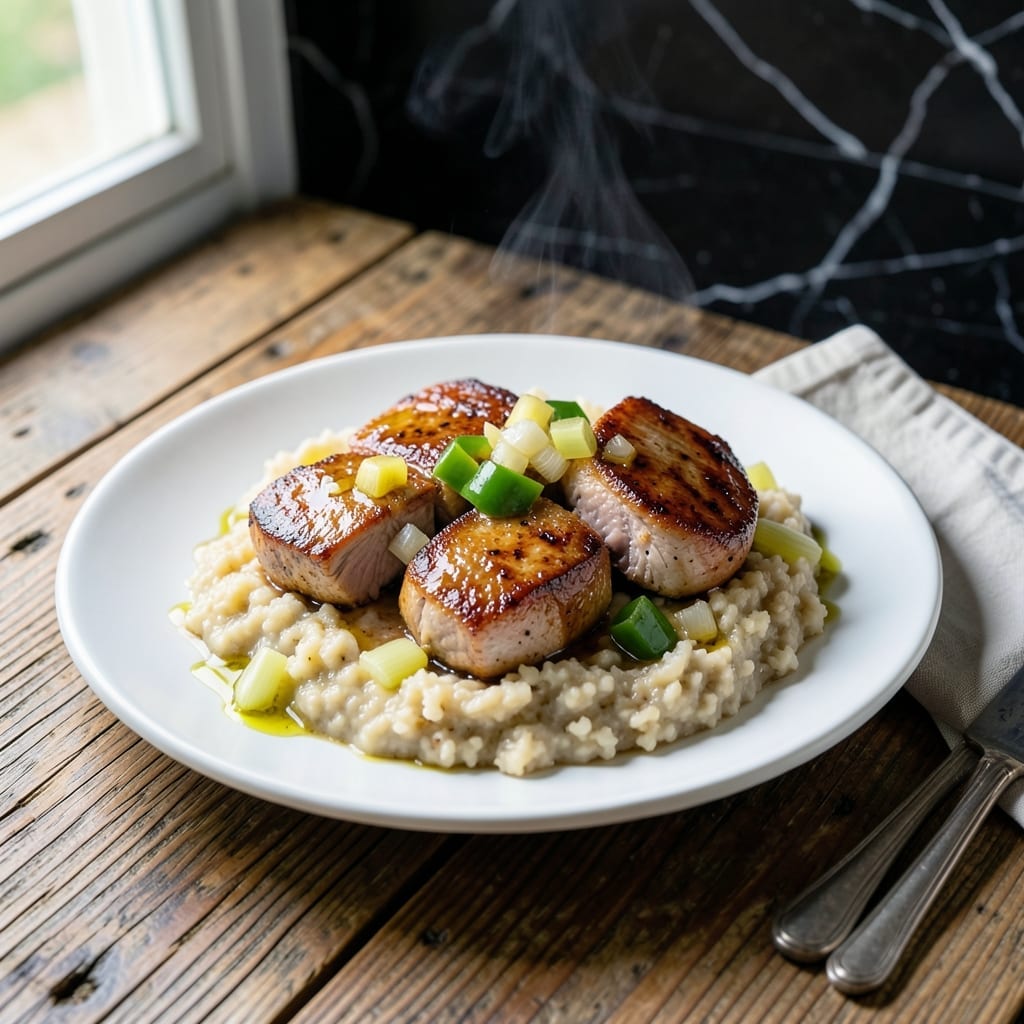
This Creole classic brings the heart of New Orleans to your kitchen with tender, flavorful pork served over creamy stone-ground grits. I developed this version after years of testing to capture the authentic taste of Louisiana.
The pork is braised in a rich, smoky-sweet sauce until fall-apart tender, while the grits simmer slowly to achieve that perfect creamy texture. It’s a dish that demands patience but rewards with every bite.
What results is a harmonious plate where the tangy, slightly spicy pork sauce soaks into the grits. This is comfort food at its most refined, with deep layers of flavor.
Serve it for Sunday supper or when you want to impress. Here’s how to make this Southern staple.
Ingredients for Pork Grillades and Grits
Pantry staples meet pork shoulder and stone-ground grits. Nothing too exotic here.
| Ingredient | Amount | Notes |
|---|---|---|
| Pork Shoulder 🥩 | 2 lb | Cut into 1/2-inch medallions |
| All-Purpose Flour 🌾 | ½ cup | For dredging pork |
| Vegetable Oil 🫒 | 2 tbsp | For browning pork |
| Yellow Onion 🧅 | 1 whole | Medium, finely chopped |
| Green Bell Pepper 🌶️ | 1 whole | Finely chopped |
| Celery Stalks 🥬 | 2 pieces | Finely chopped |
| Garlic Cloves 🧄 | 4 cloves | Minced |
| Chrushed Tomatoes 🍅 | 1 can | 28 oz can |
| Chicken Broth 💧 | 2 cups | Low-sodium preferred |
| Worcestershire Sauce 🫒 | 2 tbsp | For depth of flavor |
| Apple Cider Vinegar 🍏 | 1 tbsp | For tang |
| Brown Sugar 🧈 | 2 tbsp | Light or dark |
| Dried Thyme 🌿 | 1 tsp | Crushed between fingers |
| Bay Leaves 🍃 | 2 pieces | Whole |
| Stone-Ground Grits 🌾 | 1 cup | Uncooked |
| Whole Milk 🥛 | 2 cups | For creamy grits |
| Butter 🧈 | 2 tbsp | Unsalted, for grits |
| Salt 🧂 | 1 tsp | Kosher or sea salt |
| Black Pepper 🌶️ | ½ tsp | Freshly ground |
| Cayenne Pepper 🔥 | ¼ tsp | Adjust to taste |
[recipe_ingredient_scaler]
The pork shoulder is key—look for well-marbled meat at Whole Foods or your butcher. Cut it yourself into 1/2-inch medallions (or ask them to do it). Stone-ground grits are non-negotiable for that authentic texture—Anson Mills is the gold standard. I grab mine at Williams Sonoma, but any good grocery store should carry them. Don’t rush the browning step; that’s where the flavor develops.
No pork shoulder? Pork butt works too (it’s basically the same cut). Out of stone-ground grits? Regular grits in a pinch, but the texture won’t be as rich. No Worcestershire? Soy sauce plus a dash of vinegar gets you close. The vinegar can be white if that’s what you’ve got, but apple cider gives it that Creole tang. Fresh thyme if you’ve got it—use one-third the amount of dried.
Leftovers keep 4-5 days in the fridge—reheat gently so the grits stay creamy. The pork sauce actually deepens in flavor overnight. Freezes for 3 months too. I like to make extra grits; they firm up like polenta and fry up beautifully for breakfast the next day.
Why You’ll Love This Recipe
- One Pan Wonder: I sear the pork shoulder in the same skillet I use for the gravy—veggie oil, flour, and those sweet onions and peppers do all the work.
- That Smoky Depth: The pork soaks up the onion and bell pepper flavor while it simmers, making every bite rich and satisfying.
- Feeds My Crew: I double the batch and serve it for Sunday brunch, then again as leftovers on Tuesday with zero complaints.
- Stretches the Budget: Pork shoulder is cheap, and a little goes a long way when paired with grits. Honestly, it’s my most reliable wallet-friendly meal.
Step-by-Step Instructions for Pork Grillades and Grits
This Creole classic comes together with simple steps and delivers rich, smoky flavor every time.
Step 1: Dredge and Brown the Pork
Cut the pork shoulder into ½-inch thick medallions and season both sides with salt and black pepper. Dredge each piece lightly in the 0.5 cup all-purpose flour, shaking off any excess. The flour creates a light crust that thickens the sauce later.
Heat the 2 tbsp vegetable oil in a large Dutch oven or heavy pot over medium-high heat. Working in batches, brown the pork medallions for 3-4 minutes per side until deep golden brown. Don’t crowd the pan—this ensures a good sear instead of steaming. Transfer the browned pork to a plate and set aside.
Step 2: Build the Flavor Base
In the same pot, add the yellow onion, green bell pepper, and celery stalks. Cook for 5-6 minutes, stirring occasionally, until the vegetables soften and start to brown. This trio—the holy trinity of Creole cooking—builds the foundation of flavor.
Stir in the 4 cloves garlic cloves and cook for 30 seconds until fragrant. Then add the 1 can chrushed tomatoes, 2 tbsp brown sugar, 2 tbsp Worcestershire sauce, 1 tbsp apple cider vinegar, 1 tsp dried thyme, and 2 pieces bay leaves. Cook for 2 minutes, stirring constantly to prevent burning.
Step 3: Braise the Pork Until Tender
Return the browned pork to the pot along with any accumulated juices. Pour in the 2 cups chicken broth, ensuring the liquid covers the pork about halfway. Bring to a boil, then reduce the heat to low. Cover and simmer for 1 hour and 15 minutes, turning the pork occasionally.
The pork is done when it’s fork-tender and the sauce has thickened slightly. Taste and adjust seasoning with additional salt or 0.25 tsp cayenne pepper if you prefer more heat. Remove and discard the bay leaves before serving.
Step 4: Cook the Creamy Grits
While the pork braises, bring the 2 cups whole milk to a gentle boil in a medium saucepan over medium heat. Stir in the 1 cup stone-ground grits and 1 tsp salt. Reduce the heat to low and cook, stirring frequently, for 20-25 minutes until the grits are thick and creamy.
Remove from heat and stir in the 2 tbsp butter until melted. The grits should be smooth and velvety—this is where the creamy promise comes to life. Cover and keep warm until ready to serve.
Step 5: Serve and Enjoy
Spoon a generous portion of the grits onto each plate, creating a bed for the pork. Top with the braised pork medallions and ladle the rich sauce over the top. The grits soak up the smoky, tangy sauce beautifully, making every bite irresistible.
This dish tastes even better the next day, as the flavors continue to meld. Serve with hot sauce on the side for those who like an extra kick. You’ve just created a Creole masterpiece that’s hearty, flavorful, and deeply satisfying.
Pro Tips For Making Pork Grillades And Grits
- Brown the Flour: Cook the flour in oil for 5-7 minutes until it turns a deep peanut butter color—I learned this the hard way when my first batch tasted like raw dough. This builds the roux base that defines the dish.
- Slice Against Grain: Cut the pork shoulder into thin strips against the grain, about 1/4-inch thick. My grandmother swore by this, and she was right: it makes the meat melt-in-your-mouth tender.
- Skip the High Heat: Medium-low heat is non-negotiable for the roux and the pork. After burning three batches, I finally figured out that patience prevents bitter flour and tough meat.
- Use a Heavy Pot: A Dutch oven or heavy-bottomed pot actually changes the outcome—it distributes heat evenly so the roux doesn’t scorch and the pork cooks through without sticking. I skip this when I’m lazy, but the dish is noticeably better when I don’t.
Dietary Considerations for This pork grillades and grits
Gluten-Free Option
Swap the all-purpose flour for a gluten-free blend like King Arthur Measure for Measure. For dredging, I also love using cornstarch—it creates an even crispier coating. Just ensure all other ingredients, like the Worcestershire sauce, are certified gluten-free. 💪
Dairy-Free Grits
Use unsweetened almond milk or oat milk instead of whole milk for the grits. Replace the butter with olive oil or a dairy-free margarine. The texture will be just as creamy, and the flavor remains rich and satisfying.
Lower-Carb Adaptation
For a lighter take, reduce the grits to ½ cup uncooked and serve the pork over cauliflower rice instead. You can also use shirataki noodles for a similar texture. The pork and sauce are so flavorful, you won’t miss the extra carbs.
Reduced-Sodium Version
Use low-sodium chicken broth and skip added salt until the end. Boost flavor with extra garlic, dried thyme, or a splash of apple cider vinegar. Taste as you go and adjust seasoning carefully. 🌿
Spice Adjustments
Omit the cayenne pepper for a milder dish, or add ½ tsp smoked paprika for depth without heat. For extra kick, include diced jalapeños when cooking the holy trinity. I often add a pinch of cinnamon for warmth.
Nutrition Facts
Frequently Asked Questions
Can I use a different cut of pork?
Pork butt works equally well as it’s similar to shoulder. Avoid lean cuts like tenderloin—they’ll dry out during the 1 hour and 15 minutes braise. Always choose well-marbled meat for best results.
Why do my grits turn out grainy?
Stone-ground grits need 20-25 minutes of slow cooking with frequent stirring. Use a heavy saucepan and low heat to prevent scorching. Quick grits won’t give you that creamy texture.
Can I make this ahead?
The dish actually improves overnight as flavors meld. Reheat gently on the stove with a splash of broth. The pork stays tender for 4-5 days in the fridge.
What if I don’t have stone-ground grits?
Regular grits work in a pinch, but cook them 5 minutes less. The texture won’t be as rich, but they’ll still soak up that delicious sauce.

Trained in classic French technique but raised on slow-cooked ribs and spicy rubs, she blends culinary skill with smoke and soul.
- Recipe for Boneless Pork Chops in Cast Iron Skillet: Sear and Baste to Juicy Perfection - October 3, 2026
- Recipe for Boneless Cross Rib Roast: Slow-Roasted Beef with Herb Crust - October 3, 2026
- Hamburgers in Sauce Recipe Crock Pot: Slow-Cooked Savory Delight - October 3, 2026