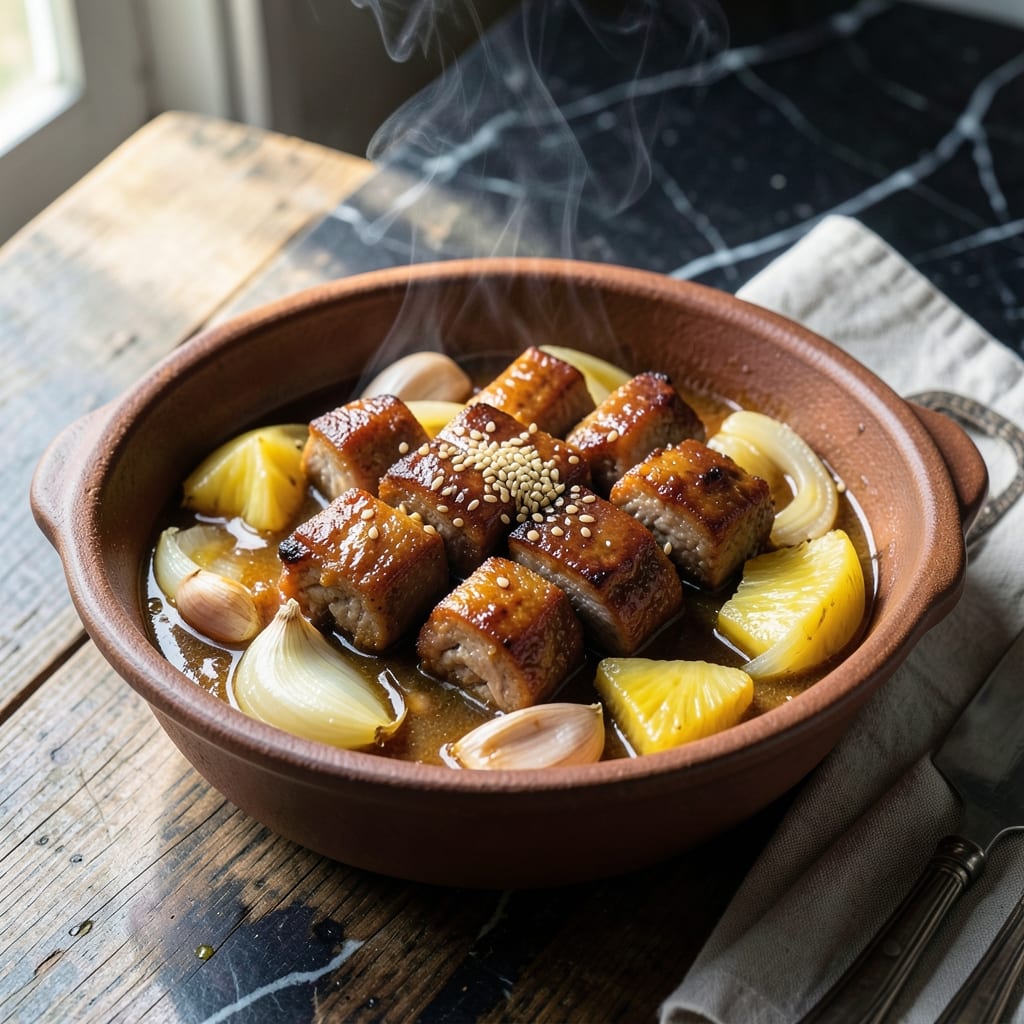
This Filipino pork humba brings the slow-braised tenderness of my grandmother’s kitchen to your table. The pineapple vinegar sauce creates a perfect balance of sweet, tangy, and savory flavors.
I’ve adapted her traditional method to work in a modern home kitchen, ensuring the pork becomes fall-apart tender while the sauce reduces to a rich, glossy finish. No shortcuts—just time-tested technique.
The dish develops depth as it simmers, with each ingredient playing its part. Garlic, soy sauce, and black peppercorns build the foundation, while the pineapple vinegar adds the signature Filipino touch.
Serve this with steamed rice to soak up every last drop of the sauce. The result is a meal that tastes like it came from a generations-old family recipe.
Ingredients for Pork Humba Recipe Panlasang Pinoy
Slow-braised pork and tangy pineapple vinegar create this rich, authentic Filipino dish.
| Ingredient | Amount | Notes |
|---|---|---|
| Pork Belly 🥩 | 2 lb | Cut into 2-inch cubes |
| Garlic Cloves 🧄 | 8 cloves | Peeled and crushed |
| Yellow Onion 🧅 | 1 whole | Peeled and quartered |
| Soy Sauce 🫙 | ½ cup | Use Filipino brands if available |
| Pineapple Vinegar 🍍 | ½ cup | Essential for authentic flavor |
| Brown Sugar 🍚 | ½ cup | Packed for sweetness balance |
| Black Peppercorns 🌶️ | 1 tbsp | Whole, lightly crushed |
| Bay Leaves 🍃 | 3 pieces | Dried, for aroma |
| Star Anise ✨ | 2 pieces | Whole pods for depth |
| Salt 🧂 | 1 tsp | Adjust to taste |
| Water 💧 | 1 cup | For braising liquid |
| Cooking Oil 🫒 | 2 tbsp | For searing pork |
[recipe_ingredient_scaler]
Pork belly is non-negotiable for the melt-in-your-mouth texture—look for well-marbled cuts at Asian markets or Costco. Filipino soy sauce (like Silver Swan) has a slightly sweeter, milder profile that balances the dish perfectly. The pineapple vinegar is the soul of humba; Datu Puti is widely available and reliable. Fresh garlic and onions from the produce section work best (avoid pre-minced for maximum flavor).
No pork belly? Pork shoulder works in a pinch, though the texture won’t be as luxurious. Substitute apple cider vinegar if pineapple vinegar is unavailable, but add 1 tbsp pineapple juice to compensate. Brown sugar can be swapped for coconut sugar at a 1:1 ratio. Star anise is traditional but 1 tsp five-spice powder can mimic its warmth if you’re out.
The dish tastes even better the next day as flavors meld. Store in an airtight container in the fridge for up to 4 days or freeze for 3 months. Reheat gently on the stove with a splash of water to revive the sauce.
Why You’ll Love This Recipe
- One Pot Wonder: I love that everything cooks together—pork belly, garlic, onions, and the tangy pineapple vinegar—minimal cleanup, maximum flavor.
- Umami Bomb: The soy sauce and vinegar create this rich, balanced taste that’s savory with just the right tang.
- Feeds a Crowd: Honestly, it’s my go-to for family gatherings—one batch satisfies everyone, and leftovers taste even better.
- Budget Stretcher: Pork belly is affordable here, and this dish turns it into something ridiculously good without fancy ingredients.
Step-by-Step Instructions for Pork Humba
Here’s the method. Straightforward, tested, works every time.
Step 1: Sear the Pork Belly Until Browned
Heat the 2 tbsp cooking oil in a large, heavy pot over medium-high heat. When the oil shimmers, add the 2 lb pork belly cubes in batches, being careful not to overcrowd the pot. Sear the pork for 3-4 minutes per side until deeply browned on all surfaces.
This searing step builds a flavorful fond at the bottom of the pot, which will dissolve into the braising liquid later. Don’t rush this process—proper browning ensures rich, complex flavors in your finished dish. Remove the pork and set aside once browned.
Step 2: Sauté Aromatics and Toast Spices
In the same pot, add the 8 cloves garlic cloves and 1 whole yellow onion. Sauté for 2-3 minutes until the onions soften and the garlic becomes fragrant. Stir in the 1 tbsp black peppercorns, 3 pieces bay leaves, and 2 pieces star anise, toasting them for 30 seconds.
You’ll smell the spices release their aroma—that’s your signal they’re ready. This step wakes up the whole spices and allows their essential oils to infuse the dish. Be careful not to burn the garlic, as it can turn bitter quickly.
Step 3: Build the Braising Liquid
Return the seared pork belly to the pot. Pour in the 0.5 cup soy sauce, 0.5 cup pineapple vinegar, 0.5 cup brown sugar, 1 tsp salt, and 1 cup water. Stir well to combine, ensuring the brown sugar dissolves completely in the liquid.
The pineapple vinegar gives this dish its distinctive tangy-sweet profile, characteristic of authentic Filipino humba. Bring the mixture to a gentle boil, then reduce the heat to low to maintain a slow simmer.
Step 4: Braise Until Tender and Glazed
Cover the pot and let the pork braise for 1.5 to 2 hours, stirring occasionally. The pork is done when it’s fork-tender and the liquid has reduced to a glossy, syrupy glaze. During the last 30 minutes of cooking, remove the lid to allow the sauce to thicken.
You’ll notice the sauce transforming from a thin liquid to a thick, sticky coating that clings to the pork. This glaze is what makes humba so irresistible. If the sauce reduces too quickly, add a splash of water to prevent burning.
Step 5: Rest and Serve
Once the pork is tender and the sauce has thickened, turn off the heat and let the dish rest for 10 minutes. This allows the flavors to meld together and the pork to reabsorb some of the sauce.
Remove the bay leaves and star anise before serving. The pork should be fall-apart tender with a rich, caramelized sauce that’s balanced between sweet, salty, and tangy. Serve hot over steamed rice to soak up every last bit of the delicious sauce.
Pro Tips For Making Pork Humba Recipe Panlasang Pinoy
- Brown the Belly: Sear the pork belly in batches over medium-high heat until deeply browned—about 5 minutes per side. I learned this the hard way: skipping this step leaves the meat pale and the sauce watery.
- Balance the Vinegar: Use exactly 1/4 cup pineapple vinegar for every 1/2 cup soy sauce to avoid overpowering the dish. My grandmother swore by this ratio, and she was right: too much vinegar makes it harsh.
- Skip the Lid: Resist the urge to cover the pot while simmering. Letting the sauce reduce uncovered for 45-60 minutes concentrates the flavors and gives the pork that sticky, glossy finish.
- Rest Before Serving: Let the humba sit off the heat for 10 minutes before serving. Sounds weird, but it works: the pork reabsorbs some of the sauce and stays juicier on the plate.
Essential Equipment for Great pork humba recipe panlasang pinoy
Heavy Pot Essential
For humba, a heavy-bottomed Dutch oven is my go-to—I use my 5-quart Le Creuset that I found at a yard sale. The weight distributes heat evenly, preventing the sugar in the sauce from burning during the long braise. A stainless steel stockpot works too if you don’t have cast iron. 🔥
Wooden Spoon Tool
Use a wooden spoon to stir the pork as it braises. Unlike metal, wood won’t scratch your pot’s surface and won’t react with the acidic pineapple vinegar. I keep mine right in the pot during cooking for convenience.
Tight-Fitting Lid
A well-fitting lid traps steam, which helps break down the pork belly’s collagen into that melt-in-your-mouth texture. If your lid is loose, cover the pot with foil first, then place the lid on top to create a tight seal.
Dual-Probe Thermometer
While not traditional, I swear by my ThermoWorks instant-read thermometer to monitor the pork’s internal temperature. Aim for 195-205°F for that perfect fall-apart tenderness. It’s how I ensure consistency every time.
Glass Measuring Cups
For the braising liquid, I use Pyrex glass measuring cups with pour spouts. The pineapple vinegar and soy sauce are easy to measure accurately, and the spout prevents spills when adding liquids to the hot pot.
These are the same cups my grandmother used, and they’ve never let me down. 💛
Nutrition Facts
Frequently Asked Questions
Can I use pork shoulder instead of belly?
Yes, but expect a leaner texture. Pork belly’s fat renders down during the 1.5-2 hour braise, creating that signature melt-in-your-mouth quality. Shoulder works in a pinch but won’t be as luxurious.
Why is pineapple vinegar essential?
It provides the dish’s signature tangy-sweet balance that defines authentic Filipino flavor. Regular vinegar lacks the fruity depth. If unavailable, use apple cider vinegar plus 1 tbsp pineapple juice.
How do I prevent the sauce from burning?
Use a heavy-bottomed pot and maintain a gentle simmer. Stir occasionally and add a splash of water if the sauce reduces too quickly. The sugar caramelizes best at low heat.
How long can I store leftovers?
Keep in an airtight container in the fridge for up to 4 days or freeze for 3 months. Reheat gently on the stove with a splash of water to revive the sauce.

Trained in classic French technique but raised on slow-cooked ribs and spicy rubs, she blends culinary skill with smoke and soul.
- Recipe for Curried Tofu: Aromatic Spices With Crispy Edges - October 3, 2026
- Recipe for Dumplings in Crock Pot: Fluffy Pillows with Minimal Effort - October 3, 2026
- Recipe For Diced Pork In Slow Cooker: Melt-In-Your-Mouth Tenderness All Day - October 3, 2026