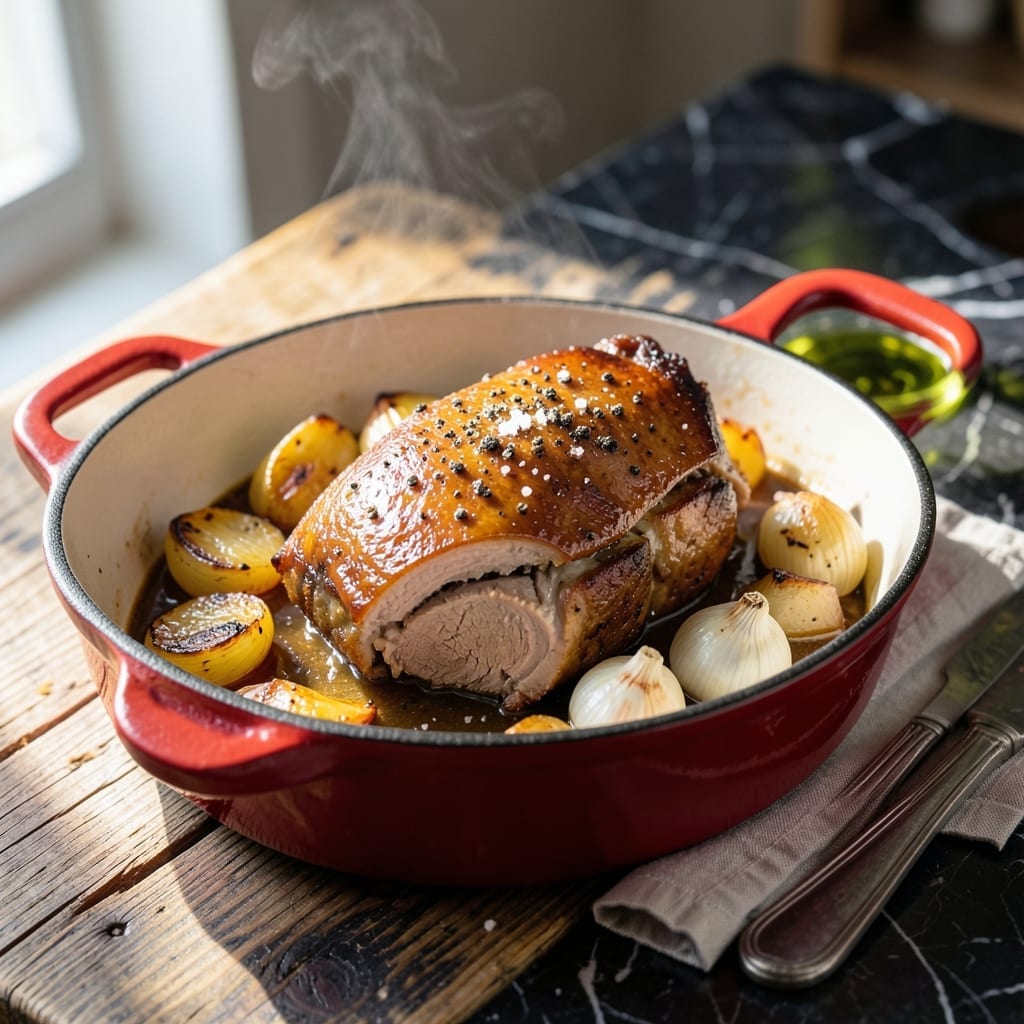
Low and slow cooking transforms tough pork shoulder into melt-in-your-mouth perfection. I’ve been perfecting this method for years, and it never fails to deliver rich, tender results.
This dish is all about patience—the long braise breaks down the meat while building layers of flavor in the sauce. The result is fall-apart pork that’s worth every minute of wait time.
Ingredients for Braised Pork Shoulder
A few humble ingredients create something extraordinary with time and care.
| Ingredient | Amount | Notes |
|---|---|---|
| Pork Shoulder 🥩 | 3 lb | Boneless, cut into large chunks |
| Kosher Salt 🧂 | 2 tsp | Divided for seasoning layers |
| Black Pepper 🌶️ | 1 tsp | Freshly ground preferred |
| Olive Oil 🫒 | 2 tbsp | For searing pork |
| Yellow Onion 🧅 | 1 whole | Large, diced |
| Garlic Cloves 🧄 | 6 cloves | Minced for depth |
| Carrots 🥕 | 2 whole | Peeled, chopped into chunks |
| Celery Stalks 🌿 | 2 whole | Chopped for aromatics |
| Tomato Paste 🍅 | 2 tbsp | For sauce base |
| Dry Red Wine 🍷 | 1 cup | Bold variety preferred |
| Chicken Stock 🥣 | 2 cups | Low-sodium recommended |
| Bay Leaves 🍃 | 2 whole | Dried for braising |
| Fresh Thyme Sprigs 🌿 | 4 whole | Tied with twine |
| Fresh Rosemary Sprig 🌿 | 1 whole | For aromatic depth |
[recipe_ingredient_scaler]
The pork shoulder is everything here. Look for bone-in if you can find it—it adds richness to the sauce. I grab mine at Costco for the best value, but any supermarket with a decent butcher counter works. Ask them to cut it into 3-4 large chunks for even cooking. Good marbling means tender results, so don’t shy away from a little fat (that’s where the flavor lives).
No red wine? Beef broth with a splash of balsamic gives similar depth. Short on fresh herbs? Dried work at one-third the amount—just tie them in cheesecloth for easy removal. The tomato paste can be swapped for tomato sauce in a pinch (reduce the stock by half). For the stock, homemade is ideal, but store-bought Better Than Bouillon works great too.
This tastes even better the next day—4-5 days in the fridge is perfect. Freezes beautifully for 3 months. Portion leftovers with some sauce for easy weeknight meals. Reheat gently to keep the pork from drying out.
Why You’ll Love This Recipe
- One Pan Wonder: I sear the pork shoulder, toss in onions, and let the oven do the rest—hardly any cleanup.
- Fall-Apart Tender: The slow braise turns the meat so soft it nearly melts on your tongue, with onions sweating into a rich, savory sauce.
- Feeds a Crowd: Between us, this is my go-to for Sunday suppers, with enough for leftovers that taste even better the next day.
- Budget Hero: Pork shoulder is cheap, and this recipe stretches it into multiple meals without skimping on flavor.
Step-by-Step Instructions for Braised Pork Shoulder
Here’s how I achieve that fall-apart texture and deep, savory sauce you’ll want to soak up with bread.
Step 1: Season and Sear the Pork Shoulder
Pat the 3 lb pork shoulder dry with paper towels, then season generously with 1 teaspoon of the kosher salt and all of the black pepper. I like to really work the seasoning into the meat so every bite is well-flavored.
Heat the 2 tbsp olive oil in a large Dutch oven over medium-high heat until it shimmers. Working in batches if needed, sear the pork chunks on all sides for 6-8 minutes total until deeply browned. Don’t rush this step—the fond (browned bits) left in the pan will become the flavor base for your sauce. Transfer the seared pork to a plate and set aside.
Step 2: Build the Aromatic Foundation
In the same Dutch oven, add the diced yellow onion, chopped carrots, and chopped celery stalks. Cook over medium heat for 5-6 minutes, stirring occasionally, until the vegetables soften and start to brown slightly at the edges.
Add the minced 6 cloves garlic cloves and cook for 30 seconds until fragrant—just until you can smell the garlic, but before it colors. Stir in the 2 tbsp tomato paste and cook for 1-2 minutes, which deepens its flavor and prevents a raw taste in the finished dish.
Step 3: Deglaze and Add Braising Liquid
Pour in the 1 cup dry red wine and scrape up all those beautiful browned bits from the bottom of the pan with a wooden spoon. Let it simmer for 3-4 minutes until the liquid reduces by about half. This step is crucial—it concentrates the wine’s flavor and ensures your sauce won’t be watery.
Return the seared pork to the Dutch oven along with any accumulated juices. Add the 2 cups chicken stock, remaining 1 tsp kosher salt, 2 whole bay leaves, 4 whole fresh thyme sprigs, and 1 whole fresh rosemary sprig. The liquid should come about halfway up the pork.
Step 4: Braise to Tender Perfection
Bring the mixture to a gentle simmer, then reduce the heat to low. Cover the Dutch oven and let it braise for 2 to 2½ hours, checking occasionally to ensure the liquid maintains a gentle simmer. You’ll know it’s ready when the pork shreds easily with a fork and the sauce has thickened slightly.
I like to flip the pork chunks halfway through the cooking time to ensure even cooking and maximum flavor absorption. If the liquid reduces too much, add a splash more chicken stock to keep the pork partially submerged.
Step 5: Shred and Serve
Once the pork is fork-tender, remove it from the sauce and shred it using two forks. Skim any excess fat from the surface of the sauce, then return the shredded pork to the pot. Stir to combine and let it sit for 5-10 minutes to soak up all that incredible flavor.
The pork should be meltingly tender, and the sauce should coat the back of a spoon. Taste and adjust the seasoning if needed—though with the proper salt at each stage, it should be perfectly balanced. Serve hot over creamy polenta, mashed potatoes, or crusty bread.
Pro Tips For Making Braised Pork Shoulder
- Sear the Shoulder: I learned this the hard way—browning the pork shoulder in olive oil before braising adds depth of flavor that skipping this step just can’t match. Use medium-high heat and don’t move the meat until it releases easily, about 3-4 minutes per side.
- Use Enough Salt: Pork shoulder can handle more salt than you think, especially during the long braise. I use about 1 teaspoon of kosher salt per pound, rubbing it in well before searing—it’s the thing that matters most for seasoning the meat through and through.
- Don’t Rush the Onions: After burning three batches, I finally figured out that cooking the yellow onions until they’re deeply caramelized (not just soft) before adding liquid transforms the braising sauce from good to rich and complex. Give them 8-10 minutes on medium-low heat.
- Rest Before Serving: Sounds weird, but it works: letting the pork shoulder rest for 15-20 minutes after braising keeps the juices inside the meat instead of flooding your serving platter. I skip this when I’m lazy, but the dish is noticeably better when I don’t.
Troubleshooting Great Braised Pork Shoulder
Sauce Too Thin
If your braising liquid hasn’t reduced enough, remove the pork and simmer the sauce uncovered over medium-high heat for 10-15 minutes. I often mash a few of the cooked carrots to help thicken it naturally. A slurry of 1 tbsp cornstarch mixed with 1 tbsp cold water can also save the day. 💡
Pork Not Tender
Did your pork come out tough? It likely needed more time. Return it to the Dutch oven with a splash of chicken stock and continue braising at low heat for another 30-45 minutes. Check that your oven temperature stayed consistent—fluctuations can stall cooking.
Bitter Sauce
A bitter edge often comes from burnt fond. Next time, deglaze immediately after searing while the pan is still hot. If it’s already happened, stir in 1 tsp honey or 1 tbsp brown sugar to balance the bitterness. I’ve found this trick works wonders.
Sauce Too Salty
Don’t add more liquid—that just dilutes flavor. Instead, add 1 peeled, diced potato to the sauce and simmer for 15 minutes. The potato absorbs excess salt. Remove it before serving. This is a classic French technique I learned early in my training.
Pork Too Dry
Overcooked pork can dry out. To prevent this, ensure the liquid covers at least half the meat during braising. If it’s already dry, shred the pork and mix it back into the sauce with ¼ cup additional stock. Let it sit covered for 10 minutes to reabsorb moisture.
Herbs Overpowering
Fresh herbs can sometimes dominate. If this happens, remove the sprigs after 1 hour of braising. For dried herbs, use half the amount next time. I always taste my sauce halfway through cooking to catch this early. ✨
Nutrition Facts
Frequently Asked Questions
What if I don’t have a Dutch oven?
Use a heavy-bottomed pot with a tight lid. A slow cooker also works—set to low for 6-8 hours. The key is maintaining steady, even heat.
Can I substitute another cut of pork?
Pork butt or picnic shoulder work well. Avoid lean cuts like tenderloin—they lack the connective tissue needed for braising. Bone-in adds flavor but takes slightly longer.
How do I prevent the sauce from curdling?
Keep the heat at a gentle simmer, never a boil. If it curdles, whisk in 1 tbsp cold butter to smooth it out. This also adds a silky finish.
Can I make this ahead of time?
The flavors deepen overnight. Store in an airtight container for up to 5 days or freeze for 3 months. Reheat slowly on the stove.

Trained in classic French technique but raised on slow-cooked ribs and spicy rubs, she blends culinary skill with smoke and soul.
- Recipe for Boneless Pork Chops in Cast Iron Skillet: Sear and Baste to Juicy Perfection - October 3, 2026
- Recipe for Boneless Cross Rib Roast: Slow-Roasted Beef with Herb Crust - October 3, 2026
- Hamburgers in Sauce Recipe Crock Pot: Slow-Cooked Savory Delight - October 3, 2026