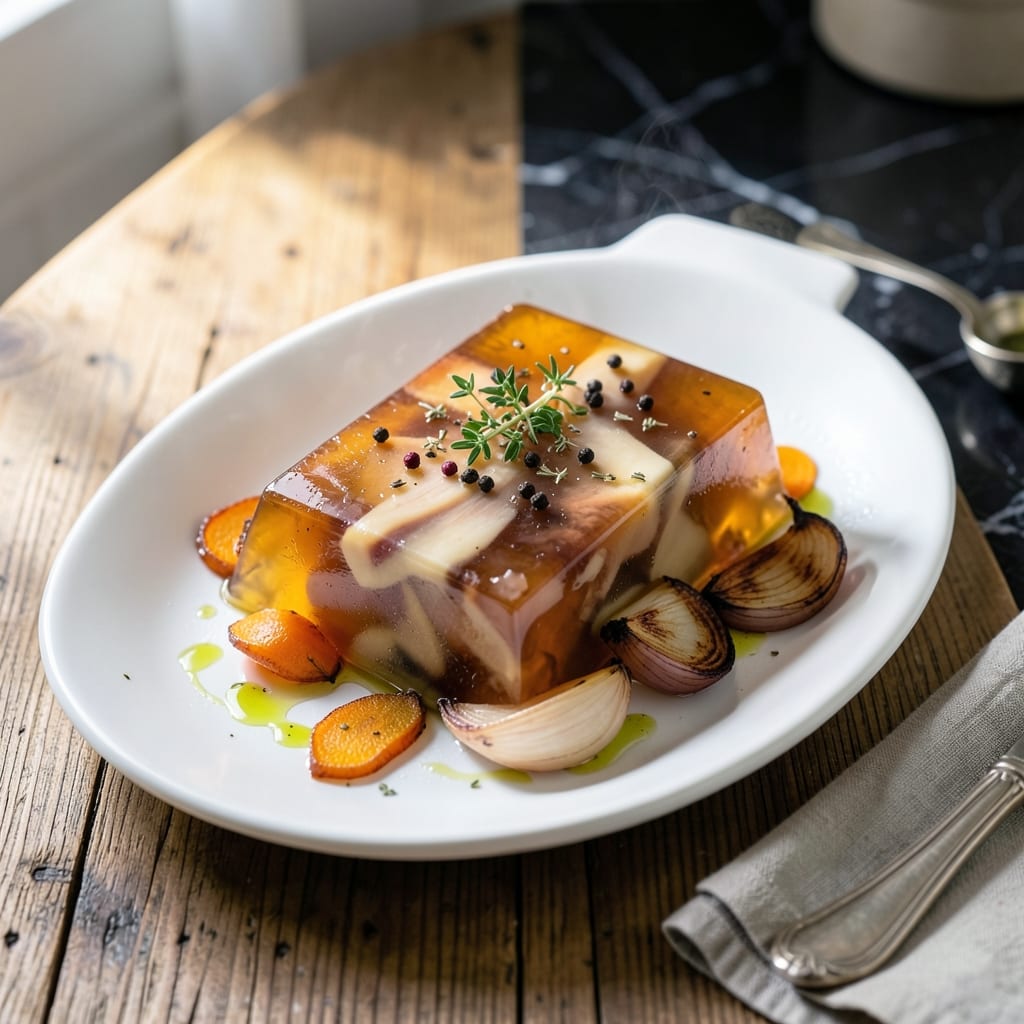
Achieving perfect clarity in pork jelly requires patience and precision. This traditional charcuterie staple transforms humble ingredients into an elegant, shimmering aspic that elevates any spread.
The process involves slowly extracting gelatin from pork trotter or skin, then clarifying the broth to crystal-clear perfection. I’ve refined this method through multiple tests to ensure consistent results every time.
What emerges is a delicate, jiggly jelly with clean pork flavor and a glossy finish. It pairs beautifully with cured meats, cheeses, and crusty bread on your next charcuterie board.
This technique honors old-world traditions while working in modern kitchens. The results speak for themselves.
Ingredients for Pork Jelly
These refined ingredients transform humble pork into an elegant, crystal-clear aspic for charcuterie boards.
| Ingredient | Amount | Notes |
|---|---|---|
| Pork Trotters 🐷 | 2 lb | Split and cleaned thoroughly |
| Pork Skin 🐖 | 1 lb | Fresh, unseasoned preferred |
| White Wine Vinegar 🍷 | ½ cup | For clarifying the broth |
| Egg Whites 🥚 | 4 whole | For raft clarification method |
| Eggshells 🥚 | 4 whole | Crushed, aids in clarification |
| Cold Water 💧 | 8 cups | For initial soaking and cooking |
| Kosher Salt 🧂 | 1 tbsp | Diamond Crystal preferred for precision |
| Black Peppercorns 🌶️ | 1 tsp | Whole, lightly crushed |
| Bay Leaves 🍃 | 2 whole | Dried, for aromatic depth |
| Fresh Thyme Sprigs 🌿 | 4 sprigs | For subtle herbal infusion |
| Onion 🧅 | 1 whole | Quartered, unpeeled for color |
| Carrot 🥕 | 1 whole | Roughly chopped, aids clarity |
| Celery Stalks 🌿 | 2 whole | Cut into large pieces |
| Cheesecloth 🧻 | 1 sheet | For final straining process |
[recipe_ingredient_scaler]
The pork trotter and skin are non-negotiable for proper gelatin extraction. Source from a trusted butcher like Whole Foods or local farms—freshness directly impacts clarity and flavor. Split trotter bones expose more surface area, maximizing collagen release. For skin, ensure it’s unseasoned and free of cure, which can cloud the final aspic. The vinegar is critical for the clarification raft, so use a clean white wine variety.
No pork trotter? Pig’s feet from the grocery store work identically. Short on time? Pre-cleaned trotter from butcher shops saves prep. Egg whites and shells create the raft—fresh eggs only, as older whites won’t set properly. For aromatics, dried herbs can substitute in a pinch, but fresh thyme and bay leaves provide superior, subtle depth without muddying the broth.
The clarified jelly keeps refrigerated for 1 week in airtight containers. For longer storage, freeze in portioned molds for up to 3 months. Always strain through cheesecloth twice—once for debris, again for absolute clarity. Serve chilled for optimal texture and presentation.
Why You’ll Love This Recipe
- Set and Forget: Most of the work is just simmering the trotter and skin with vinegar—no stirring, no fuss.
- Rich Collagen Payoff: The slow cook turns the skin and trotter into a wobbly, savory jelly that’s honestly better than store-bought.
- Feeds a Crowd: One batch makes enough for sandwiches, appetizers, or a chilled starter for Sunday dinner.
- Budget Stretcher: Pork trotter and skin are cheap cuts, and the eggshells help clarify without extra cost.
Step-by-Step Instructions for Pork Jelly
Achieving crystal-clear aspic demands precision and patience—follow this method exactly.
Step 1: Prepare and Simmer the Stock Base
Place the 2 lb Pork Trotters and 1 lb Pork Skin in a large stockpot. Cover with the 8 cups Cold Water and add the 0.5 cup White Wine Vinegar, 1 tbsp Kosher Salt, 1 tsp Black Peppercorns, 2 whole Bay Leaves, 4 sprigs Fresh Thyme Sprigs, 1 whole Onion (quartered, unpeeled), 1 whole Carrot (roughly chopped), and 2 whole Celery Stalks (cut into large pieces).
Bring to a gentle boil, then reduce heat to maintain a low simmer. Skim any foam that rises to the surface during the first 30 minutes. This ensures a clean foundation for clarification. Simmer uncovered for 4-6 hours until the liquid reduces by about a third and takes on a rich, golden color.
Step 2: Clarify with Egg Raft
Strain the stock through a fine-mesh sieve into a clean pot, discarding solids. In a bowl, whisk the 4 whole Egg Whites with the 4 whole Eggshells (lightly crushed) until frothy. Slowly pour this mixture into the warm stock while stirring gently.
Return the pot to low heat and bring to a bare simmer. As the egg whites cook, they’ll rise to the surface, forming a raft that traps impurities. Do not stir. Let this clarify for 30-45 minutes until the raft is firm and the liquid beneath is nearly transparent. The stock should look like pale amber glass when ready.
Step 3: Strain and Set the Jelly
Line a fine-mesh sieve with the 1 sheet Cheesecloth and place it over a clean bowl or mold. Carefully ladle the clarified stock through, avoiding disturbing the raft. Discard the raft and any solids—this step ensures the final jelly is flawlessly clear.
Pour the strained liquid into serving molds or a shallow dish. Refrigerate uncovered for 8-12 hours or until fully set. The jelly should be firm, glossy, and quiver slightly when touched, with no cloudiness or sediment. This slow chilling is essential for the perfect texture.
Step 4: Unmold and Serve
To unmold, dip the bottom of the mold in hot water for 5-10 seconds to loosen the jelly. Run a thin knife around the edges if needed, then invert onto a chilled plate. The jelly should release cleanly, holding its shape with a mirror-like sheen.
Serve in thin slices or cubes as part of a charcuterie board. The aspic should glisten under light, with a delicate pork flavor and a slight bounce. Store covered in the refrigerator for up to 5 days—the clarity and texture will hold if kept undisturbed.
Pro Tips For Making Pork Jelly
- Simmer Low and Slow: Keep the heat just below a boil—around 180-190°F—for at least 4-5 hours to extract maximum gelatin from the trotters and skin without breaking it down.
- Rinse the Trotters: Soak the pork trotters in cold water with a splash of white wine vinegar for 30 minutes before cooking to remove impurities and help clarify the final jelly.
- Strain Through Cheesecloth: After cooking, strain the broth through a fine cheesecloth-lined sieve to remove any stray bits of eggshell or solid impurities that could cloud your jelly.
- Use Fresh Eggshells: Crush clean, raw eggshells into small pieces before adding them—they help clarify the broth better than store-bought powdered versions, but wash them thoroughly first.
Perfect Pairings for This Dish
Charcuterie Board Essentials
This jelly shines alongside cured meats like prosciutto di Parma or soppressata. The delicate pork flavor complements without overpowering. I love pairing it with aged cheddar and Gouda for a New England twist that reminds me of family gatherings. 💛
Bread and Crackers
Offer water crackers or baguette slices for texture contrast. The crispness cuts through the jelly’s silkiness. Rosemary focaccia from my local Italian deli adds herbal notes that elevate the spread beautifully.
Fresh Accompaniments
Balance the richness with cornichons or pickled onions for acidity. Grainy mustard provides a sharp counterpoint. I always include fresh figs or sliced pears for a touch of sweetness that pairs wonderfully. ✨
Wine Pairings
A crisp Sauvignon Blanc from New Zealand cuts through the gelatin’s richness. For red lovers, a light Pinot Noir works surprisingly well. I discovered this pairing during my corporate marketing days at a client dinner—it stuck with me.
Garnishing Tips
Top the jelly with fresh thyme sprigs or edible flowers for visual appeal. A drizzle of high-quality olive oil adds sheen. In my tiny Boston kitchen, I use whatever fresh herbs I can grab from the windowsill.
Nutrition Facts
Frequently Asked Questions
What can I use instead of pork trotter?
Pig’s feet from the grocery store work identically. Chicken feet or added gelatin powder can also work in a pinch, but may yield a slightly different texture.
Why did my jelly turn cloudy?
Cloudiness usually means incomplete clarification or disturbing the egg raft during straining. Ensure you simmer the raft gently for 30-45 minutes and strain carefully through cheesecloth.
How long does homemade aspic keep?
Properly stored in an airtight container, it lasts 5 days refrigerated or 3 months frozen. Thaw in the fridge overnight before serving.

Trained in classic French technique but raised on slow-cooked ribs and spicy rubs, she blends culinary skill with smoke and soul.
- Recipe for Boneless Pork Chops in Cast Iron Skillet: Sear and Baste to Juicy Perfection - October 3, 2026
- Recipe for Boneless Cross Rib Roast: Slow-Roasted Beef with Herb Crust - October 3, 2026
- Hamburgers in Sauce Recipe Crock Pot: Slow-Cooked Savory Delight - October 3, 2026