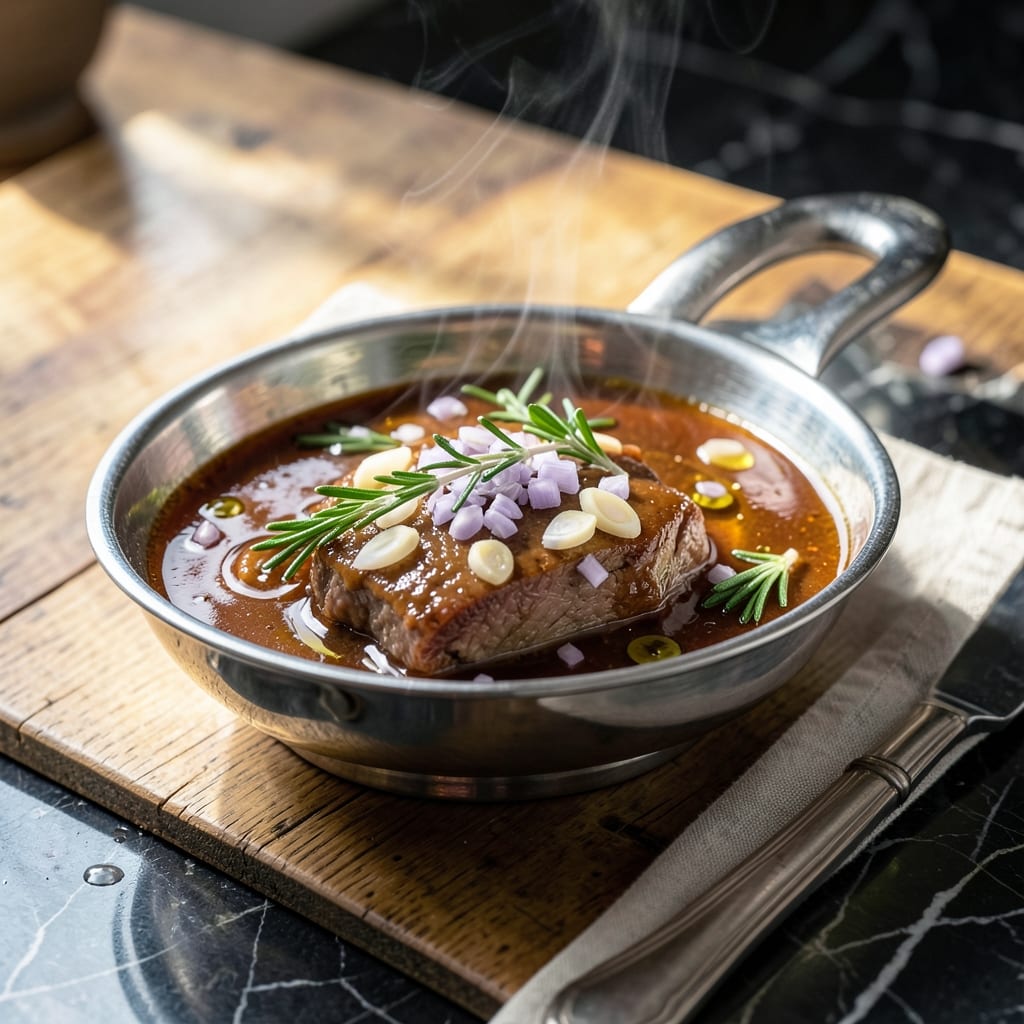
This rich pork jus transforms any roast into a restaurant-quality masterpiece. I developed this reduction technique after years of testing, focusing on depth of flavor without overpowering the meat.
The secret lies in a slow simmer that concentrates the natural juices from the pork, enhanced with aromatic vegetables and a touch of wine. This creates a velvety sauce that coats the back of a spoon with intense savory notes.
What you get is a smooth, glossy jus that enhances every bite of pork. It’s the kind of sauce that makes home cooking feel like a professional kitchen creation.
Perfect for drizzling over roasts, mashed potatoes, or Yorkshire puddings. This sauce elevates simple dishes to extraordinary.
Ingredients for Pork Jus
Nine ingredients. One velvety sauce. Restaurant-quality at home.
| Ingredient | Amount | Notes |
|---|---|---|
| Pork Drippings 🥓 | 2 cups | From roasted pork, fat skimmed |
| Dry White Wine 🍷 | ½ cup | Sauvignon Blanc or Pinot Grigio |
| Shallots 🧅 | 2 whole | Finely minced for depth |
| Garlic Cloves 🧄 | 3 cloves | Lightly crushed, peeled |
| Fresh Thyme Sprigs 🌿 | 4 sprigs | Stems removed before serving |
| Fresh Rosemary Sprigs 🍃 | 2 sprigs | Bruised to release oils |
| Beef Stock 🥣 | 1 cup | Low-sodium preferred for control |
| Unsalted Butter 🧈 | 2 tbsp | For glossy finish, cold |
| Dijon Mustard 🟡 | 1 tsp | Adds subtle tang |
[recipe_ingredient_scaler]
The pork drippings are the soul here—use what you get from roasting a pork shoulder or loin (the good stuff, not the pre-packaged kind). Costco or Whole Foods have great bone-in cuts if you’re starting fresh. The wine doesn’t need to be fancy—Trader Joe’s Charles Shaw works perfectly. Fresh herbs are non-negotiable for that bright, aromatic finish. Look for organic thyme and rosemary if you can swing it.
No white wine? Dry vermouth at one-to-one ratio works in a pinch. Out of shallots? Yellow onion at double the amount gets you close. If you’re missing fresh herbs, dried at one-third the quantity—but add them earlier to bloom the flavors. The beef stock can be swapped for chicken stock (just know the flavor will be milder). Better Than Bouillon paste is a solid backup.
Jus keeps 4-5 days in the fridge, reheats like a dream. Freeze it for up to 3 months in airtight containers. The fat will separate—just skim and reheat gently (don’t let it boil). Perfect for making ahead when you’re prepping a big roast dinner.
Why You’ll Love This Recipe
- Five Minute Jus: I just simmer the drippings with wine and shallots—hardly any work for such depth.
- Unreal Depth: The garlic and thyme steep in the pork fat, giving every bite that rich, savory punch.
- Sunday Roast Savior: I drizzle this over pork, potatoes, even sandwiches. It’s my weekend secret.
- No Waste Wins: I use every drop of roasting pan goodness, so nothing goes to waste and my wallet stays happy.
Step-by-Step Instructions for Pork Jus
Here’s the method I use every time to create a deeply flavorful sauce that elevates any roast.
Step 1: Render and Strain the Pork Drippings
Pour the 2 cups Pork Drippings into a saucepan and place over medium-low heat. As the fat melts, you’ll see it separate from the juices. This is exactly what we want. Skim off and discard any floating fat or impurities with a fine-mesh skimmer or spoon.
After 5-7 minutes, once the liquid is clear with no fat floating on top, pour it through a fine-mesh strainer into a clean bowl. The separated drippings should be rich, deep brown, and free of any solids. This clean base ensures a silky-smooth jus.
Step 2: Sauté Aromatics for Flavor Foundation
Return the saucepan to medium heat and add the 2 whole Shallots, finely minced. Cook for 3-4 minutes, stirring frequently, until they’re translucent and just beginning to caramelize. The edges should turn light golden brown, but don’t let them darken too much.
Add the 3 cloves Garlic Cloves, lightly crushed and peeled, along with the 4 sprigs Fresh Thyme Sprigs and 2 sprigs Fresh Rosemary Sprigs, bruised. Cook for another 1 minute just until the garlic is fragrant. Here’s the thing—burnt garlic turns bitter, so watch it closely.
Step 3: Deglaze with Wine and Reduce
Pour in the 0.5 cup Dry White Wine and stir, scraping up any browned bits from the bottom of the pan. These stuck-on bits are packed with flavor. Bring the mixture to a gentle boil and let it reduce by half, which should take 3-4 minutes.
You’ll know it’s ready when the liquid has thickened slightly and the alcohol smell has mostly cooked off. The wine should coat the back of a spoon but still be pourable. This reduction step is crucial—it concentrates the flavors and removes the raw wine taste.
Step 4: Build and Simmer the Jus
Add the strained 2 cups Pork Drippings and 1 cup Beef Stock to the pan. Stir well to combine. Bring the mixture to a gentle simmer, then reduce the heat to low and let it cook for 15-20 minutes.
The jus should reduce by about a third, becoming rich and glossy. Skim off any additional fat that rises to the surface during simmering. I’ve found that low-sodium beef stock lets you control the saltiness better, but regular stock works too—just taste before seasoning.
Step 5: Finish with Butter and Mustard
Remove the pan from heat and discard the herb sprigs. Stir in the 2 tbsp Unsalted Butter, 1 tsp Dijon Mustard, and season to taste with salt and pepper. The butter should melt completely, giving the jus a beautiful sheen.
The mustard adds a subtle tang that balances the richness. Let the jus rest for 2-3 minutes before serving to allow the flavors to meld. Strain once more if you prefer an ultra-smooth texture, then serve warm over roasted pork or other meats. This makes enough for 4 servings.
Pro Tips For Making Pork Jus
- Skim the Fat: I learned this the hard way—always spoon off the top layer of fat from the pork drippings before adding wine, or your jus will taste greasy instead of rich.
- Deglaze Hot: Pour the white wine in while the pan is still sizzling hot to lift all those caramelized shallot and garlic bits—this is where the real flavor hides.
- Crush the Garlic: Smash the cloves with the flat of your knife before tossing them in; it releases way more aroma without the risk of burning the pieces to bitterness.
- Strain Twice: After the first strain, I run it through a coffee filter for silky-smooth jus. Sounds fussy, but it removes every last speck of thyme and shallot.
Wine and Beer Pairings for This Recipe
White Wine Pairings
A crisp Sauvignon Blanc mirrors the wine used in the recipe, creating harmony on the palate. I love New Zealand options like Kim Crawford—its citrus notes cut through the richness beautifully. Serve chilled at 45-50°F for best results.
Red Wine Options
For red lovers, a light Pinot Noir from Oregon offers earthy notes that complement without overpowering. Eyrie Vineyards makes a fantastic version. Avoid heavy Cabernets—they’ll clash with the jus’s delicate balance.
Beer Pairings
A malty Amber Ale like Fat Tire enhances the pork’s savory depth. The caramel notes in the beer echo the reduction’s complexity. For something lighter, a Pilsner with its clean finish works surprisingly well. 🍺
Non-Alcoholic Choices
Sparkling apple cider provides the effervescence of wine without alcohol. I recommend Martinelli’s for its crisp acidity. A well-chilled ginger beer like Fever-Tree offers spicy contrast that cuts through the richness.
Serving Temperature
Whites and rosés should be 45-50°F, while reds are best at 60-65°F. Beer should be ice cold—around 38-42°F. These temperatures ensure the flavors pair perfectly with your meal.
Pro Tip
Always taste your jus with the beverage pairing before serving. The balance of acidity and richness should feel natural together. I learned this the hard way after a particularly bold jus overpowered a delicate white. 💡
Nutrition Facts
Frequently Asked Questions
Can I make this without wine?
Yes! Substitute 0.5 cup dry vermouth or 0.25 cup apple cider vinegar mixed with 0.25 cup water. The acidity helps balance the richness just like wine does.
How do I fix a jus that’s too thin?
Simmer it longer to reduce further. If in a hurry, mix 1 tsp cornstarch with 1 tbsp cold water, then stir into simmering jus until thickened. Let it cook for 1-2 minutes to remove the starchy taste.
Why does my jus taste bitter?
Burnt garlic or over-reduced wine are common culprits. Next time, cook garlic just until fragrant and remove the pan from heat when reducing wine. Strain the sauce if you suspect burnt bits.
Can I use chicken stock instead of beef?
Yes, but expect a milder flavor. Use low-sodium chicken stock and consider adding 1 tsp soy sauce or Worcestershire for depth. The jus will still be delicious but less robust.

Trained in classic French technique but raised on slow-cooked ribs and spicy rubs, she blends culinary skill with smoke and soul.
- Recipe for Boneless Pork Chops in Cast Iron Skillet: Sear and Baste to Juicy Perfection - October 3, 2026
- Recipe for Boneless Cross Rib Roast: Slow-Roasted Beef with Herb Crust - October 3, 2026
- Hamburgers in Sauce Recipe Crock Pot: Slow-Cooked Savory Delight - October 3, 2026