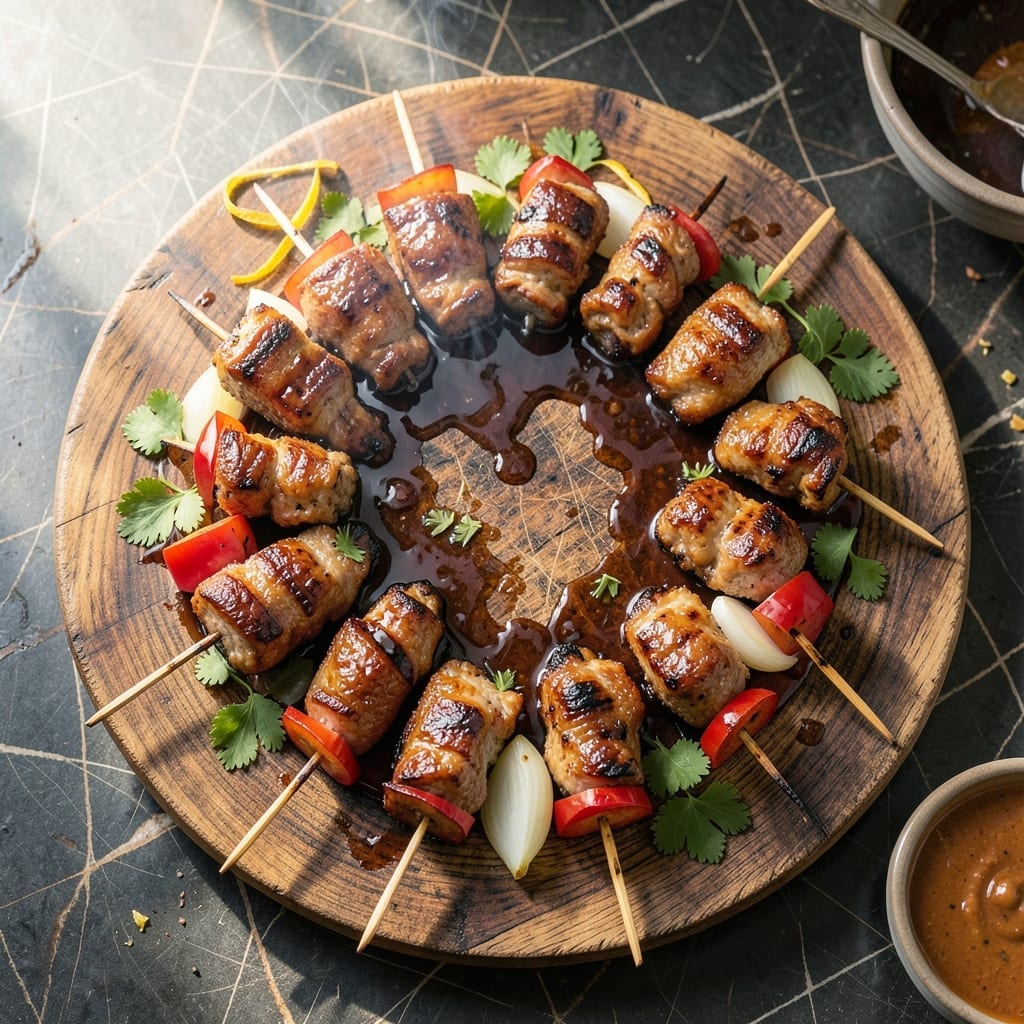
Fire-kissed pork kabobs deliver that irresistible smoky char only the grill can provide. These tender, juicy bites absorb marinade flavors while developing a perfect crust over direct heat.
I’ve refined this method through years of backyard cookouts, balancing tender pork with bold seasoning. The key is cutting uniform pieces and soaking wooden skewers to prevent burning.
Each skewer emerges with caramelized edges and a hint of wood-fired aroma. Serve with grilled vegetables or flatbread to complete the meal.
This technique works for any cut, from shoulder to tenderloin, making it versatile for weeknight dinners or gatherings.
Ingredients for Pork Kabobs Recipe Grilled
Tender pork shoulder plus bold marinade ingredients create grilled perfection on a stick.
| Ingredient | Amount | Notes |
|---|---|---|
| Pork Shoulder 🥩 | 1 ½ lb | Cut into 1-inch cubes |
| Wooden Skewers 🪵 | 8 pieces | Soaked in water 30 minutes |
| Olive Oil 🫒 | ¼ cup | Extra-virgin preferred |
| Soy Sauce 💧 | ¼ cup | Low-sodium for control |
| Honey 🍯 | 2 tbsp | For caramelization |
| Garlic Cloves 🧄 | 4 cloves | Minced for marinade |
| Fresh Ginger 🌿 | 1 tbsp | Grated finely |
| Ground Cumin 🌶️ | 1 tsp | Toasted for depth |
| Smoked Paprika 🌶️ | 1 tsp | For smoky flavor |
| Salt 🧂 | 1 tsp | Kosher or sea salt |
| Black Pepper 🌶️ | ½ tsp | Freshly ground |
| Red Bell Pepper 🌶️ | 1 whole | Cut into 1-inch pieces |
| Red Onion 🧅 | 1 whole | Cut into 1-inch pieces |
| Lemon Juice 🍋 | 2 tbsp | Freshly squeezed |
[recipe_ingredient_scaler]
The pork shoulder is non-negotiable for tenderness and fat content that prevents drying over direct heat. Costco or Whole Foods carry quality pre-cubed pork for convenience, but ask the butcher to trim excess fat if you prefer. Uniform 1-inch cubes ensure even cooking and proper caramelization. For the skewers, bamboo or wooden types require soaking—metal can work but lacks the traditional presentation (and gets screaming hot).
No pork shoulder? Pork tenderloin works but requires shorter cooking time to avoid dryness. Swap soy sauce for tamari if gluten-free. Honey can be replaced with maple syrup or brown sugar, though the flavor profile shifts slightly. The ginger and garlic are essential for the marinade’s depth, but ginger paste at half the amount works in a pinch. Fresh herbs like rosemary or thyme can supplement the paprika for added complexity.
Marinated pork keeps in the fridge for up to 24 hours (ideal for flavor development). Cooked kabobs hold well at room temperature for 1 hour before serving. Leftovers store for 3-4 days refrigerated and reheat best in a skillet or under the broiler to revive the char.
Why You’ll Love This Recipe
- Minimal Chopping Required: I just cube the pork shoulder, thread it on skewers, and let the grill do the work.
- Sweet-Savory Magic: The honey and soy sauce combo caramelizes into this ridiculous glaze that’ll have everyone licking their fingers.
- Feeds a Hungry Crowd: I’ve served these at summer BBQs and weeknight dinners—always a hit, and the skewers make portions effortless.
- Budget-Friendly Winner: Pork shoulder is cheap, stretches far, and honestly, the leftovers (if there are any) taste even better the next day.
Step-by-Step Instructions for Pork Kabobs Grilled
Master the technique for perfectly charred skewers with this straightforward, professional approach.
Step 1: Marinate the Pork for Maximum Flavor
In a large bowl, whisk together the 0.25 cup olive oil, 0.25 cup soy sauce, 2 tbsp honey, minced 4 cloves garlic cloves, 1 tbsp fresh ginger, 1 tsp ground cumin, 1 tsp smoked paprika, 1 tsp salt, and 0.5 tsp black pepper until fully emulsified. This marinade balances sweet, savory, and smoky notes for depth of flavor.
Add the 1.5 lb pork shoulder (cut into 1-inch cubes) and toss to coat evenly. Cover and refrigerate for at least 2 hours (overnight for best results). The pork should absorb the marinade and develop a slightly sticky surface, which helps it caramelize on the grill.
Step 2: Prepare Vegetables and Skewers
Cut the 1 whole red bell pepper and 1 whole red onion into 1-inch pieces to match the pork size for even cooking. Soak the 8 pieces wooden skewers in water for 30 minutes to prevent burning during grilling—this is non-negotiable for wooden skewers.
Drain the skewers and pat them dry. Thread the marinated pork, red bell pepper, and red onion onto the skewers, alternating ingredients for balanced flavor in each bite. Leave a small gap between pieces to allow heat circulation. Discard any remaining marinade that touched raw pork.
Step 3: Grill to Charred Perfection
Preheat your grill to medium-high heat (about 375-400°F). Clean and oil the grates thoroughly to prevent sticking. Place the skewers on the grill and cook for 10-12 minutes, turning occasionally, until the pork reaches an internal temperature of 145°F.
Watch for char marks to form on all sides and the pork to develop a glossy, caramelized crust. The vegetables should soften slightly and develop grill marks without becoming mushy. If flare-ups occur, move the skewers to a cooler part of the grill temporarily.
Step 4: Rest and Finish with Acid
Transfer the skewers to a clean platter and let rest for 5 minutes. This allows the juices to redistribute in the pork, ensuring tenderness. Drizzle with the 2 tbsp lemon juice just before serving—the acidity brightens the rich, smoky flavors and cuts through the fat.
Serve immediately while hot. The pork should be juicy with a slight char on the edges, and the vegetables should retain a bit of crispness. Each skewer should offer a mix of textures and flavors, from the caramelized pork to the slightly sweet, charred vegetables.
Pro Tips For Making Pork Kabobs Recipe Grilled
- Soak the Skewers: I learned this the hard way—soak wooden skewers in water for at least 30 minutes before threading. This keeps them from burning to a crisp on the grill while your pork cooks.
- Cut Evenly: Aim for 1-inch cubes of pork shoulder, no bigger. After burning three batches, I finally figured out that uniform pieces cook through without drying out or leaving raw centers.
- Skip the Overcrowding: Leave a little space between pork pieces on each skewer. Sounds weird, but it works: this guarantees even heat circulation and proper browning instead of steaming.
- Glaze Late: Brush on that honey-soy mixture only during the last 2-3 minutes of grilling. My grandmother swore by this, and she was right: it prevents the sugar from burning while still giving you that sticky, caramelized finish.
Troubleshooting This Recipe
Uneven Cooking
If some pork pieces are charred while others look pale, your heat zones are inconsistent. Rotate skewers more frequently and ensure your grill maintains 375-400°F. I check with a Thermoworks probe thermometer to confirm even heat distribution. 🌡️
Dry Pork
Overcooked pork becomes tough. Pull skewers when internal temp hits exactly 145°F. Let them rest 5 minutes before serving—this step is non-negotiable for juiciness. Brushing with extra marinade during grilling helps too.
Skewers Burning
Wooden skewers charring? Soak them 30 minutes minimum—I use a deep baking dish filled with water. For extra protection, wrap exposed ends with aluminum foil before grilling. Never skip this prep step.
Sticking to Grates
Clean and oil your grates thoroughly before cooking. Use tongs to turn skewers instead of forks to avoid piercing the meat. If pieces stick, let them cook 1-2 minutes longer to develop a proper crust before turning.
Marinade Issues
If marinade slides off, your pork cubes might be too wet. Pat them dry before marinating. For stronger flavor, score the pork surface lightly with a knife to help absorption. I often add 1 tsp cornstarch to thicken the marinade.
Vegetable Discoloration
Bell peppers turning black? They’re likely overcooking. Cut them slightly larger than pork pieces and add to skewers last. Move veggie-heavy skewers to indirect heat after 6 minutes to prevent burning. 🔥
Nutrition Facts
Frequently Asked Questions
What’s the best cut for tender skewers?
Pork shoulder is ideal for its fat content and tenderness. Pork tenderloin works too but cooks faster and can dry out if overcooked.
How long should I marinate the pork?
Marinate for at least 2 hours, but overnight yields the deepest flavor. Don’t exceed 24 hours as the acid can start breaking down the meat.
Can I use metal skewers instead of wooden?
Yes, metal skewers are reusable and don’t require soaking. Just be cautious—they get very hot and can cook the meat faster on the inside.
How do I prevent flare-ups on the grill?
Trim excess fat from the pork and keep a spray bottle of water nearby. If flames appear, move skewers to a cooler part of the grill until they subside.

Trained in classic French technique but raised on slow-cooked ribs and spicy rubs, she blends culinary skill with smoke and soul.
- Recipe for Boneless Pork Chops in Cast Iron Skillet: Sear and Baste to Juicy Perfection - October 3, 2026
- Recipe for Boneless Cross Rib Roast: Slow-Roasted Beef with Herb Crust - October 3, 2026
- Hamburgers in Sauce Recipe Crock Pot: Slow-Cooked Savory Delight - October 3, 2026