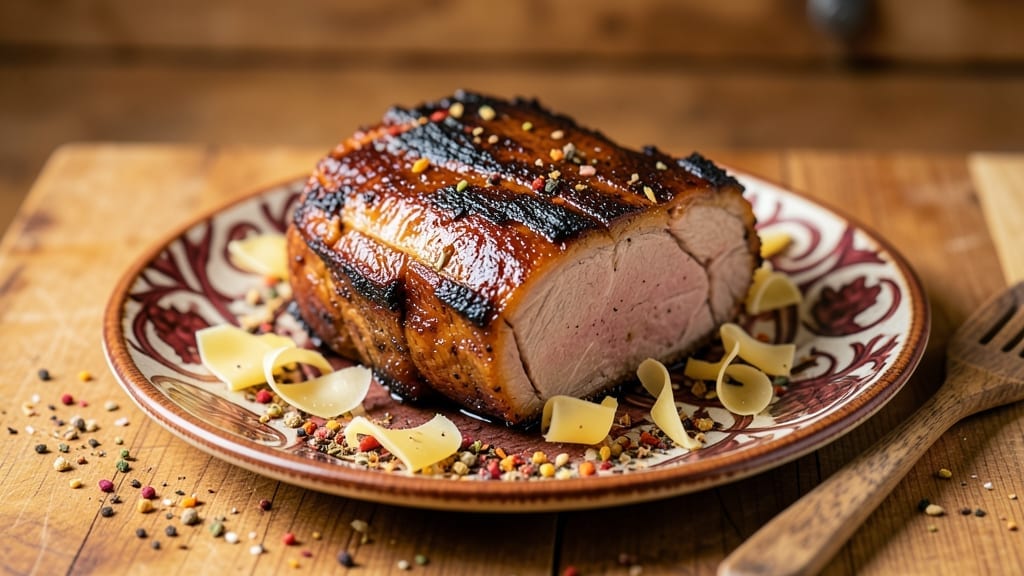
This pork loin roast recipe smoker masterpiece—where tender meat meets smoky perfection—turns a humble cut into a showstopping centerpiece that rivals any restaurant’s finest. I perfected this method after years of experimenting with wood choices and smoke times—because nothing beats the aroma of hickory-kissed pork wafting through the kitchen.
The secret lies in patience: letting the bark develop slowly while maintaining an internal temperature that guarantees tender, melt-in-your-mouth perfection.
This recipe demands just six essential ingredients (plus your choice of wood) and a three-stage smoking process that builds flavor layer by layer.
Start with a dry rub of coarse salt, black pepper, and smoked paprika to create that coveted bark, then smoke at 225°F until the internal temperature hits 145°F—where science meets art. The result?
A roast so flavorful it disappears faster than my dad’s pancakes when I was six years old.
What you’ll end up with is a golden-brown crust that shatters at the touch, revealing pink-hued meat that’s juicy without being greasy. The smoky aroma lingers long after serving, making this ideal for holiday gatherings or weekend dinners when you want to impress.
Pair it with roasted potatoes or a tangy apple sauce to complete the meal.
Whether you’re a seasoned pitmaster or new to smoking, this method delivers restaurant-quality results every time. The key is precision—temperature control, proper resting, and knowing exactly when to pull it from the smoker. Let’s get started on creating your most flavorful pork loin yet.
Ingredients for pork loin roast recipe smoker
Seven simple ingredients transform humble pork into a showstopping smoked masterpiece.
| Ingredient | Amount | Notes |
|---|---|---|
| Pork Loin Roast 🐷 | 4 lb | Bone-in for better flavor |
| Coarse Kosher Salt 🧂 | 2 tbsp | Diamond Crystal preferred |
| Black Peppercorns 🌶️ | 1 tbsp | Freshly cracked |
| Smoked Paprika 🌶️ | 1 tbsp | For authentic bark |
| Granulated Sugar 🍚 | 1 tbsp | Balances saltiness |
| Hickory Wood Chips 🌳 | 1 lb | Soaked 30 mins before use |
| Apple Cider Vinegar 🍎 | ¼ cup | For tenderizing |
[recipe_ingredient_scaler]
The pork loin is your star—bone-in for maximum flavor—and you can find perfect cuts at Whole Foods or your local butcher. I always look for marbled fat—that white streaking—because it renders during smoking, keeping the meat juicy. For the dry rub, Diamond Crystal kosher salt dissolves slower than table salt, so you get that perfect crust without oversalting. The hickory wood chips? Traeger or Webers have great pre-soaked options, but I prefer soaking my own in apple cider vinegar for 30 minutes—trust me, it makes a difference in that smoky aroma.
No smoked paprika? Regular paprika plus a pinch of cayenne gets you close, though the bark won’t be quite as deep. Short on time? Substitute apple cider vinegar with lemon juice, but use half the amount—it’s stronger. Want to skip the vinegar entirely? Brining the pork overnight with kosher salt and brown sugar will still yield tender results. And if you’re using a pellet smoker, hickory pellets work, but fruitwoods like cherry add a different sweetness—great for holiday meals. The sugar in the rub isn’t just for flavor; it helps caramelize that bark beautifully.
After smoking, let the pork rest 20-30 minutes before slicing—this keeps all the juices inside. Wrap it loosely in foil with a splash of apple cider vinegar to keep it moist. The roast keeps 4-5 days in the fridge or freezes beautifully for 3-4 months. I always make extra because leftovers reheat like a dream—just pop it back in the smoker for 10 minutes at 250°F to revive that smoky flavor. Store the wood chips in an airtight container away from direct sunlight to keep them fresh for your next session.
Why You’ll Love This Recipe
- Smoker’s Secret Shortcut: Honestly, this isn’t one of those recipes that requires a 10-step prep dance. Just dry the pork, slap on that salt-sugar-pepper-paprika rub, and let it chill in the fridge for an hour. The hardest part? Resisting the urge to check on it every five minutes while it smokes. That’s it.
- Crispy Bark, Juicy Core: Between the smoked paprika and the sugar caramelizing at 250°F, you get that perfect bark—crispy enough to hold its own but not so tough it ruins the melt-in-your-mouth meat inside. And the apple cider vinegar? It’s not just for show; it tenderizes and gives that final sheen that makes every slice look (and taste) like a restaurant plate.
- Feeds a Crowd, Stays Warm: I serve this at family gatherings, game nights, or even lazy Sundays when I know people will linger over seconds. The roast keeps its temperature perfectly while resting, and leftovers? You’ve got 4-5 days of sandwiches, tacos, or fried rice—no waste, just happy bellies.
- Budget-Friendly Smoker Star: A 4 lb pork loin is cheaper than you’d think, especially when you’re using bone-in for extra flavor. The ingredients? Basic pantry staples (and that hickory wood chips soak time is basically hands-off). You’ll spend less but leave with a dish that feels like a splurge—everyone’s a winner.
Step-by-step instructions for smoked pork loin roast
Here’s how to transform a simple pork loin into smoky, tender perfection with a crackling bark.
Prepare the Pork Loin for Maximum Flavor
Begin by patting the 4 lb pork loin roast completely dry with paper towels, focusing on the surface and any crevices. This step is critical—moisture on the surface prevents proper bark formation. Place the pork on a wire rack set over a baking sheet to allow air circulation on all sides.
In a small bowl, combine the 2 tbsp coarse kosher salt, 1 tbsp freshly cracked black peppercorns, 1 tbsp smoked paprika, and 1 tbsp granulated sugar. The sugar here isn’t just for sweetness—it helps caramelize the surface for that coveted bark. Rub this mixture all over the pork, pressing firmly to ensure it adheres evenly. Let the seasoned pork rest uncovered in the refrigerator for 1 hour to allow the salt to penetrate and the surface to dry further.
While the pork rests, soak the 1 lb hickory wood chips in water for 30 minutes. This prevents them from burning too quickly in the smoker. Drain before using. Here’s the thing—using soaked wood chips gives you a cleaner burn and more consistent smoke flavor throughout the cook.
Set Up Your Smoker for Perfect Results
Preheat your smoker to 225°F using the soaked hickory wood chips. I like to use a two-zone fire method if possible—place the coals on one side and the wood chips on the other to maintain even temperature and steady smoke production. The goal is thin, blue smoke—not thick white smoke, which indicates too much moisture.
Once the smoker reaches temperature and you see that clean smoke, place the pork loin directly on the smoker grates. Position it so the thicker end (usually the bone end) is closest to the heat source—this helps cook the meat more evenly. Close the lid and resist the urge to peek. Every time you open it, you lose heat and potentially alter the cooking environment.
Here’s the secret to that crispy bark: After 1 hour of smoking, increase the temperature to 250°F. This slight bump in heat helps dry the surface further while maintaining that slow cook that keeps the meat tender. The pork should smoke for a total of 4-5 hours until the internal temperature reaches 145°F at the thickest part of the roast.
Apply the Apple Cider Vinegar Baste for Tenderization
When the pork reaches 145°F, remove it from the smoker and brush all sides generously with the ¼ cup apple cider vinegar. This isn’t just for flavor—it helps tenderize the meat further and creates a beautiful sheen on the surface. Return the pork to the smoker and continue cooking until the internal temperature reaches 155°F.
The vinegar also helps prevent the surface from drying out too much during the final stages. You’ll notice the pork developing a deep reddish-pink color and that beautiful bark starting to form. This is when the magic happens—the combination of smoke, heat, and the vinegar creates that perfect balance of texture and flavor.
Total smoking time should be about 5-6 hours depending on your smoker’s efficiency. The key is patience—rushing this process will result in dry meat instead of that juicy perfection you’re after.
Rest and Slice for Maximum Juiciness
Once the pork reaches 155°F, remove it from the smoker and transfer it to a cutting board. Let it rest for 20-30 minutes before slicing. This resting period is absolutely crucial—it allows the juices to redistribute throughout the meat, preventing them from running out when you cut into it.
While the pork rests, preheat your oven to 300°F. This warm environment helps maintain the internal temperature during the resting period. Tent the pork loosely with foil and place it in the oven if your kitchen is particularly cool—this helps keep it warm and ready to serve.
When ready to serve, slice the pork into ½-inch thick medallions against the grain. Each slice should be tender enough to fall apart slightly with gentle pressure, with that perfect balance of smoky flavor and juicy texture. The bark should be crispy enough to stand up to a fork but not so hard it’s tough to eat.
Pro Tips For Making Pork Loin Roast Recipe Smoker
- Crack the Pepper Fresh: DESCRIPTION:
- Soak Wood Like a Pro: DESCRIPTION:
- Bump Heat at Hour One: DESCRIPTION:
- Vinegar at 145°F Only: DESCRIPTION:
Essential equipment for great pork loin roast recipe smoker
Your Smoker’s MVP
The Traeger Pro 22 is my go-to smoker for this recipe—it’s reliable, easy to use, and delivers consistent 225°F temperatures. I love the pellet feed system because it automatically maintains temperature and smoke production, so you don’t have to babysit it.
If you’re on a budget, the Weber Smokey Mountain Cooker is a solid charcoal option that still gives you that classic smoky flavor. Just invest in a good thermometer like the Thermoworks Smoke—it’s a game-changer for tracking internal temps. 🌡️
Wood Chip Wisdom
Hickory wood chips are my top pick for pork—they create that classic smoky depth without overpowering. Soak them in apple cider vinegar for 30 minutes (like the recipe says) to prevent burning and add a subtle tang.
For a sweeter profile, try cherry or apple wood chips, especially if you’re serving this for a holiday meal. I keep my wood chips stored in a ziplock bag in the fridge to keep them fresh for weeks.
The Right Tools for Bark
A meat probe thermometer is non-negotiable for this recipe—you want to hit 145°F internal temp without drying out the meat. I also use a wire rack and baking sheet combo to dry-brine the pork before smoking, which helps create that perfect bark.
For slicing, a sharp 12-inch boning knife makes all the difference—it glides through the meat like butter. 🔪
Must-Have Accessories
Don’t skip the smoke box if your smoker doesn’t have one—it helps control the smoke flow and prevents flare-ups. A foil-wrapped water pan placed near the heat source adds moisture to the cooking environment, which is especially helpful if your kitchen is dry.
And if you’re smoking outdoors, a windbreak (like a large cardboard box) keeps the smoke flowing where you want it.
Budget-Friendly Swaps
If you don’t have a fancy smoker, a grill with a smoker box works in a pinch. For wood chips, pine or oak are budget-friendly alternatives to hickory, though they’ll give a slightly different flavor profile.
And if you’re short on time, a slow cooker can mimic some of the tenderizing effects—just add a splash of apple cider vinegar to the liquid and cook on low for 6-8 hours. Your mileage may vary, but it’s worth a try! 💡
Nutrition facts
Frequently asked questions
Why do I need to rest the pork after smoking?
Resting is critical—it lets juices redistribute so every bite is moist. After smoking to 155°F, let it rest 20-30 minutes before slicing. This prevents dry, stringy meat and keeps the bark crispy. Think of it like letting bread cool after baking!
What if my smoker runs hotter than 225°F?
Adjust your setup! If temps exceed 225°F, move the wood chips farther from the heat source or use a two-zone fire. A fan can also help regulate airflow. Consistency is key—aim for thin blue smoke, not thick white clouds. Your pork will thank you!
Can I use a different wood type?
While hickory is classic, cherry or apple wood adds sweetness—perfect for holiday meals. Just soak chips for 30 minutes to prevent burning. Avoid fruitwoods like mesquite, which can overpower pork’s natural flavor. Experiment to find your favorite!
What if the bark isn’t crispy enough?
Try this: After 1 hour at 225°F, bump temp to 250°F for the final 2-3 hours. This dries the surface faster while keeping the meat tender. For extra bark, pat the pork dry again before smoking and use 1 tbsp extra sugar in your rub. Patience pays off!
How do I reheat leftovers?
Pop slices back in the smoker at 250°F for 10 minutes to revive the smoky flavor. Alternatively, warm in a skillet over medium heat with a splash of apple cider vinegar. Avoid microwave reheating—it makes the bark soggy!

Trained in classic French technique but raised on slow-cooked ribs and spicy rubs, she blends culinary skill with smoke and soul.
- Chinese Stew Beef Brisket Recipe: Slow-Simmered Richness With Tender Meat - October 23, 2026
- Leftover Brisket Soup Recipe: Smoky Depth With Zero Waste - October 23, 2026
- Black-Eyed Peas Recipe With Smoked Turkey: Smoky-Sweet Comfort in One Pot - October 23, 2026