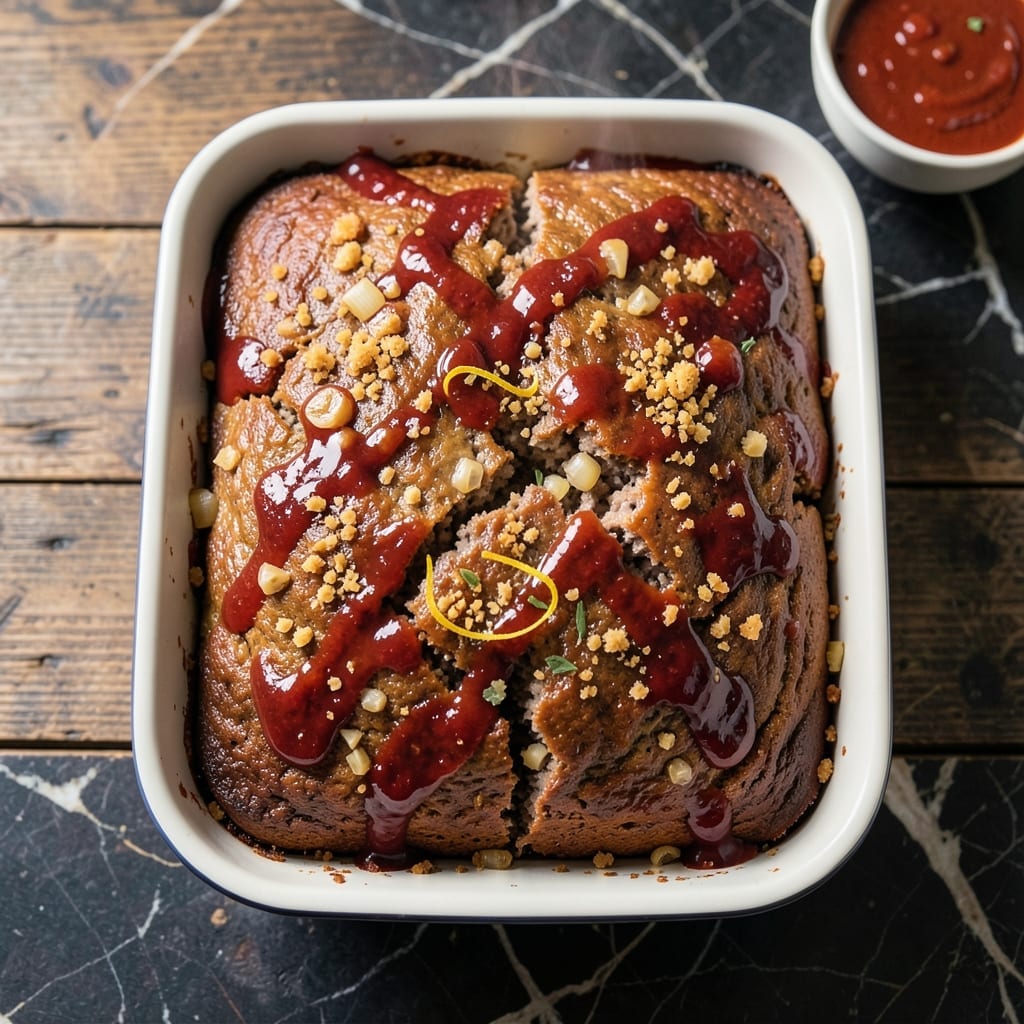
This pork meatloaf delivers a moist center every time with a rich, savory glaze that locks in flavor. The secret lies in the right balance of fat and seasoning.
I’ve perfected this method through years of testing—simple ingredients, precise technique, and a finish that’s anything but ordinary.
Ingredients for Pork Meatloaf
Ground pork and panko form the base with a bold glaze to finish. Simple ingredients, big flavor.
| Ingredient | Amount | Notes |
|---|---|---|
| Ground Pork 🐷 | 1 ½ lb | 80/20 fat ratio for moisture |
| Panko Breadcrumbs 🍞 | ¾ cup | Or substitute regular breadcrumbs |
| Large Egg 🥚 | 1 whole | Binds the mixture together |
| Yellow Onion 🧅 | 1 whole | Finely diced for even distribution |
| Garlic Cloves 🧄 | 3 cloves | Minced for maximum flavor |
| Ketchup 🍅 | ½ cup | For glaze base and moisture |
| Worcestershire Sauce 🫒 | 1 tbsp | Adds umami depth to glaze |
| Dijon Mustard 🟡 | 1 tbsp | Sharp flavor balances sweetness |
| Brown Sugar 🟤 | 2 tbsp | For caramelized glaze finish |
| Dried Thyme 🌿 | 1 tsp | Earthy note complements pork |
| Dried Oregano 🍃 | 1 tsp | Mediterranean herb blend |
| Salt 🧂 | 1 tsp | Kosher or sea salt preferred |
| Black Pepper 🌶️ | ½ tsp | Freshly ground for best flavor |
| Milk 🥛 | ¼ cup | Adds moisture to meat mixture |
[recipe_ingredient_scaler]
The pork is critical—80/20 ground pork ensures a moist finished product. Most butchers will grind it fresh if you ask, or Whole Foods has excellent pre-packaged options. Avoid lean pork as it dries out during baking. The panko breadcrumbs, found in the Asian aisle at Kroger, create a lighter texture than traditional breadcrumbs. Look for freshly baked panko for best results.
No panko? Regular breadcrumbs at the same amount will work, though the texture will be denser. Out of Worcestershire? Soy sauce with a pinch of sugar mimics the umami. The Dijon mustard can be swapped for yellow mustard in a pinch, but it lacks the sharpness. For the glaze, honey instead of brown sugar adds a different sweetness profile. Fresh herbs can replace dried at three times the amount.
The meatloaf keeps well for 4-5 days in the fridge, and the glaze actually deepens in flavor. For longer storage, freeze unglazed loaves for up to 3 months. Reheat slices in the microwave or toaster oven for best texture. Always bring ground pork to room temperature before mixing for even cooking.
Why You’ll Love This Recipe
- Minimal Chopping Required: I just dice one onion and mince a couple garlic cloves—no fancy prep here.
- That Garlic Punch: The roasted garlic and onion in the pork make every bite ridiculously good.
- Feeds My Crew: One loaf serves my family of four with leftovers for lunch the next day.
- Budget Stretcher: Ground pork and panko keep this dish reliable without breaking the bank.
Step-by-Step Instructions for Pork Meatloaf
Here’s the method. Straightforward, tested, works every time.
Step 1: Prepare the Aromatic Base
Finely dice the yellow onion into small, even pieces so they distribute uniformly throughout the meatloaf. Mince the 3 cloves garlic cloves until they’re nearly paste-like—this ensures every bite carries that aromatic punch without large chunks.
In a small skillet over medium heat, sauté the onion for 3-4 minutes until translucent and just beginning to soften. Add the minced garlic and cook for an additional 30 seconds until fragrant. Remove from heat and let cool completely before mixing with the pork—this prevents the fat from melting prematurely.
Step 2: Combine the Meat Mixture
In a large mixing bowl, combine the 1.5 lb ground pork, cooled onion and garlic mixture, 0.75 cup panko breadcrumbs, 1 whole large egg, 0.25 cup milk, 1 tsp salt, 0.5 tsp black pepper, 1 tsp dried thyme, and 1 tsp dried oregano.
Use your hands to gently mix until just combined—overworking the mixture will result in a dense, tough meatloaf. The panko breadcrumbs absorb the milk, creating a tender crumb while keeping the center moist. The egg binds everything together, so ensure it’s fully incorporated without streaks of white remaining.
Step 3: Shape and Prepare for Baking
Transfer the mixture to a parchment-lined loaf pan or shape it into a free-form loaf on a baking sheet lined with parchment paper. Gently pat the top and sides to create an even surface, which promotes uniform cooking and prevents cracking.
I shape mine into a slightly rounded dome in the center—this helps the glaze run down the sides evenly rather than pooling in the middle. Place the shaped loaf in the refrigerator while you preheat the oven to 375°F and prepare the glaze.
Step 4: Bake and Glaze to Perfection
Bake the meatloaf on the middle oven rack for 45 minutes. Meanwhile, whisk together the 0.5 cup ketchup, 1 tbsp Worcestershire sauce, 1 tbsp Dijon mustard, and 2 tbsp brown sugar in a small bowl until smooth.
After the initial 45 minutes, carefully remove the meatloaf from the oven and brush the top and sides with half of the glaze. Return it to the oven and bake for another 15-20 minutes, or until the internal temperature reaches 160°F and the top is caramelized. Brush with the remaining glaze during the last 5 minutes of baking for a glossy, sticky finish.
Step 5: Rest and Serve
Transfer the meatloaf to a cutting board and let it rest for 10-15 minutes before slicing. This resting period allows the juices to redistribute, ensuring the center stays moist and each slice holds its shape.
Use a sharp knife to cut into 1-inch thick slices. The meatloaf should have a rich, caramelized glaze on top with a tender, juicy interior. The herbs and spices will be evenly distributed, and the panko breadcrumbs will give it a light, airy texture without being dry.
Pro Tips For Making Pork Meatloaf
- Chill Before Baking: Let the meatloaf mixture rest in the fridge for 15-20 minutes before shaping—it keeps the panko from absorbing too much moisture and the loaf from falling apart.
- Sauté the Onions: Cook the yellow onion and garlic until soft before mixing in; raw onion can leave the meatloaf with a harsh, undercooked bite.
- Don’t Overmix: Combine the ground pork, egg, and panko just until they hold together—overworking makes the meatloaf dense and tough.
- Use a Meat Thermometer: Pull it at 160°F internal temperature; pork meatloaf can dry out fast if left to guesswork, and nobody wants that.
Pro Cooking Tips for Pork Meatloaf
Fat is Flavor
Never skimp on pork fat—80/20 ground pork is non-negotiable for moisture. I learned this the hard way after a dry batch ruined a family dinner. Bring the pork to room temp before mixing to prevent dense texture. 🔥
Rest Like a Pro
Let your meatloaf rest for 10-15 minutes after baking. This isn’t just tradition—it lets juices redistribute. I use this time to set the table and pour a glass of wine. Skipping this step means a dry, crumbly mess on the cutting board.
Glaze Timing
Apply the first glaze layer after 45 minutes of baking, then the second during the final 5 minutes. This creates that sticky, caramelized crust without burning the sugars. I always use a pastry brush for even coverage.
Even Cooking
Shape your loaf with a slight dome in the center. This helps the glaze cascade down the sides evenly. Place it on the middle oven rack for consistent heat circulation. Rotate the pan halfway through if your oven has hot spots.
Don’t Overmix
Gently combine ingredients just until incorporated. Overworking develops gluten in the panko, making the texture tough. I stop mixing as soon as I can’t see separate ingredients, even if the mixture looks uneven.
Use your hands—they’re the best tools for this job. Just wash them thoroughly in cold water afterward to remove the fat. 💡
Nutrition Facts
Frequently Asked Questions
Can I use ground beef instead of pork?
Yes, but the flavor and texture will differ. Ground beef works in a 1:1 ratio, though pork’s fat content keeps it moister. For best results with beef, use an 80/20 blend.
Why does my meatloaf crack on top?
Cracking usually means the exterior cooked too fast. Prevent this by shaping a slight dome in the center and baking at 375°F. Also, avoid overmixing the meat mixture.
How do I know when it’s done?
Use a meat thermometer—it’s done at 160°F internally. The glaze should be caramelized and bubbly. Let it rest for 10-15 minutes before slicing.

Trained in classic French technique but raised on slow-cooked ribs and spicy rubs, she blends culinary skill with smoke and soul.
- Recipe for Boneless Cross Rib Roast: Slow-Roasted Beef with Herb Crust - October 3, 2026
- Hamburgers in Sauce Recipe Crock Pot: Slow-Cooked Savory Delight - October 3, 2026
- Sanjeev Kapoor Egg Biryani Recipe: Fragrant Spiced Rice With Boiled Eggs - October 3, 2026