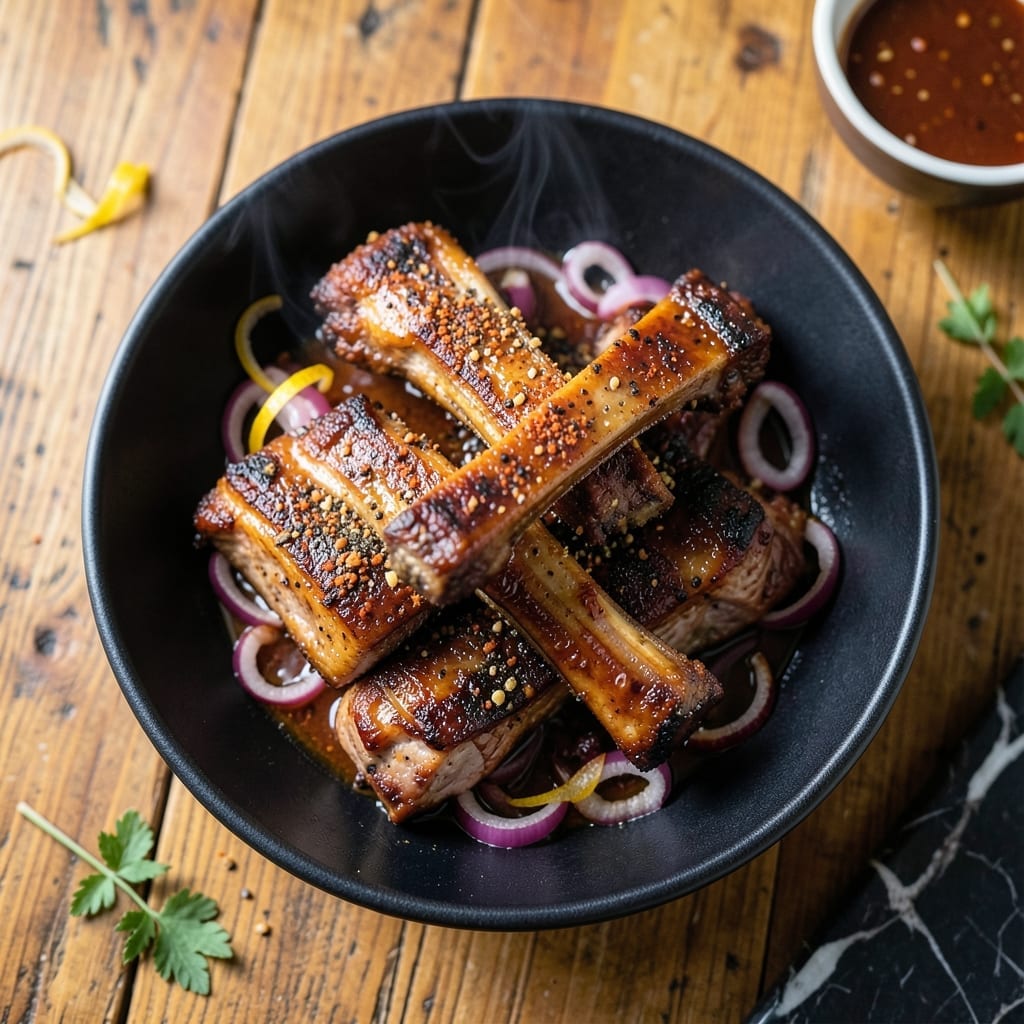
There’s nothing like the deep, smoky aroma of slow-cooked pork neck on the grill. This method delivers tender results every time, with a rich bark that locks in juices.
I’ve refined this approach through years of pitmaster experience, blending classic techniques with bold flavors. The low-and-slow process ensures meat that pulls apart effortlessly.
Ingredients for Pork Neck Barbecue
Meaty pork neck, bold spices, and wood smoke create this dish’s signature depth and tenderness.
| Ingredient | Amount | Notes |
|---|---|---|
| Pork Neck Bones 🍖 | 3 lb | Meaty, with good fat marbling |
| Kosher Salt 🧂 | 2 tbsp | Diamond Crystal preferred for texture |
| Coarse Black Pepper 🌶️ | 2 tbsp | Freshly ground for maximum flavor |
| Smoked Paprika 🌶️ | 1 tbsp | Spanish variety for authentic smoke |
| Garlic Powder 🧄 | 1 tbsp | Not garlic salt for pure flavor |
| Onion Powder 🧅 | 1 tbsp | Balances the rub with sweetness |
| Brown Sugar 🍚 | ½ cup | Light or dark, for caramelization |
| Apple Cider Vinegar 🍏 | ½ cup | Adds tang to cut richness |
| Worcestershire Sauce 💧 | ¼ cup | Anchovy-free version if preferred |
| Hickory Wood Chips 🪵 | 2 cups | Soaked for 30 minutes prior |
| Yellow Mustard 🟡 | ¼ cup | Binder for the dry rub |
| Barbecue Sauce 🍯 | 1 ½ cups | Low-sugar variety recommended |
| Beer 🍺 | 12 oz | Dark lager or stout for depth |
[recipe_ingredient_scaler]
The pork neck bones are non-negotiable here. Ask your butcher for the meatiest cuts—avoid pre-trimmed pieces with too much bone. Costco or Sam’s Club often carry them in bulk, ideal for large batches. Look for marbling throughout; lean pork dries out during the long cook. For the wood chips, hickory or applewood gives classic barbecue flavor without overpowering.
No pork neck? Pork shoulder or Boston butt at half the cook time works in a pinch. Swap apple cider vinegar for white vinegar (less sweetness). Skip the mustard binder if allergic—use olive oil instead. For a sweeter bark, increase brown sugar to 3/4 cup. The beer can be omitted; replace with additional apple cider vinegar and water to maintain moisture.
Pork neck freezes beautifully raw for up to 6 months. Once cooked, store leftovers in the fridge for 4-5 days or freeze for 3 months. Reheat gently with a splash of broth to restore moisture. The rub can be mixed ahead and stored in an airtight container for 2 weeks.
Why You’ll Love This Recipe
- Set and Forget: Honestly, just rub those neck bones with salt, pepper, smoked paprika, and garlic powder, then let the smoker do the rest.
- Smoky Depth: The smoked paprika and garlic powder create this crazy-rich crust that clings to every bite.
- Feeds the Crew: I’ve served this at potlucks and weeknight dinners—always disappears first.
- Stretches the Budget: Pork neck bones are cheap, and this recipe turns them into something special with zero waste.
Step-by-Step Instructions for Pork Neck Barbecue
Master the low-and-slow technique to achieve fall-off-the-bone results with this method.
Step 1: Prepare and Season the Pork Neck Bones
Begin by patting the 3 lb Pork Neck Bones completely dry with paper towels. This ensures the dry rub adheres properly and promotes even cooking. In a medium bowl, combine the 2 tbsp Kosher Salt, 2 tbsp Coarse Black Pepper, 1 tbsp Smoked Paprika, 1 tbsp Garlic Powder, and 1 tbsp Onion Powder with the 0.5 cup Brown Sugar.
Brush the 0.25 cup Yellow Mustard evenly over all sides of the pork neck bones—this acts as a binder for the rub. Generously coat each piece with the spice mixture, pressing firmly so it adheres well. Let the seasoned meat rest at room temperature for 30 minutes while you prepare the smoker.
Step 2: Set Up the Smoker for Indirect Heat
Soak the 2 cups Hickory Wood Chips in water for 30 minutes prior to use. This prevents them from burning too quickly and ensures a steady stream of smoke. Drain the wood chips and add them to your smoker’s wood chip box or wrap them in foil with holes poked through for airflow.
Preheat your smoker to 225-250°F using indirect heat. Once the temperature stabilizes and you see thin, blue smoke, you’re ready to begin cooking. Place a drip pan filled with water beneath the grates to maintain moisture during the long cook.
Step 3: Smoke the Pork Neck Bones to Tenderness
Arrange the seasoned pork neck bones on the smoker grates, bone-side down. Insert a meat thermometer into the thickest piece to monitor the internal temperature. Smoke the bones undisturbed for 3-4 hours, maintaining a consistent temperature between 225-250°F.
After 3 hours, check the internal temperature. When it reaches 165°F, transfer the bones to a large piece of heavy-duty aluminum foil. Pour 12 oz Beer, 0.5 cup Apple Cider Vinegar, and 0.25 cup Worcestershire Sauce over the meat, then seal the foil tightly to create a braising environment.
Step 4: Braise and Glaze to Perfection
Return the foil-wrapped pork neck bones to the smoker and continue cooking for another 1-2 hours, or until the meat is probe-tender and the internal temperature reaches 203-205°F. The bones should pull away from the meat easily when tested with a fork.
Carefully remove the bones from the foil and place them back on the smoker grates. Brush generously with 1.5 cups Barbecue Sauce and smoke for an additional 15-20 minutes to set the glaze. Flip and repeat the glazing process on the other side for a sticky, caramelized finish.
Step 5: Rest and Serve
Transfer the glazed pork neck bones to a clean cutting board and tent loosely with foil. Allow them to rest for 10-15 minutes—this lets the juices redistribute for maximum tenderness. The meat should be so tender it nearly falls off the bone at the slightest touch.
Serve the pork neck barbecue immediately with additional barbecue sauce on the side if desired. The combination of smoky depth from the hickory, tangy brightness from the vinegar, and rich sweetness from the sauce creates a perfectly balanced bite every time.
Pro Tips For Making Pork Neck Barbecue
- Low and Slow First: I learned this the hard way—start the pork neck bones at 225°F for 2-3 hours before cranking the heat. It renders the fat and keeps the meat from drying out, especially with tougher cuts like neck bones.
- Dry the Bones Well: Pat the pork neck bones completely dry with paper towels before seasoning. Sounds obvious, but wet meat steams instead of searing, and you’ll lose that smoky crust the smoked paprika is meant to create.
- Skip the Overcrowding: Resist the urge to pile all the bones on one tray. Give them space—about an inch apart—so the heat circulates properly, or you’ll end up with soggy, unevenly cooked pieces.
- Rest Before Serving: After pulling the pork neck bones off the heat, let them rest under foil for at least 10 minutes. It lets the juices redistribute, and the garlic powder flavor actually deepens while it sits.
Essential Equipment for pork neck barbecue
Quality Smoker
Invest in a reliable smoker like the Weber Smokey Mountain or Traeger Pro Series. These maintain steady 225-250°F temperatures crucial for low-and-slow cooking. I’ve used my Weber for years—it never lets me down during long cooks. 🔥
Accurate Thermometers
Dual-probe thermometers are essential. I trust ThermoWorks Smoke for precise readings. One probe tracks the smoker, the other monitors internal temp. Never guess—203-205°F is your target for perfect tenderness.
Wood Chip Tools
Use hickory or applewood chips for authentic smoke flavor. Soak 2 cups for 30 minutes before cooking. A sturdy chip box or foil pouch with holes ensures proper airflow. Avoid dry chips—they burn too fast.
Heavy-Duty Foil
Thick aluminum foil is a must for the Texas crutch stage. It traps steam to break down collagen. I recommend Reynolds Wrap Heavy Duty—regular foil tears too easily. Seal tightly for 1-2 hours of braising. 💡
Heat-Resistant Gloves
Protect your hands with heat-resistant gloves rated to at least 500°F. Handling foil-wrapped meat or adjusting smoker vents requires safety. I use OXO Good Grips for confidence during long sessions.
Resting Setup
After smoking, rest your meat wrapped in foil and a towel in a cooler. This maintains temperature while juices redistribute. A simple Igloo cooler works perfectly for this 10-15 minute critical step.
Nutrition Facts
Frequently Asked Questions
Can I use a regular grill instead of a smoker?
Yes, set up your grill for indirect heat with wood chips in a foil pouch. Maintain 225-250°F and add chips every hour for consistent smoke.
What’s the best way to store leftovers?
Store in an airtight container in the fridge for up to 4-5 days. Reheat gently with broth to restore moisture.
How do I know when it’s done?
The meat is ready when it reaches 203-205°F internally and pulls away from the bone easily. Use a meat thermometer for accuracy.
Can I skip the beer in the braising liquid?
Replace with equal parts apple cider vinegar and water, or use beef broth for extra depth.

Trained in classic French technique but raised on slow-cooked ribs and spicy rubs, she blends culinary skill with smoke and soul.
- Recipe for Pan Fried: Golden Crust with Savory Depth - October 3, 2026
- Recipe For Fried Chicken In A Pressure Cooker: Crispy Golden Bites in Half the Time - October 3, 2026
- Recipe For Leftover Fried Fish: Crunchy Leftovers Transformed - October 3, 2026