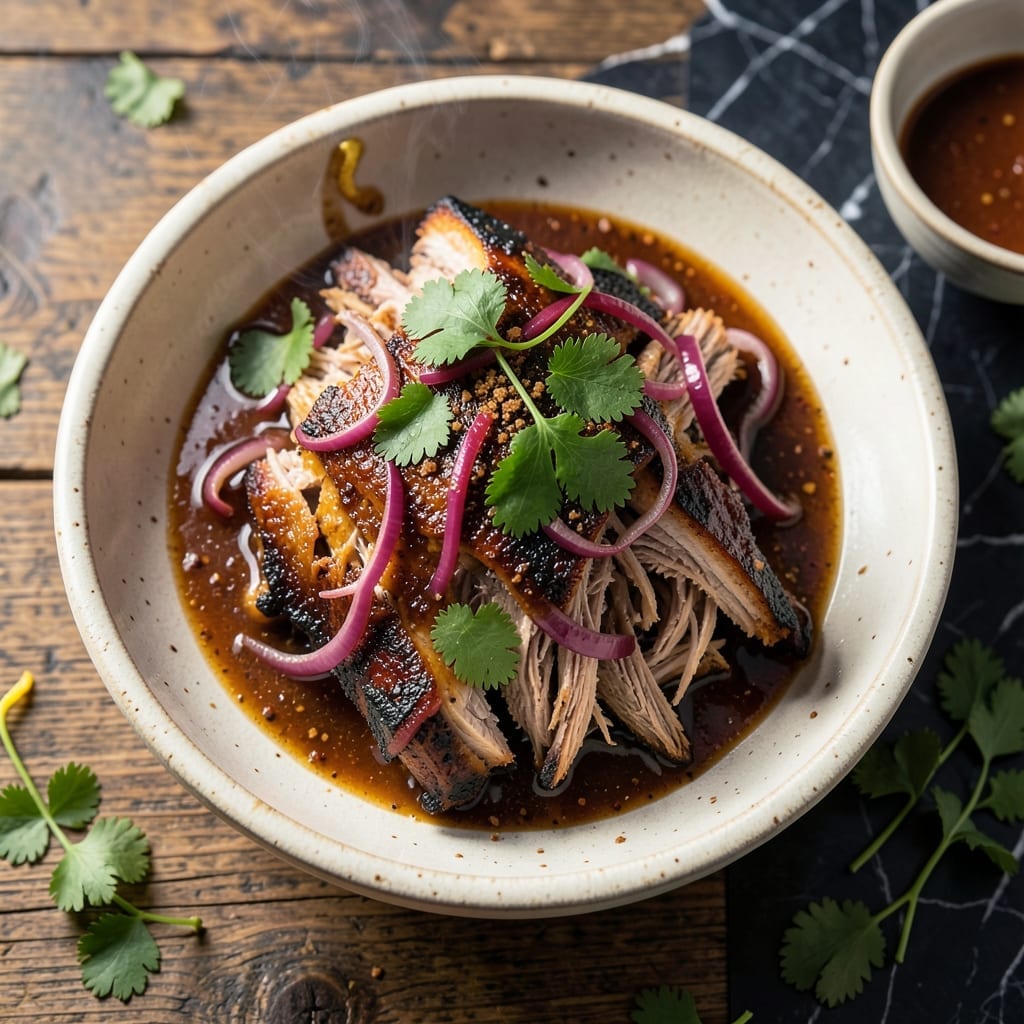
There’s nothing like the first whiff of hickory smoke on a family cookout evening. This Carolina tradition transforms tough pork shoulder into tender, vinegar-kissed perfection through slow, steady heat and patience.
I’ve perfected this method over years of backyard competitions and weekend gatherings. The vinegar base cuts through the richness while the smoke adds depth that defines authentic barbecue.
Ingredients for Barbecue Pork Shoulder
Pork shoulder, vinegar, and smoke create this Carolina classic with bold, tangy depth.
| Ingredient | Amount | Notes |
|---|---|---|
| Pork Shoulder 🥩 | 4 lb | Bone-in, skin-on preferred |
| Apple Cider Vinegar 🍏 | 2 cups | For tangy Carolina base |
| Hickory Wood Chips 🌳 | 4 cups | Soaked in water 1 hour |
| Brown Sugar 🍚 | ½ cup | Light or dark variety |
| Kosher Salt 🧂 | 2 tbsp | Diamond Crystal preferred |
| Black Pepper 🌶️ | 1 tbsp | Freshly ground coarse |
| Paprika 🌶️ | 1 tbsp | Smoked or sweet variety |
| Garlic Powder 🧄 | 1 tbsp | Not garlic salt |
| Onion Powder 🧅 | 1 tbsp | Fine grain preferred |
| Cayenne Pepper 🔥 | ½ tsp | Adjust for heat preference |
| Yellow Mustard 🟡 | ½ cup | For binding rub |
| Water 💧 | 1 cup | For vinegar mop |
| Crushed Red Pepper Flakes 🌶️ | 1 tsp | Optional for extra heat |
[recipe_ingredient_scaler]
The pork shoulder must have good marbling—bone-in, skin-on yields the juiciest results. Source from a reputable butcher or specialty grocer like Whole Foods. Look for vibrant pink color and a thick fat cap. Hickory wood chips are non-negotiable for authentic Carolina flavor; avoid mesquite as it overpowers. Apple cider vinegar should be raw, unfiltered for maximum tang.
No hickory chips? Pecan or oak are acceptable substitutes. Brown sugar can be swapped for turbinado or coconut sugar. If you lack a smoker, a charcoal grill with indirect heat works well. Mustard in the rub can be replaced with Dijon for sharper flavor. For a milder version, reduce cayenne by half.
Store pork shoulder in the fridge up to 5 days before cooking or freeze for 6-12 months. The rub keeps indefinitely in a cool, dry place. Cooked pork freezes beautifully for 3 months—portion before storing.
Why You’ll Love This Recipe
- I’ll be real: the shredded pork tastes even better the next day piled on nachos or stuffed in baked potatoes.
- Set It and Forget: I rub the pork with brown sugar and salt the night before, then let the smoker do all the work with hickory chips.
- Smoky Sweet Magic: The apple cider vinegar tang cuts through the rich pork while hickory smoke wraps every bite in warmth.
- Feeds a Crowd: Honestly, one shoulder gives me enough for tacos, sandwiches, and a couple of meals prepped for the week.
Step-by-Step Instructions for Barbecue Pork Shoulder
Master the Carolina tradition with this time-tested method for tender, vinegar-kissed perfection.
Step 1: Prepare the Pork Shoulder and Dry Rub
Pat the 4 lb pork shoulder dry with paper towels, then trim any excess fat, leaving a thin layer for flavor. In a bowl, combine the 2 tbsp kosher salt, 1 tbsp black pepper, 1 tbsp paprika, 1 tbsp garlic powder, 1 tbsp onion powder, 0.5 tsp cayenne pepper, and 0.5 cup brown sugar. Mix thoroughly to create a uniform rub.
Rub the 0.5 cup yellow mustard over the entire surface of the pork shoulder—this acts as a binder for the dry rub. Apply the spice mixture generously, pressing it into the meat so it adheres well. Let the seasoned pork shoulder sit at room temperature for 30 minutes while you prepare the smoker.
Step 2: Soak Wood Chips and Preheat the Smoker
Place the 4 cups hickory wood chips in a large bowl and cover completely with water. Let them soak for at least 1 hour to ensure they smolder rather than burn, producing clean, aromatic smoke. Drain the wood chips just before use.
Preheat your smoker to 225-250°F. Use a water pan in the smoker to maintain humidity, which helps keep the pork shoulder moist during the long cook. Once the smoker reaches the target temperature and you see a steady stream of thin blue smoke, you’re ready to begin.
Add a handful of the soaked and drained hickory wood chips directly to the coals or smoker box to maintain consistent smoke throughout the cooking process.
Step 3: Smoke the Pork Shoulder Low and Slow
Place the pork shoulder fat-side up on the smoker grate. Insert a meat thermometer into the thickest part of the pork, avoiding the bone. Smoke undisturbed for 4-5 hours, or until the internal temperature reaches 160-165°F.
During this time, combine the 2 cups apple cider vinegar and 1 cup water in a spray bottle. Every 45-60 minutes, spritz the pork shoulder with this vinegar mop to keep the surface moist and add a tangy Carolina flavor. Add the 1 tsp crushed red pepper flakes to the mop for extra heat if desired.
Step 4: Wrap and Finish to Perfection
Once the pork shoulder hits 165°F, it will likely stall as moisture evaporates. Wrap the pork tightly in aluminum foil or butcher paper, adding a splash of the vinegar mop for extra moisture. Return it to the smoker and continue cooking until the internal temperature reaches 195-203°F.
This final stage typically takes another 2-3 hours. The pork is done when it probes like butter in multiple spots. Remove it from the smoker and let it rest, wrapped, in a warm cooler or oven set to 170°F for at least 1 hour to allow the juices to redistribute.
Step 5: Shred and Serve
Unwrap the pork shoulder and place it on a large cutting board or in a serving dish. Use two forks or meat claws to shred the pork into bite-sized pieces. Discard any large pieces of fat or bone.
Mix in some of the accumulated juices from the foil wrap to keep the pork moist. Serve immediately with additional vinegar mop on the side if desired. The pork should be tender, juicy, and infused with the tangy, smoky flavor characteristic of Carolina barbecue.
Pro Tips For Making Barbecue Pork Shoulder
- Start Low and Slow: Keep your smoker or grill at 225°F—any hotter and the pork shoulder will tighten up before it gets tender. I learned this the hard way after pulling a dry, chewy shoulder at 275°F.
- Dry the Shoulder: Pat the pork shoulder completely dry before rubbing with salt and sugar. Sounds weird, but it works: the bark sticks better and the seasoning doesn’t slide off.
- Skip the Early Peek: Resist the urge to open the smoker for the first 4 hours. Every time you lift the lid, you lose heat and add 10 minutes to your cook time—I know, I’ve tested this.
- Rest Under Wrap: Once it hits 195°F internally, pull it off, wrap in foil, and let it rest for at least 30 minutes. My grandmother swore by this, and she was right: the juices redistribute and the meat stays moist.
Essential Equipment for This Dish
Smoker Essentials
For authentic Carolina flavor, I swear by my Weber Smokey Mountain—it maintains 225-250°F perfectly for the 8-10 hour cook. A quality dual-probe thermometer like ThermoWorks Smoke lets me monitor both smoker and meat temps without opening the lid. 🌡️
Fuel and Smoke
Use lump charcoal (I prefer Jealous Devil brand) for consistent heat. The 4 cups hickory wood chips must soak 1 hour before use. A water pan prevents drying—I add 1 gallon hot water at the start.
Prep Tools
A sharp 8-inch chef’s knife makes trimming the 4 lb pork shoulder effortless. I keep a disposable aluminum pan handy for the vinegar mop. Don’t forget heat-resistant gloves for handling hot grates.
Resting Gear
After smoking, wrap the pork in heavy-duty foil or pink butcher paper. A small cooler lined with towels keeps it warm during the 1-hour rest. This step is non-negotiable for juicy results.
Serving Setup
For shredding, bear claw meat handlers save time and protect your hands. Serve on a wooden cutting board to catch all those precious juices. I always keep extra vinegar mop in a squeeze bottle for finishing. 🔥
Nutrition Facts
Frequently Asked Questions
Should I remove the skin before smoking?
Leave the skin on for the first 4-5 hours—it protects the meat and helps retain moisture. You can remove it after wrapping if you prefer crispier bark.
Why does the temperature stall at 165°F?
This is called “the stall” and happens as moisture evaporates from the surface. Wrapping in foil or butcher paper helps push through to 195-203°F. Be patient!
Can I use a gas grill instead of a smoker?
Yes! Set up for indirect heat with a water pan and wood chips in a smoker box. Maintain 225-250°F and add chips every 45-60 minutes.
How do I know when it’s done?
The pork should probe like butter in multiple spots. Internal temp of 195-203°F is ideal, but tenderness is the true test.

Trained in classic French technique but raised on slow-cooked ribs and spicy rubs, she blends culinary skill with smoke and soul.
- Recipe for Boneless Pork Chops in Cast Iron Skillet: Sear and Baste to Juicy Perfection - October 3, 2026
- Recipe for Boneless Cross Rib Roast: Slow-Roasted Beef with Herb Crust - October 3, 2026
- Hamburgers in Sauce Recipe Crock Pot: Slow-Cooked Savory Delight - October 3, 2026