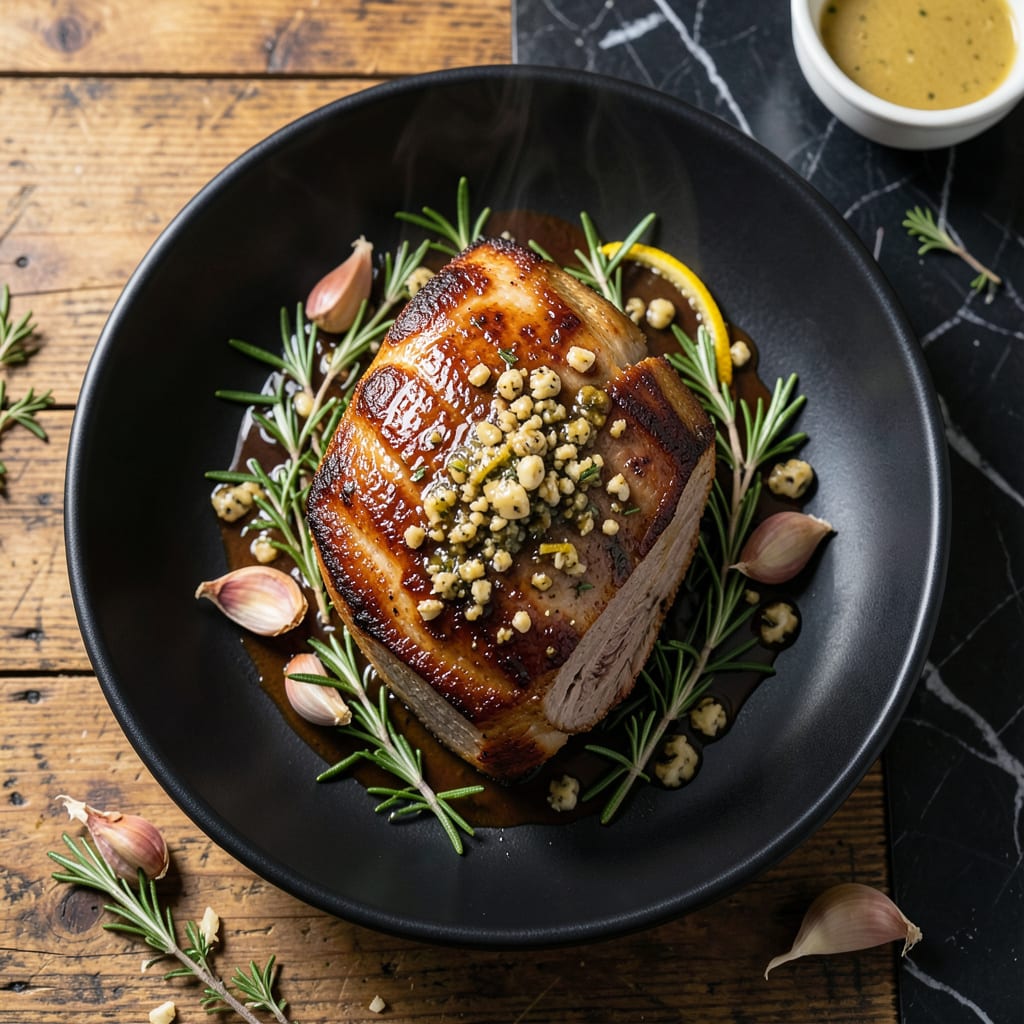
Sunday dinner deserves a centerpiece that impresses without overwhelming. This herb-crusted pork prime rib delivers restaurant-quality results with straightforward technique.
I developed this method to highlight the natural richness of pork while adding aromatic depth through fresh herbs. The crust forms a golden seal that locks in juices, ensuring every slice is tender and flavorful.
Ingredients for Pork Prime Rib Roast
Quality pork and aromatic herbs create this impressive yet approachable centerpiece for your table.
| Ingredient | Amount | Notes |
|---|---|---|
| Pork Prime Rib Roast 🥩 | 4 lb | Bone-in, well-marbled preferred |
| Fresh Rosemary 🌿 | 2 tbsp | Finely chopped, stems discarded |
| Fresh Thyme Leaves 🍃 | 2 tbsp | Stripped from stems |
| Garlic Cloves 🧄 | 6 cloves | Minced to fine paste |
| Dijon Mustard 🟡 | 3 tbsp | Whole grain preferred |
| Extra-Virgin Olive Oil 🫒 | 3 tbsp | Divided for crust and searing |
| Kosher Salt 🧂 | 2 tbsp | Diamond Crystal preferred |
| Freshly Ground Black Pepper 🌶️ | 1 tbsp | Coarse grind for crust |
| Dry White Wine 🍷 | ½ cup | For deglazing pan |
| Low-Sodium Chicken Broth 🥣 | 1 cup | Divided for basting and sauce |
| Unsalted Butter 🧈 | 2 tbsp | For finishing sauce |
| All-Purpose Flour 🌾 | 1 tbsp | For thickening sauce |
| Shallot 🧅 | 1 whole | Finely minced for sauce |
[recipe_ingredient_scaler]
The pork prime rib is paramount. Seek bone-in, well-marbled roasts from a reputable butcher or Whole Foods—the fat cap should be at least 1/4-inch thick for optimal self-basting. Fresh herbs are non-negotiable here; organic rosemary and thyme from the farmers market deliver superior aromatic intensity compared to supermarket offerings. Look for stems with vibrant color and no wilting.
No fresh herbs? Dried at one-third the quantity works in a pinch, though the flavor profile will be less complex. White wine can be replaced with additional chicken broth plus a splash of apple cider vinegar for acidity. Unsalted butter is essential for controlling seasoning—European-style butter adds richness. Shallots can be swapped for sweet onion, but the flavor will be slightly more pungent.
The raw roast keeps 2-3 days in the fridge, but ideally cook within 24 hours of purchase. Leftovers reheat beautifully—slice before warming to prevent drying. The finished sauce can be refrigerated for 4-5 days or frozen for 3 months in airtight containers.
Why You’ll Love This Recipe
- Set It and Forget: I rub the roast with Dijon, garlic, and herbs, then let the oven do the work.
- Herb-Crusted Perfection: The rosemary and thyme form a crust so fragrant, it’ll make your kitchen smell like a holiday.
- Feeds a Hungry Table: This roast is my go-to for Sunday dinners, birthdays, or when the in-laws drop by unannounced.
- Leftovers for Days: Honestly, the sandwiches I make with the leftovers might be better than the first meal.
Step-by-Step Instructions for Herb-Crusted Pork Prime Rib Roast
This method ensures a perfectly browned crust with juicy, tender meat throughout.
Step 1: Prepare the Herb Crust
In a small bowl, combine the 2 tbsp Fresh Rosemary, 2 tbsp Fresh Thyme Leaves, 6 cloves Garlic Cloves (minced to a paste), 3 tbsp Dijon Mustard, and 2 tbsp Extra-Virgin Olive Oil. Stir until the mixture forms a thick, fragrant paste.
The garlic should be finely minced to near-puree consistency to distribute evenly across the roast. This herb-garlic paste will create a robust crust while keeping the meat moist during cooking. Set the mixture aside while you prepare the roast.
Step 2: Season and Sear the Roast
Pat the 4 lb Pork Prime Rib Roast thoroughly dry with paper towels. This step is crucial for achieving a proper sear. Season the entire surface aggressively with the 2 tbsp Kosher Salt and 1 tbsp Freshly Ground Black Pepper, pressing the seasoning into the meat.
Heat the remaining 1 tbsp Extra-Virgin Olive Oil in a large oven-safe pan over medium-high heat. Sear the roast on all sides until deeply browned, about 3-4 minutes per side. This creates a flavorful foundation for the herb crust.
Step 3: Apply Crust and Roast
Remove the roast from the pan and brush the herb-garlic paste evenly over all surfaces, including the ends. Return the roast to the pan, fat-side up. Transfer the pan to a preheated 375°F oven.
Roast for 1 hour, then begin basting with ½ cup Low-Sodium Chicken Broth every 20 minutes until the internal temperature reaches 145°F for medium-rare. The crust should be deep golden brown and aromatic.
Step 4: Rest and Prepare Pan Sauce
Transfer the roast to a cutting board and tent loosely with foil. Let it rest for 15 minutes—this allows the juices to redistribute for maximum tenderness.
Place the pan on the stovetop over medium heat. Add the 1 whole Shallot (finely minced) and cook for 1 minute until softened. Pour in the 0.5 cup Dry White Wine and deglaze, scraping up browned bits.
Step 5: Finish with Butter Sauce
Stir in the remaining ½ cup Low-Sodium Chicken Broth and bring to a simmer. Whisk in the 1 tbsp All-Purpose Flour and cook for 2 minutes until slightly thickened. Remove from heat and whisk in the 2 tbsp Unsalted Butter until glossy.
Strain the sauce through a fine-mesh sieve and serve alongside the carved roast. The sauce should coat the back of a spoon with a rich, velvety consistency.
Pro Tips For Making Pork Prime Rib Roast
- Start High, Finish Low: Sear the roast at 450°F for 20 minutes to get that crust going, then drop to 325°F—this is the only way I’ve found to get both crispy outside and juicy inside with pork prime rib.
- Crush the Garlic: Don’t just slice the garlic cloves—smash them first so they release more flavor into the Dijon mustard rub. I learned this the hard way after my first few roasts tasted under-seasoned.
- Skip the Cold Roast: Let the pork sit at room temperature for at least 1 hour before cooking, or the center stays stubbornly undercooked while the outside dries out. Sounds tedious, but it actually saves time in the long run.
- Rest Under Foil: After pulling it from the oven, tent the roast with foil and let it rest for 15 minutes—this keeps the juices from pooling on the cutting board instead of in the meat. I skip this when I’m in a hurry, but the difference is noticeable.
Dietary Considerations for These Flavors
Gluten-Free Adaptation
This creation is naturally gluten-free if you use cornstarch instead of all-purpose flour for the sauce. Mix 1 tbsp cornstarch with 1 tbsp cold water before whisking into the pan drippings. The result is just as silky and rich.
Dairy-Free Option
Swap the 2 tbsp unsalted butter for olive oil or dairy-free butter alternative. I recommend Miyoko’s Creamery brand for best flavor. The sauce will still emulsify beautifully with vigorous whisking.
Low-Carb Version
Skip the sauce thickening entirely for a low-carb approach. The pan drippings with wine and broth create a flavorful au jus. Simply reduce by half over medium-high heat for 5-7 minutes. 💪
Sodium Considerations
Reduce the 2 tbsp kosher salt by half and use low-sodium Dijon mustard. The herbs and garlic provide plenty of flavor. I also recommend seeking out no-salt-added chicken broth for the basting liquid.
Allergen-Free Notes
This dish is naturally free from nuts, soy, and eggs. For mustard allergies, replace Dijon mustard with 2 tbsp minced shallots in the herb paste. Always verify your wine and broth labels for hidden allergens.
Keto-Friendly
The entire recipe fits keto guidelines with no modifications needed. The 4 lb pork prime rib roast provides high-quality protein and fat. Just ensure your wine choice is dry (under 2g sugar per serving). 🔥
Nutrition Facts

Trained in classic French technique but raised on slow-cooked ribs and spicy rubs, she blends culinary skill with smoke and soul.
- Recipe for Boneless Pork Chops in Cast Iron Skillet: Sear and Baste to Juicy Perfection - October 3, 2026
- Recipe for Boneless Cross Rib Roast: Slow-Roasted Beef with Herb Crust - October 3, 2026
- Hamburgers in Sauce Recipe Crock Pot: Slow-Cooked Savory Delight - October 3, 2026