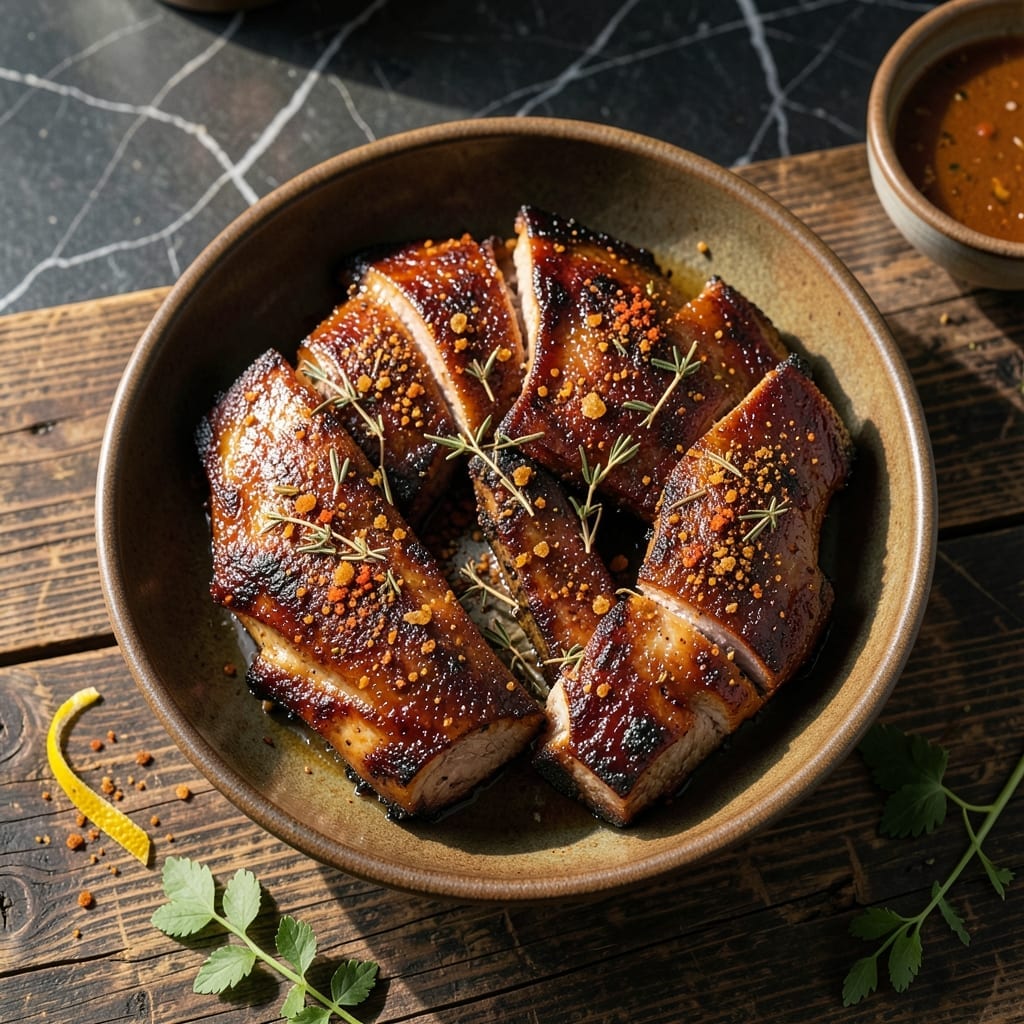
Achieving fall-off-the-bone pork ribs in the oven requires patience and the right technique. This method delivers consistently tender results without a smoker or grill.
Slow-roasting at a low temperature allows the connective tissue to break down gradually. A simple herb rub enhances the natural pork flavors, creating a dish that impresses every time.
Ingredients for Pork Ribs Recipe Oven
These quality ingredients transform into melt-in-your-mouth ribs with minimal effort and maximum flavor.
| Ingredient | Amount | Notes |
|---|---|---|
| Pork Baby Back Ribs 🥩 | 2 lb | Full rack, membrane removed |
| Brown Sugar 🍚 | ¼ cup | Light or dark variety |
| Paprika 🌶️ | 1 tbsp | Sweet or smoked variety |
| Garlic Powder 🧄 | 1 tbsp | Not garlic salt substitute |
| Onion Powder 🧅 | 1 tbsp | Fresh ground preferred |
| Dried Thyme 🌿 | 1 tsp | Crushed between fingers |
| Dried Rosemary 🍃 | 1 tsp | Finely crumbled |
| Kosher Salt 🧂 | 1 tbsp | Diamond Crystal preferred |
| Black Pepper 🌶️ | 1 tsp | Freshly ground coarse |
| Olive Oil 🫒 | 2 tbsp | For rub binding |
| Apple Cider Vinegar 🍏 | ¼ cup | For tenderizing marinade |
| Chicken Stock 🥣 | ½ cup | Low-sodium preferred |
| Worcestershire Sauce 🍶 | 1 tbsp | Adds depth to rub |
[recipe_ingredient_scaler]
The pork ribs are the foundation—baby back ribs give the most consistent results with their tender meat-to-bone ratio. Look for racks with good marbling at your butcher or the meat counter at Whole Foods. Ask them to remove the membrane if you’re not comfortable doing it yourself (it’s a game-changer for texture). The brown sugar in the rub caramelizes beautifully, so organic light brown is my go-to for cleaner flavor.
No apple cider vinegar? White vinegar in a pinch, though the flavor will be sharper. Swap Worcestershire for soy sauce if needed, but reduce the salt elsewhere. For the herbs, fresh rosemary and thyme can be used at triple the amount—just finely chop them. If you’re watching sodium, low-sodium chicken stock or even water with extra herbs works fine.
The rub keeps in an airtight container for 1 month. Ribs are best cooked immediately after seasoning but can marinate overnight. Leftovers (if any) reheat beautifully and taste even better the next day—store in the fridge for up to 4 days.
Why You’ll Love This Recipe
- Set It and Forget: I just rub the ribs with brown sugar and spices, pop them in the oven, and let the heat do the work—no babysitting required.
- Smoky Sweet Crust: The paprika and brown sugar caramelize into this sticky, finger-licking glaze that’s honestly hard to resist.
- Feeds a Hungry Crowd: I’ve served these at summer cookouts and weeknight dinners alike, and they disappear faster than I can slice them.
- Leftovers? Better: Between us, the flavors deepen overnight, so yesterday’s ribs taste even more ridiculous reheated for lunch.
Step-by-Step Instructions for Pork Ribs in the Oven
This method guarantees perfectly tender ribs with a flavorful herb crust every time.
Step 1: Prepare and Season the Ribs
Pat the 2 lb Pork Baby Back Ribs completely dry with paper towels. In a bowl, combine the 0.25 cup Brown Sugar, 1 tbsp Paprika, 1 tbsp Garlic Powder, 1 tbsp Onion Powder, 1 tsp Dried Thyme, 1 tsp Dried Rosemary, 1 tbsp Kosher Salt, and 1 tsp Black Pepper. Mix thoroughly to create an even spice blend.
Rub the 2 tbsp Olive Oil over the entire surface of the ribs. This helps the dry rub adhere better. Generously apply the spice mixture, pressing it into the meat on all sides. The ribs should be fully coated with a visible layer of seasoning. Let them sit at room temperature for 30 minutes to allow the flavors to penetrate.
Step 2: Create the Braising Liquid
In a separate bowl, whisk together the 0.25 cup Apple Cider Vinegar, 0.5 cup Chicken Stock, and 1 tbsp Worcestershire Sauce. This liquid will tenderize the meat and infuse it with depth of flavor during the cooking process.
The acidity from the apple cider vinegar balances the richness of the pork while helping to break down the connective tissue. The Worcestershire sauce adds a subtle umami complexity that complements the herb rub perfectly.
Step 3: Slow Roast the Ribs
Preheat your oven to 300°F. Place the seasoned ribs meat-side up on a rimmed baking sheet. Pour the braising liquid around the ribs, not over them, to prevent washing off the rub. Cover the entire pan tightly with heavy-duty foil, creating a sealed environment.
Roast in the preheated oven for 2.5 to 3 hours. This low-and-slow method ensures the ribs become fork-tender without drying out. Check at the 2.5-hour mark—the meat should be pulling away from the bones and have an internal temperature of at least 190°F.
Step 4: Finish and Glaze the Ribs
Carefully remove the foil (watch for steam) and increase the oven temperature to 425°F. Return the ribs to the oven, uncovered, for 10-15 minutes to allow the tops to caramelize slightly. Baste the ribs with the accumulated juices every 5 minutes during this final phase.
The exposed time at higher heat helps develop a sticky, flavorful glaze on the exterior while maintaining the fall-off-the-bone tenderness achieved during the slow roast. The braising liquid should have reduced to a syrupy consistency.
Step 5: Rest and Serve
Transfer the ribs to a cutting board and let them rest for 10 minutes before slicing. This resting period allows the juices to redistribute throughout the meat. Slice between the bones to create individual rib portions.
Serve the ribs with some of the reduced braising liquid spooned over the top. The meat should separate from the bone with minimal pressure, delivering the promised tenderness. Any remaining liquid makes an excellent dipping sauce.
Pro Tips For Making Pork Ribs Recipe Oven
- Preheat High First: Start the oven at 450°F for 15 minutes to render fat before dropping to 275°F for slow cooking—I learned this the hard way after serving greasy ribs once too often.
- Pat Ribs Dry: Blot the ribs with paper towels before seasoning so the brown sugar and spices stick instead of sliding off with excess moisture.
- Skip the Boiling: Resist the urge to parboil the ribs first; it washes away flavor and makes the meat mushy—just season and slow-roast.
- Double the Rub: Use twice as much spice mix as you think you need, especially paprika and brown sugar, because half always ends up on the baking sheet.
Storing and Reheating Leftovers
Refrigerator Storage
Let your ribs cool completely (about 2 hours at room temp) before storing. Place them in an airtight container with some of the cooking liquid to maintain moisture. They’ll keep in the fridge at 40°F or below for up to 4 days. Honestly, they often taste even better the next day. ❄️
Freezer Storage
For longer storage, wrap individual portions tightly in plastic wrap then heavy-duty foil. I use quart-size freezer bags for space efficiency. They’ll maintain quality for up to 3 months without freezer burn if properly sealed.
Oven Reheating
Preheat oven to 325°F. Wrap ribs in foil with 2 tbsp chicken stock or water. Heat for 20-25 minutes until reaching 165°F internal temperature. This method preserves the fall-off-the-bone texture beautifully. 🔥
Microwave Method
For quick meals, place ribs on a microwave-safe plate with a damp paper towel. Heat on 50% power for 1-2 minutes, then check temperature. Continue in 30-second bursts until warmed through.
Sauce Preservation
The cooking liquid makes excellent sauce—store it separately in a small jar. It will keep in the fridge for up to 1 week or can be frozen for 1 month. Reheat gently on the stove before serving.
Nutrition Facts
Frequently Asked Questions
What temperature ensures fall-off-the-bone tenderness?
Slow-roasting at 300°F for 2.5-3 hours breaks down connective tissue perfectly. The internal temp should reach 190°F for that melt-in-your-mouth texture.
Can I use spare ribs instead of baby back?
Yes, but adjust cooking time. Spare ribs are meatier and may need 30-45 extra minutes. Baby backs cook faster due to their smaller size and tender meat.
Why rest ribs before serving?
Resting for 10 minutes lets juices redistribute. Slicing too soon causes dryness as fluids escape. The wait ensures each bite stays moist and flavorful.
What if my ribs aren’t tender after the allotted time?
Check the internal temp—it should hit 190°F. If not, re-cover with foil and cook in 30-minute increments until tender. Low heat is key.

Trained in classic French technique but raised on slow-cooked ribs and spicy rubs, she blends culinary skill with smoke and soul.
- Recipe for Boneless Pork Chops in Cast Iron Skillet: Sear and Baste to Juicy Perfection - October 3, 2026
- Recipe for Boneless Cross Rib Roast: Slow-Roasted Beef with Herb Crust - October 3, 2026
- Hamburgers in Sauce Recipe Crock Pot: Slow-Cooked Savory Delight - October 3, 2026