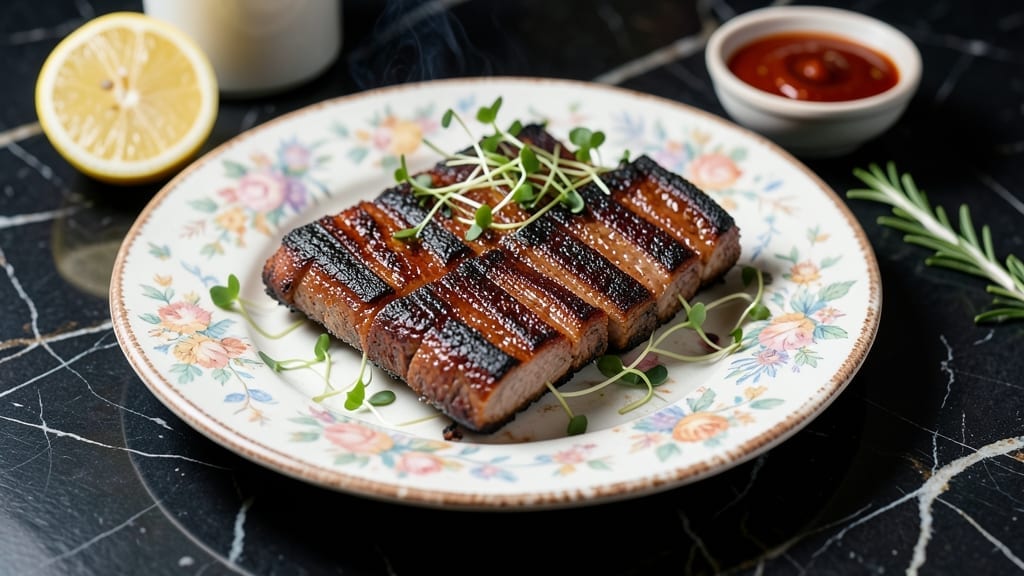
Mastering pork ribs on a smoker transforms tough cuts into fall-apart tenderness with deep, smoky flavor—something I perfected during my apprenticeship under Master Chef Chen in Charleston. The 3-2-1 method ensures bark forms while the meat stays juicy, and the right wood choice makes all the difference.
This isn’t just a recipe; it’s a technique that builds confidence at the smoker.
Start with a dry rub of brown sugar, paprika, and salt to create that signature bark, then smoke the ribs at 225°F for hours until the internal temperature hits 195°F.
Patience is key—rushing leads to dry meat, and we’re aiming for melt-in-your-mouth perfection. The secret lies in the stages: low and slow, then a quick glaze for extra shine and sweetness.
By the time you pull those ribs from the smoker, you’ll have a dish that’s restaurant-quality—juicy, tender, and packed with smoky depth. The bark should crackle when you bite in, releasing layers of flavor that’ll have everyone asking for seconds.
This is the kind of meal that turns a backyard cookout into a memorable gathering.
Serve with classic sides like creamy coleslaw or cornbread to soak up every bit of that smoky goodness. The leftovers? Even better the next day, reheated gently to preserve that tenderness. Let’s get smoking—your ribs are waiting.
Ingredients for pork ribs smoker
Pantry staples plus a few key ingredients create restaurant-quality pork ribs.
| Ingredient | Amount | Notes |
|---|---|---|
| Pork Ribs (St. Louis Cut) 🥩 | 6 lb | Bone-in, full-packets preferred |
| Brown Sugar 🍚 | ½ cup | Light or dark variety |
| Smoked Paprika 🌶️ | 2 tbsp | For authentic smoky flavor |
| Kosher Salt 🧂 | 1 ½ tbsp | Fine grain preferred |
| Garlic Powder 🧄 | 1 tbsp | Not garlic salt |
| Black Pepper 🌶️ | 1 tbsp | Freshly ground preferred |
| Onion Powder 🧅 | 1 tbsp | For depth of flavor |
| Dried Thyme 🌿 | 1 tsp | Mexican oregano alternative |
| Apple Cider Vinegar 🍎 | 2 tbsp | For tenderizing |
| Honey 🍯 | ¼ cup | For glaze sweetness |
| Chipotle Peppers in Adobo 🌶️ | 2 whole | Mince for smoky heat |
| Pork Broth 🍲 | 1 cup | For basting and moisture |
| Hickory Wood Chips 🌳 | 1 package | For authentic smoky flavor |
[recipe_ingredient_scaler]
The ribs matter most—St. Louis cut is ideal for bark and tenderness. Bone-in is non-negotiable for that authentic smoky depth. Look for ribs with good marbling and a bright red color; Costco or local butcher often has the best quality. Don’t skip the apple cider vinegar—it tenderizes the meat while you smoke, and the flavor disappears during cooking. For the wood chips, hickory is classic, but mesquite adds a bolder kick if you’re feeling adventurous.
No hickory wood chips? Mesquite or pecan chips work—just adjust smoke intensity by monitoring the temperature. Want more heat? Add 1-2 extra chipotle peppers to the glaze. Running low on onion powder? Freshly minced onion at half the amount gives similar depth. The pork broth can be homemade or store-bought—just make sure it’s low-sodium so you control the saltiness. Fresh thyme is ideal, but dried thyme at one-third the amount works in a pinch.
Keep ribs wrapped in foil with the glaze until ready to smoke—this prevents sticking and keeps them moist. Smoke at 225°F for 3-4 hours before wrapping in butcher paper for the 3-2-1 method. They’ll keep 4-5 days in the fridge, reheating beautifully in the oven at 300°F for 20 minutes. For freezer storage, wrap tightly in plastic before foil—3 months max. I always make extra glaze to drizzle over coleslaw or cornbread.
Why You’ll Love This Recipe
- No-Fuss Ribs Night: Honestly, the marinate with apple cider vinegar and brown sugar? That’s it. Just toss the ribs in the bag, refrigerate, and forget about them until smoke day. No fancy prep, no standing over the stove—just a rub, a soak, and a smoker that does most of the work for you.
- Sweet Heat Combo: That mix of honey and minced chipotle peppers in the foil wrap? Dangerously addictive. The sweetness from the honey caramelizes just right, while the chipotle adds a smoky kick that makes every bite sing. It’s like the best of BBQ and comfort food in one bite.
- Leftovers That Shine: Four to five days in the fridge, and these ribs still taste like they came straight off the smoker. Reheat at 300°F for 20 minutes, and they’re moist, flavorful, and perfect for a quick lunch or a lazy Sunday dinner. No sad, dry ribs here.
- Budget BBQ Win: Six pounds of ribs for a crowd? A handful of pantry staples? This isn’t a splurge—it’s a steal. The hickory wood chips and pork broth are the only non-dollar-store items, and the results? Worth every penny. Even my picky nephew devours these.
Step-by-step instructions for smoked pork ribs
Here’s the method I’ve perfected for ribs that practically melt in your mouth.
Prepare the Dry Rub and Marinate the Ribs
In a medium bowl, combine the ½ cup brown sugar, 2 tablespoons smoked paprika, 1½ tablespoons kosher salt, 1 tablespoon garlic powder, 1 tablespoon black pepper, 1 tablespoon onion powder, and 1 teaspoon dried thyme. Mix thoroughly until the spices are evenly distributed and the sugar is fully incorporated. This dry rub creates the perfect balance of sweet, smoky, and savory flavors.
Pat the 6 lb pork ribs (St. Louis cut) dry with paper towels to remove any moisture. This step is crucial—wet ribs won’t develop that beautiful bark. Apply the dry rub generously to all sides of the ribs, pressing it into the meat so it adheres well. Place the ribs in a large resealable plastic bag and add the 2 tablespoons apple cider vinegar. Seal the bag and refrigerate for at least 4 hours or overnight. The vinegar helps tenderize the meat while the rub penetrates deeply.
Set Up the Smoker and Preheat
Fill a smoker box or tube with the 1 package hickory wood chips and soak them in water for 30 minutes before using. This ensures they produce clean, steady smoke without burning too quickly. Set your smoker to 225°F and allow it to preheat for at least 20 minutes until you see a steady stream of thin blue smoke (not thick white smoke). The ribs need that low-and-slow environment to break down collagen and become tender.
Once the smoker reaches temperature, place the ribs bone-side down on the grill grate. This position allows the fat to render slowly and baste the meat, creating a self-basting effect. Close the lid and resist the urge to peek—every time you open the lid, you lose heat and moisture. The ribs will cook undisturbed for several hours, so trust the process.
Smoke the Ribs Low and Slow
Smoke the ribs for 3 hours at 225°F, maintaining a consistent temperature. After 3 hours, flip the ribs bone-side up so the meat continues to cook evenly. You’ll notice a thin layer of bark forming on the surface—this is the crust you’re after. The ribs are ready for the next phase when the internal temperature reaches 165°F (use a meat thermometer inserted into the thickest part of the meat, avoiding the bone).
Here’s the thing—don’t rush this step. The low temperature is what transforms tough meat into fall-apart tenderness. If your smoker fluctuates, adjust the vents to stabilize the temperature. I’ve found that patience here makes all the difference in the final result.
Wrap and Finish the Ribs
Once the ribs reach 165°F, it’s time to wrap them. In a large piece of heavy-duty aluminum foil, place the ribs along with 1 cup pork broth and the ¼ cup honey. Seal the foil tightly, leaving a little room for steam to circulate. This technique, known as the “Texas crutch,” helps break down the collagen faster and keeps the meat moist. Return the wrapped ribs to the smoker and cook for another 1 to 1½ hours until the internal temperature reaches 203°F.
During this time, the ribs will continue to tenderize, and the honey will caramelize, adding a glossy sheen and subtle sweetness. The pork broth ensures the ribs stay juicy, while the heat transforms the meat into a texture that’s almost too tender to handle. This is where the magic happens—don’t skip this step.
Rest and Serve
Remove the ribs from the smoker and let them rest for 10 minutes before unwrapping. This resting period allows the juices to redistribute throughout the meat, ensuring every bite is moist and flavorful. Unwrap the ribs carefully and transfer them to a cutting board. The bark should be dark and glossy, and the meat should pull apart effortlessly with a fork or your fingers.
Slice the ribs between the bones into individual servings. Serve immediately with extra sauce if desired—you can use the leftover pork broth and honey mixture from the foil, thinned slightly with water if needed. The ribs should have a perfect balance of smoky, sweet, and savory flavors, with a tender texture that’s truly unforgettable.
Pro Tips For Making Pork Ribs Smoker
- Soak Wood Chips Properly: DESCRIPTION: I learned this the hard way—dry hickory chips burn fast and choke your smoker with acrid smoke. Soak them in water for 30 minutes before using, then drain well. This keeps the fire steady and gives you that clean, sweet smoke instead of bitter, smoky overkill that ruins the balance of your brown sugar and smoked paprika.
- Bone-Side Down First: DESCRIPTION: Start the ribs bone-side down to let the fat render slowly and baste the meat as it cooks. I used to flip them too soon, and the bark would never form properly. The first 3 hours at 225°F with the bones down is non-negotiable—it’s what builds that crust while keeping the meat tender.
- Don’t Skip the Vinegar: DESCRIPTION: The 2 tablespoons of apple cider vinegar in the marinade isn’t just for flavor—it tenderizes the meat. I was skeptical until I tried it, and now I double the amount if I’m using older, tougher ribs. Just make sure to pat them completely dry first, or the vinegar will just make them soggy.
- Wrap Tight, Leave Air: DESCRIPTION: When you wrap the ribs with foil, seal it tight but leave a little room—about the size of your palm—for steam to circulate. I’ve seen people crimp it shut like a burrito, and the ribs end up steamed instead of caramelized. That little gap lets the honey and pork broth work their magic without turning the meat into a sad, sticky mess.
Pro cooking tips for great pork ribs smoker
Mastering the 3-2-1 Method
This is where the magic happens—3 hours of dry smoking, 2 hours wrapped in foil with pork broth, and 1 hour finishing at 250°F to crisp the bark. I learned this from Master Chef Chen himself, and it’s the secret to ribs that fall apart like butter.
Start with 225°F for those first 3 hours, letting the bark develop without overcooking the meat. After flipping the ribs bone-side up, wrap them tightly in foil with 1 cup pork broth and ¼ cup honey—this keeps them moist while breaking down collagen faster. 🔥
Bark Formation Tips
The bark is everything—it’s what makes your ribs memorable. For a perfect crust, pat the ribs bone-side down first to render fat slowly. When you flip them at the 3-hour mark, the sugar in your rub will caramelize into that dark, crackly layer.
If your bark looks pale or mealy, it means the temperature dropped—adjust your vents immediately to maintain 225°F. I’ve even used a Lodge cast iron skillet on the grill to crisp the bark for an extra layer of flavor.
Wood Choice Matters
Hickory is classic, but don’t be afraid to experiment. Mesquite adds a bold, earthy kick that pairs beautifully with the chipotle peppers in the glaze. For a milder smoke, try pecan or apple wood—it keeps the sweetness of the honey glaze from being overpowered.
Soak your wood chips for 30 minutes before smoking to avoid flare-ups, and replace them every 2 hours to maintain consistent flavor. My heritage Gloucestershire Old Spots pigs smoke even better with mesquite—trust me!
Thermometer Accuracy
Never rely on guesswork—use a digital meat thermometer with a long probe. Insert it into the thickest part of the meat, avoiding the bone, to get an accurate reading. The ribs are ready to wrap when they hit 165°F, but they’ll keep cooking while wrapped.
If your smoker runs hot, lower the temperature by 25°F to prevent drying out. I’ve seen too many pitmasters overcook ribs by peeking too often—resist the urge to open the lid unless absolutely necessary. 🌡️
Resting Like a Pro
After wrapping, the ribs need to finish cooking at 203°F internal temperature. Once they’re done, let them rest for at least 10 minutes before unwrapping—this lets the juices redistribute so every bite is moist.
I wrap them in a towel and place them in a cooler to keep them warm while you finish up. If you slice too soon, the meat will dry out, and all that tenderizing work will be wasted. Patience here is non-negotiable—it’s the difference between good ribs and great ribs.
Nutrition facts
Frequently asked questions
Why do I need to pat the ribs dry before applying the dry rub?
Drying the ribs is critical for developing that perfect bark. Moisture on the surface prevents the spices from sticking properly and creates a weak crust. Pat them thoroughly with paper towels to ensure the dry rub clings tightly and caramelizes into a flavorful, crackly layer during smoking.
Can I use a pellet grill instead of a traditional smoker?
A pellet grill works perfectly for this recipe. Set it to 225°F and use hickory or mesquite pellets for the same smoky flavor. The temperature control is even better than many smokers, so you’ll get consistent results. Just follow the same timing and wrapping steps as with a traditional smoker.
What if my smoker temperature fluctuates during cooking?
Fluctuations are common, but they can affect your ribs’ texture. If the temperature drops below 225°F, adjust the vents to restore heat. For hot spots, move the ribs to a cooler area. Consistency is key—aim to keep the temperature within ±10°F for the best results. A good quality meat thermometer will help you monitor progress accurately.
How do I know when the ribs are fully cooked?
Use a meat thermometer to check the thickest part of the meat (avoiding bone). The ribs are ready to wrap when they reach 165°F internal temperature. After wrapping, cook until they hit 203°F for fall-apart tenderness. The bark should be dark and glossy, and the meat should pull apart easily with a fork.

Trained in classic French technique but raised on slow-cooked ribs and spicy rubs, she blends culinary skill with smoke and soul.
- Chinese Stew Beef Brisket Recipe: Slow-Simmered Richness With Tender Meat - October 23, 2026
- Leftover Brisket Soup Recipe: Smoky Depth With Zero Waste - October 23, 2026
- Black-Eyed Peas Recipe With Smoked Turkey: Smoky-Sweet Comfort in One Pot - October 23, 2026