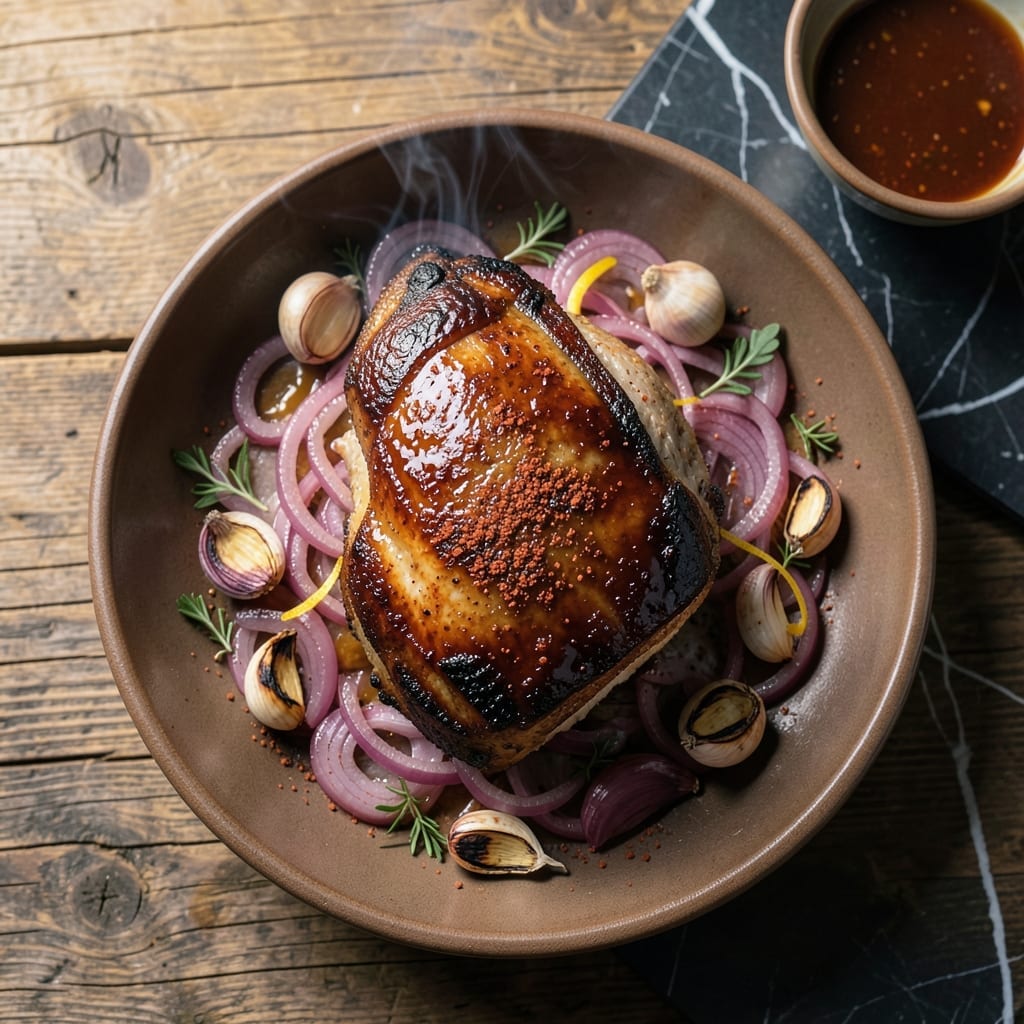
This smoker recipe transforms pork roast into a tender, flavorful masterpiece with minimal effort.
Low and slow cooking at 225°F ensures the meat becomes fall-off-the-bone while absorbing smoky depth. The result is a juicy, perfectly seasoned roast that rivals any BBQ joint.
Ingredients for Pork Roast Recipe for Smoker
Transform humble pork shoulder into a BBQ masterpiece with these bold, smoky ingredients.
| Ingredient | Amount | Notes |
|---|---|---|
| Pork Shoulder Roast 🐖 | 4 lb | Bone-in for best flavor |
| Coarse Kosher Salt 🧂 | 2 tbsp | Diamond Crystal preferred |
| Black Pepper 🌶️ | 2 tbsp | Freshly ground preferred |
| Garlic Powder 🧄 | 2 tbsp | Not garlic salt |
| Onion Powder 🧅 | 1 tbsp | Freshly ground optimal |
| Smoked Paprika 🌶️ | 1 tbsp | Sweet or hot variety |
| Brown Sugar 🧈 | ½ cup | Light or dark works |
| Yellow Mustard 🟡 | ¼ cup | Binder for dry rub |
| Apple Cider Vinegar 🍎 | ¼ cup | Balances sweetness in rub |
| Hickory Wood Chips 🪵 | 2 cups | Soaked in water 30 minutes |
| Beer or Apple Juice 🍺 | 2 cups | For spritzing during cook |
| Butter 🧈 | ½ cup | Unsalted, cubed for serving |
[recipe_ingredient_scaler]
The pork shoulder is non-negotiable here. Bone-in, skin-on gives you that perfect bark and fall-apart texture. Source from Costco or Sam’s Club for consistent quality and better prices per pound. Look for good marbling—this fat renders down during the long cook, keeping the meat moist. Avoid pre-cubed pork; you want a whole roast for even cooking.
No smoked paprika? Regular paprika plus a pinch of liquid smoke works in a pinch. Brown sugar can be swapped for honey or maple syrup, but adjust quantities slightly as liquids behave differently. Mustard haters can use olive oil as the binder—same effect, less tang. The vinegar is optional but recommended for balancing the rub’s sweetness.
Store pork in the fridge for up to 3-4 days before cooking, or freeze for 6-12 months. Dry rub ingredients keep indefinitely in a cool, dark pantry. Once cooked, the roast holds beautifully in a warm oven for 2-3 hours before serving.
Why You’ll Love This Recipe
- Set and Forget: Honestly, just rub the pork shoulder with salt, pepper, and those powders, then let the smoker do all the work.
- Crispy Bark: That combo of coarse salt and garlic powder creates the most addictive crust I’ve ever pulled off a smoker.
- Feeds the Freezer: One 8-pound shoulder gives me pulled pork for tacos, sandwiches, and a freezer stash that lasts for weeks.
- Budget Hero: Pork shoulder is cheap, and with just five ingredients I turn it into a meal that tastes like a weekend splurge.
Step-by-Step Instructions for Pork Roast for Smoker
This method ensures tender, smoky perfection with a caramelized bark every time.
Step 1: Prepare the Pork Shoulder and Dry Rub
Begin by patting the 4 lb Pork Shoulder Roast completely dry with paper towels. This step is essential for the rub to adhere properly and form that coveted bark. In a bowl, combine the 2 tbsp Coarse Kosher Salt, 2 tbsp Black Pepper, 2 tbsp Garlic Powder, 1 tbsp Onion Powder, 1 tbsp Smoked Paprika, and 0.5 cup Brown Sugar.
Mix the dry ingredients thoroughly to ensure even distribution of flavors. I find that using my hands works best for blending. Stir in the 0.25 cup Yellow Mustard and 0.25 cup Apple Cider Vinegar to create a paste-like consistency. This mixture will act as both a binder and a flavor enhancer for the rub.
Step 2: Apply the Rub and Prepare the Smoker
Generously coat the pork shoulder with the rub mixture, pressing it into the meat to ensure full coverage. The mustard and vinegar in the rub will help create a beautiful, sticky surface that the smoke can cling to. Let the seasoned pork shoulder sit at room temperature for 30 minutes while you prepare the smoker.
Soak the 2 cups Hickory Wood Chips in water for 30 minutes to promote a slow, steady smoke. Preheat your smoker to 225°F using indirect heat. Once the smoker is up to temperature, add the soaked wood chips to the firebox or smoker box. You want to see a thin, blue smoke, not thick white smoke, which can impart a bitter flavor.
Step 3: Smoke the Pork Shoulder
Place the pork shoulder directly on the smoker grates, fat-side up. This position allows the rendered fat to baste the meat as it cooks, enhancing both moisture and flavor. Insert a meat thermometer into the thickest part of the pork shoulder, avoiding the bone.
Close the lid and maintain a consistent temperature of 225°F. Every 45 minutes to 1 hour, spritz the pork shoulder with 2 cups Beer or Apple Juice to keep the surface moist and add an additional layer of flavor. This step also helps build the bark.
Step 4: Wrap and Finish Cooking
Once the pork shoulder reaches an internal temperature of 160°F (typically after 5-6 hours), it will hit a stall where the temperature plateaus. Wrap the pork shoulder tightly in aluminum foil or butcher paper to push through this stall. Return it to the smoker.
Continue cooking until the internal temperature reaches 203°F. At this point, the connective tissues in the pork shoulder will have broken down, making the meat probe-tender. This process usually takes an additional 2-3 hours.
Step 5: Rest and Serve
Remove the pork shoulder from the smoker and let it rest, wrapped, for at least 1 hour. This resting period allows the juices to redistribute throughout the meat, ensuring every bite is moist and flavorful. Unwrap the pork shoulder and discard any excess fat or liquid that has accumulated.
Shred the pork shoulder using two forks or your hands, mixing in the 0.5 cup Butter as you go for added richness. Serve the pulled pork on buns, in tacos, or as a hearty main dish with your favorite sides. The result should be tender, smoky, and full of complex flavors that make this dish a true masterpiece.
Pro Tips For Making Pork Roast Recipe For Smoker
- Preheat the Smoker: I learned this the hard way—crank your smoker to 225°F and let it stabilize for 15 minutes before the pork goes in, or you’ll fight temperature swings the whole cook.
- Pat the Pork Dry: Sounds tedious, but a quick blot with paper towels makes the rub stick better and helps form that dark, flavorful bark everyone wants.
- Don’t Rush the Rest: After pulling it at 195°F, wrap the pork in a towel and let it sit in a cooler for at least 30 minutes—it finishes cooking and stays juicy.
- Double the Rub: My first few attempts were bland until I started using twice as much salt and spices as I thought I needed; pork shoulder can handle it and the flavor actually penetrates.
Perfect Pairings for This Recipe
Classic BBQ Sides
I love serving this with creamy coleslaw—the cool crunch cuts through the rich, smoky pork beautifully. Use 1 head cabbage and ½ cup mayo for a quick, tangy version. Baked beans are another must, especially with bacon bits mixed in for extra depth. 🥗
Fresh and Light Options
For something lighter, try a corn and avocado salad with lime dressing. Toss 2 cups corn kernels, 1 diced avocado, and ¼ cup chopped cilantro. The acidity balances the meat’s richness perfectly.
Bread and Pickles
Soft brioche buns or Texas toast are ideal for sandwiches. Add bread-and-butter pickles for a sweet, crunchy contrast. I like Bubbies brand for their crisp texture and bold flavor.
Drink Pairings
A cold IPA or amber ale complements the smoky, sweet profile of the pork. For non-alcoholic options, sweet tea or sparkling lemonade works wonderfully. The bubbles cleanse your palate between bites. 🍺
Sauce It Up
Offer classic BBQ sauce on the side for dipping—I prefer Stubb’s Original. For heat lovers, add a spicy vinegar-based sauce like Texas Pete. A small bowl of apple sauce adds a sweet, fruity note that kids love.
Nutrition Facts
Frequently Asked Questions
What’s the ideal internal temperature for smoked pork?
Aim for 203°F internally for perfect tenderness. At this point, the collagen breaks down, making the meat probe-tender. Don’t rush it—patience is key for that fall-apart texture.
How do I prevent the meat from drying out?
Spritz with beer or apple juice every 45 minutes to 1 hour. Wrapping in foil at 160°F also locks in moisture during the stall phase.
Can I use a different wood for smoking?
Yes! Apple or cherry wood adds a sweeter, milder smoke than hickory. Avoid mesquite—it’s too strong and can overpower the pork’s flavor.
How long should I rest the pork after smoking?
Rest wrapped for at least 1 hour. This lets juices redistribute for maximum moisture. Skipping this step risks a dry, uneven result.

Trained in classic French technique but raised on slow-cooked ribs and spicy rubs, she blends culinary skill with smoke and soul.
- Recipe for Boneless Pork Chops in Cast Iron Skillet: Sear and Baste to Juicy Perfection - October 3, 2026
- Recipe for Boneless Cross Rib Roast: Slow-Roasted Beef with Herb Crust - October 3, 2026
- Hamburgers in Sauce Recipe Crock Pot: Slow-Cooked Savory Delight - October 3, 2026