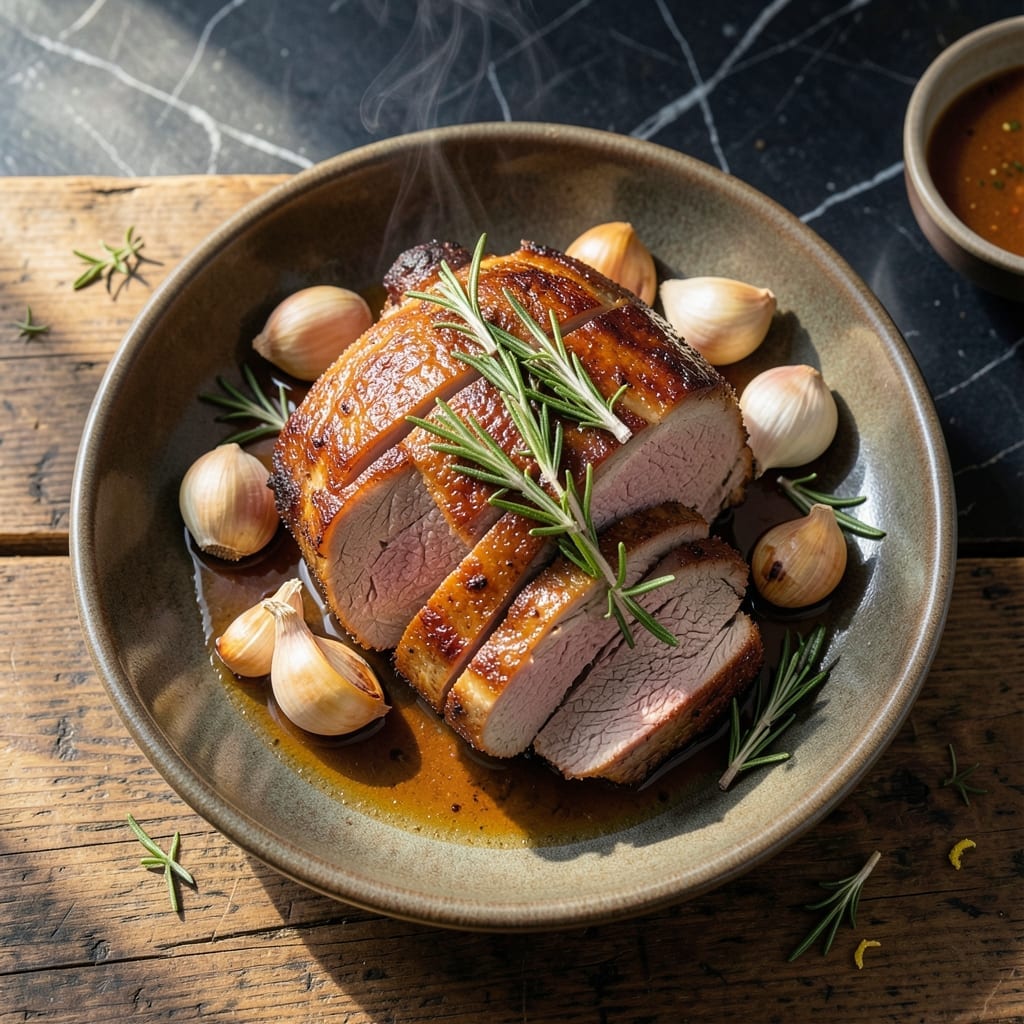
This slow-roasted pork shoulder elevates simple ingredients into a showstopping centerpiece. The garlic and rosemary infusion creates a fragrant crust that locks in juices, ensuring every bite is tender and full of flavor.
I’ve perfected this method over years of Sunday dinners, focusing on low heat and patience. The result is fall-apart tender meat with a golden, herb-crusted exterior that impresses without complicated techniques.
The beauty lies in its simplicity: rub, roast, and rest. No fancy equipment, just time and attention to detail. The aroma alone will have everyone gathering in the kitchen.
Serve with roasted vegetables or mashed potatoes to soak up the rich pan juices. This dish turns an ordinary meal into something memorable.
Ingredients for Pork Roast Recipe Ideas
Transform humble ingredients into a spectacular roast with garlic and rosemary at the heart.
| Ingredient | Amount | Notes |
|---|---|---|
| Pork Shoulder 🥩 | 4 lb | Bone-in, skin-on preferred |
| Garlic Cloves 🧄 | 8 cloves | Peeled, thinly sliced |
| Fresh Rosemary 🌿 | ¼ cup | Chopped, stems discarded |
| Kosher Salt 🧂 | 2 tbsp | Diamond Crystal preferred |
| Black Pepper 🌶️ | 1 tbsp | Freshly cracked preferred |
| Olive Oil 🫒 | ¼ cup | Extra-virgin for richness |
| Dijon Mustard 🟡 | 2 tbsp | Smooth, no seeds |
| Apple Cider Vinegar 🍏 | 1 tbsp | Balances richness |
| Brown Sugar 🍚 | 2 tbsp | Light or dark variety |
| Carrots 🥕 | 4 whole | Peeled, cut into chunks |
| Yellow Onion 🧅 | 1 whole | Peeled, quartered |
| Chicken Stock 🍲 | 1 cup | Low-sodium preferred |
| Bay Leaves 🍃 | 2 pieces | Dried, whole |
| Red Wine 🍷 | ½ cup | Dry variety recommended |
[recipe_ingredient_scaler]
The pork shoulder is non-negotiable here. Bone-in, skin-on yields superior moisture and flavor. Source from Whole Foods or a trusted butcher for consistent quality. The rosemary should be fresh, vibrant green—dried won’t deliver the same aromatic punch. For the garlic, seek out large, firm heads with tight skins. This isn’t the time for pre-minced jars (they lack the sharpness needed to cut through the fat).
No pork shoulder? Pork butt is identical—just a different name. Out of fresh rosemary? Thyme or sage at equal volume work in a pinch. Skip the wine? Additional chicken stock with a splash of balsamic vinegar mimics the depth. The Dijon can be swapped for whole-grain mustard (just strain the seeds if you prefer a smooth crust).
The roast improves overnight. Store leftovers sealed in their juices for 4-5 days in the fridge or freeze for 3 months. Reheat gently in the oven to preserve texture. Always rest the meat before slicing—this keeps it juicy.
Why You’ll Love This Recipe
- Set It and Forget: I toss the pork shoulder with garlic, rosemary, salt, and pepper, then let the oven do all the work.
- That Rosemary Garlic Bite: The aroma alone is worth it—garlic and fresh rosemary make every bite ridiculously flavorful.
- Meal Prep Magic: I make a big batch on Sunday and use it for tacos, sandwiches, or rice bowls all week.
- Budget Feeder: Pork shoulder is cheap, and this recipe stretches to feed a crowd without breaking the bank.
Step-by-Step Instructions for Garlic and Rosemary Slow-Roasted Pork
Master the technique for fall-apart tender pork with a fragrant herb crust.
Step 1: Prepare the Pork with Aromatic Marinade
Pat the 4 lb Pork Shoulder dry with paper towels to ensure proper browning. In a small bowl, combine the 0.25 cup Olive Oil, 2 tbsp Dijon Mustard, 1 tbsp Apple Cider Vinegar, 2 tbsp Brown Sugar, 2 tbsp Kosher Salt, and 1 tbsp Black Pepper. This creates a balanced marinade that tenderizes while adding depth.
Using a sharp knife, make small incisions all over the pork and insert the 8 cloves Garlic Cloves and half of the 0.25 cup Fresh Rosemary. Rub the marinade all over the surface, ensuring every crevice is coated. This step infuses flavor deep into the meat.
Step 2: Build the Roasting Environment
Arrange the 4 whole Carrots and 1 whole Yellow Onion in the bottom of a roasting pan. These vegetables will act as a natural rack, elevating the pork and preventing it from stewing in its juices. Pour the 1 cup Chicken Stock and 0.5 cup Red Wine into the pan—this liquid will create steam, keeping the meat moist during the long cook.
Place the pork on top of the vegetables, fat-side up. Sprinkle the remaining Fresh Rosemary and add the 2 pieces Bay Leaves to the liquid. The fat cap will render down, basting the meat naturally as it roasts.
Step 3: Slow-Roast to Perfection
Preheat your oven to 325°F. This low temperature ensures the connective tissue breaks down slowly without drying out the exterior. Roast the pork uncovered for 3 to 3.5 hours, basting with the pan juices every 45 minutes.
You’ll know it’s ready when the internal temperature reaches 195-200°F and the meat pulls apart easily with a fork. The skin should be deep mahogany and crisp, while the interior remains succulent. Resist the urge to increase the heat—patience is key for that perfect texture.
Step 4: Rest and Serve
Transfer the pork to a cutting board and tent loosely with foil. Let it rest for 20-30 minutes—this allows the juices to redistribute, ensuring every bite is moist and flavorful. Skim excess fat from the pan juices if desired, then strain the liquid to create a simple au jus for serving.
Shred or slice the pork against the grain. The meat should be tender enough to pull apart with minimal effort, with a rich, caramelized exterior. Serve with the roasted vegetables and a drizzle of the reduced pan juices for a complete, restaurant-quality meal.
Pro Tips For Making Pork Roast Recipe Ideas
- Start Low and Slow: I learned this the hard way—pork shoulder needs 275°F for at least 4 hours to turn tender. Cranking the heat just dries it out.
- Score the Skin: Cut 1/4-inch slashes in the fat cap before seasoning so the salt, rosemary, and garlic actually penetrate.
- Skip the Cold Meat: Let the pork sit at room temp for 30 minutes before roasting, or the center stays raw while the outside overcooks.
- Rest Under Foil: Give it a solid 15-20 minutes wrapped loosely in foil after roasting—it keeps the juices from pooling on the cutting board.
Flavor Customization for These Flavors
Sweet and Spicy
Add 2 tbsp honey and 1 tsp cayenne pepper to the marinade for a sweet-spicy contrast. The honey caramelizes beautifully, while the cayenne adds subtle heat. I often add 1 tsp smoked paprika too for depth. 🌶️
Citrus Infusion
Zest and juice 1 orange and 1 lemon into the marinade for bright, citrusy notes. The acidity tenderizes the meat and cuts through the richness. This works especially well in warmer months.
Herb Variations
Swap rosemary for 1/4 cup fresh thyme or 1/4 cup fresh sage for a different aromatic profile. Thyme adds earthiness, while sage brings a slightly peppery note. Both pair wonderfully with garlic.
Mustard and Beer
Replace red wine with 1 cup dark beer and add 1 tbsp whole-grain mustard to the marinade. The beer adds malty depth, while the mustard seeds create a textured crust. I love this for game day gatherings. 🍺
Asian-Inspired Twist
Mix 2 tbsp soy sauce, 1 tbsp grated ginger, and 1 tbsp sesame oil into the marinade. This creates an umami-rich, Asian-inspired flavor profile that’s perfect with steamed rice.
Coffee and Cocoa
Add 1 tbsp instant coffee granules and 1 tbsp cocoa powder to the dry rub. This might sound unusual, but it creates a deep, complex flavor that works beautifully with pork. Trust me on this one.
Nutrition Facts
Frequently Asked Questions
What’s the best cut for slow roasting?
Pork shoulder or butt is ideal for slow roasting. They have enough fat and connective tissue to break down beautifully during the 3-3.5 hour cook time, resulting in tender, juicy meat.
Can I cook this in a slow cooker?
Yes! Sear the pork first, then cook on low for 8-10 hours or high for 5-6 hours. You won’t get the crispy skin, but the meat will be just as tender.
How do I prevent dry meat?
Don’t skip the resting time—20-30 minutes lets juices redistribute. Also, baste every 45 minutes and keep the oven at 325°F for even cooking.
What sides pair well with this?
Roasted root vegetables, creamy mashed potatoes, or a crisp apple salad complement the rich flavors. All soak up the delicious pan juices perfectly.

Trained in classic French technique but raised on slow-cooked ribs and spicy rubs, she blends culinary skill with smoke and soul.
- Recipe for Boneless Pork Chops in Cast Iron Skillet: Sear and Baste to Juicy Perfection - October 3, 2026
- Recipe for Boneless Cross Rib Roast: Slow-Roasted Beef with Herb Crust - October 3, 2026
- Hamburgers in Sauce Recipe Crock Pot: Slow-Cooked Savory Delight - October 3, 2026