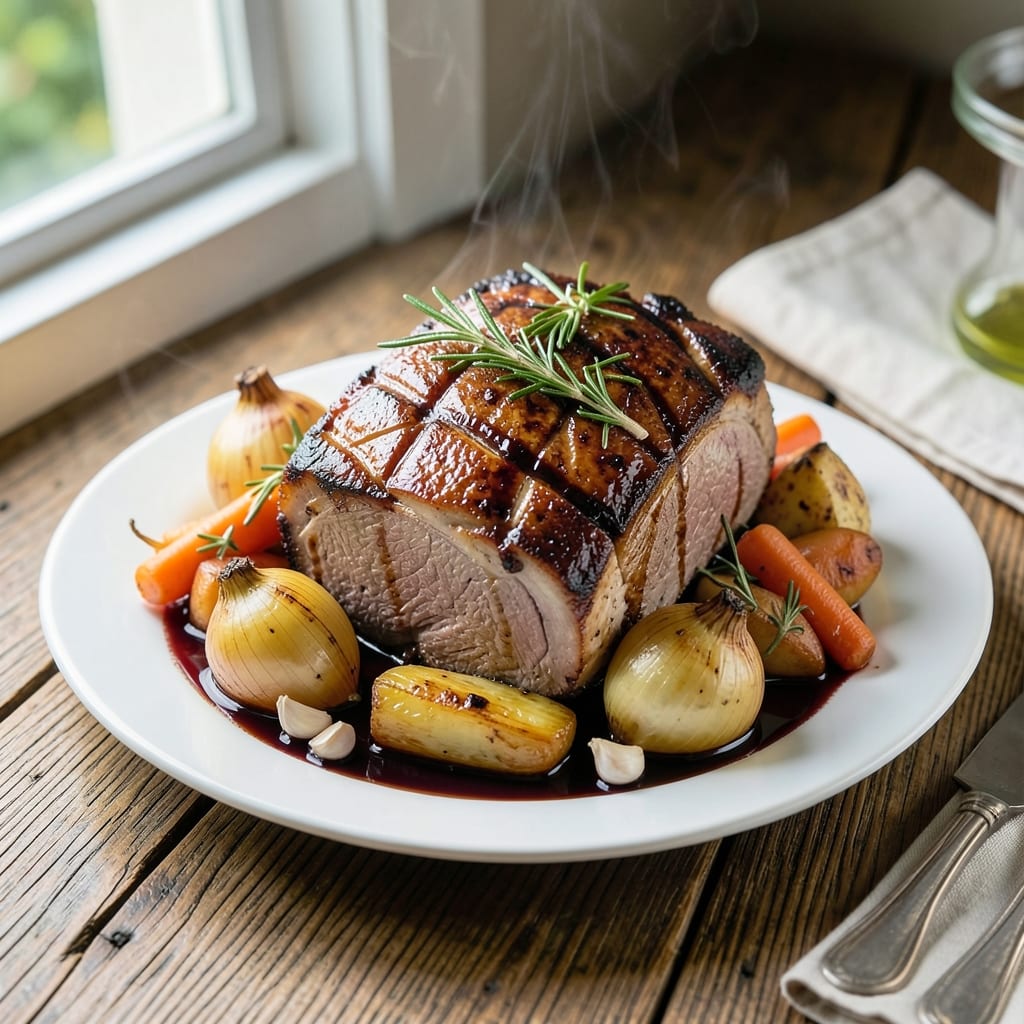
Slow-roasting transforms pork into something extraordinary. This method, perfected through countless tests in my tiny Boston kitchen, delivers tender, juicy meat with a caramelized crust.
The balsamic vinegar doesn’t just add tang—it creates a rich glaze that deepens in flavor as it roasts. I’ve found the perfect balance between acidity and sweetness to complement the pork’s natural richness.
What emerges is a centerpiece worthy of any dinner table: fall-apart meat with a glossy, deeply flavored exterior. The aroma alone will have everyone gathering in the kitchen before it’s even done.
Serve with roasted vegetables or mashed potatoes to soak up every drop of that incredible sauce. This is comfort food elevated to art.
Ingredients for Pork Roast Recipe with Balsamic Vinegar
A few quality cuts and pantry staples create that show-stopping roast with glossy balsamic glaze.
| Ingredient | Amount | Notes |
|---|---|---|
| Pork Shoulder 🍖 | 3 lb | Boneless, trimmed of excess fat |
| Balsamic Vinegar 🍷 | ¾ cup | Aged, high-quality preferred |
| Brown Sugar 🍚 | ¼ cup | Light or dark variety |
| Dijon Mustard 🟡 | 2 tbsp | Smooth, not grainy |
| Garlic Cloves 🧄 | 6 cloves | Minced for maximum flavor |
| Fresh Rosemary 🌿 | 2 tbsp | Chopped, stems removed |
| Fresh Thyme 🌿 | 2 tsp | Leaves stripped from stems |
| Olive Oil 🫒 | 2 tbsp | Extra-virgin for richness |
| Kosher Salt 🧂 | 1 ½ tsp | Diamond Crystal preferred |
| Black Pepper 🌶️ | 1 tsp | Freshly ground for best flavor |
| Chicken Stock 🥣 | ½ cup | Low-sodium recommended |
| Yellow Onion 🧅 | 1 whole | Large, thinly sliced |
| Carrots 🥕 | 3 whole | Medium, peeled and chopped |
| Celery Stalks 🌿 | 2 whole | Chopped for aroma base |
[recipe_ingredient_scaler]
The pork shoulder is non-negotiable here—bone-in or boneless both work, but shoulder stays juicy through the long roast. Whole Foods or Costco usually have good options (look for marbling—fat equals flavor). The balsamic vinegar needs to be aged at least 5 years; that cheap stuff from the grocery aisle won’t give you the depth this dish deserves. I always keep a bottle of Colavita on hand for this exact reason.
No pork shoulder? Pork butt is basically the same thing (just a different cut from the same area). Swap brown sugar for maple syrup if needed. Fresh herbs not happening? Dried at one-third the amount, but honestly, the fresh stuff makes a difference. The chicken stock can be vegetable stock in a pinch, but it changes the flavor profile slightly. Don’t skip the Dijon—it’s balancing the sweetness of the vinegar.
This reheats like a dream—actually gets better overnight as the flavors meld. Keeps in the fridge for 4-5 days, freezes beautifully for 3 months. I portion leftovers into containers so I can pull out exactly what I need for sandwiches or tacos later.
Why You’ll Love This Recipe
- Set It and Forget It: I toss the pork shoulder with the marinade the night before, then just pop it in the oven. Honestly, it does all the work while I do mine.
- Sweet-Tangy Perfection: That balsamic vinegar and brown sugar combo caramelizes into this sticky, finger-licking glaze that’s ridiculous with the garlic.
- Feeds the Whole Crew: I’ve served this for Sunday dinner and packed leftovers for lunch all week. Between us, it tastes even better the next day.
- Wallet-Friendly Feast: Pork shoulder is cheap, and the pantry staples do the rest. I’ll be real: it’s my go-to when I need to impress without overspending.
Step-by-Step Instructions for Pork Roast With Balsamic Vinegar
Here’s the method I use to create tender pork with a glossy, tangy glaze every time.
Step 1: Sear and Season the Pork Shoulder
Pat the 3 lb Pork Shoulder dry with paper towels—this ensures a proper sear. Season generously with 1.5 tsp Kosher Salt and 1 tsp Black Pepper on all sides. I like to press the seasoning into the meat so it adheres well.
Heat 2 tbsp Olive Oil in a large Dutch oven over medium-high heat. Once shimmering, add the pork and sear for 4-5 minutes per side until deeply browned. You’re looking for a rich, golden crust that forms a flavor foundation. Remove the pork and set aside.
Step 2: Build the Aromatic Base
In the same pot, add the 1 whole Yellow Onion, 3 whole Carrots, and 2 whole Celery Stalks. Cook for 5-6 minutes until the onion softens and the vegetables begin to caramelize at the edges. This creates a sweet, savory base for the roast.
Add the 6 cloves Garlic Cloves, 2 tbsp Fresh Rosemary, and 2 tsp Fresh Thyme. Stir for 1 minute until fragrant—this releases the herbs’ essential oils and infuses the dish with their aroma.
Step 3: Deglaze and Add the Pork
Pour in 0.75 cup Balsamic Vinegar and scrape the browned bits from the bottom of the pot. Add 0.25 cup Brown Sugar, 2 tbsp Dijon Mustard, and 0.5 cup Chicken Stock. Stir until the sugar dissolves and the mixture begins to thicken slightly.
Return the pork to the pot, spooning the liquid over it. Bring to a gentle simmer, then cover and transfer to a preheated 325°F oven. The liquid should just barely bubble around the edges.
Step 4: Roast Until Fork-Tender
Roast for 3-4 hours, turning the pork every 45-60 minutes to ensure even cooking and basting. The pork is done when it shreds easily with a fork and the internal temperature reaches 195-200°F.
During the last hour, uncover the pot to allow the liquid to reduce into a glossy glaze. You’ll know it’s ready when the sauce coats the back of a spoon and has a rich, syrupy consistency.
Step 5: Rest and Serve
Transfer the pork to a cutting board and tent loosely with foil. Let it rest for 15-20 minutes—this allows the juices to redistribute, ensuring every bite is moist and flavorful.
Skimming excess fat from the sauce and adjusting seasoning if needed. Slice or shred the pork, then serve it with the reduced balsamic glaze spooned over the top. The meat should be fall-apart tender with a deep, tangy-sweet flavor.
Pro Tips For Making Pork Roast Recipe With Balsamic Vinegar
- Sear the Pork: I learned this the hard way—brown the pork shoulder on all sides in a hot pan before roasting. It locks in juices and adds depth to the balsamic glaze.
- Mince the Garlic: Sounds obvious, but finely mincing the garlic cloves instead of just crushing them distributes the flavor evenly through the roast and glaze.
- Reduce the Glaze: After roasting, simmer the pan drippings with balsamic vinegar, brown sugar, and Dijon mustard for 3-4 minutes to thicken—it transforms from liquid to a rich, sticky coating.
- Rest Before Slicing: Give the pork a solid 15 minutes under foil after roasting. I used to slice too soon and watched all the juices run out onto the cutting board.
Troubleshooting Great pork roast recipe with balsamic vinegar
Glaze Too Thin
If your balsamic glaze isn’t thickening, uncover the pot and simmer on the stovetop for 10-15 minutes. I often add 1 tbsp cornstarch mixed with 1 tbsp water to help it along. Stir frequently to prevent scorching at the bottom. 🔥
Meat Not Tender
Pork shoulder needs time to break down. If it’s still tough after 3 hours, return it to the oven for another 30-60 minutes. Check the internal temperature—it should reach 195-200°F for that fall-apart texture.
Sauce Too Acidic
Balance the tang with 1-2 tbsp brown sugar or a pinch of baking soda. I’ve found that 1 tsp honey also mellows the acidity beautifully. Taste as you go—this dish should be rich, not sharp.
Dry Pork Roast
This usually means it was overcooked or not basted enough. Next time, baste every 45 minutes and pull it from the oven at 195°F. Let it rest 20 minutes before slicing to retain juices. ❄️
Bland Flavor
Boost the depth with 1 tsp soy sauce or 1 tbsp Worcestershire. Fresh herbs make a difference—if you used dried, double the amount. I always taste the sauce before serving and adjust with salt or pepper.
Burnt Bottom
Prevent this by ensuring your oven temperature is accurate. Use a thermometer to check it’s at 325°F. If the bottom scorches, transfer the pork and sauce to a new pot. Deglaze with ¼ cup water to save the pan.
Nutrition Facts
Frequently Asked Questions
What’s the best cut for this dish?
Pork shoulder is ideal for its marbling and tenderness after long cooking. Pork butt works equally well as they’re from the same area. Avoid lean cuts like tenderloin.
Can I use a different vinegar?
Balsamic’s sweet-tart depth is key, but apple cider vinegar plus 1 tbsp honey can substitute in a pinch. Avoid white vinegar—it’s too harsh for this application.
How do I know when it’s done?
The pork should reach 195-200°F internally and shred easily with a fork. If it resists, give it another 30 minutes in the oven.
Can I make this in a slow cooker?
Yes! Brown the meat first, then cook on low for 8-10 hours. The glaze won’t reduce as much, so thicken it on the stovetop afterward.

Trained in classic French technique but raised on slow-cooked ribs and spicy rubs, she blends culinary skill with smoke and soul.
- Hamburgers in Sauce Recipe Crock Pot: Slow-Cooked Savory Delight - October 3, 2026
- Sanjeev Kapoor Egg Biryani Recipe: Fragrant Spiced Rice With Boiled Eggs - October 3, 2026
- Recipe for French Pork Spread Gorton: Savory Gallic Flavors in a Spreadable Delight - October 3, 2026