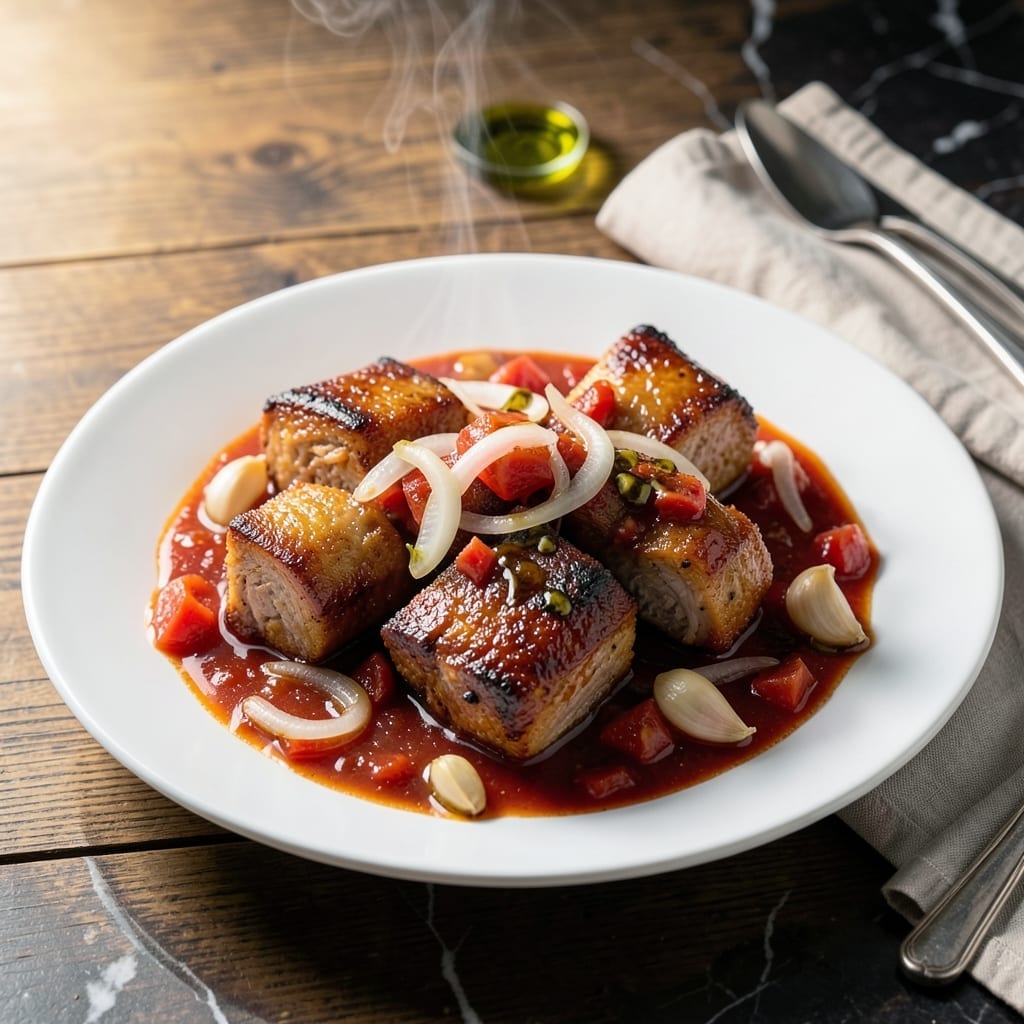
This Filipino pork sarciado delivers tender meat in a rich, tangy tomato sauce that’s both comforting and vibrant. I’ve tested this method multiple times to ensure the pork stays succulent while absorbing the bold flavors.
The dish comes together with simple ingredients, yet the combination of tomatoes, garlic, and vinegar creates a complex sauce. The key is simmering the pork just until it’s tender but still holds its shape.
What you’ll get is a hearty, saucy dish that pairs perfectly with steamed rice. The balance of tangy and savory makes it a standout in Filipino home cooking.
Ready in under an hour, this recipe brings authentic flavors to your table without fuss. Here’s how to make it.
Ingredients for Pork Sarciado Recipe Panlasang Pinoy
Simple pantry staples create this vibrant, tangy Filipino pork dish with rich tomato sauce.
| Ingredient | Amount | Notes |
|---|---|---|
| Pork Shoulder 🐖 | 1 ½ lb | Cut into 1-inch cubes, bone-in preferred |
| Ripe Tomatoes 🍅 | 4 whole | Medium-sized, chopped roughly |
| Garlic Cloves 🧄 | 6 cloves | Minced finely for depth |
| White Onion 🧅 | 1 whole | Sliced thinly for texture |
| Cane Vinegar 💧 | ½ cup | Filipino brand preferred for authenticity |
| Soy Sauce 🫒 | 3 tbsp | All-purpose variety works well |
| Fish Sauce 🐟 | 1 tbsp | Patis or Thai tiparos for umami |
| Bay Leaves 🌿 | 2 pieces | Dried, for aromatic depth |
| Black Peppercorns 🌶️ | 1 tsp | Freshly cracked for best flavor |
| Salt 🧂 | 1 tsp | Adjust to taste at the end |
| Vegetable Oil 🫒 | 2 tbsp | For browning pork evenly |
| Sugar 🍚 | 1 tsp | Balances the acidity of vinegar |
| Water 💧 | 1 cup | For adjusting sauce consistency |
[recipe_ingredient_scaler]
The pork is the foundation—pork shoulder with good marbling stays tender during simmering. I source mine from Filipino markets when possible (they often carry pre-cut chunks), but any supermarket with a decent meat counter works. Look for pieces with fat streaks for flavor. For tomatoes, ripe but firm Roma or vine-ripened work best (the canned kind is fine in winter).
No cane vinegar? White vinegar with a pinch of sugar mimics the tang. Swap fish sauce for soy sauce plus a dash of salt if needed. Fresh tomatoes can be replaced with canned crushed tomatoes (14 oz can). For extra richness, some cooks add a spoonful of tomato paste—I skip it to keep the sauce light. The bay leaves are optional but add a subtle depth.
This tastes even better the next day as flavors meld. Store in the fridge for up to 3 days or freeze for 1 month. Reheat gently on the stove—microwaving can break the sauce. Serve with steamed rice to soak up every last drop.
Why You’ll Love This Recipe
- One-Pot Wonder: I love that everything cooks in a single pan—pork shoulder soaks up all the tomato and vinegar goodness without extra fuss.
- Tangy Comfort: That first bite where the ripe tomatoes and cane vinegar hit? It’s sweet, sour, and savory all at once.
- Weeknight Hero: Honestly, it’s my Tuesday lifesaver—ready before the kids finish their homework.
- Stretches Far: Leftovers taste even better the next day, and the pork shoulder stays tender no matter how long it sits.
Step-by-Step Instructions for Pork Sarciado
This method ensures perfectly tender meat with a rich, tangy tomato sauce every time.
Step 1: Brown the Pork Shoulder
Heat the 2 tbsp vegetable oil in a large pan over medium heat. Add the 1.5 lb pork shoulder cubes and cook for 8-10 minutes, turning occasionally, until all sides are lightly browned.
I always work in batches to avoid overcrowding the pan—this prevents steaming and ensures proper browning. Remove the pork and set aside once browned, leaving the rendered fat in the pan for extra flavor.
Step 2: Sauté Aromatics and Tomatoes
In the same pan, add the 1 whole white onion and sauté for 2 minutes until it begins to soften. Stir in the 6 cloves garlic cloves and cook for 30 seconds until fragrant.
Add the 4 whole ripe tomatoes and cook for 5-7 minutes until they break down and release their juices. This creates the base for your tangy sauce.
Step 3: Deglaze and Simmer
Pour in the 0.5 cup cane vinegar, 3 tbsp soy sauce, 1 tbsp fish sauce, 1 tsp sugar, 2 pieces bay leaves, and 1 tsp black peppercorns. Stir to combine and scrape up any browned bits from the bottom of the pan.
Return the pork to the pan along with any accumulated juices. Add the 1 cup water and 1 tsp salt. Bring to a simmer, then reduce heat to low.
Step 4: Cook Until Tender
Cover and let the mixture simmer gently for 45-50 minutes, stirring occasionally. The pork is done when it’s fork-tender and the sauce has thickened slightly.
If the sauce reduces too much before the pork is tender, add a splash of water. Taste and adjust seasoning if needed—this is when I usually add a pinch more salt or sugar to balance the flavors.
Step 5: Adjust and Serve
Once the pork is tender, remove the bay leaves and discard them. Let the dish sit for 5 minutes off the heat—the flavors will meld together beautifully.
Serve hot with steamed rice, allowing the rich, tangy sauce to soak into each bite. The sauce should coat the pork nicely without being too thin or watery.
Pro Tips For Making Pork Sarciado Recipe Panlasang Pinoy
- Brown the Pork First: Sear the pork shoulder over medium-high heat until golden before adding liquids—this builds a deep flavor base that simmering alone won’t achieve.
- Use Ripe Tomatoes: Overripe tomatoes break down faster and sweeter, so pick the softest ones you have; they’ll melt into the sauce better than firm ones.
- Balance the Vinegar: Add the cane vinegar gradually and taste as you go; too much too soon can overwhelm the dish, and you can’t take it out once it’s in.
- Simmer Low and Slow: After the initial sear, drop the heat to low and let it bubble gently for 30-40 minutes—rushing it with high heat toughens the pork.
Make-Ahead Tips for pork sarciado recipe panlasang pinoy
Prep Ahead Strategy
You can chop the 1.5 lb pork shoulder, 4 ripe tomatoes, 1 white onion, and mince the 6 garlic cloves up to 24 hours ahead. Store them separately in airtight containers in the fridge. This saves 15 minutes of prep time on cooking day.
Partial Cook Method
Brown the pork and sauté the aromatics as directed, then refrigerate the mixture in a sealed container for up to 12 hours. When ready, add the remaining ingredients and simmer for 30-35 minutes. The flavors develop even more with this head start.
Sauce Base Prep
Make the sauce base (tomatoes, vinegar, soy sauce, fish sauce) a day ahead and store it in the fridge. The acidity of the 0.5 cup cane vinegar actually mellows overnight, creating a more balanced flavor profile when you finish cooking the pork. 💡
Freezer-Friendly Option
This dish freezes beautifully for up to 1 month. Cool completely, then portion into freezer-safe containers with ½ inch headspace. Thaw overnight in the fridge before reheating gently on the stove with a splash of water.
Reheating Tips
For best results, reheat on the stove over low heat for 10-12 minutes, stirring occasionally. Add ¼ cup water if the sauce thickens too much. Microwaving works in a pinch—cover and use 50% power in 1-minute intervals. ❄️
Flavor Boost
If making ahead, slightly under-season the sauce initially. Flavors concentrate during storage, so you can adjust salt, sugar, or vinegar to taste just before serving. I always taste and tweak right before serving—it makes all the difference.
Nutrition Facts
Frequently Asked Questions
Can I use a different cut of pork?
Yes, pork belly or pork ribs work well too. Belly adds more fat for richness, while ribs give extra depth. Avoid lean cuts like tenderloin as they dry out during the 45-50 minutes simmering.
Why does the sauce need vinegar?
The 0.5 cup cane vinegar balances the richness of the pork and adds the signature tang. It also helps tenderize the meat during cooking. Skip it and you’ll miss the dish’s characteristic bright flavor.
What if my sauce is too thin?
Simmer uncovered for an extra 5-10 minutes to reduce. If it’s still thin, mix 1 tsp cornstarch with water and stir in. The sauce should coat the back of a spoon when done.

Trained in classic French technique but raised on slow-cooked ribs and spicy rubs, she blends culinary skill with smoke and soul.
- Recipe for Boneless Pork Chops in Cast Iron Skillet: Sear and Baste to Juicy Perfection - October 3, 2026
- Recipe for Boneless Cross Rib Roast: Slow-Roasted Beef with Herb Crust - October 3, 2026
- Hamburgers in Sauce Recipe Crock Pot: Slow-Cooked Savory Delight - October 3, 2026