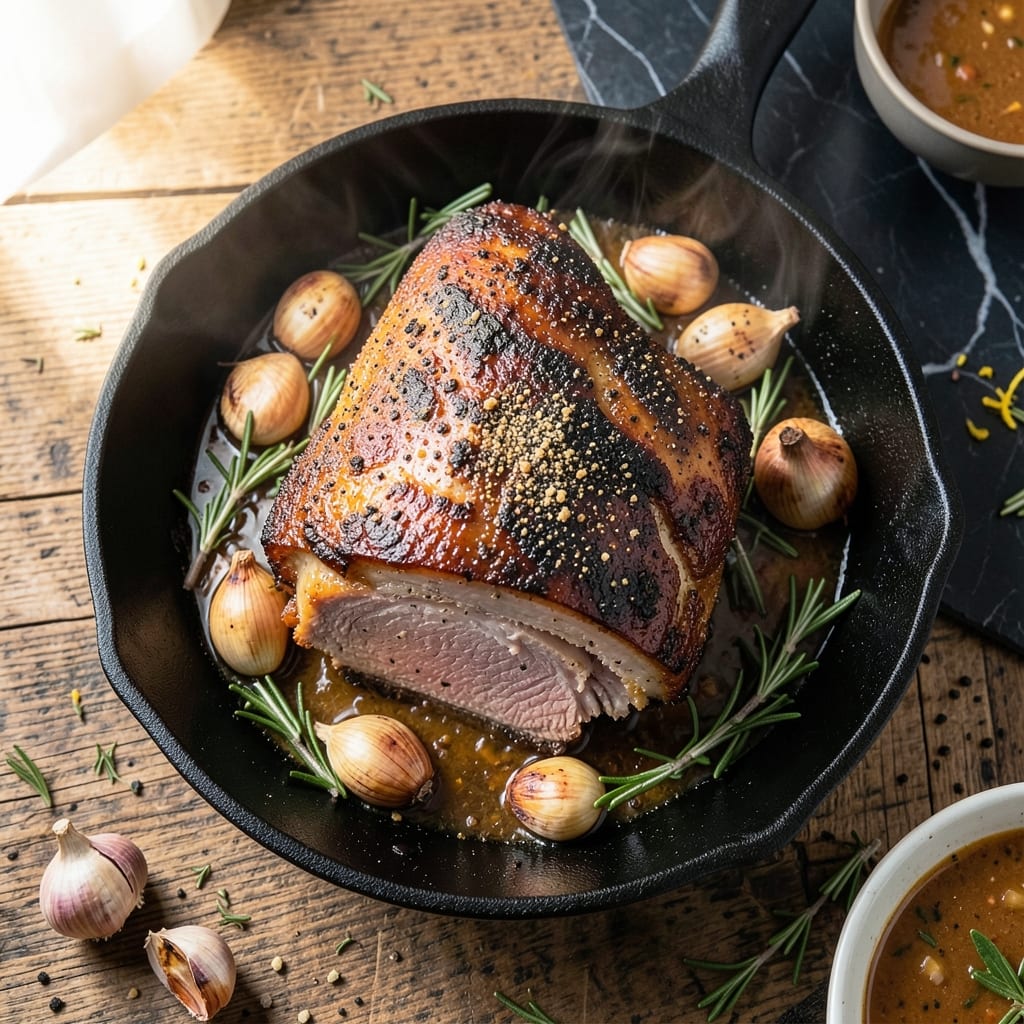
Growing up in Georgia, I learned early that great pork shoulder requires patience and low heat. This method transforms a humble Boston butt into meltingly tender perfection every time.
Slow-cooking at 275°F allows the connective tissue to break down gradually, creating that coveted pull-apart texture. The fat renders slowly, basting the meat from within for maximum flavor.
What emerges is pork so tender it falls apart with a nudge, with a rich, caramelized crust on the outside. The meat retains its natural juices, making every bite incredibly moist and flavorful.
This technique has won me championships on the Southeast BBQ circuit. The results speak for themselves.
Ingredients for Pork Shoulder Boston Butt Roast
Transform humble pork into championship-worthy tenderness with these essential ingredients.
| Ingredient | Amount | Notes |
|---|---|---|
| Boston Butt Pork Shoulder 🥩 | 4 lb | Bone-in preferred for flavor |
| Kosher Salt 🧂 | 2 tbsp | Diamond Crystal preferred for texture |
| Coarse Black Pepper 🌶️ | 1 tbsp | Freshly ground for maximum aroma |
| Garlic Powder 🧄 | 1 tbsp | Not garlic salt |
| Onion Powder 🧅 | 1 tbsp | Fine grind preferred |
| Smoked Paprika 🌶️ | 1 tbsp | Spanish variety for depth |
| Brown Sugar 🥣 | ½ cup | Light or dark works |
| Apple Cider Vinegar 🍏 | ¼ cup | For acidity balance |
| Yellow Mustard 🟡 | ¼ cup | Acts as binder and flavor |
| Olive Oil 🫒 | 2 tbsp | For rubbing exterior |
| Chicken Stock 🥣 | 1 cup | Low-sodium recommended |
| Apple Juice 🍎 | 1 cup | Natural sweetness enhancer |
[recipe_ingredient_scaler]
The pork shoulder is non-negotiable—bone-in Boston butt yields superior flavor and moisture. Source from local butchers or Costco for consistent quality. Look for good marbling (fat streaks) which melts into the meat during cooking. The Diamond Crystal kosher salt is a professional choice; its coarse texture adheres better to the meat’s surface for even seasoning distribution.
No smoked paprika? Regular paprika plus a pinch of cayenne approximates the flavor. Chicken stock can be swapped for vegetable stock or even water in a pinch (though flavor will be milder). Brown sugar substitutes include maple syrup or honey at half the volume. The apple juice adds subtle sweetness—pineapple juice works too, though it leans tropical.
The rub keeps in an airtight container for 1 week. Cooked pork stays fresh in the fridge for 4-5 days or freezes beautifully for 3 months. Always bring the meat to room temperature before applying the seasoning for even penetration.
Why You’ll Love This Recipe
- Set It and Forget: Honestly, just rub those five ingredients on the pork shoulder, pop it in the oven, and walk away—no babysitting required.
- Crispy, Juicy Magic: That combo of coarse black pepper, garlic powder, and onion powder forms the most addictive crust while keeping the inside fall-apart tender.
- Feeds the Whole Crew: I’ve served this at Sunday dinners and weeknight meals alike—it’s the kind of dish that disappears fast, no matter the occasion.
- Leftovers for Days: One Boston butt makes enough for sandwiches, tacos, and fried rice—my wallet loves it as much as my taste buds do.
Step-by-Step Instructions for Pork Shoulder Boston Butt Roast
Master this technique for fork-tender pork with a caramelized crust every time.
Step 1: Season the Boston Butt Pork Shoulder Generously
Pat the 4 lb Boston Butt Pork Shoulder dry with paper towels, ensuring all moisture is removed. This is crucial for achieving a proper sear and bark formation. In a bowl, combine the 2 tbsp Kosher Salt, 1 tbsp Coarse Black Pepper, 1 tbsp Garlic Powder, 1 tbsp Onion Powder, 1 tbsp Smoked Paprika, and 0.5 cup Brown Sugar until uniform.
Rub the spice mixture all over the pork, pressing firmly to adhere. I work it into every crevice and fold—this ensures maximum flavor penetration. Let the seasoned shoulder sit at room temperature for 30 minutes while you preheat the oven.
Step 2: Sear and Deglaze for Depth of Flavor
Heat the 2 tbsp Olive Oil in a large Dutch oven over medium-high heat. When it shimmers, add the pork shoulder and sear on all sides for 3-4 minutes per side until deeply browned. The goal is a rich, mahogany crust, not blackened.
Remove the pork and reduce heat to medium. Add the 0.25 cup Apple Cider Vinegar and 0.25 cup Yellow Mustard, scraping the fond from the bottom. This deglazing step captures all the caramelized flavor and prevents burning.
Step 3: Braise with Moisture for Tenderness
Return the pork to the Dutch oven and add the 1 cup Chicken Stock and 1 cup Apple Juice. The liquid should come about ⅓ of the way up the pork—enough to braise but not submerge. Cover tightly with the lid.
Transfer to a preheated 300°F oven. This low-and-slow approach breaks down the connective tissue over 4-5 hours without drying the meat. You’ll know it’s ready when a fork slides in with no resistance.
Step 4: Rest and Shred for Serving
Carefully transfer the pork to a cutting board and tent with foil. Let it rest for 20-30 minutes—this allows the juices to redistribute, ensuring every bite is moist. The internal temperature will continue to rise slightly during this time.
Shred the pork using two forks, discarding any large fat pieces. Skim excess fat from the braising liquid and reduce it on the stovetop for 5-7 minutes until it thickens into a glaze. Pour this over the shredded pork before serving.
Pro Tips For Making Pork Shoulder Boston Butt Roast
- Dry the Surface: Pat the pork shoulder completely dry with paper towels before seasoning—I learned this the hard way after my first few roasts came out steamed instead of browned.
- Season Overnight: Rub the kosher salt, pepper, and powders into the meat at least 12 hours ahead. Sounds weird, but it works: the flavors penetrate deeper than any last-minute dusting.
- Use a Thermometer: Pull it at 195-203°F internal temp, not by time alone. After burning one to a crisp waiting for “fall-apart” texture, I finally figured out the thermometer doesn’t lie.
- Let It Rest: Give it a solid 30-45 minutes wrapped in foil after cooking—yes, even if you’re hungry. This isn’t the prettiest part, but it’s the only way to keep every slice juicy.
Best Sauces and Condiments for This Recipe
Classic BBQ Sauce
My championship-winning choice is a vinegar-based Carolina sauce—mix 1 cup apple cider vinegar, ½ cup ketchup, ¼ cup brown sugar, and 1 tbsp smoked paprika. The tang cuts through the richness beautifully. I learned this balance competing in the Southeast BBQ circuit.
Alabama White Sauce
For something different, try this creamy Alabama classic: whisk 1 cup mayonnaise, ¼ cup apple cider vinegar, 1 tbsp horseradish, and 1 tsp black pepper. It’s perfect for pulled pork sandwiches. The horseradish adds just the right kick. 🥗
Spicy Mustard Glaze
Combine ½ cup yellow mustard (already in your ingredients), 2 tbsp honey, and 1 tbsp hot sauce for a bold, tangy finish. Brush it on during the last 30 minutes of cooking. This works especially well with the existing mustard in your braising liquid.
Sweet and Smoky
Simmer 1 cup ketchup, ¼ cup molasses, 2 tbsp apple cider vinegar, and 1 tsp liquid smoke for 10 minutes. The molasses deepens the caramelized flavors from your pork’s crust. I use this when I want that classic backyard BBQ taste. 🔥
Quick Pickled Onions
Thinly slice 1 red onion, then soak in ½ cup apple cider vinegar and 1 tbsp sugar for 30 minutes. These add a bright, crunchy contrast to the rich pork. They’re a game-changer for texture and acidity balance.
Nutrition Facts
Frequently Asked Questions
What’s the ideal internal temperature for doneness?
Cook until it reaches 195-203°F internally. At this range, collagen breaks down into gelatin, creating that melt-in-your-mouth texture. Use a meat thermometer for accuracy.
Can I use a slow cooker instead of an oven?
Yes! Cook on low for 8-10 hours or high for 5-6 hours. Add ½ cup extra liquid since slow cookers don’t reduce as much. The results will be just as tender.
Why did my pork turn out dry?
This usually happens from cooking at too high a temperature or not enough liquid. Stick to 300°F or lower and ensure the braising liquid covers at least ⅓ of the meat. Resting is also key!
Can I prepare this the day before serving?
Cook and shred the pork, then store it in its juices in the fridge for up to 4 days. Reheat gently on the stove with a splash of liquid to restore moisture.

Trained in classic French technique but raised on slow-cooked ribs and spicy rubs, she blends culinary skill with smoke and soul.
- Recipe for Boneless Pork Chops in Cast Iron Skillet: Sear and Baste to Juicy Perfection - October 3, 2026
- Recipe for Boneless Cross Rib Roast: Slow-Roasted Beef with Herb Crust - October 3, 2026
- Hamburgers in Sauce Recipe Crock Pot: Slow-Cooked Savory Delight - October 3, 2026