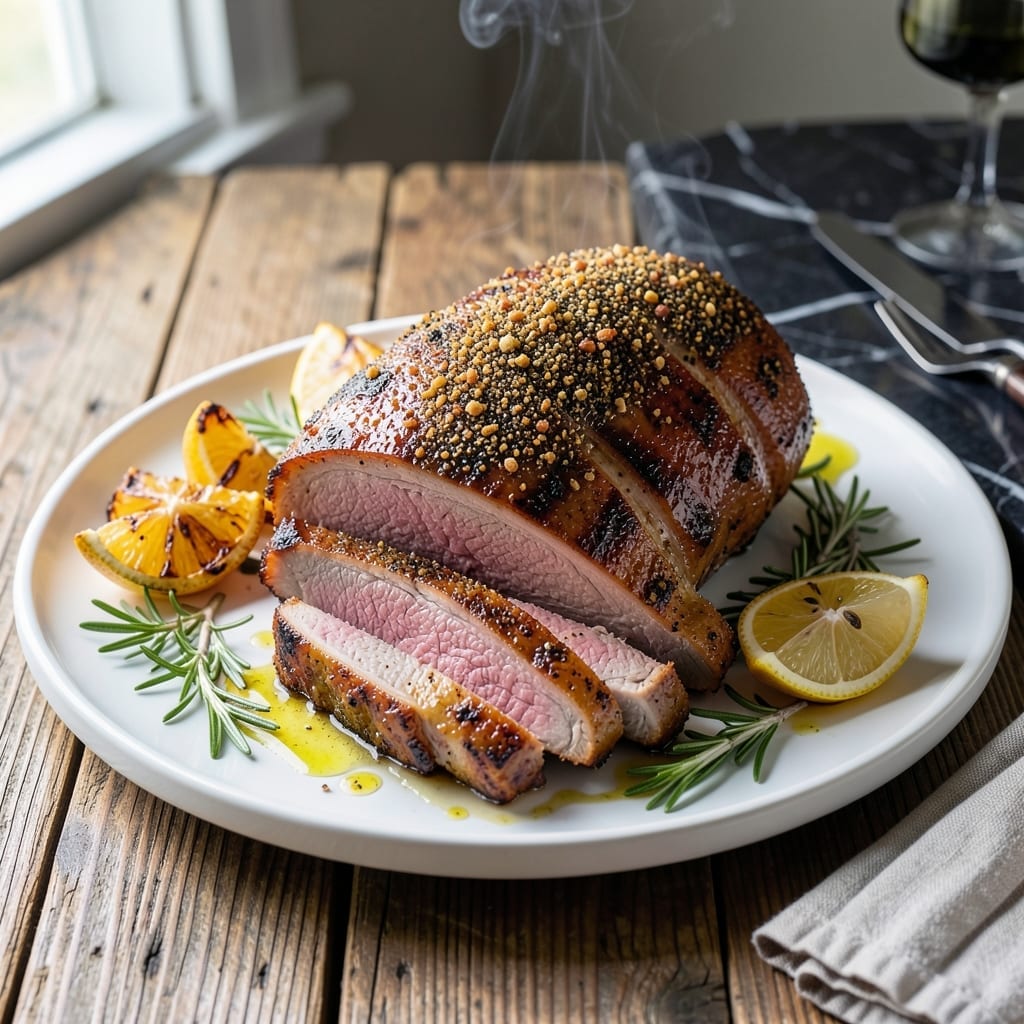
This grilling method transforms pork shoulder picnic roast into a tender, juicy masterpiece with smoky depth. The slow heat allows the fat to render while sealing in natural flavors.
I developed this technique after years of perfecting my rub blends and fire management. The result is meat that pulls apart effortlessly with every bite packed with rich, charred character.
Ingredients for Pork Shoulder Picnic Roast Grill
Transform pork shoulder picnic roast with these bold, smoky ingredients for juicy, charred perfection.
| Ingredient | Amount | Notes |
|---|---|---|
| Pork Shoulder Picnic Roast 🐖 | 4 lb | Bone-in, skin-on preferred |
| Kosher Salt 🧂 | 2 tbsp | Diamond Crystal preferred |
| Coarse Black Pepper 🌶️ | 1 tbsp | Freshly ground |
| Smoked Paprika 🌶️ | 1 tbsp | Sweet or hot variety |
| Garlic Powder 🧄 | 1 tbsp | Not garlic salt |
| Onion Powder 🧅 | 1 tbsp | Freshly ground preferred |
| Brown Sugar 🍚 | ½ cup | Light or dark |
| Apple Cider Vinegar 🍏 | ¼ cup | Balances sweetness |
| Olive Oil 🫒 | ¼ cup | For rubbing the roast |
| Hickory Wood Chips 🪵 | 2 cups | Soaked in water for 30 minutes |
| Yellow Mustard 🟡 | 2 tbsp | For binder in rub |
| Dried Thyme 🌿 | 1 tsp | Crushed between fingers |
[recipe_ingredient_scaler]
The pork shoulder picnic roast is the foundation—look for bone-in, skin-on cuts with good marbling at Whole Foods or Costco. The fat cap ensures self-basting during the long cook. Diamond Crystal kosher salt is ideal for the rub due to its coarse texture and clean flavor. Avoid pre-ground black pepper; freshly grinding releases more aroma. Soak the hickory chips in water for at least 30 minutes before use.
No hickory chips? Apple or cherry wood adds a milder, fruity smoke. Swap brown sugar for honey or maple syrup in the rub. If you lack apple cider vinegar, white vinegar with a pinch of sugar works in a pinch. Yellow mustard can be replaced with Dijon for extra tang. The garlic and onion powders are non-negotiable for depth, but fresh minced garlic can be used at double the amount.
Store the pork shoulder in the fridge for up to 3 days before cooking, or freeze for 6 months. The rub can be mixed in advance and kept in an airtight container for 1 month. Soaked wood chips should be used immediately for optimal smoke output.
Why You’ll Love This Recipe
- Set It and Forget: I rub the pork with salt, pepper, smoked paprika, and garlic powder, then let the grill do the work for hours.
- Smoky, Spiced Crust: That combo of smoked paprika and garlic powder gives every bite a deep, crave-worthy flavor.
- Feeds a Hungry Crowd: Honestly, this picnic roast is my go-to for summer cookouts—plenty for seconds and sandwiches the next day.
- Budget Hero: Pork shoulder is so affordable, and this recipe turns it into something ridiculously good without fancy ingredients.
Step-by-Step Instructions for Pork Shoulder Picnic Roast
Master the technique for tender, smoky results with a perfect crust.
Step 1: Prepare the Pork Shoulder and Make the Rub
Begin by patting the 4 lb Pork Shoulder Picnic Roast completely dry with paper towels, as moisture prevents the rub from adhering properly. This step ensures the seasoning forms a flavorful bark during grilling.
In a bowl, combine the 2 tbsp Kosher Salt, 1 tbsp Coarse Black Pepper, 1 tbsp Smoked Paprika, 1 tbsp Garlic Powder, 1 tbsp Onion Powder, 0.5 cup Brown Sugar, and 1 tsp Dried Thyme. Add the 2 tbsp Yellow Mustard and 0.25 cup Olive Oil, then stir until it forms a thick paste. The mustard acts as a binder to help the rub cling to the meat.
Step 2: Apply the Rub and Prep the Grill
Rub the paste generously over every surface of the pork shoulder, pressing it into the meat to ensure full coverage. Let the seasoned roast sit at room temperature for 30-45 minutes while you prepare the grill—this allows the flavors to begin penetrating the meat.
Soak the 2 cups Hickory Wood Chips in water for 30 minutes to prevent them from burning too quickly. Set up your grill for indirect heat, targeting a temperature of 275-300°F. Place a drip pan filled with 0.25 cup Apple Cider Vinegar and water under the grate to catch drippings and add moisture to the cooking environment.
Step 3: Smoke the Pork Low and Slow
Place the pork shoulder on the grill grate, bone-side down, over the drip pan. Add the soaked hickory wood chips to the coals or smoker box. Close the lid and maintain the temperature between 275-300°F for 4-5 hours, adding more wood chips as needed to sustain smoke.
Resist the urge to peek frequently—every time you open the lid, you lose heat and smoke. The pork is ready for the next step when the internal temperature reaches 160-165°F and the bark has developed a deep, mahogany color.
Step 4: Wrap and Finish for Maximum Tenderness
Remove the pork from the grill and wrap it tightly in heavy-duty aluminum foil. Return it to the grill and continue cooking until the internal temperature reaches 195-203°F, about 2-3 hours longer. This stage breaks down the collagen, transforming tough connective tissue into melt-in-your-mouth gelatin.
You’ll know it’s done when a probe thermometer slides into the thickest part of the meat with no resistance, like inserting it into warm butter. The wrapping step also helps retain moisture, ensuring the final product is juicy, not dry.
Step 5: Rest and Serve
Carefully unwrap the pork and transfer it to a cutting board. Tent it loosely with foil and let it rest for 30-45 minutes. This resting period allows the juices to redistribute throughout the meat, so every bite is flavorful and moist.
Pull the pork apart with forks or slice it against the grain. The exterior should boast a dark, smoky bark, while the interior remains tender and juicy. Serve immediately with your favorite barbecue sauce or a simple vinegar-based mop for a true taste of low-and-slow perfection.
Pro Tips For Making Pork Shoulder Picnic Roast Grill
- Dry the Roast: Pat the pork shoulder picnic roast completely dry with paper towels before seasoning—this guarantees the rub sticks and forms a proper crust.
- Low and Slow: Cook it at 225-250°F on the grill, not hot and fast. I learned this the hard way—rushing just gives you tough meat instead of fall-apart tenderness.
- Don’t Skip the Rest: Let the roast rest under foil for at least 15 minutes after grilling, or all the juices will end up on the cutting board instead of in the meat.
- Boost the Rub: Add a teaspoon of brown sugar to the smoked paprika, salt, and pepper mix—sounds simple, but it caramelizes beautifully on the grill.
Regional Styles of These Flavors
Carolina Style
In the Carolinas, we focus on a vinegar-based approach. I use 1 cup apple cider vinegar mixed with ½ cup water and 2 tbsp brown sugar for a tangy mop. The pork gets pulled and mixed with this sauce for a bright, clean finish.
Texas Twist
Texas pitmasters go heavy on the smoke and spice. I add 1 tbsp cayenne and 1 tbsp chili powder to the rub for heat. The key is a long 12-hour smoke at 225°F using post oak wood for deep, bold flavor.
Memphis Dry Rub
Memphis style skips the sauce entirely, relying on a powerful dry rub. I boost the original with 1 tbsp cumin and 1 tsp coriander. The result is a crispy bark that packs a punch in every bite. 💪
Kansas City Sweet
This Midwestern approach loves sweetness. I brush the pork with a mix of ½ cup ketchup, ¼ cup molasses, and 2 tbsp apple cider vinegar during the final hour. The sticky glaze caramelizes beautifully over the smoke.
Alabama White Sauce
Alabama’s signature white sauce is a game-changer. I whisk 1 cup mayonnaise, ¼ cup apple cider vinegar, and 1 tbsp horseradish to serve alongside. The creamy, tangy contrast cuts through the richness perfectly. 💫
Nutrition Facts
Frequently Asked Questions
What’s the ideal grill temperature for this roast?
Maintain your grill at 275-300°F for the first phase. This range ensures steady cooking without drying out the meat.
Can I use a gas grill instead of charcoal?
Yes, gas grills work well. Use indirect heat and add wood chips in a smoker box for that essential smoky flavor. Preheat thoroughly before starting.
How do I know when it’s done?
Use a meat thermometer: it’s ready at 195-203°F internally. The probe should slide in easily, like butter.
Should I wrap it in foil during cooking?
Wrap tightly after reaching 160-165°F to retain moisture. This step helps break down collagen for tender results.

Trained in classic French technique but raised on slow-cooked ribs and spicy rubs, she blends culinary skill with smoke and soul.
- Recipe For Diced Pork In Slow Cooker: Melt-In-Your-Mouth Tenderness All Day - October 3, 2026
- Recipe for Crock Pot Lasagna Using Ravioli: No-Boil Cheese Layers - October 3, 2026
- Recipe for Cut Up Chicken: One-Pan Crispy Bites - October 3, 2026